


‘ASEAN Way’ offers hope amid rising global tensions
From the wars in Gaza and Ukraine to protracted crises in Africa, geopolitical tensions abound in today’s turbulent world. But there is a bright spot closer to home.
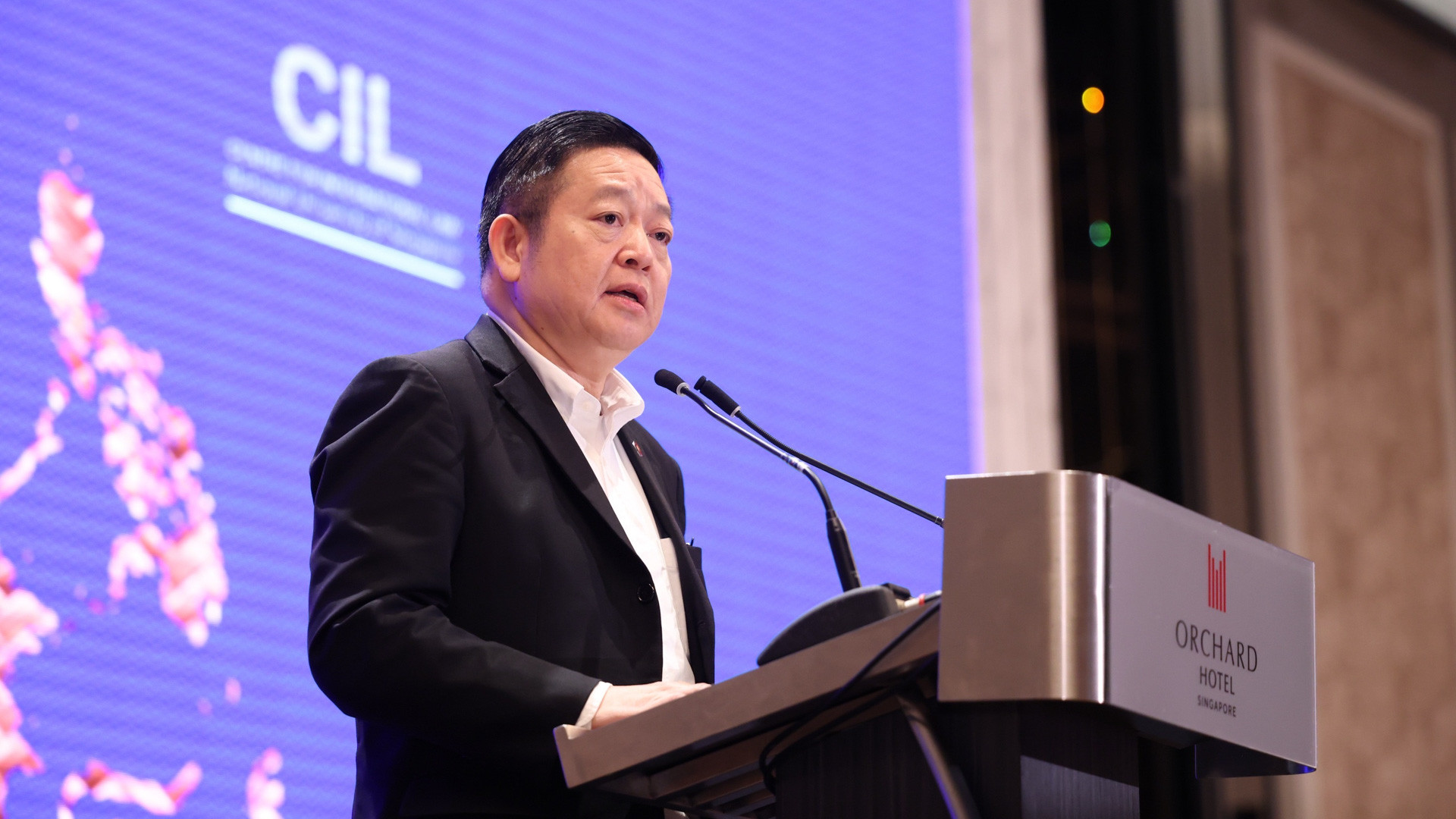
Guided by the basic principles of non-interference, non-aggression, decision-making through consensus, and quiet diplomacy, the Association of Southeast Asian Nations (ASEAN) has remained a shining example of hope in the region, said ASEAN Secretary-General Dr Kao Kim Hourn.
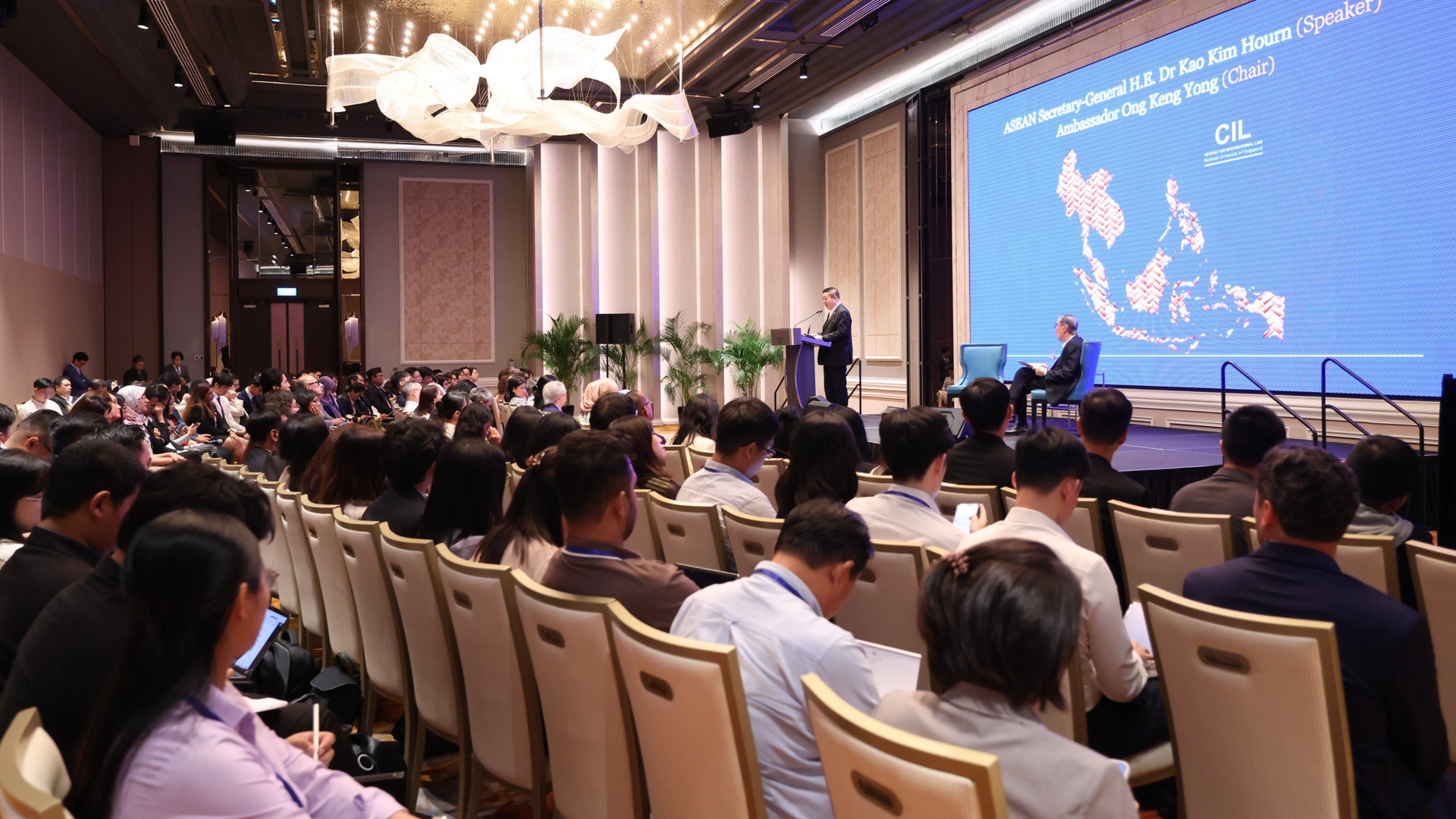
“History has taught us that peace is not a natural state of affairs – it is sustained by restraint, dialogue, diplomacy, and a shared commitment to order,” noted Dr Kao at a lecture organised by the NUS Centre for International Law (CIL) on 4 August 2025 that was attended by about 130 participants, including policymakers, diplomats, government officials as well as members of academia and the private sector from Singapore and the region.
“ASEAN’s journey stands as a profound testament to the tenacity required to make regionalism and multilateralism work.”
ASEAN is an area of focus for CIL, particularly in its role as a pillar of international law, said CIL Director, Dr Nilufer Oral. In her welcome remarks at the annual CIL-NUS ASEAN Distinguished Lecture, she hailed ASEAN as “an important building block in the international legal system”.
Echoing this, Dr Kao added: “Even in times of difficulty, we do not abandon our faith in the power of diplomacy, a culture of dialogue, and a sense of shared purpose. That is the ‘ASEAN Way’, and it remains a source of light in an increasingly uncertain and polarised world.”
His lecture, titled “ASEAN: A Bright Spot in a Darkening World”, focused on the continued relevance of the bloc, which was founded in 1967. But the brightness can dim occasionally.
“The recent flare-up along the Cambodia-Thailand border should serve as a sobering wake-up call…we can neither afford complacency, nor take peace for granted,” stressed the Cambodian diplomat, who has been ASEAN’s Secretary-General since 2023.
Clashes between the two countries in July de-escalated after an intervention by neighbouring leader Mr Anwar Ibrahim, Prime Minister of Malaysia, who is the current ASEAN Chair.
Unity amid uncertainty
Dr Kao emphasised ASEAN’s commitment to future-proofing the region, as set out in the “ASEAN 2045” agenda adopted at the 46th ASEAN Summit in May 2025.
“For the first time in ASEAN’s history, we have articulated a 20-year outlook that anticipates the global megatrends already reshaping the international system,” he said, highlighting the challenges of climate change, demographic shifts, and technological disruptions.
“‘ASEAN 2045’ seeks not just to respond to them, but also to harness them in shaping a dynamic, inclusive, and future-ready region.”
Other challenges threatening the rules-based world order include the rising tides of unilateralism, fragmentation, and protectionism, with Dr Kao calling for concerted efforts and vigilance to sustain this relationship of trust.
Such efforts are especially crucial given the outsized impact of external forces on the region.
For example, Dr Kao acknowledged that US President Donald Trump’s support was crucial to securing peace in the Indo-Pacific. But he said ASEAN had to make known to the US that its recent tariffs had caused “a lot of uncertainty” in the region, especially in the private sector.
“ASEAN has been trying to respond collectively as a region to the US,” said Dr Kao in his reply to a question on the rules-based order, adding that the bloc is also working to boost trade within the region and with partners like China, Korea, and India.
A beacon in a darkening world
Amid geopolitical tensions, ASEAN’s growing appeal is evident as more non-Southeast Asian countries join ASEAN-led partnerships. It has not only championed peace, but also “reinforced its position as a cornerstone of regional economic success”, said Dr Kao.
Currently the world’s fifth-largest economy, ASEAN is projected to become the fourth-largest by 2030. In 2023, it secured a record US$230 billion in foreign direct investment.
Asked if ASEAN was in need of reform, Dr Kao conceded the bloc had its “shortcomings” such as not delivering results quickly enough, and was working to address them. On a separate note, he highlighted that ASEAN was making inroads in AI-related issues ranging from governance to ethics, and was gaining “a lot of momentum” in cybersecurity.
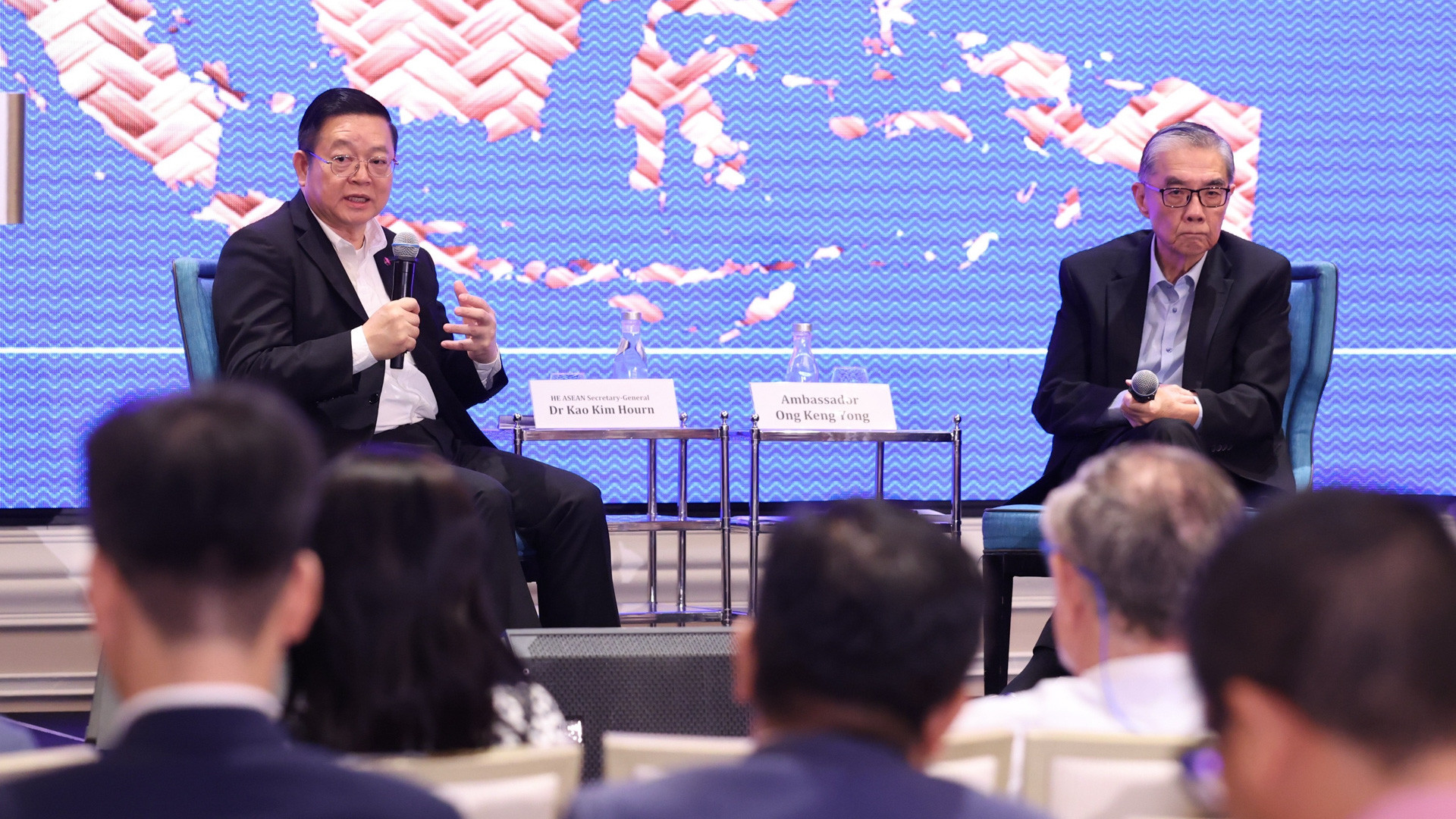
Weighing in, Mr Ong Keng Yong, Singapore’s Ambassador-at-Large and current CIL Governing Board Member, who moderated the dialogue, added that countries needed more political will to enforce cybersecurity-related laws.
Participants believed the topics discussed were timely. “The lecture was an accurate reflection of the processes and the recent priorities of ASEAN,” said Ms Diane Shayne D. Lipana, Acting Director of ASEAN Affairs at the Philippines’ Department of Foreign Affairs.
In these uncertain times, ASEAN’s role is starker than ever. “We will redouble our efforts to ensure that ASEAN remains – steadily and resolutely – a bright beacon in a darkening world,” Dr Kao added.
