


Bridging communities through service learning
“A journey of a thousand miles begins with a single step”, as Lao Tzu wisely observed. This timeless proverb reminds us that the most meaningful positive changes in our community often begin with something small, such as simple actions taken to help others. RVN2000 Engaging Communities in Sustainability and UTC2105/UTS2105 Singapore as “Model” City? are among academic courses under the Communities & Engagement Pillar, offering students from Ridge View Residential College (RVRC) and Tembusu College opportunities to deepen their engagement with local communities.
Ridge View Residential College: Reducing waste through community effort
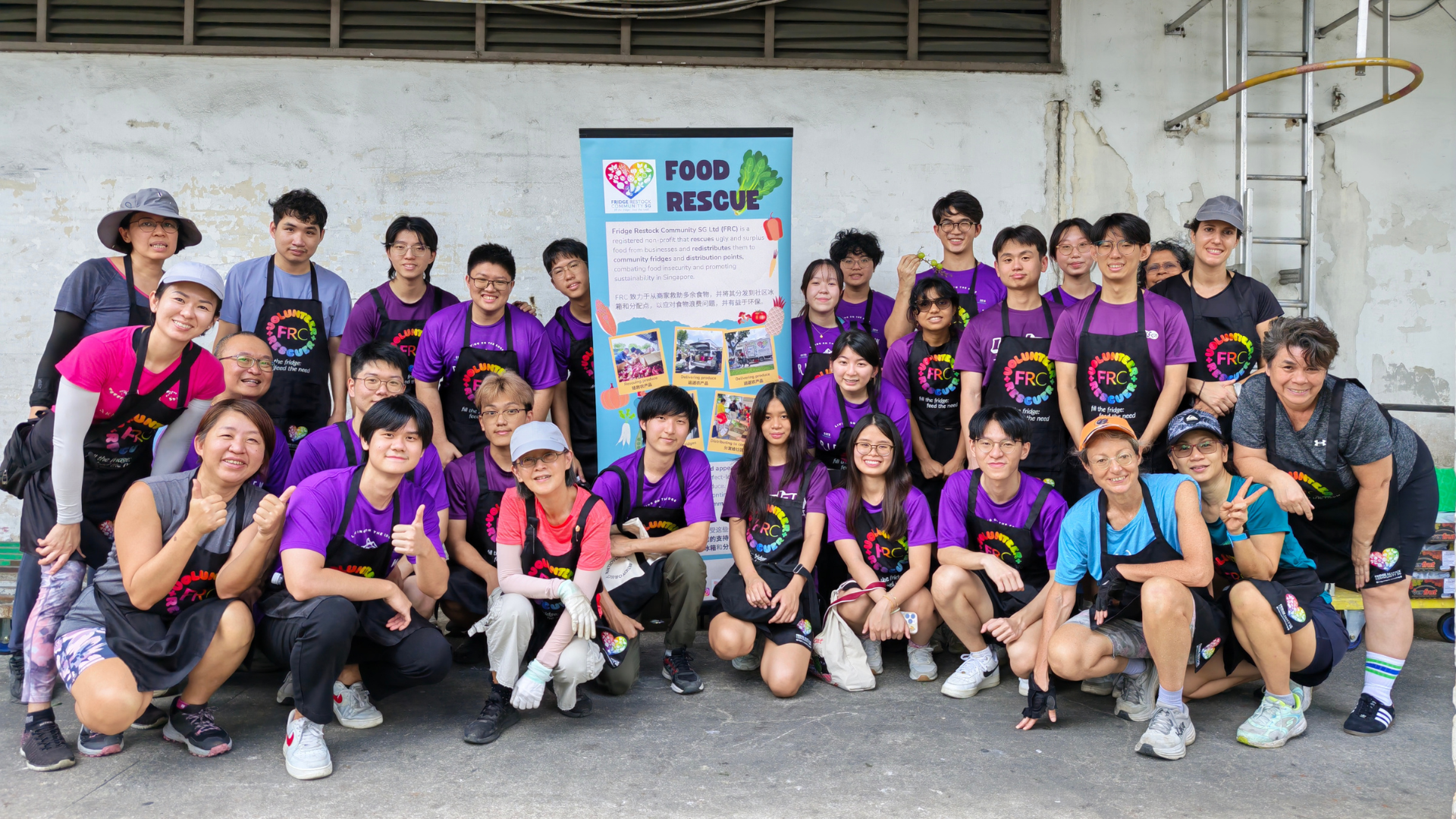
Offered by RVRC, RVN2000 is an interdisciplinary course that explores the economic, environmental, and social dimensions of sustainability. For its most recent iteration, students worked with four community partners – Stridy, Fridge Restock Community, Repair Kopitiam and Fashion Parade – representing ground-up communities that encourage individual ownership and agency over issues around resource consumption and waste production. Immersive field trips are a highlight, connecting students with community partners and enabling them to contribute meaningfully. For their final project, students analysed the operating environment of the community partners to better understand their resources and strengths, and proposed ways to amplify their community impact.
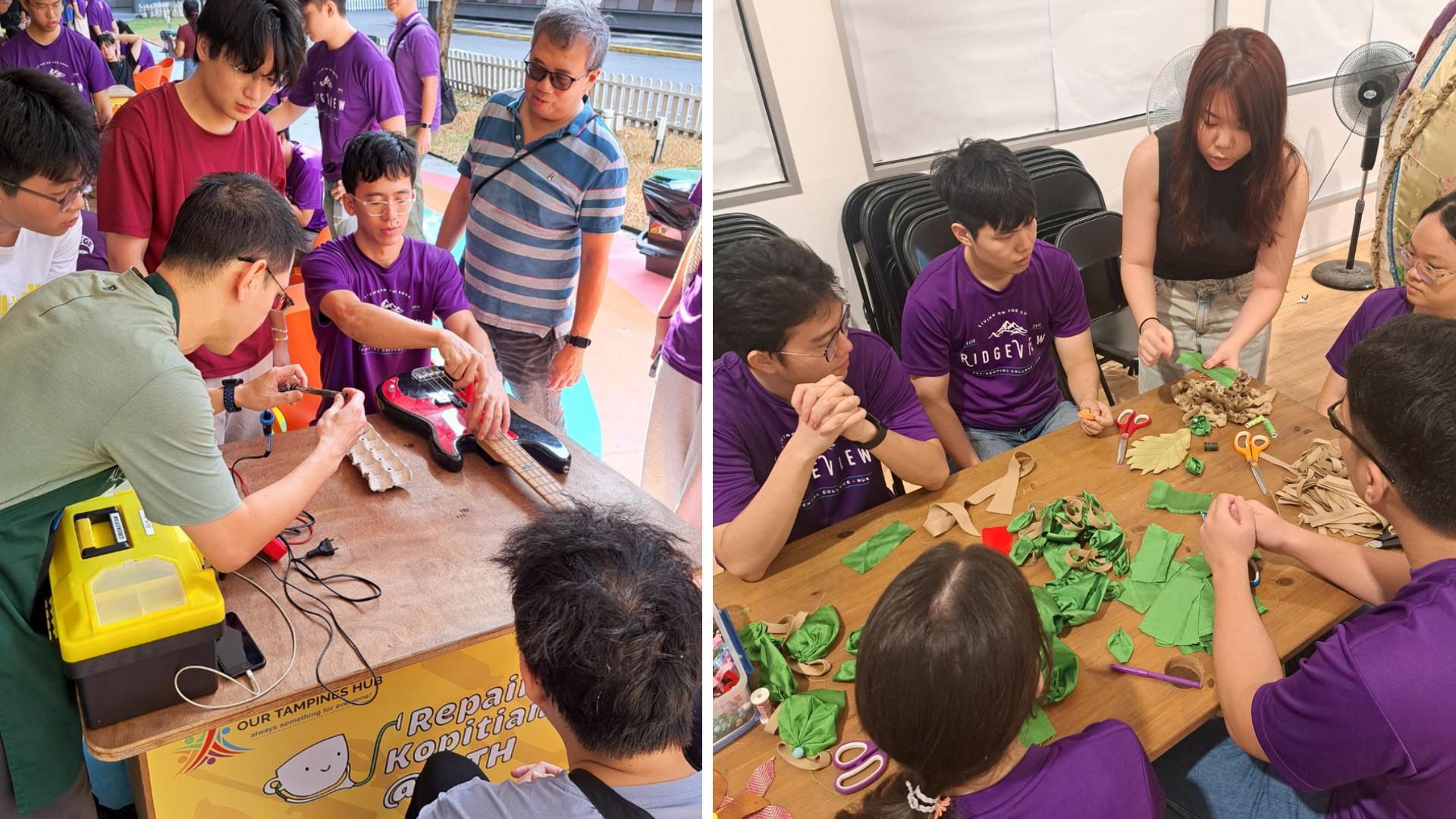
During the field trip with Stridy, a community addressing waste management, students had the opportunity to conduct a litter audit at Clementi. They collected and categorised the litter, generating data for Stridy’s Community Impact Dashboard. In another session, they participated in the Fridge Restock Community initiative to “rescue” unsold food from Pasir Panjang Wholesale Centre for redistribution across Singapore. At Repair Kopitiam, volunteer coaches guided them in repairing electrical items. Students also contributed to Fashion Parade, a textile sustainability initiative, by creating textile flowers for an art installation at Earthopia, a sustainability festival where members of the public used the flowers to make sustainability pledges.
Tembusu College: Revitalising public spaces
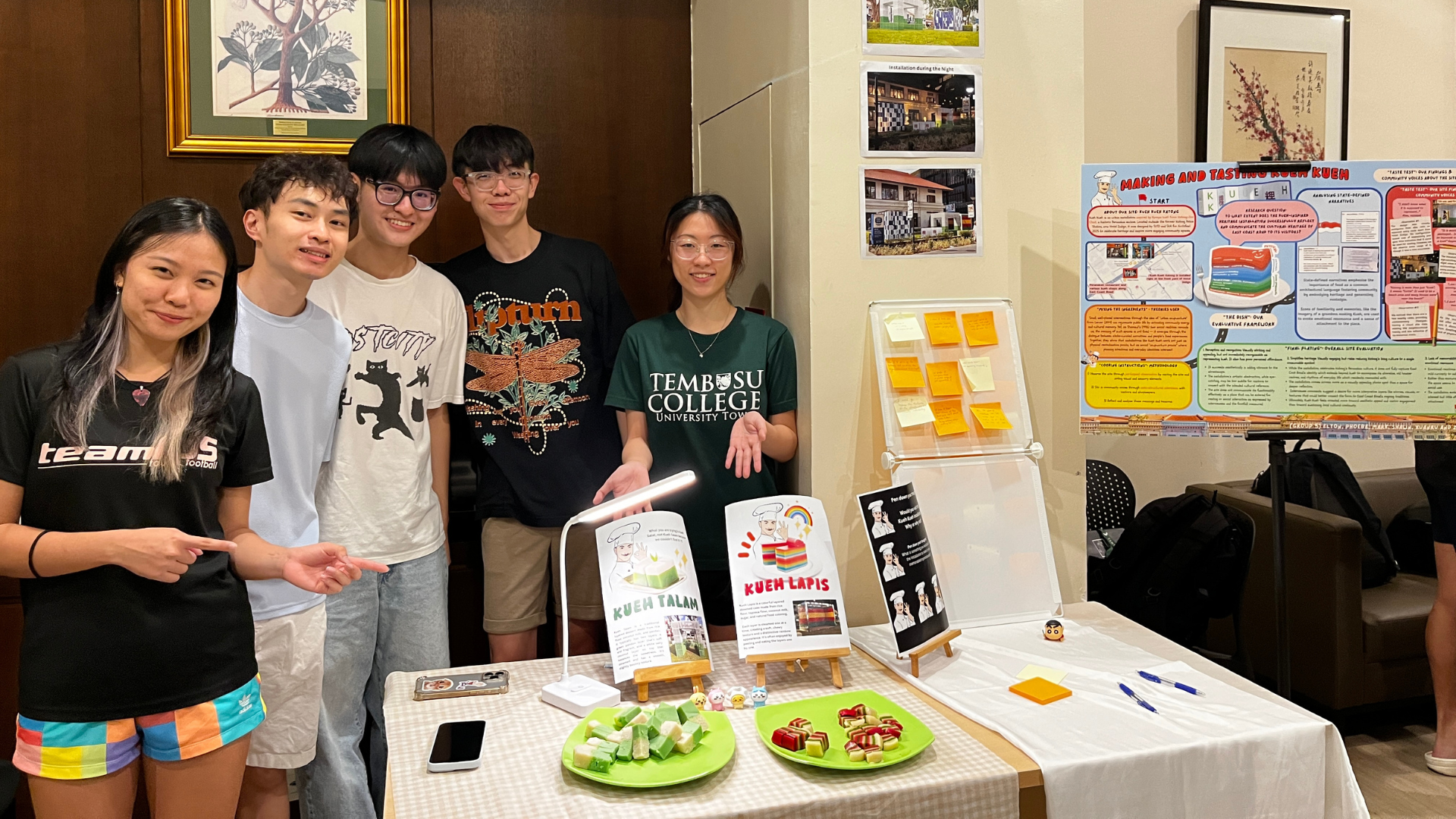
At Tembusu College, students in the UTC2105/UTS2105 Senior Seminar evaluated the effectiveness and community response to public space installations in the Katong-Joo Chiat neighbourhood, as part of a collaboration with Singapore’s Urban Redevelopment Authority (URA). These installations, designed and developed by URA and its community partners, are a form of “urban acupuncture”: small-scale, pin-prick interventions in underutilised areas with the aim of catalysing broader revitalisation of urban areas, thereby activating public spaces and fostering a deeper sense of place identity.
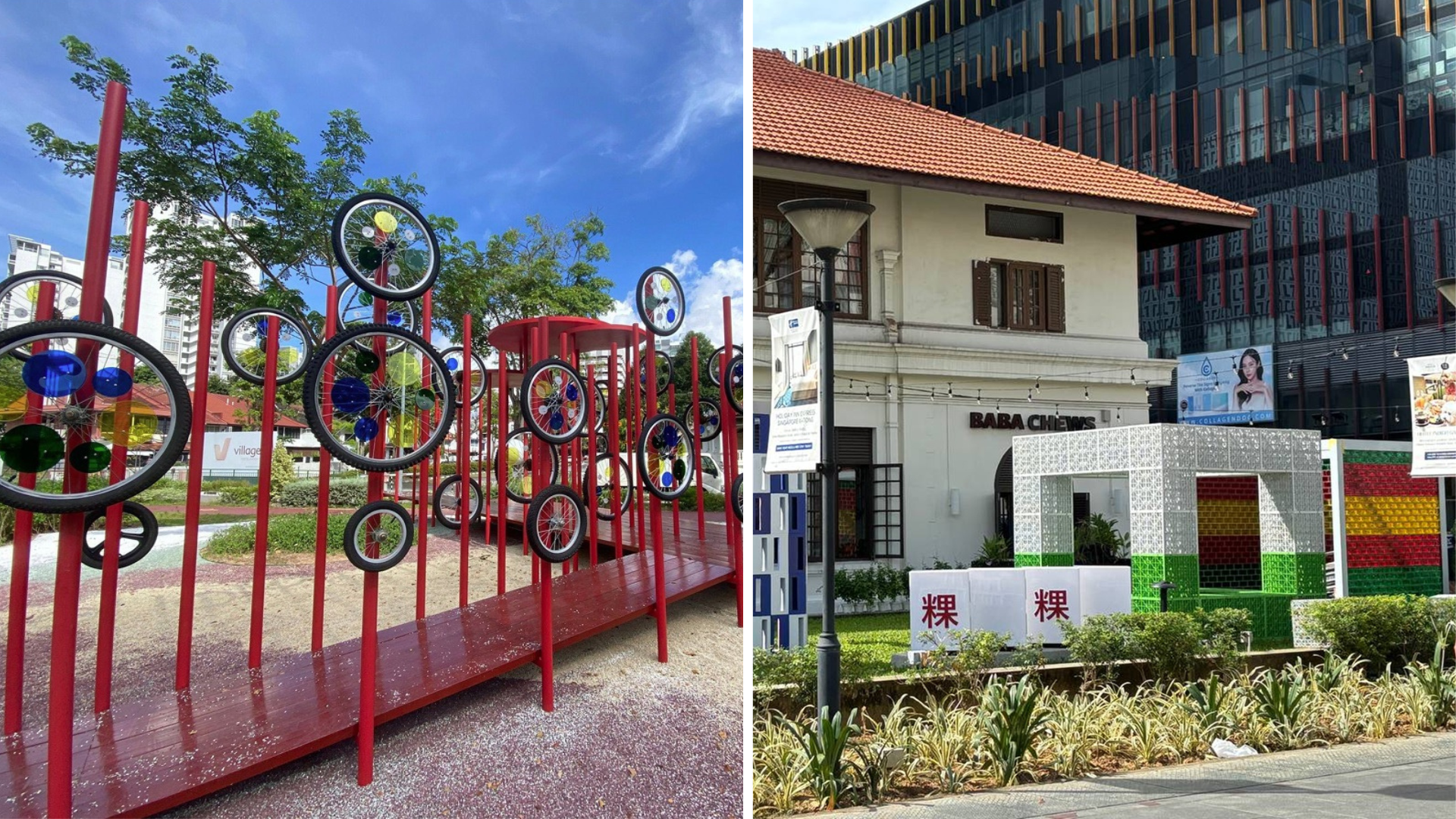
Building on prior work of then third-year students Srivarshini Radhakrishnan and Desmond Poh from the College of Design and Engineering and Faculty of Arts and Social Sciences respectively, current students developed a public space evaluation toolkit and an evaluation framework which were used to assess four installations: The Archipavilion, The Jetty, Blueprint of a Shophouse and Kueh Kueh.
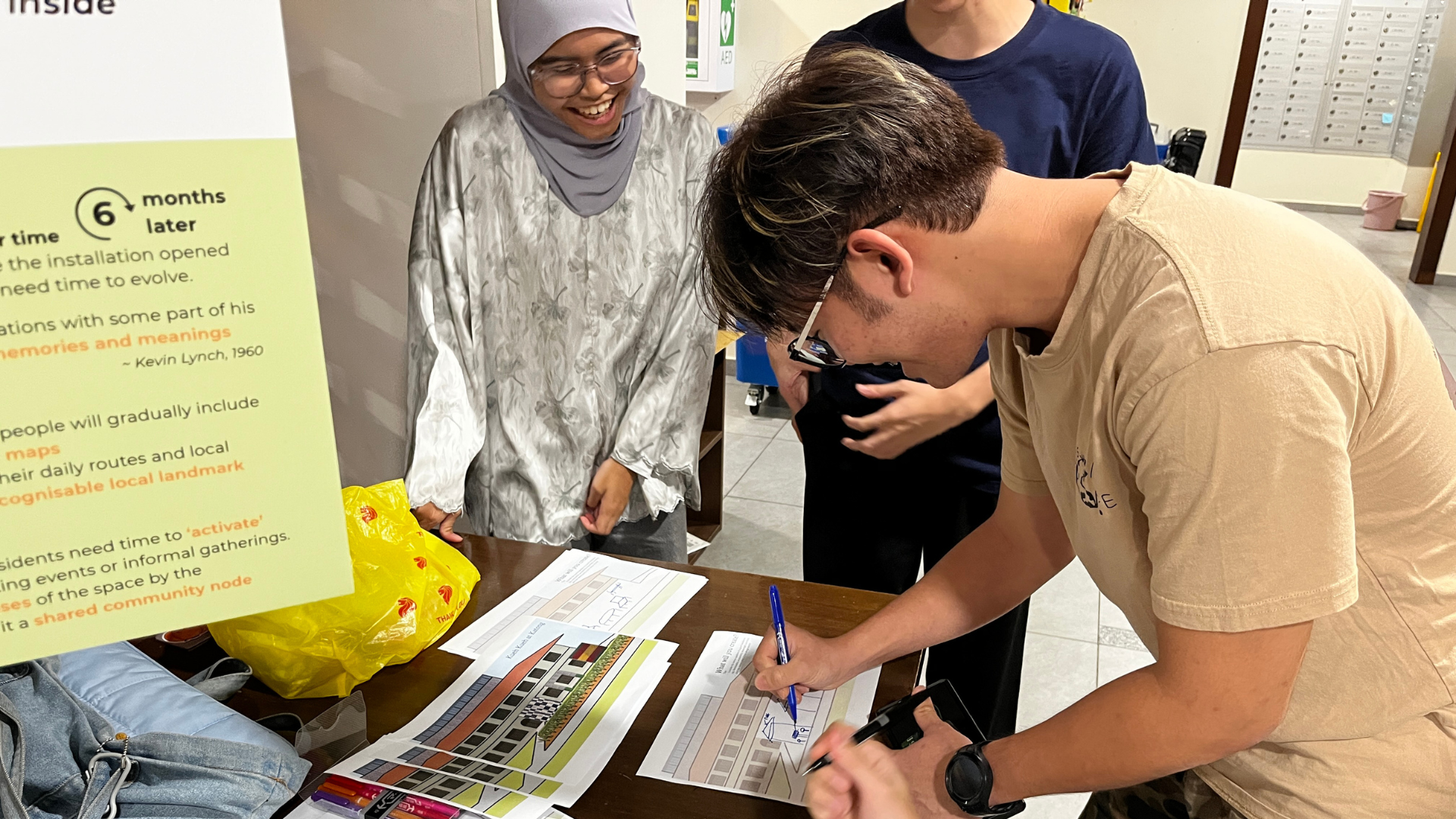
Students employed methods such as behavioural mapping, alongside sensory and environmental audits, to conduct their evaluation. They spoke extensively with a wide range of stakeholders including local residents, heritage businesses, artists, and architects, to understand how people engage with installations in public spaces, and the factors influencing these interactions.
One resident, for instance, shared that installations like murals, contribute significantly to a place’s ambience and “vibe”. This view was reinforced by the students’ own observations. For example, at The Jetty, an installation serving a cyclist rest stop, the students noted that its wooden planks doubled as a surface for a tap dancer’s evening practices. For another installation, Kueh Kueh – modular pavilions inspired by Nonya confections – the students took in valuable feedback from residents and suggested adding more seating around the installation to encourage interaction and longer stays.
The Architecture and Urban Design Group at URA noted that the students’ findings offered thoughtful and multidisciplinary perspectives, demonstrating strong analytical rigour and a keen sensitivity to the nuances of public space activation, user experience, and community context. These ground-up insights are now informing the refinement of future installations, helping to make them more engaging, better integrated with their surroundings, and more responsive to the evolving needs and demographics of the community.
These courses, among many others, empower NUS students to directly impact and serve the local communities they engage with, enabling them to play an active role in building a more caring and resilient society.
