


Business leadership course brings life lessons into the classroom
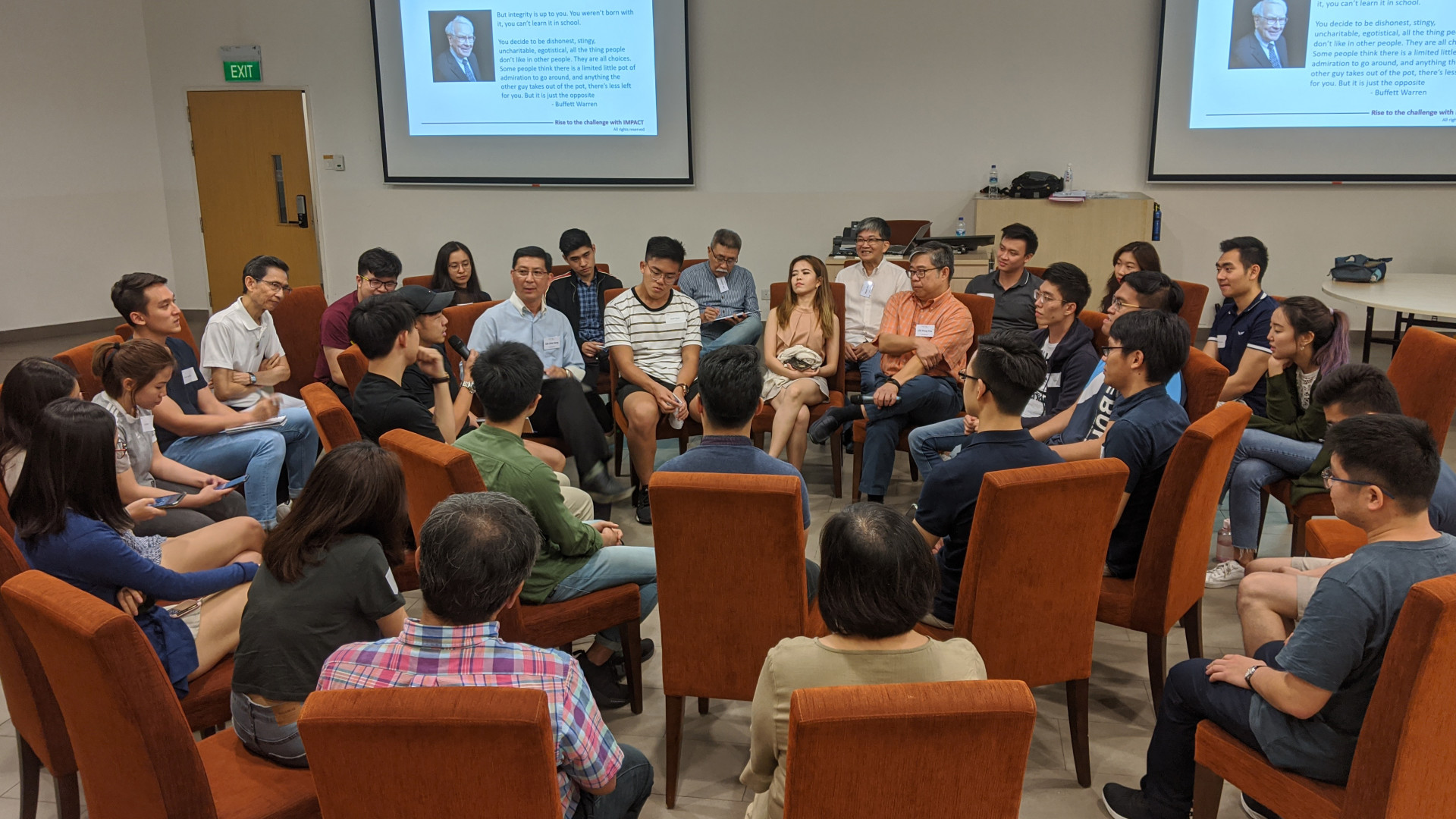
Academic excellence and preparation for one’s chosen career are often the focus of a university education, but a unique course offered to final-year students at the NUS Business School is helping to ensure that they graduate with a head start in the school of life too.
In the course “Effective Leadership in Action,” students learn to navigate the working world and become effective, impactful leaders – not from textbooks, but from industry veterans with decades of experience and hard-earned wisdom under their belts.
The course is run by non-profit group Compass@Campus in partnership with the Business School as a credit-bearing version of the group's IMPACT Leadership Mentoring Programme. The programme is offered to other NUS students via Compass@Campus's partnerships with the Yong Loo Lin School of Medicine, NUS Overseas Colleges, and the Centre for Future-ready Graduates, which recently completed a successful pilot run for the School of Computing and the College of Design and Engineering.
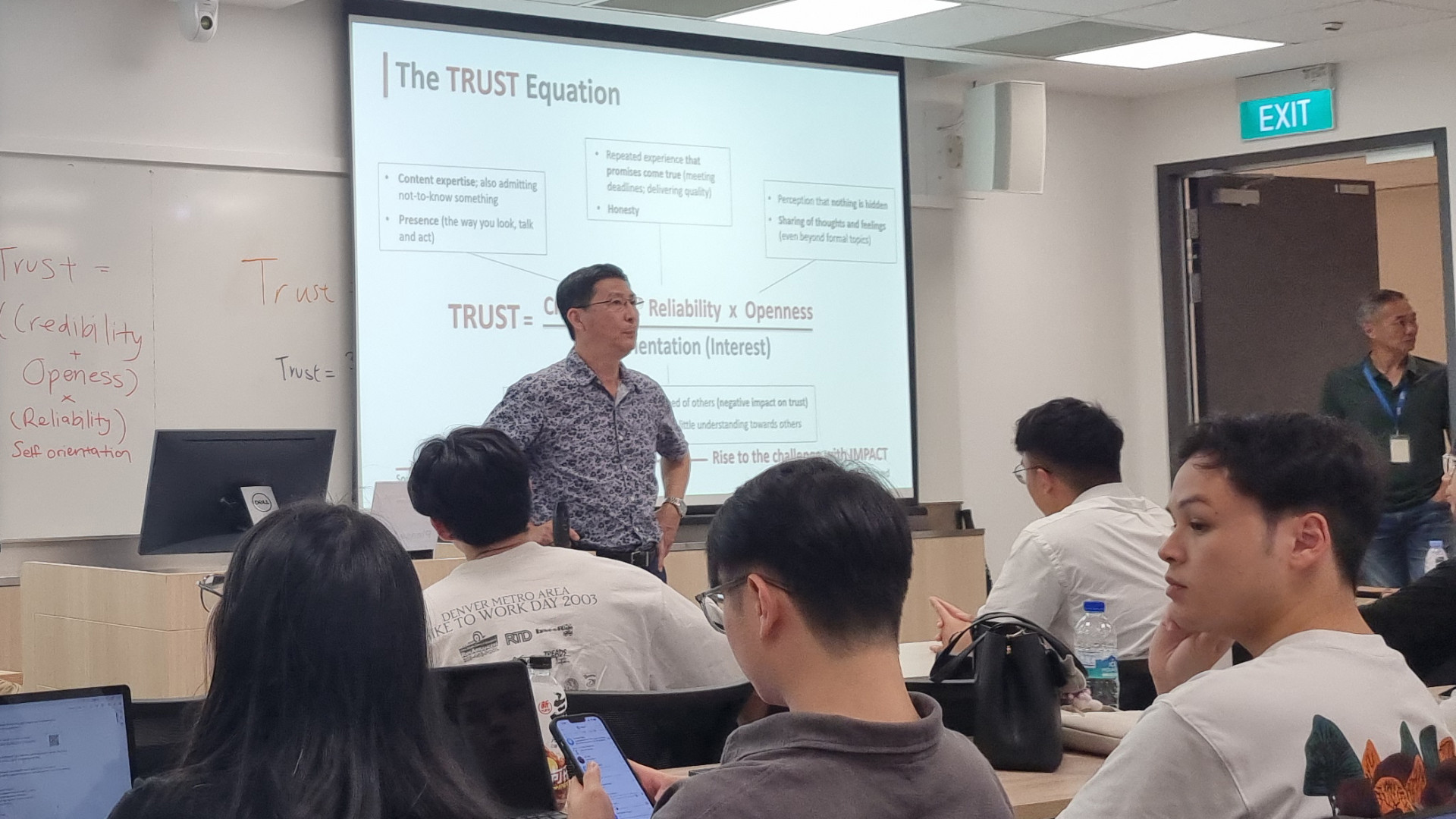
Over six weeks, the professionals teach and mentor students to build four pillars for a meaningful life: identifying one’s purpose, cultivating relationships, developing a strong moral compass, and creating a positive impact through servant leadership. The weekly three-hour seminars feature interactive lectures that draw on the mentors’ life experiences and resources like Harvard Business Review articles and McKinsey & Company studies, followed by group sessions in which the mentors share personal anecdotes and facilitate thoughtful discussions.
In its nearly five-year run at the Business School, this course has garnered enthusiastic reviews from students and an average course rating of 4.8 out of 5. Students say it teaches unique lessons that are hard to learn elsewhere, and the course’s value far exceeds the two academic units it adds to their degree transcript.
Final-year business student Nabil Kamaludeen candidly admits that he expected to learn “about as much as I would from watching a 20-minute TED Talk” but ended up taking away much more from the insightful content, activities, and advice. He still revisits some of the course handouts for personal reflection and goal-setting a semester later.
“This course gave me a new perspective to consider what is most important to us, and how these things or people can help us while we pursue our goals, such that we do not lose sight of the bigger picture – which is what we want to achieve in this life,” he said.
Having secured a job in investment banking ahead of her upcoming graduation, final-year student Hong Shanshan appreciated the industry-relevant advice from her mentor Mr Boey Yin Chong, a retired career banker who encouraged her to be open to exploring other divisions of banking beyond her initial choice. She also benefitted from a lesson on automatic negative thoughts, which helped her realise that she was not alone in experiencing them and she could learn to manage them effectively.
“This is a module where I truly learnt something, and the learnings go beyond the module,” said Shanshan. “The networking that you forge and the friends that you make will stay with you, and this is a very useful network to tap in the future.”
Compass@Campus organises annual conferences for programme graduates to grow their knowledge and network with alumni from other institutes of higher learning, and many alumni like Ms Cherie Lim (BBA 2022) keep in touch with their mentors after graduation, reaching out for advice or to share their achievements.
The people skills taught in the course have proved invaluable in her work and personal life for communicating effectively, building trust, and nurturing strong relationships, said Ms Lim, who is a communications associate at Google APAC. “People skills are super underrated and (once you learn them), they will carry you through the rest of your career,” she said. “You can learn about people skills and values on your own, but when you hear from mentors and different people, you can accelerate the learning process.”
Feedback like this prompts Professor Hum Sin Hoon, who has served as the course coordinator since 2019, to describe this course as “one of the most impactful classes” that he has ever taught. “Other things I teach are supply chain and operations management. They are worth teaching in the sense that they are skills and conceptual frameworks that help you when you graduate and go out to work. But this is something that impacts a person’s life beyond work and the job,” he said.
Lessons for life
Compass@Campus, the non-profit group behind the IMPACT Programme, comprises senior executives, professionals, and entrepreneurs who are passionate about developing future-ready servant leaders of integrity who will make a positive impact on society. The group’s partnership with NUS Business School started in 2017, and the programme was conducted four times as a standalone workshop series before it was converted in AY2019/20 to a credit-bearing course offered every semester.
An essential element of the course’s success is the warm and safe dynamic that the mentors nurture by conducting all sessions under the Chatham House Rule and candidly sharing about lessons learnt through their own mistakes. Shanshan noticed that this encouraged students in her class to open up about their personal experiences, such as the difficulties they may have faced during their internships.
“It felt like everyone was very comfortable to share what they went through, and people were there to listen. That was surprising to me, that this class created such a comfortable environment for people to step up and share,” Shanshan said.
Creating this environment takes vulnerability from the mentors, as well as good storytelling skills, said Mr Lee Chin Seng, one of about 25 mentors who have been involved in the course over the years.
“Mentors are not there to show off their medals but to show the wounds, the mistakes that they made,” said Mr Lee, who has a wealth of experience from his long HR career in various multinational companies including Cadbury and Mars Inc. “In return, we get students to pour their hearts out – their passions, their anxiety. We all go on a mentoring journey together.”
The mentors find the experience deeply fulfilling, and they take pride in helping young people navigate their life journeys. “Some of my early mentees have asked me to ‘screen’ their potential partners and I was invited to their wedding ceremonies. I’ve helped them in their first job search, and their career transitions as well,” Mr Lee said.
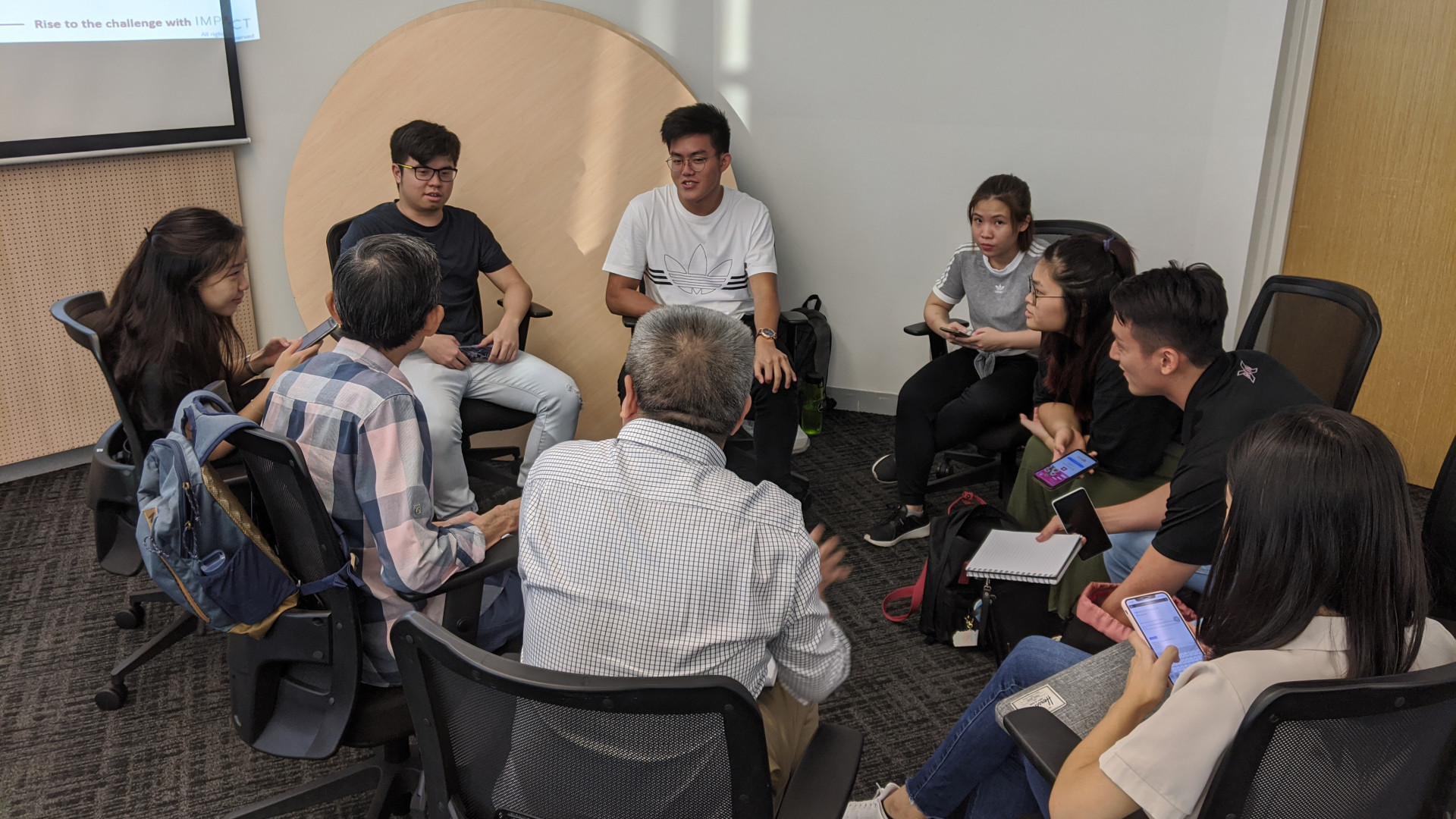
After each lesson, each student shares three things they learnt, two people they will share their lessons with, and one thing they would do differently. The mentors are especially heartened when the students’ answers reveal that the values taught in class are taking root.
For instance, many students recognised the need to improve their family relationships, with some vowing to go beyond a curt “ok” or “yes” to send more heartfelt replies to their parents’ WhatsApp messages.
Others take it a step further, like international students who make an effort to call their parents more often just to talk, not only when they need money, and students who pledge to organise a family dinner later in the same week to start cultivating stronger family bonds.
Said Mr Boey: “We want to hold onto the core values, because when times are volatile and things are crumbling, what do you hang onto? If you want to hang onto your friends, your family, and people close to you, how do you retain a purposeful outlook and connection? That’s what we hope to be able to impart.”
