


Celebrating 70 years of excellence in civil engineering: Partnerships charting the future of the built environment sector
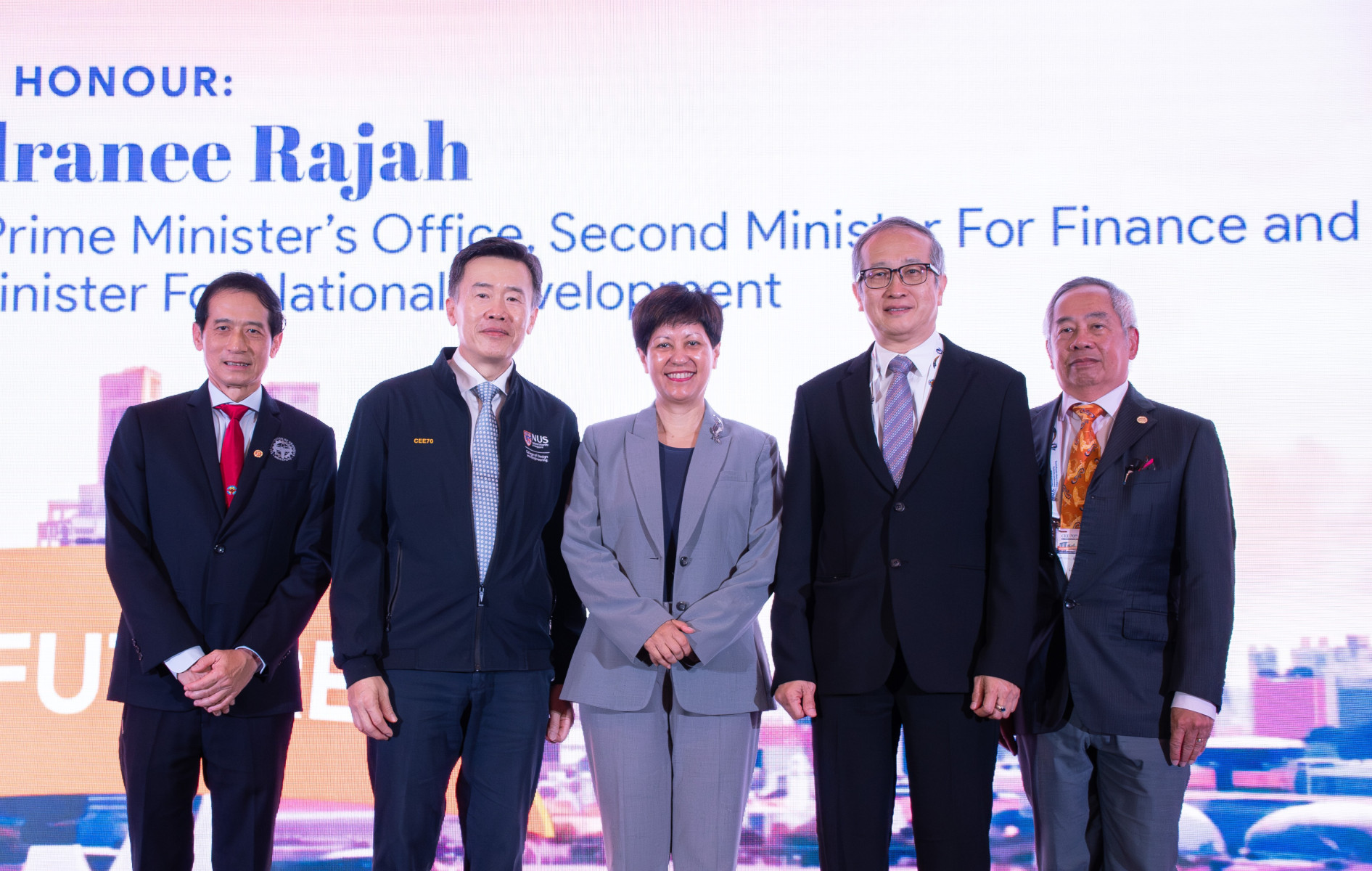
For seven decades, the Department of Civil and Environmental Engineering (CEE) in the College of Design and Engineering at the National University of Singapore has played a pivotal role in Singapore’s transformation and contributed to advancements in global engineering. To commemorate this significant milestone, CEE organised the 70th Anniversary Symposium 2025 on 10 October 2025, in partnership with the Professional Engineers Board (PEB) and The Institution of Engineers, Singapore (IES).
Held at the Marina Bay Sands Expo & Convention Centre, the event brought together partners from the government and industry sectors, as well as students from primary and secondary schools, pre-university institutions and polytechnics.
Comprising three components – the symposium, an exhibition and a student fair – the event provided a unique platform where academia, government, and industry came together to share perspectives and innovative solutions, explore collaborative approaches and excite young talents who will shape the future of the built environment sector.
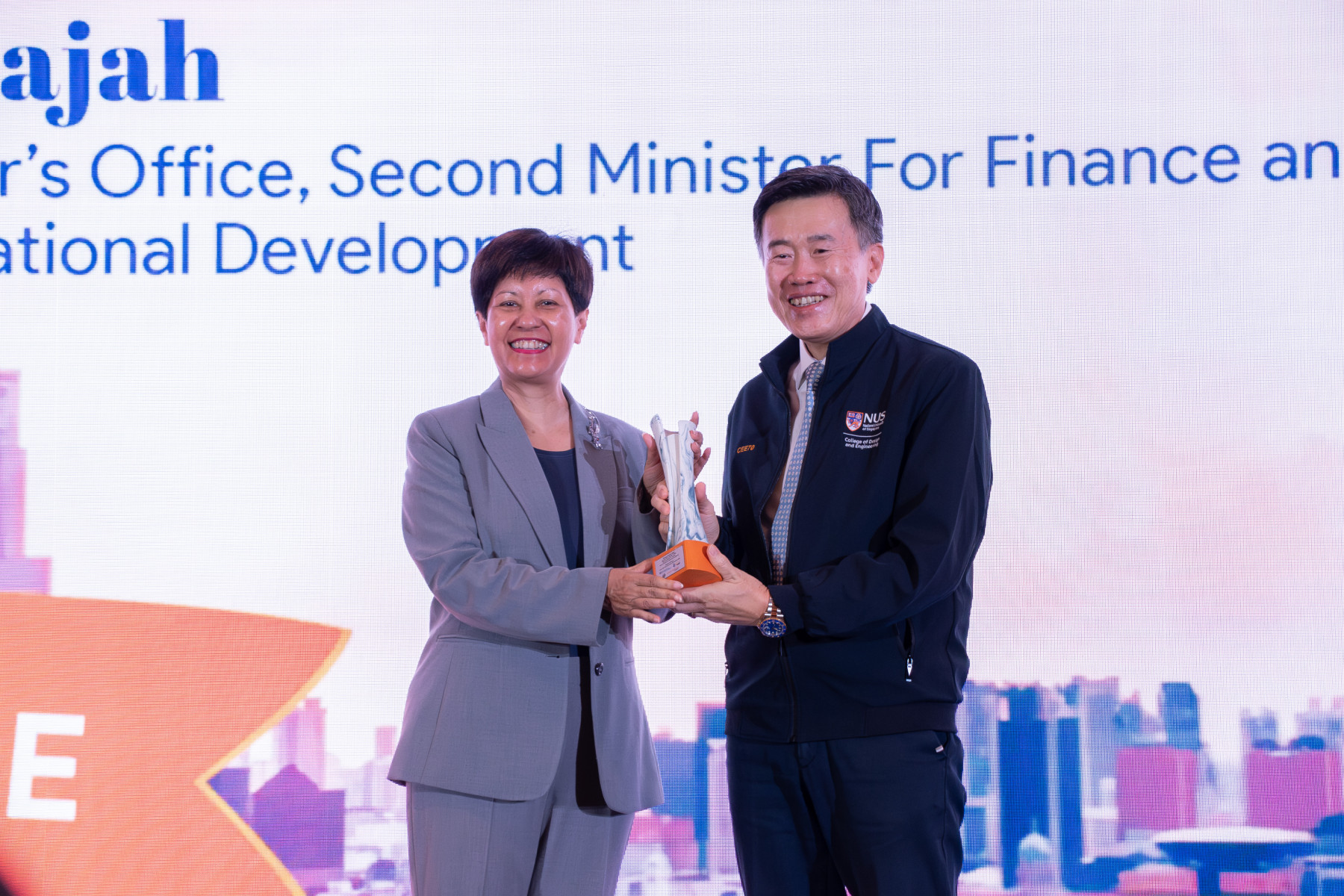
Guest-of-Honour Ms Indranee Rajah, Minister in the Prime Minister’s Office and Second Minister for Finance and National Development, said, “As we face challenges like climate change and resource scarcity, the role of civil and environmental engineers has never been more critical – or more exciting.” Highlighting that built environment professionals “shape how we live, work, and play” and their work “creates the infrastructure that connects communities, and the solutions that protect our environment”, Ms Rajah discussed the various efforts to uplift the built environment sector.
Professor Teo Kie Leong, Dean of the College of Design and Engineering at NUS, expressed his appreciation to CEE’s partners for their unstinting support. “Together, we have nurtured talent, advanced innovation, and shaped Singapore’s built environment into one we can all take pride in,” he said.
“Singapore has been our living laboratory and our shared mission – to engineer a safe, sustainable, and resilient home for generations to come. Today’s symposium reflects that mission and our direction forward,” said Professor Richard Liew, Head of CEE. He added that CEE remained committed to three key thrusts, namely, education, research, and engagement, over the next decade.
A resilient, sustainable and innovative Singapore
The symposium featured speakers from key agencies in Singapore's built environment sector — namely, Building and Construction Authority (BCA), Housing & Development Board (HDB), PUB, Home Team Science and Technology Agency, Land Transport Authority, Urban Redevelopment Agency, and JTC Corporation — who shared important milestones achieved, addressed the current challenges facing the industry, and outlined strategies to build a more resilient and sustainable future for Singapore.
The concluding session of the symposium featured academic and industry leaders discussing the innovative strategies and collaborative approaches necessary for the sector to advance and succeed in an increasingly complex and evolving environment.
As part of his symposium lecture, Associate Professor Raymond Ong from CEE outlined the research directions that will help tackle current and future challenges. His focus was on sustainability and green technologies, robotics and automation, as well as intelligent sensing and autonomy within the built environment. Additionally, he emphasised the importance of developing industry capabilities in the context of an ageing infrastructure and an ageing society.
Innovation comes alive
An interesting highlight of the event was an exhibition featuring key innovations that shaped Singapore today and will drive the nation’s progress into the future. Among the exhibits were:
Green cement and 3D printing (CEE)
This technology pushes the limit of recycling percentage in cement, relying solely on local waste. This innovation not only reduces the carbon footprint of the built environment and wastes destined for Semakau but also reflects CEE’s strong commitment to advancing green and sustainable technologies.
Periodic inspection and defect detection of coastal infrastructure using autonomous underwater vehicles (CEE, BeeX and Delta Marine Consultants)
A groundbreaking approach to enhance the monitoring and protection of Singapore’s coastal infrastructure is the deployment of advanced Hovering Autonomous Underwater Vehicles (HAUVs) to conduct precise and thorough inspections of submerged structures, reducing reliance on human divers and lowering inspection costs. This innovative solution aims to set a new standard for coastal protection, ensuring the long-term safety and resilience of Singapore's shores.
Centre for Resource Circularity and Resilience (CEE)
A series of low-carbon cement, carbon-mineralised aggregates, and aggregates developed from 100 per cent local wastes could be used to address the waste and resource challenges of Singapore. These innovations offer sustainable pathways to upcycle large volumes of excavated marine clay from upcoming megaprojects, turning what was once waste into high-value construction resources.
First on-site 3D printed concrete building (CEE and Woh Hup)
The Norwood Grand Project, located at Champions Way, is Woh Hup’s first on-site 3D concrete printing project in Singapore approved by BCA. CEE researchers contributed their expertise in materials engineering and structural performance, ensuring adherence to local standards while integrating cutting-edge technology.
Inspiring future engineering talents through fun and play
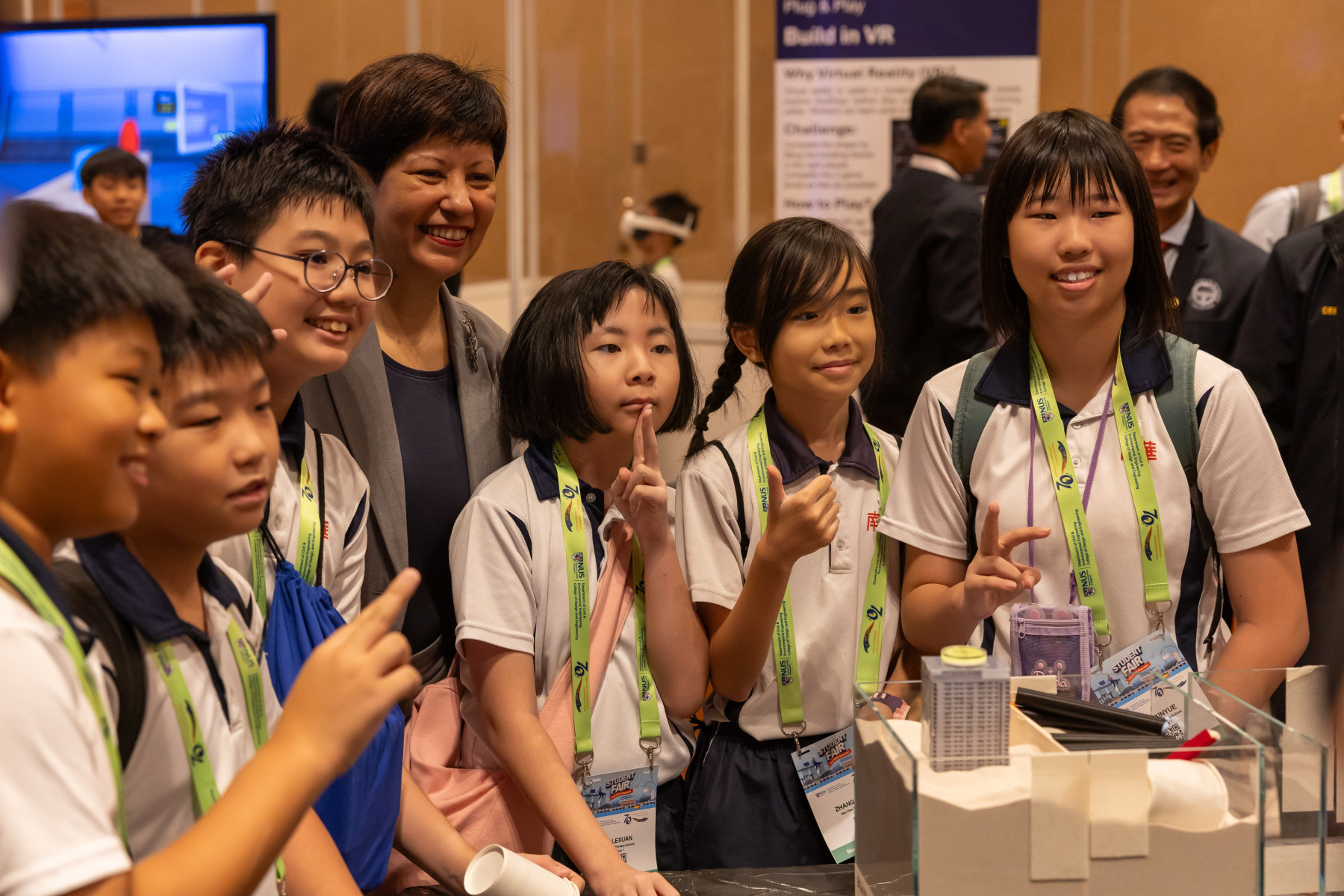
Close to 300 students from around 30 primary and secondary schools, pre-university institutions and polytechnics participated in the student fair, which was designed to immerse students in the world of engineering. These students had the opportunity to engage in a variety of hands-on activities, dynamic interactive demonstrations and connect with engineers as well as young professionals.
These experiences were tailored to spark curiosity and enthusiasm, encouraging students to explore the principles of engineering in action while discovering how these concepts apply to real-world situations, from desalination to tunnelling to protecting Singapore’s shores.
