


Contributing to the management and restoration of Singapore’s forests
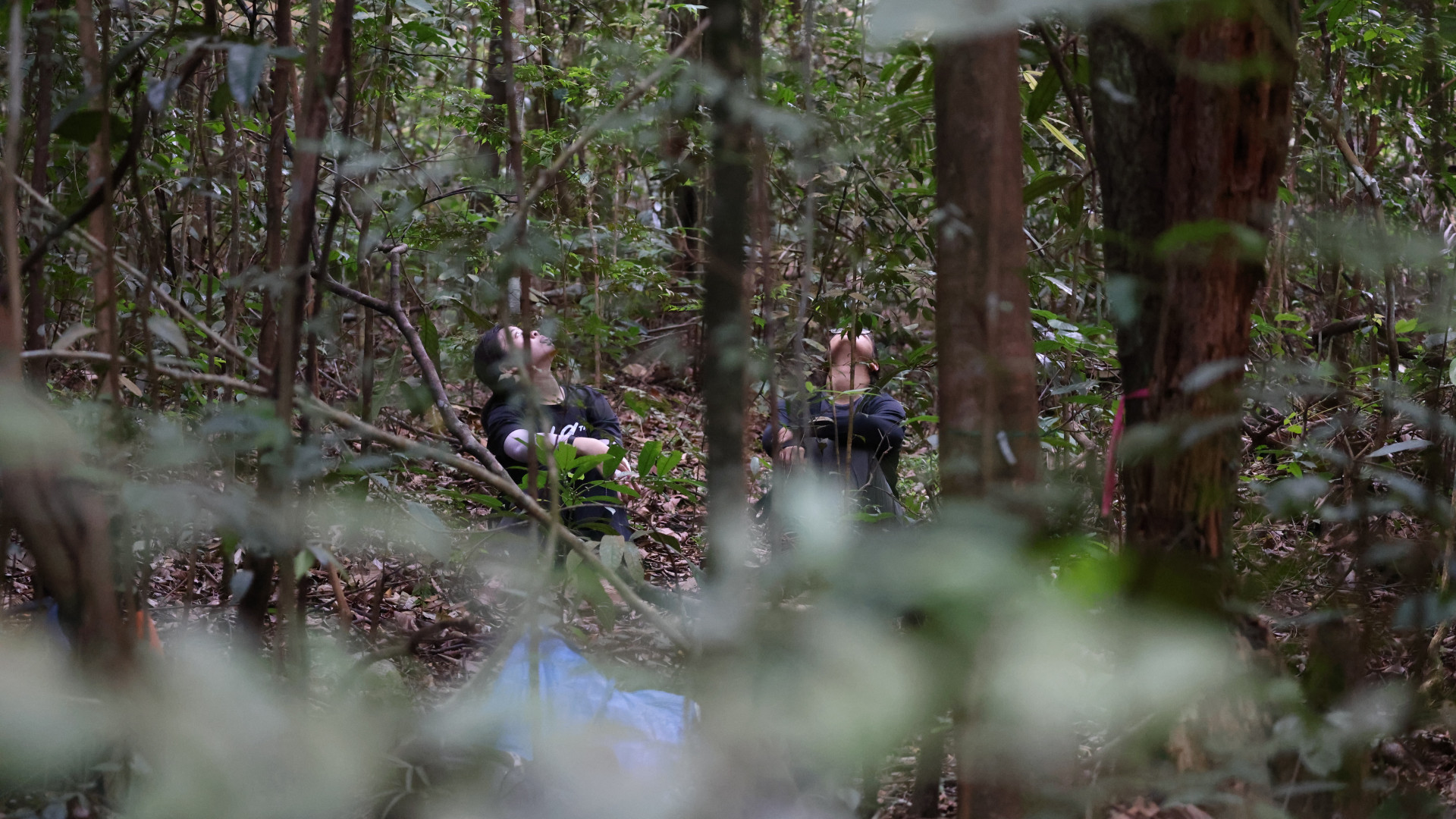
Two research projects by NUS researchers, in collaboration with experts from the National Parks Board (NParks), reveal new insights into Singapore’s forests which can enhance management and restoration initiatives. The research projects are under NParks’ Tropical Forest Ecology Research (TFER) programme established in March 2021. The TFER programme coordinates and advances forest ecological research in Singapore, with the overall aim of informing forest management strategies and policies in Singapore and the region.
Largest-ever survey of flying insects in Singapore’s forests
One of the projects, a collaborative study between the Plant Ecology, Evolution, and Biogeography (PEEB) Lab at the NUS Department of Biological Sciences (DBS), NUS Lee Kong Chian Natural History Museum (LKCNHM) and NParks, set out to establish the first comprehensive ecological baseline for Singapore’s insect communities for long-term monitoring efforts, and represents the largest-ever survey of insect diversity in Singapore’s forests. The study was a collaboration between Assistant Professor Lim Jun Ying and doctoral student Ms Angelica See from NUS DBS and the Centre for Nature-based Climate Solutions (CNCS) at the NUS Faculty of Science, and Dr Hwang Wei Song, Senior Lecturer and Curator of Insects at LKCNHM.
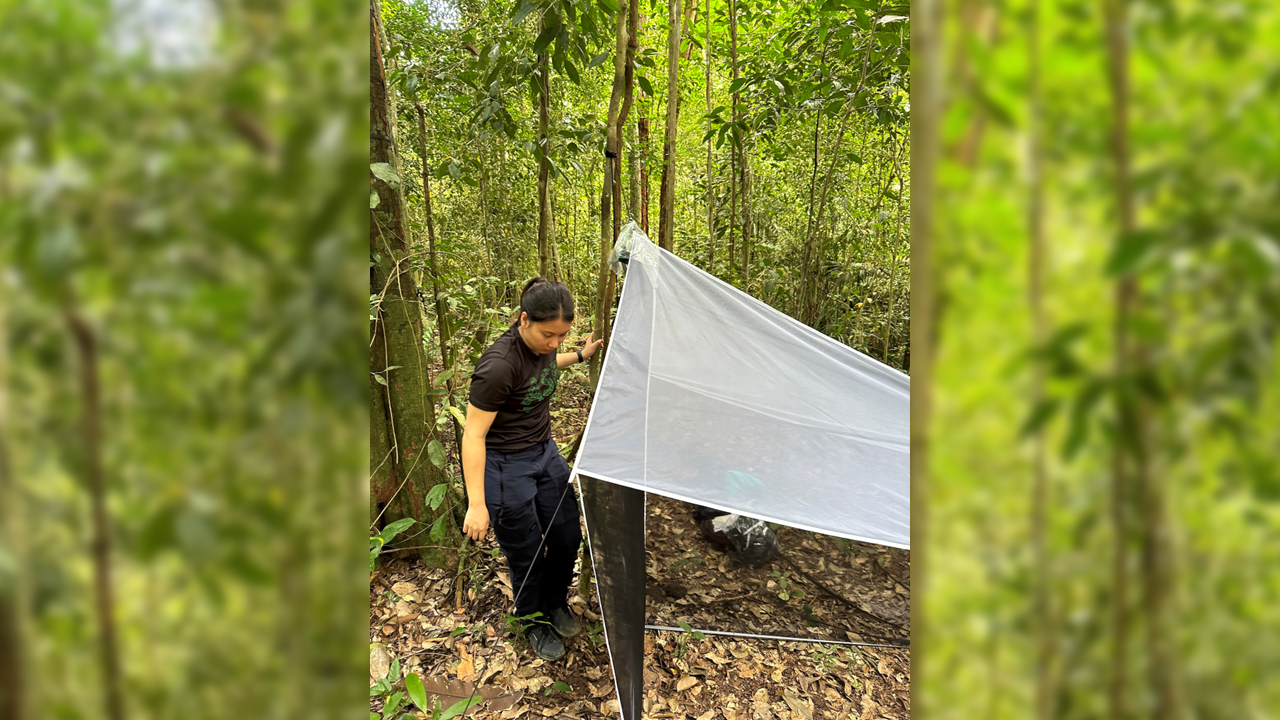
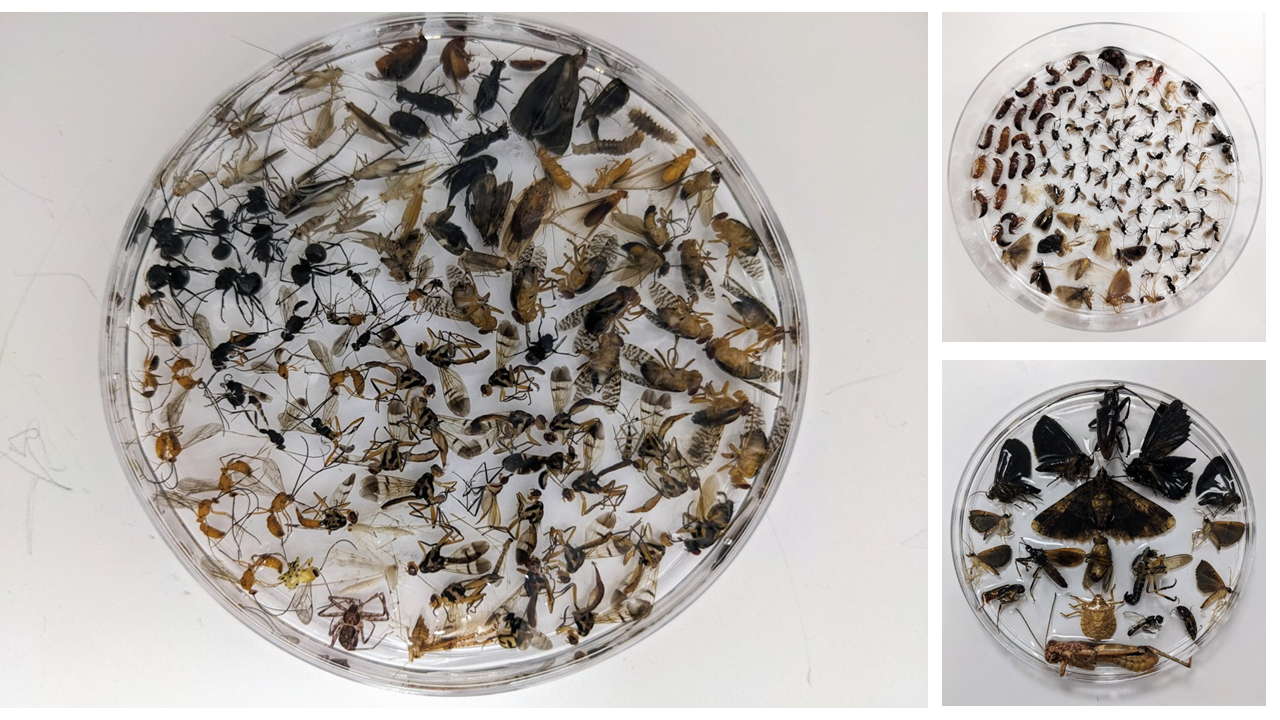
Using Malaise traps to collect insects from the forest understorey and DNA metabarcoding to analyse the samples, the researchers recovered approximately 140,000 unique insect DNA sequences. Many of these likely represent species new to science, with flies and wasps accounting for the majority of the diversity detected. Although often overlooked because of their small size,insects form the foundation of healthy forest ecosystems. They serve as food sources for other animals, break down organic matter as decomposers and support plant reproduction as pollinators.
By providing an unprecedented snapshot of Singapore’s insect biodiversity, the study establishes a critical benchmark for detecting future changes in forest health and strengthens efforts to conserve the ecological integrity of the nation’s remaining forests.
Plant-frugivore interactions: Uncovering the ecological relationships that support tropical forest regeneration
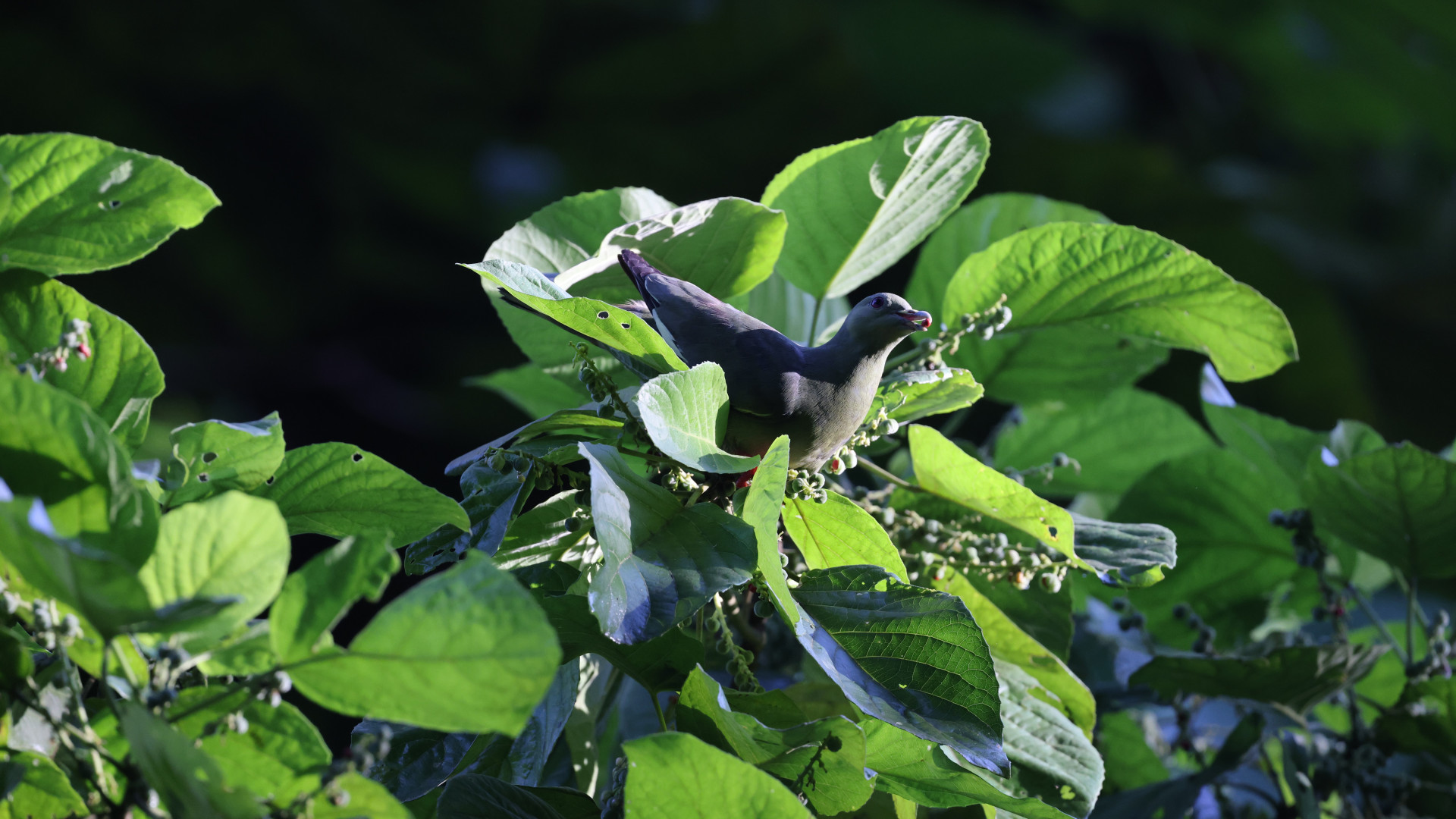
Ms Fung Tze Kwan, a doctoral student at NUS DBS and CNCS, led a research team that collaborated with NParks to establish the first plant-frugivore interaction network for Singapore’s forests. This pioneering study investigated how fruit-eating animals and fruiting tree species contribute to forest regeneration, identifying functionally important seed dispersers, key food plants, and rare frugivorous bird species of conservation concern.
The 18-month field research study, which involved visual tree watch surveys and camera trapping, documented more than 1,075 plant-frugivore interactions, encompassing 21 tree species and 45 fauna species. Network analysis revealed that common fruit-eating animals play key roles in plant-frugivore interactions that underpin seed dispersal and natural regeneration in Singapore's forests. These findings highlight the intricate interdependencies between plants and animals that support biodiversity and forest resilience.
In the long run, the findings will inform the selection of tree species for planting under NParks’ Forest Restoration Action Plan and strengthen the formulation of targeted biodiversity conservation strategies for endangered and key frugivorous species. Beyond these applications, the study provides a valuable foundation for future research in Singapore and the region by establishing a baseline dataset, survey protocol, and local research capacity for studying plant–frugivore interactions.
This study was funded by the Hongkong and Shanghai Banking Corporation Limited, Singapore (HSBC), the Lady Yuen Peng McNeice Graduate Fellowship, and The Singapore Institute of Biology (SIBiol) Research Trust Fund.
Read more about the studies here.
