


Prof Alexander Ling from CQT selected as Distinguished International Associate by the UK’s Royal Academy of Engineering
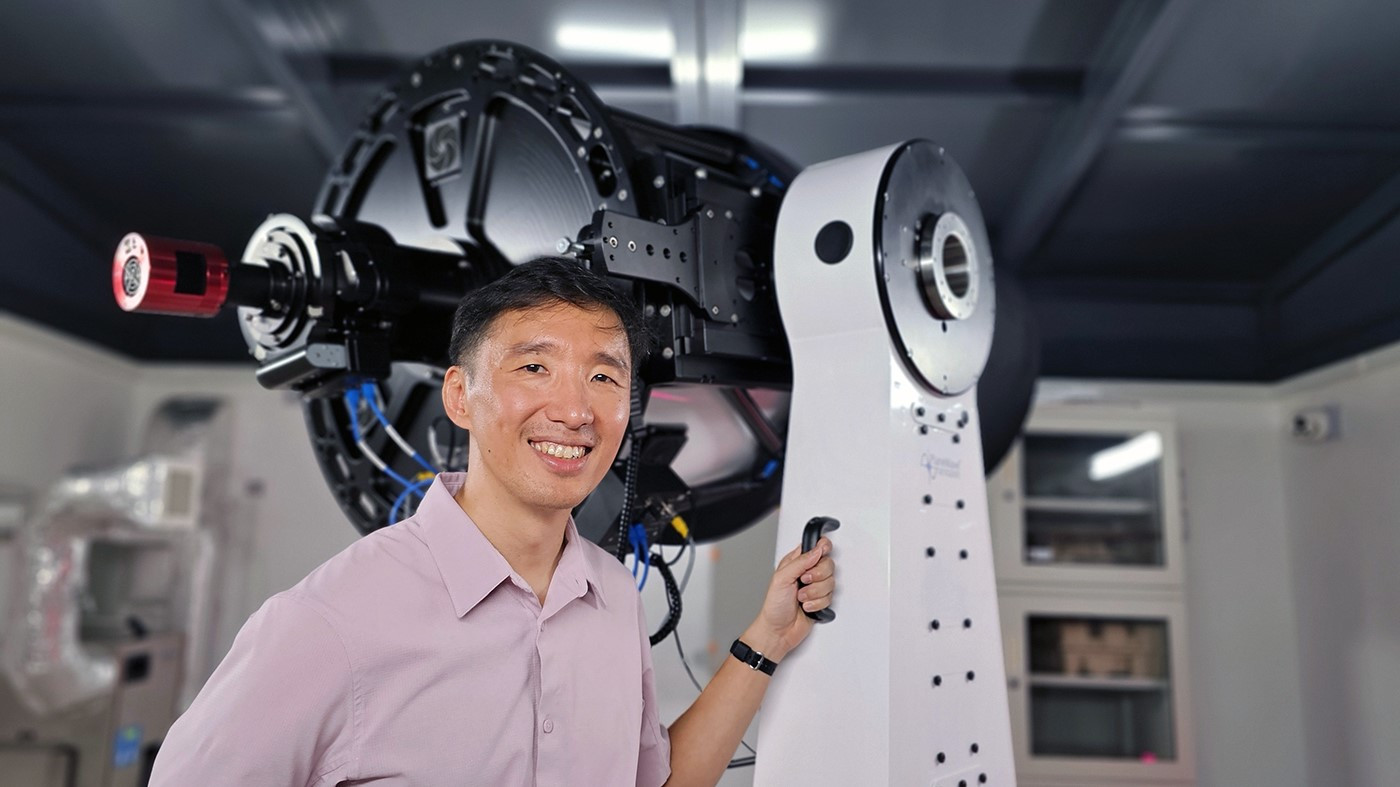
Professor Alexander Ling, a Principal Investigator from the Centre for Quantum Technologies (CQT) at the National University of Singapore (NUS), has been named Distinguished International Associate (DIA) by the United Kingdom’s (UK) Royal Academy of Engineering for his strong track record of work in quantum communication and quantum networking. He is among 10 researchers and the sole awardee in Singapore selected for the 2024 DIA programme, which provides a grant to support his collaborations with UK scientists on quantum space technologies for one year from May 2024.
The DIA programme celebrates exceptional engineers who are making significant advances in research or innovation across all sectors and have existing connections to the UK. The fourth round of the DIA programme focuses on the theme of “Technologies for the Future” to contribute to the Academy’s goals of building a sustainable society and inclusive economy.
Groundbreaking research in quantum technologies
In 2019, Prof Ling’s team launched SpooQy-1, a 2.6kg quantum nanosatellite, into orbit 400km above Earth. The novel shoebox-sized nanosatellite, much lighter than its 600kg predecessor – the Chinese Micius satellite, could create entangled pairs of photons in a compact instrument onboard the device. It aims to lay the foundation for a global quantum internet connecting quantum machines together, which is beyond the capabilities of current fibre infrastructure.
The DIA grant will support Prof Ling’s ongoing project to extend the range of entangled light distribution and work towards an international quantum network. It will also support his existing collaboration with Dr Daniel Oi, an expert in quantum communication protocols from the University of Strathclyde. Together, they aim to build an international consortium that will propose standards for satellite quantum communications to stakeholders globally. NUS and the University of Strathclyde signed a Memorandum of Understanding in 2022 to enable their own optical ground stations to communicate with each other’s satellites.
Prof Ling will also use the grant to strengthen collaborations with other UK-based quantum teams. He hopes to engage with stakeholders in the UK on the responsible use of quantum technologies in space.
Read more here.
