Focus on mastering a craft to stand out in a tighter job market: Minister Ong Ye Kung
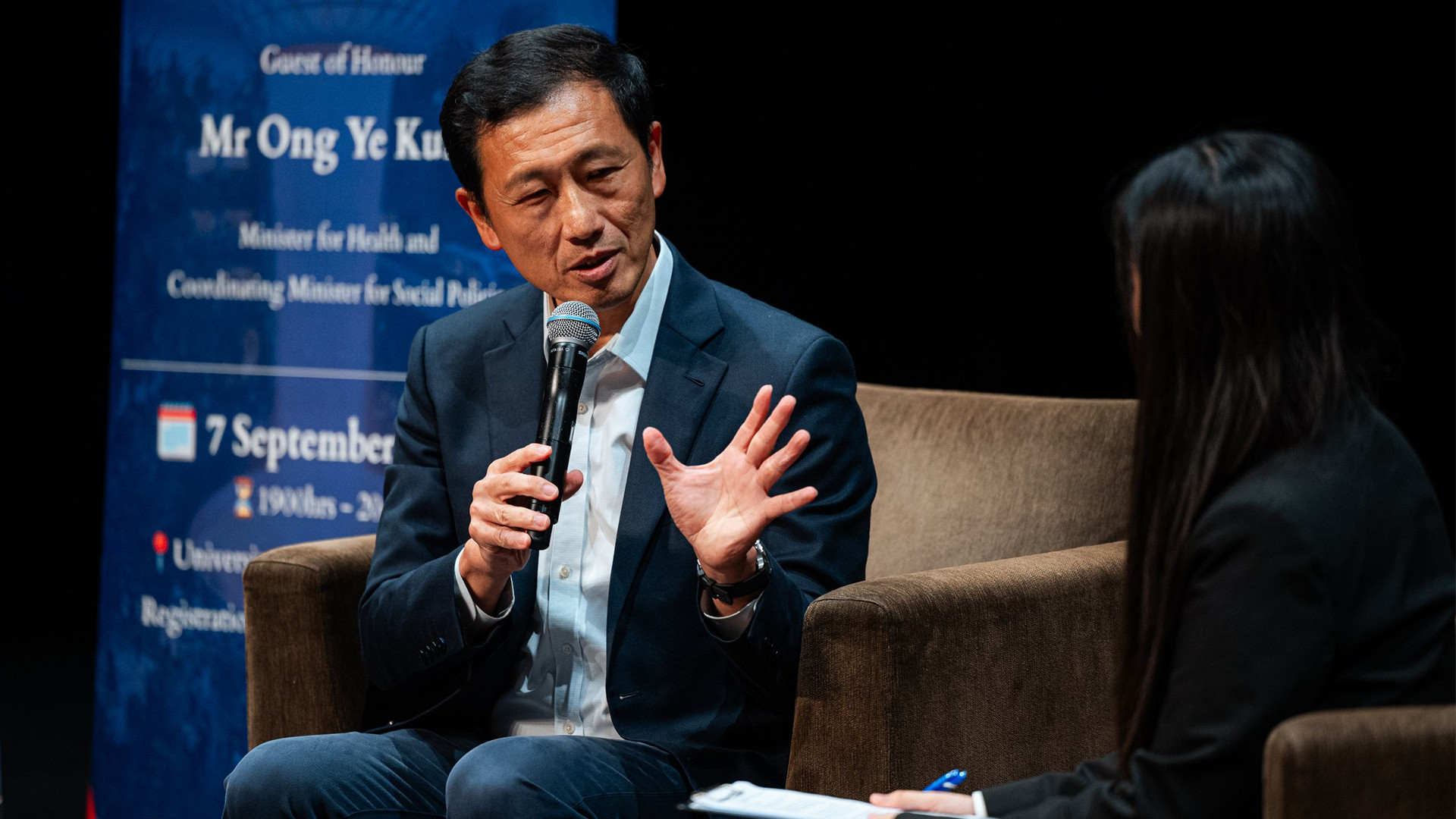
In a tighter graduate job market, developing mastery of one’s craft — rather than simply accumulating internships and credentials — can help young people stand out, said Mr Ong Ye Kung, Minister for Health and Coordinating Minister for Social Policies.
Speaking at the Kent Ridge Ministerial Forum (KRMF) 2026, Mr Ong urged young people to remain confident about Singapore’s economic prospects, tap on the support available to them and focus on building expertise for the long term. He also called on employers to help cool an escalating hiring “arms race” by looking beyond grades and internship counts to recognise candidates’ potential and broader life experiences.
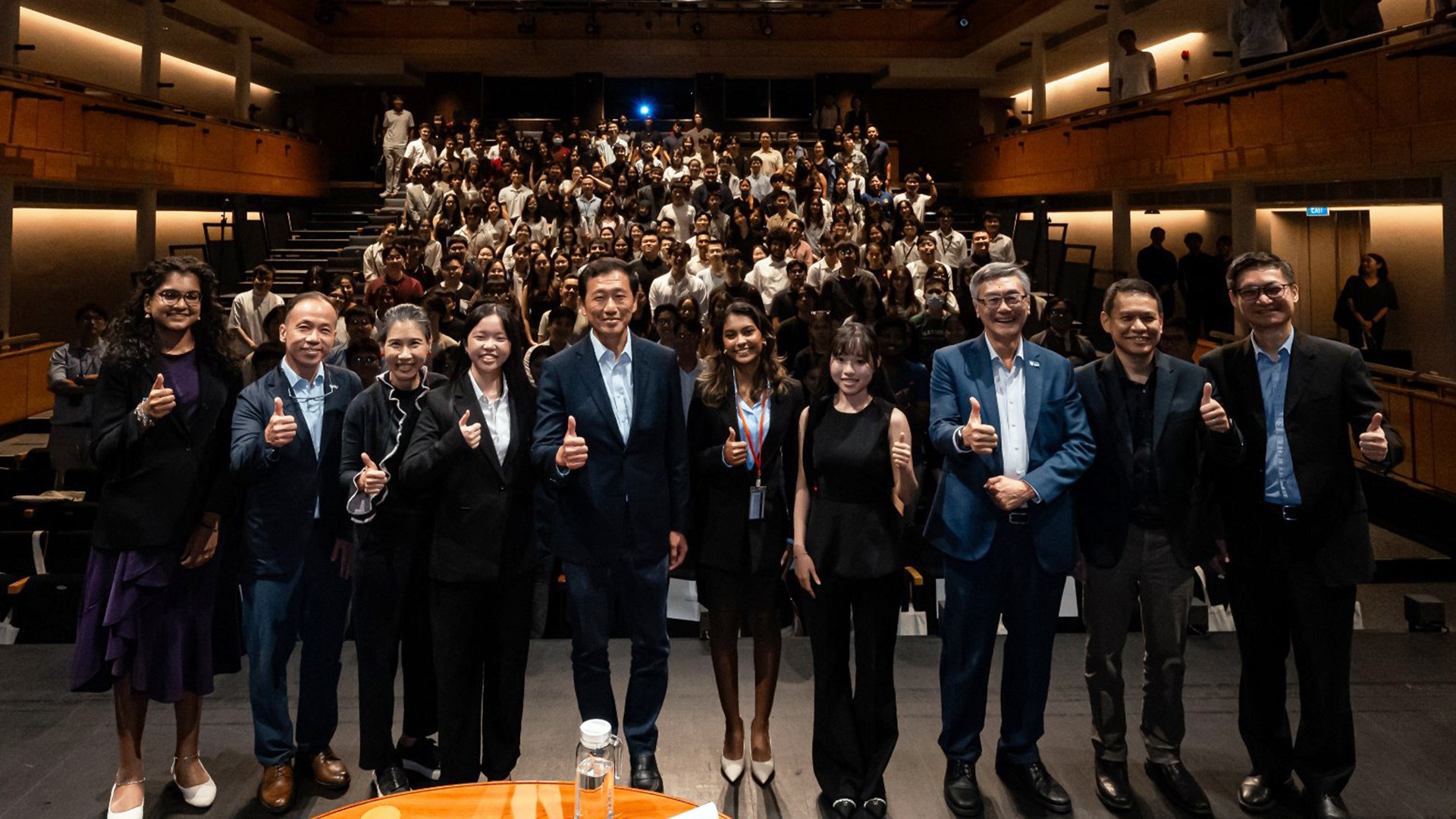
Organised by the NUS Students’ Political Association (NUSPA) at the University Cultural Centre, the event on 7 September 2026 drew about 250 students from various tertiary institutions across Singapore.
The “arms race” and “broken ladder syndrome”
Mr Ong acknowledged the anxieties facing graduates today: some are stacking multiple internships and sending out hundreds of CVs, only to find themselves screened by AI before they meet a human recruiter.
Citing the Graduate Employment Survey data, Mr Ong noted that the proportion of graduates who secured employment within six months of graduation had declined from about 93 per cent in 2023 to 89 per cent in 2025, reflecting a more competitive job market. But attributing this simply to AI, he cautioned, would be an oversimplification.
When he graduated in the 1990s, about one in five students made it to university. Today, it is one in two. While lauding the greater access to higher education for Singaporeans, he noted, “A degree remains valuable, but it distinguishes you less than before.”
This is why, in addition to grades, employers now look at internship experience to distinguish among applicants, he added.
This can create a self-reinforcing loop: as students accumulate more internships and credentials to stand out, employers look for further ways to differentiate candidates, prompting students to do more, in what Mr Ong described as a hiring “arms race”.
AI is adding another dimension. By automating some of the structured, routine tasks traditionally performed by new hires, it may raise the baseline expectations placed on fresh graduates. Mr Ong called this the “broken ladder syndrome”: the career ladder remains, but some of its lower rungs are being automated, requiring new hires to take a bigger first step.
He cautioned that employers should pay attention to the implications, as these early-career tasks have traditionally helped young workers learn the ropes and build professional competencies.
The biggest competitive edge
Against this backdrop, Mr Ong encouraged graduates to focus on building mastery, with genuine expertise becoming more valuable than ever before.
“This means finding an area that you care about, going deep into the craft, and working at it for the long haul,” he advised. “It may or may not be the course that you are studying, but you have to find something you are prepared to invest in and go through some difficulty learning it.”
“A mastery of your craft will define you as a professional and become your biggest competitive edge…mastery is what sets you apart and will be more valuable than before.”
On this note, Mr Ong also encouraged graduates to keep an open mind about their first job, even if it does not tick every box. Early in one’s career, he said, the opportunity to learn and build a strong foundation should weigh heavily alongside considerations such as salary and work-life balance.
“Your first job is a starting point, not a settling point,” he said, adding that an imperfect opportunity could still provide a platform from which to build towards longer-term goals.
Fortunately, graduates have a strong, ever-evolving support system to tap on. Mr Ong noted that Singapore’s tertiary institutions have continued to update their curricula with industry input, incorporate more real-world and interdisciplinary teaching, and build data and AI fluency among students. University career offices are also playing an active role in connecting graduates with employment opportunities.
At the same time, the wider employment ecosystem is stepping up, with career fairs connecting graduates directly with employers. The new Skills and Workforce Development Agency is also expanding support for job seekers through career guidance, job matching and training.
With these pillars in place, graduates should reconsider the efficiency of sending out hundreds of CVs. Instead, they should focus on industries, roles and organisations that genuinely interest them.
But easing the pressure on graduates is not their responsibility alone — employers also play an important role in preventing hiring from becoming an ever-escalating “arms race”.
Without lowering hiring standards, employers could look more holistically at candidates and recognise experiences beyond conventional measures such as grades and internships, he said. Competitive sport, the arts, volunteering, caregiving and other life experiences can reveal qualities such as resilience, initiative, discipline, empathy and work ethic.
A dynamic economy, not a declining one
While acknowledging the uncertainty created by AI and a more competitive employment landscape, Mr Ong urged young people to remain confident about the future.
Pointing to continued investment by multinational and local companies, as well as major infrastructure projects, he said Singapore remained competitive, continued to attract investment and was still creating jobs.
His conversations with people across different professions also suggested that, for now, AI is more often replacing specific tasks than entire jobs. In other words, it is reshaping work and, in some cases, enabling people to do more.
This is reason for optimism. Borrowing a Gen Z expression for being doomed, he drew laughter when he told the students: “So you are not cooked.”
Ultimately, navigating uncertainty is about focusing on what one could do in the present, he said: seizing opportunities, continuing to learn and investing in mastery.