


Health District @ Queenstown opens first community engagement hub to co-design a healthier future with residents

The Health District @ Queenstown (HD@QT) has officially opened its first community engagement hub at Block 40 Margaret Drive, further advancing its mission to build a healthier, more inclusive community. This hub, situated in the heart of Queenstown, serves as a collaborative space to empower residents to lead healthy and purposeful lives throughout their life journey.
Mr Eric Chua, Senior Parliamentary Secretary for the Ministry of Culture, Community and Youth and the Ministry of Social and Family Development, and Member of Parliament for Tanjong Pagar GRC (Queenstown), opened the community engagement hub today, welcoming its first visitors from Queenstown.
Professor John Eu-Li Wong, Co-Chair of the HD@QT Steering Committee, highlighted the significant role of this new connection point in fostering resident engagement to promote purposeful and sustainable longevity. “The community engagement hub is part of our commitment to support residents and build communities. By bringing the initiatives of the Health District @ Queenstown closer to residents, we aim to co-develop programmes which improve physical, mental and social well-being – the pre-requisites for healthy longevity. We hope to develop several hubs across Queenstown once we learn how this one benefits residents,” he said. Prof Wong is also the Executive Director of the National University of Singapore (NUS) Centre for Population Health and Senior Advisor of the National University Health System.
HD@QT is a multi-stakeholder, whole-of-society endeavour spearheaded by NUS, the National University Health System and the Housing & Development Board, to increase healthy longevity, enable purposeful longevity, promote intergenerational bonding, and support a community of all ages.
Collaborative innovation for healthy, purposeful longevity
The name of the new space, “Come4TeaLah!”, was also announced at the opening. Inspired by the space’s location at Block 40 (“4Tea”), the friendly, community-centric name was the winning entry in a naming competition where close to 70 residents proposed names for the space.
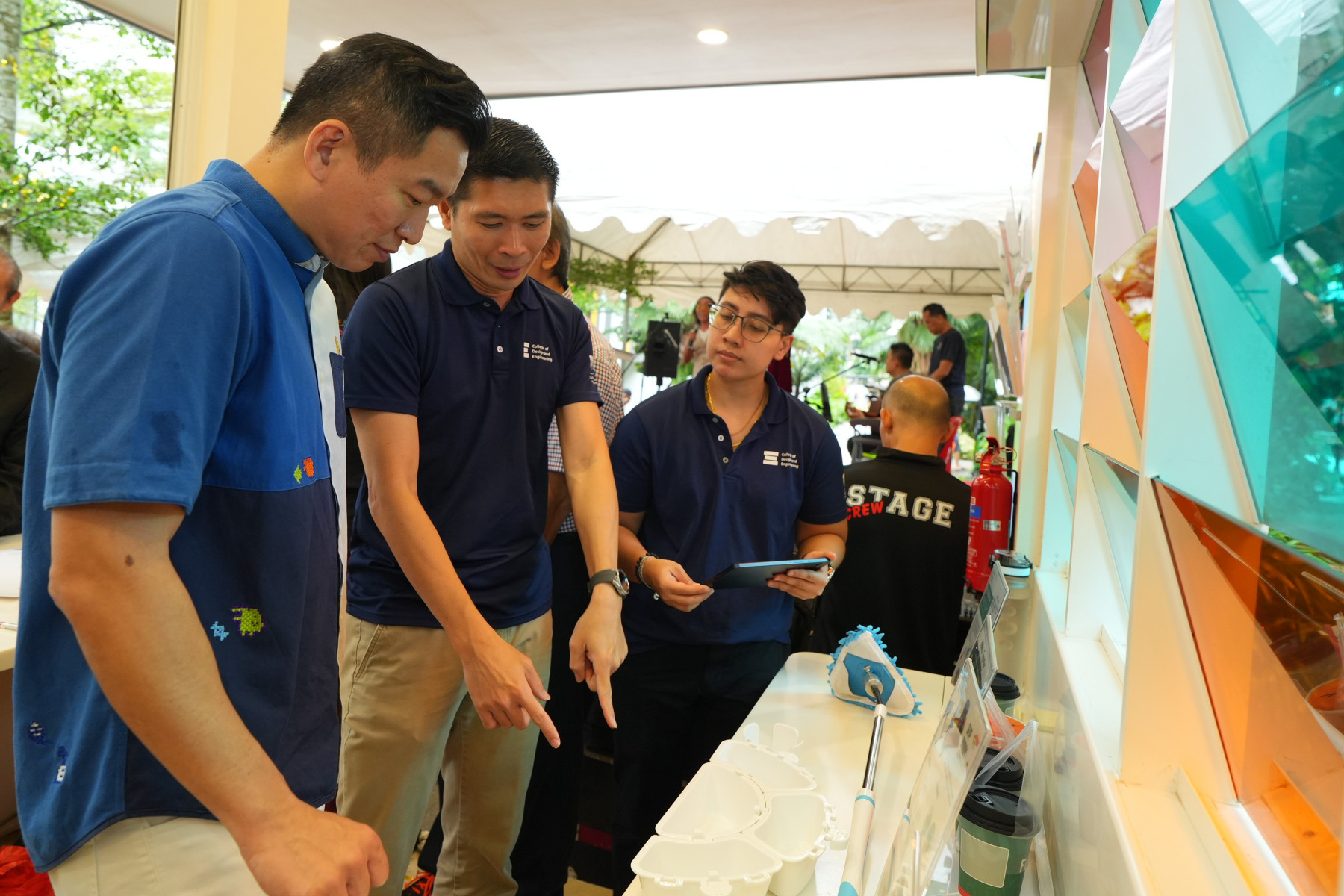
Nestled between the park connector and the Food Hub at 40 Margaret Drive, the new community space is located within an area with high resident footfall. Its welcoming vibrant neon colours and semi-open concept was the collaborative brainchild of the NUS Centre for Population Health, Department of Architecture at the College of Design and Engineering in NUS, Housing & Development Board, ARC Studio Architecture + Urbanism, and Moderna Homes, created through focus group discussions with residents. Funding for the development of this hub was made possible through the support of the Widjaja family.
“We see Come4TeaLah! as a social catalyst. The presence of this colourful little icon has the potential to form a node around which community life can flourish,” commented Ms Belinda Huang, Director and Co-founder of ARC Studio Architecture + Urbanism.
The community engagement hub will serve as a dedicated space for:
- Learning: Information about the programmes under the HD@QT will be shared through activities hosted here, aimed at inspiring healthier lifestyles.
- Interaction: A welcoming venue for people of all ages to connect and build meaningful relationships. Residents, researchers, and community stakeholders will exchange ideas and collaborate.
- Co-creation: Residents will co-develop programmes that promote healthy longevity, intergenerational bonding, and social inclusion.
Besides hosting workshops, events, and consultation sessions, Come4TeaLah!, which will be managed by members of the HD@QT team together with volunteers, will pilot innovative programmes that, if successful, can be expanded and introduced to other estates.
Elaborating on the potential of this vibrant community space, Mr Khoo Peng Beng, Director and Co-founder of ARC Studio Architecture + Urbanism, said, “It would be amazing to get the architecture and art communities involved in designing events that promote health and well-being. We could have collaborative workshops, public art installations, and even do some research on how design impacts our health. Imagine creating a whole ecosystem around the Come4TeaLah! that supports our physical and emotional well-being – it's a very exciting idea!”
A shared commitment to a healthier future
Associate Professor Emi Kiyota, Deputy Executive Director of the NUS Centre for Population Health, highlighted the important role of community partnerships. “This community engagement hub symbolises a shared vision of inclusion and collaboration. It is a space where residents, stakeholders, and researchers can come together to co-create solutions tailored to Queenstown’s unique needs. We are excited to see this initiative bring people of all generations closer, fostering connections and a sense of purpose.”
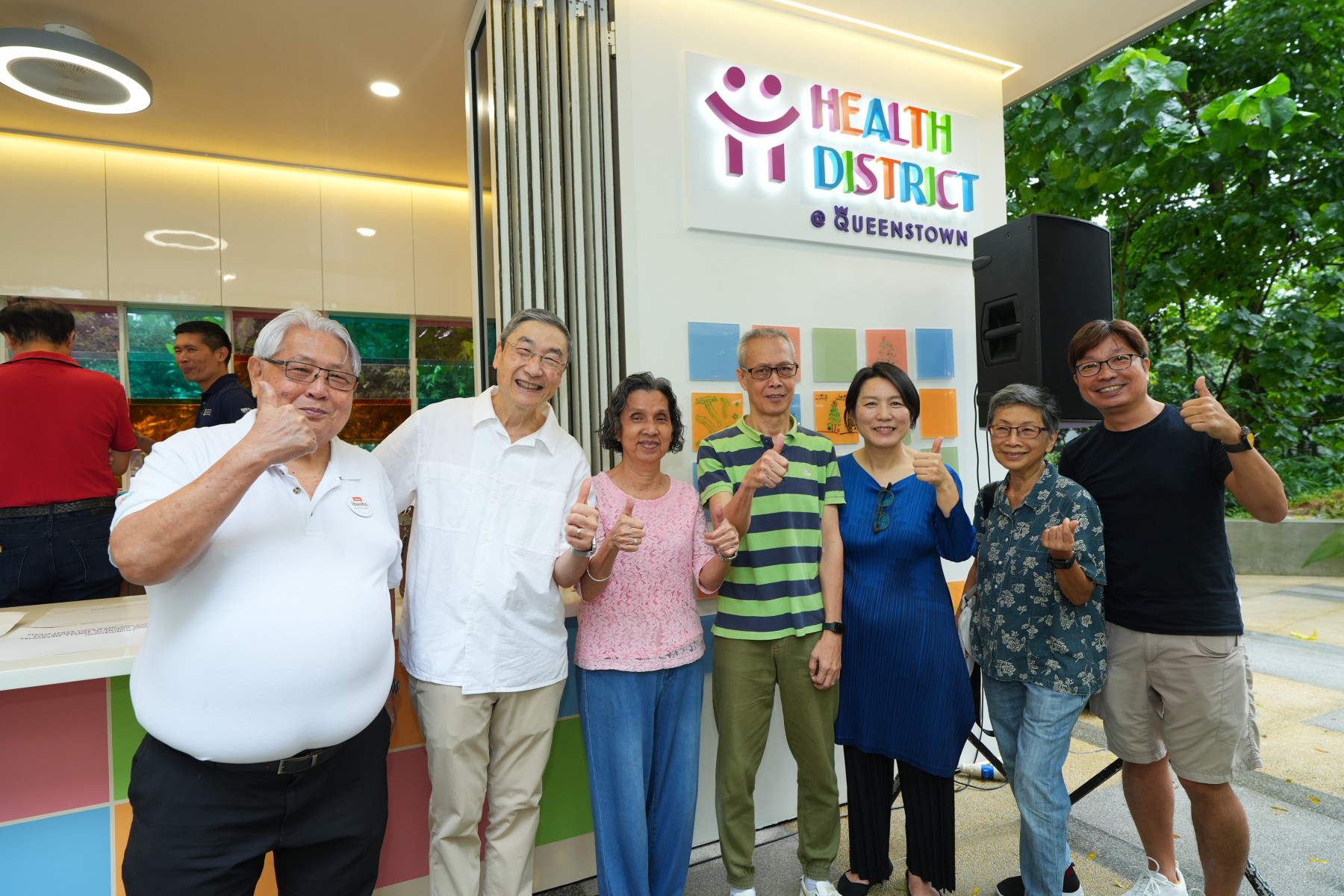
Queenstown resident 71-year-old Stephen Teo looks forward to joining the activities at Come4TeaLah!. “I’m eager to be part of the Health District @ Queenstown initiative because I believe in the power of community. Volunteering allows me to connect with others and play a small part in improving the well-being of those around me. I feel myself opening up, and it brings me great joy to give back to society. Together, we can create a stronger, healthier community, and I’m excited to contribute to that mission."
Strengthening Singapore's preparedness for a successful ageing society
According to a recent study by NUS and Columbia University, Singapore ranks 10th in the world and first in Asia in its readiness to address the challenges and leverage the opportunities of an ageing population as measured by the Global Ageing Society Index.
The new community engagement hub is a key component of HD@QT’s comprehensive suite of initiatives which, as a whole, is designed to optimise adaptation to societal ageing. HD@QT’s initiatives focus on the Global Ageing Society Index’s five domains central to a successfully ageing society, namely well-being, productivity and engagement, equity, cohesion and security.
