


Identifying as Singaporean a matter of choice and conviction given the multi-layered nature of national identity: Senior Minister Lee Hsien Loong
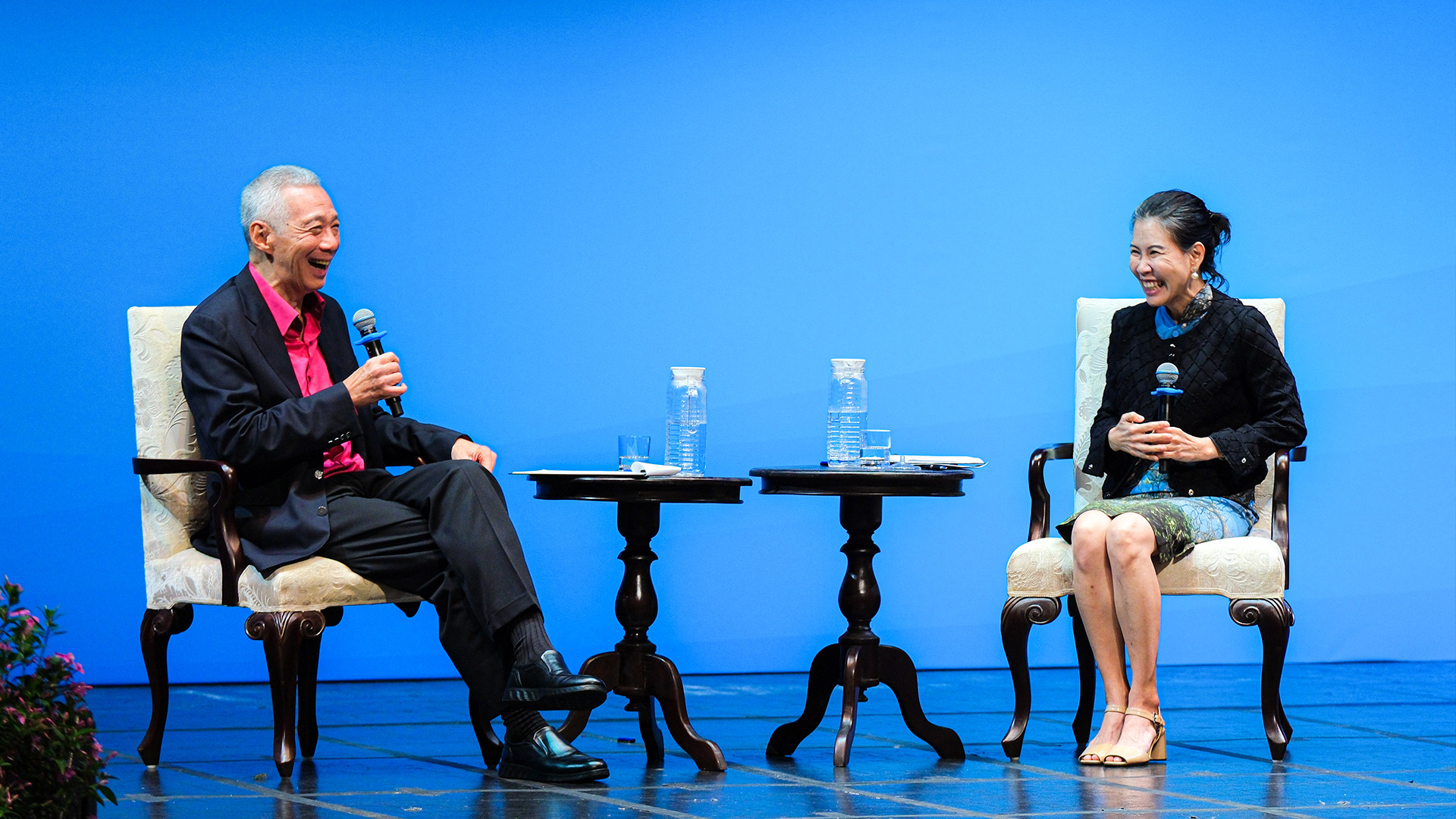
Being Singaporean may not be the most important part of many people’s identity, said Senior Minister Lee Hsien Loong. Instead, aspects like religion or race may take precedence even with a stronger national identity.
Individuals thus have to make a conscious choice to decide on Singapore as their home, he said at the Kent Ridge Ministerial Forum (KRMF) 2025, organised by the NUS Students' Political Association (NUSPA) at the University Cultural Centre on 9 September 2025. “Singaporeans could belong in many other places. What makes you decide you want to be here and this is your home? And it can't just be the char kway teow or the durian,” he said to laughter from the audience.
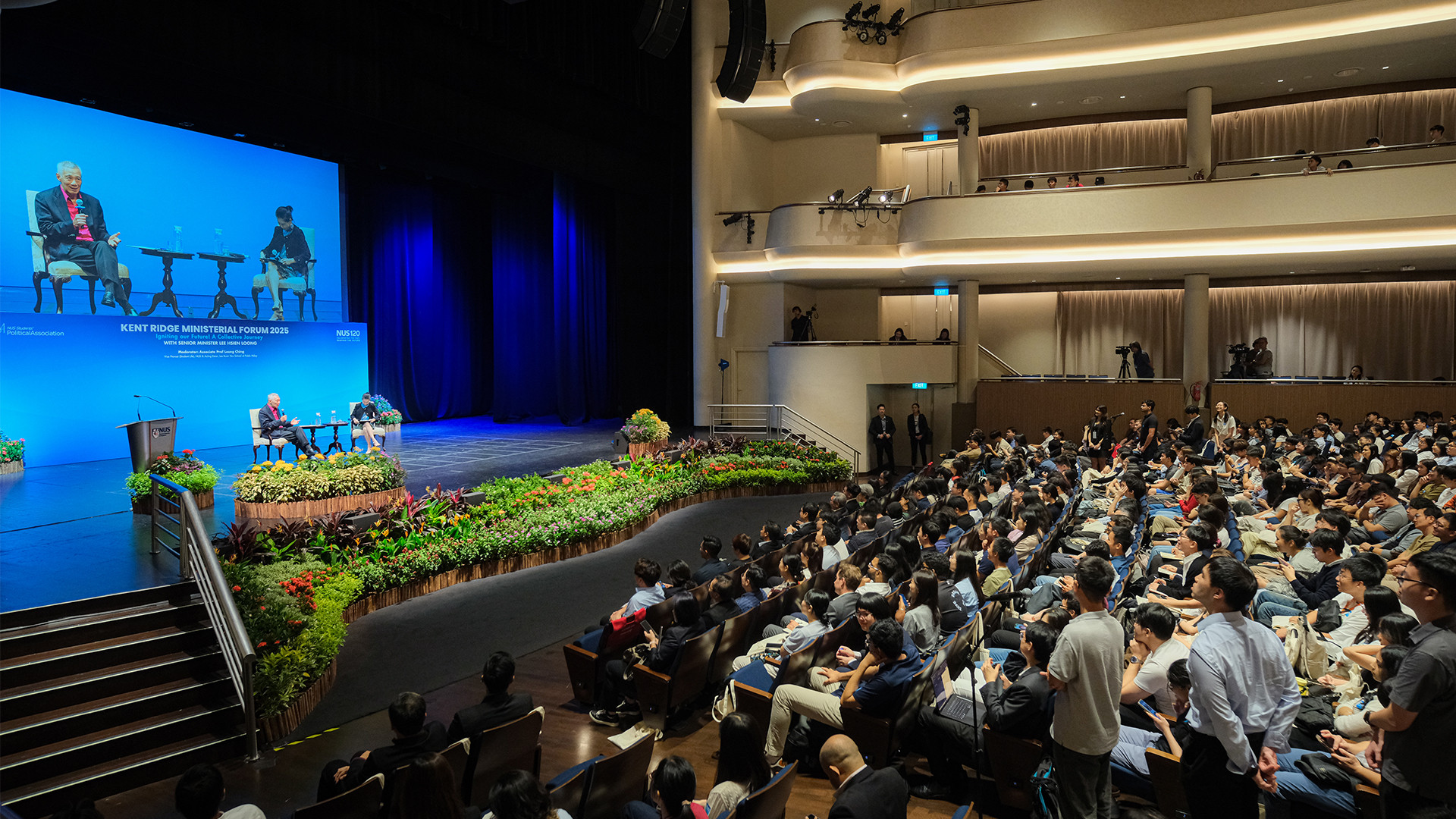
In the two-hour dialogue moderated by Associate Professor Leong Ching, NUS Vice Provost (Student Life) and Acting Dean of the Lee Kuan Yew School of Public Policy, Mr Lee delved deep into what nationhood is. “I think I can say that the national identity is stronger but at the same time, it is not the only tribe which we belong to because we all have different layers to our identity,” he noted.
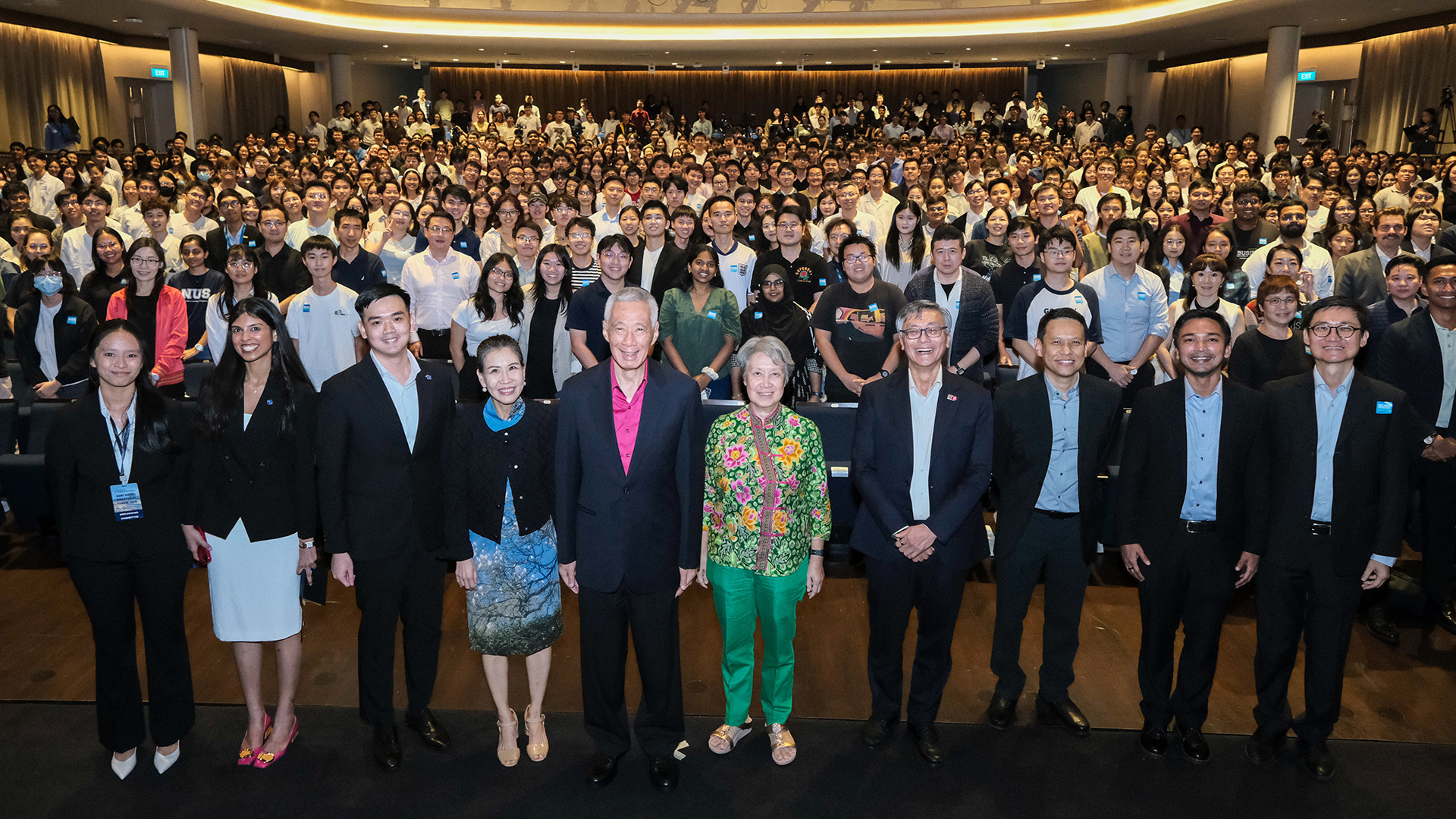
Themed “Igniting our Future! A Collective Journey”, the event was attended by about 800 students and academic staff from NUS and other tertiary institutions, as well as pre-tertiary institutions. In her welcome address, noting that 2025 marks both SG60 and NUS120, Year 1 Political Science undergraduate Ms Sophia Chye, who is also the forum’s project director, said, “It is a timely moment for us to reflect on what our national identity is, how it has been shaped over time, and the forces that continue to influence it today.”
Choice and conviction
Opening the dialogue, Assoc Prof Leong cited a quote by Singapore’s first Minister for Foreign Affairs, Mr S. Rajaratnam, “That being Singaporean is not about ancestry, but choice and conviction,” to bring to the forefront the idea of choice in relation to national identity.
Mr Lee agreed, but pointed out that the decision was different during Mr Rajaratnam’s time. “For that generation, the choice was to stand, fight, and build,” said Mr Lee, Singapore’s former Prime Minister.
“Now this generation is a beneficiary,” he added. “And the choice is…, do I continue the mission which was passed to us… and keep on making it better? Or do I say…You have provided me wings. I am flying.’”
Such decisions, whether to stay or migrate, could have an existential bearing on Singapore’s future. “I think for this generation too, it has to be choice and conviction. If you just so happen to be here and tomorrow the wind blows ‘poof’ and… tomorrow you won’t be here, and Singapore won’t be here,” he said.
Challenges to national identity
Many factors could influence the choice to stay or go, as the question-and-answer session reflected. Questions ranged from how youths can feel a sense of belonging and the importance of one’s mother tongue, to keeping the local arts culture alive. Other challenges include globalisation and fault lines in society.
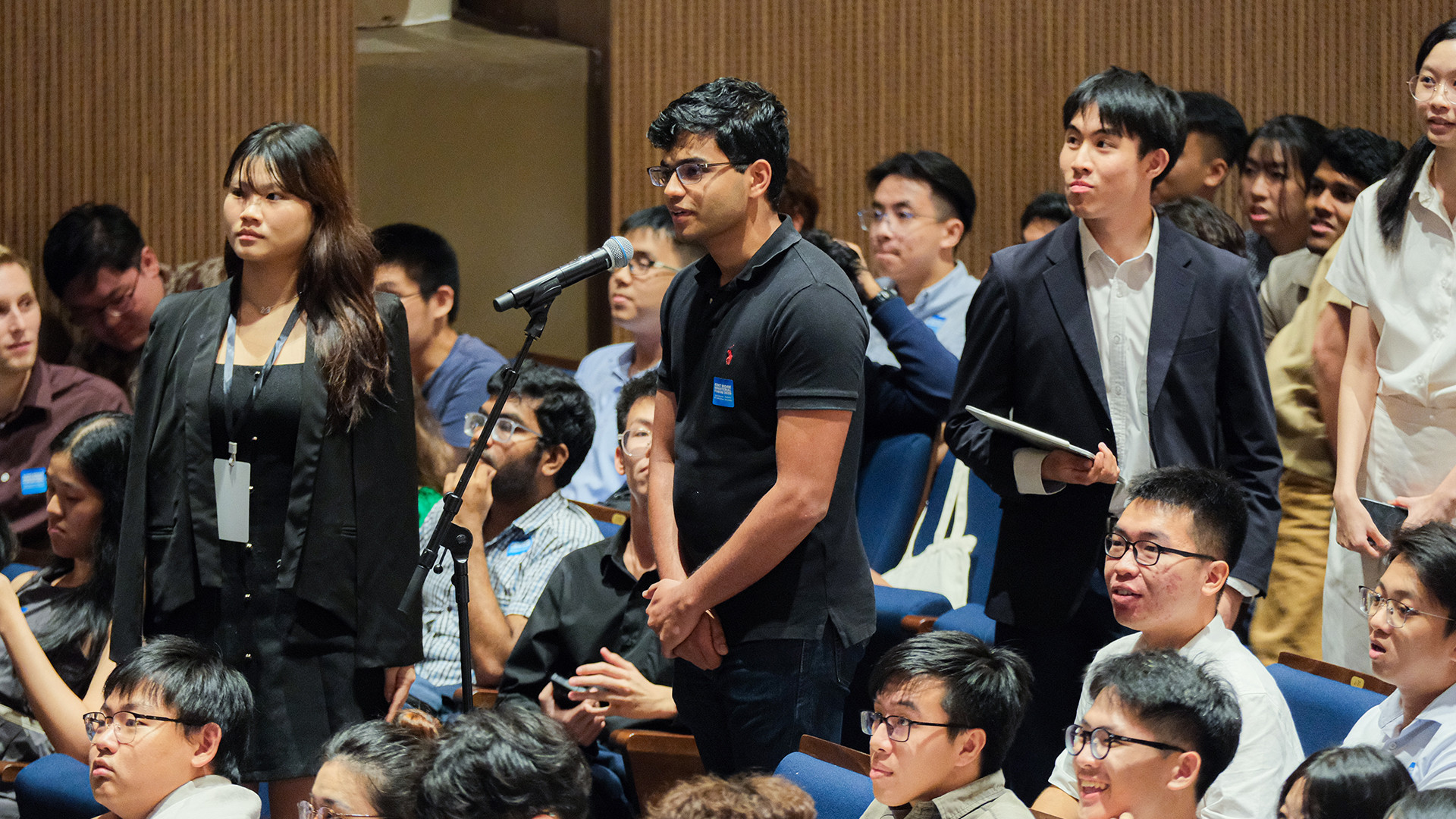
Mr Lee noted that the last two issues still present risks, especially when external events and geopolitical tensions cause “differential tugs” in Singapore. “We are going to be pulled in the immediate term from time to time in very different directions. And our job is to resist that and to remember, ‘Yes, I am Muslim or I am Chinese or I am Indian, but I am also Singaporean and I do hold something here, and I belong here, and I should look at the world starting from here.’”
He added that some have suggested that the government “pretend that we’re all the same”, to simply “gloss over differences” and treat individuals as just Singaporeans.
“We have not gone that way because we don’t believe it works,” he said. “Over the years, we have made adjustments which have, in fact, gone the other way, in order to allow people to express themselves more in their ethnic, religious identities, rather than less, and acknowledge that we are different from one another.”
Mr Lee shared anecdotes on how bigger countries assume Singapore would have similar interests based on shared ethnic cultures. However, he emphasised that striking that balance between personal and national identity is crucial, as it has a great impact on foreign relations.
SM Lee’s most Singaporean trait
Responding to questions from students on how Singaporeans should then retain their own identities while calling Singapore home, Mr Lee said, one way is for them to “roll up (their) sleeves” and be active citizens, whether by cleaning the beach, doing social work, or promoting entrepreneurialism, for example.
It is a mantra he subscribes to himself. Asked by Assoc Prof Leong what is the most Singaporean thing about him, Mr Lee said it is his mindset that things can always be better, and he works hard to find solutions. One way he does this is by being a “mystery shopper” for the government. When he uses government websites, for instance, he sends suggestions on how the interfaces can be improved.
“I think if we had more ‘mystery shoppers’, we would have better services, a more involved and engaged population,” he said. To those who want to feel more rooted to Singapore, he suggested taking a more proactive stance: “Do the things that will make you feel this is home.”
