


More than buildings: Social Design Lab at NUS is reframing architecture as a social discipline
Think architecture, and buildings and structures are probably what spring to mind. But the discipline, while manifested in physical buildings and spaces, is driven by social relations.
This approach to architecture, known as social design, frames creating spaces as a means to address human issues and improve people’s lives. It is the cornerstone of the Social Design Lab (SoDL), co-founded in August 2025 by Associate Professor Thomas Kong and Associate Professor Lilian Chee from the Department of Architecture in the College of Design and Engineering (CDE) at NUS.
SoDL serves as an interdisciplinary platform designed to bridge institutional research with the lived realities of communities in Singapore and the wider region.
“We seek to decouple architecture from being understood simply as a physical structure to understanding how space is socially produced by a host of actors: from users and non-experts to design professionals,” said Assoc Prof Chee.
This is done by connecting students and faculty with external communities through workshops, exhibitions, conferences, and artist residencies.
“SoDL was conceived as a testing ground — where ideas are developed and examined in dialogue with communities, practitioners, and the public,” said Professor Teo Kie Leong, Dean of CDE.
Social design in practice
While a new initiative, SoDL’s work mirrors the interdisciplinary nature of CDE, home to diverse practices from engineering to project management, that work together to address complex challenges. Its focus on social design is crucial, especially in land-scarce Singapore. Developments must have a clear and effective purpose — to fulfil the needs of end users — or risk making sub-optimal use of the limited land.
Singapore has several other ongoing social design initiatives. One example is Participate in Design (PiD), a non-profit organisation that pioneered a community-centric approach to urban planning and design. It focuses on facilitating public engagement through consultancy, education, and research, nudging the discipline of architecture from a traditionally top-down approach towards a collaborative one.
“By developing methods for participation, PiD moves beyond simply democratising design. It actively empowers and educates the public to reclaim influence over the planning processes that shape their lives,” said Assoc Prof Chee.
The Casual Poet Library in Alexandra Village is a showcase of this approach. Started by freelance photographer Rebecca Toh in 2024, the library allows people to rent shelves and display their own books for others to loan. Entirely community-funded, it has been running for close to one and a half years.
“This is a space that defies market logic to prioritise collective stewardship and the cultivation of a shared intellectual life,” said Assoc Prof Chee. “The spirit of care, repair, and maintenance is what sustains this physical community space.”
The success of these examples, she added, proves that social design is “not merely a theoretical ambition, but a lived reality made possible through empowerment, resilience, and communal care”.
Spotlighting proactive practitioners
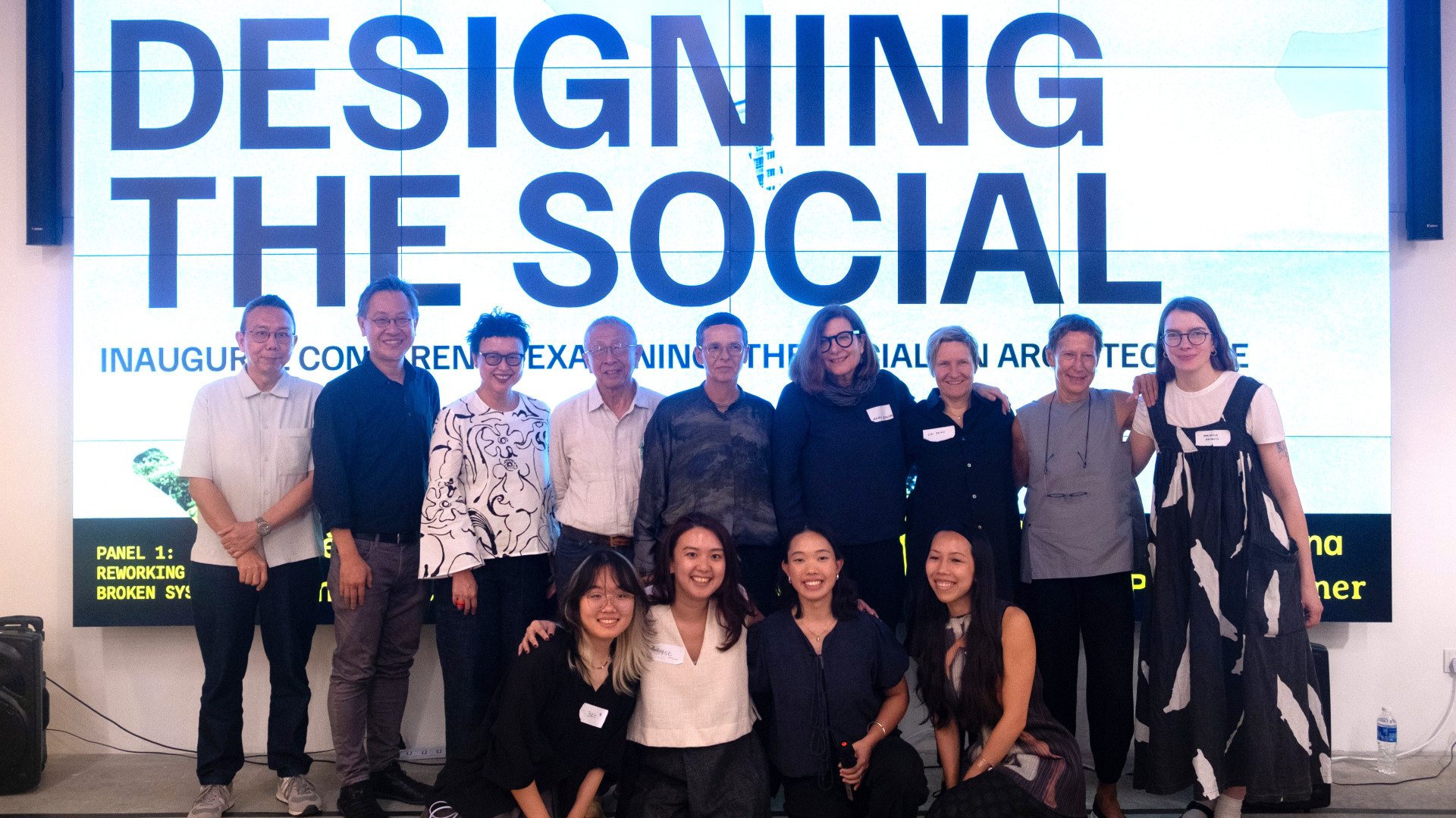
To promote social design in Singapore, SoDL organised its own conference titled “Designing the Social” on 5 February 2026. The conference gathered international scholars and practitioners for two panel sessions, exploring how architecture and space can shape and reconfigure complex social relations.
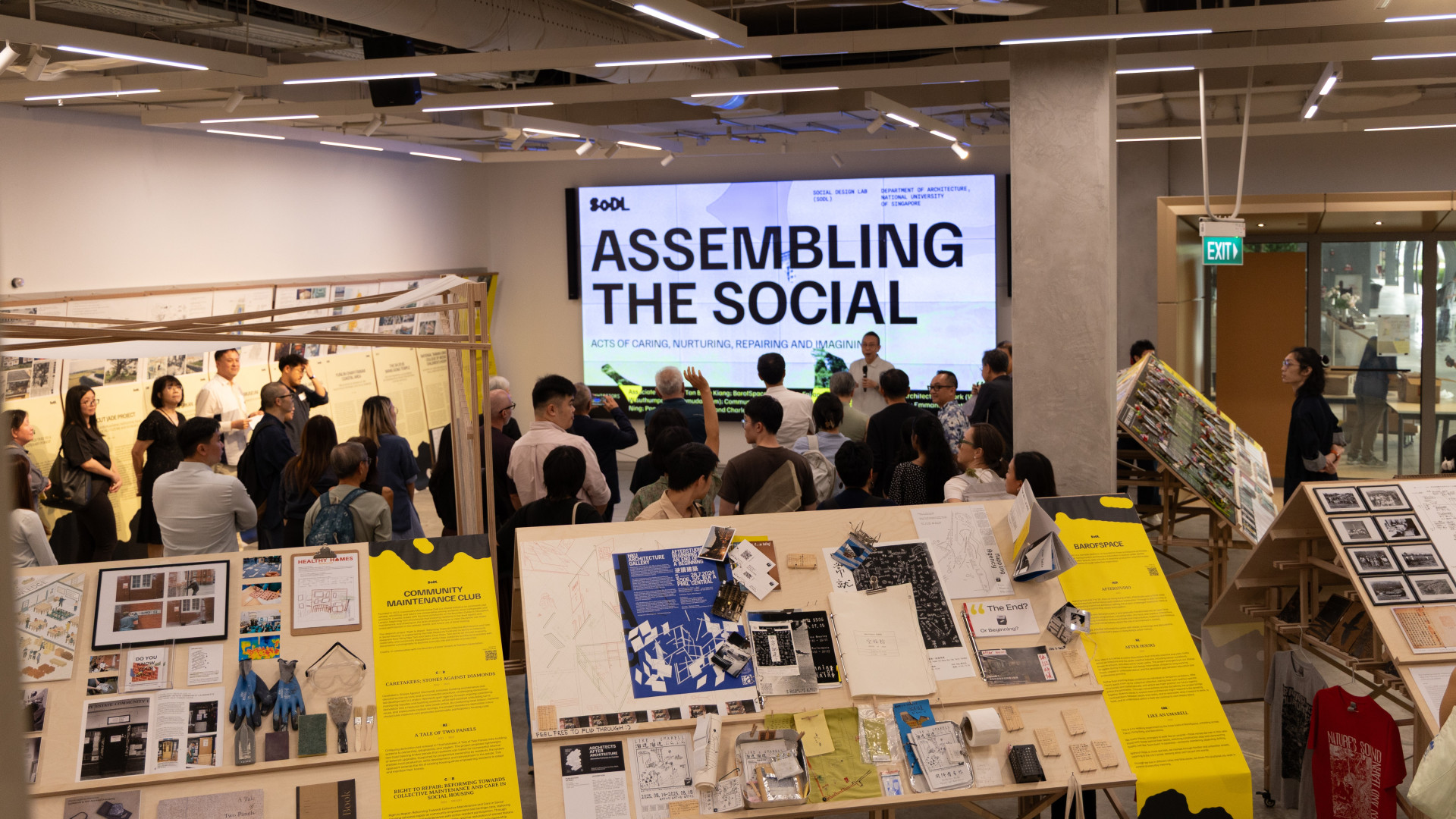
In tandem, SoDL ran the “Assembling the Social” exhibition from 5 February to 8 March 2026. It featured the work of 12 socially engaged architecture practices from across the globe. Through different local initiatives, the displays highlight “how communities can sustain themselves, manage conflict, heal, and innovate”, said Assoc Prof Kong, who is also the exhibition chair.
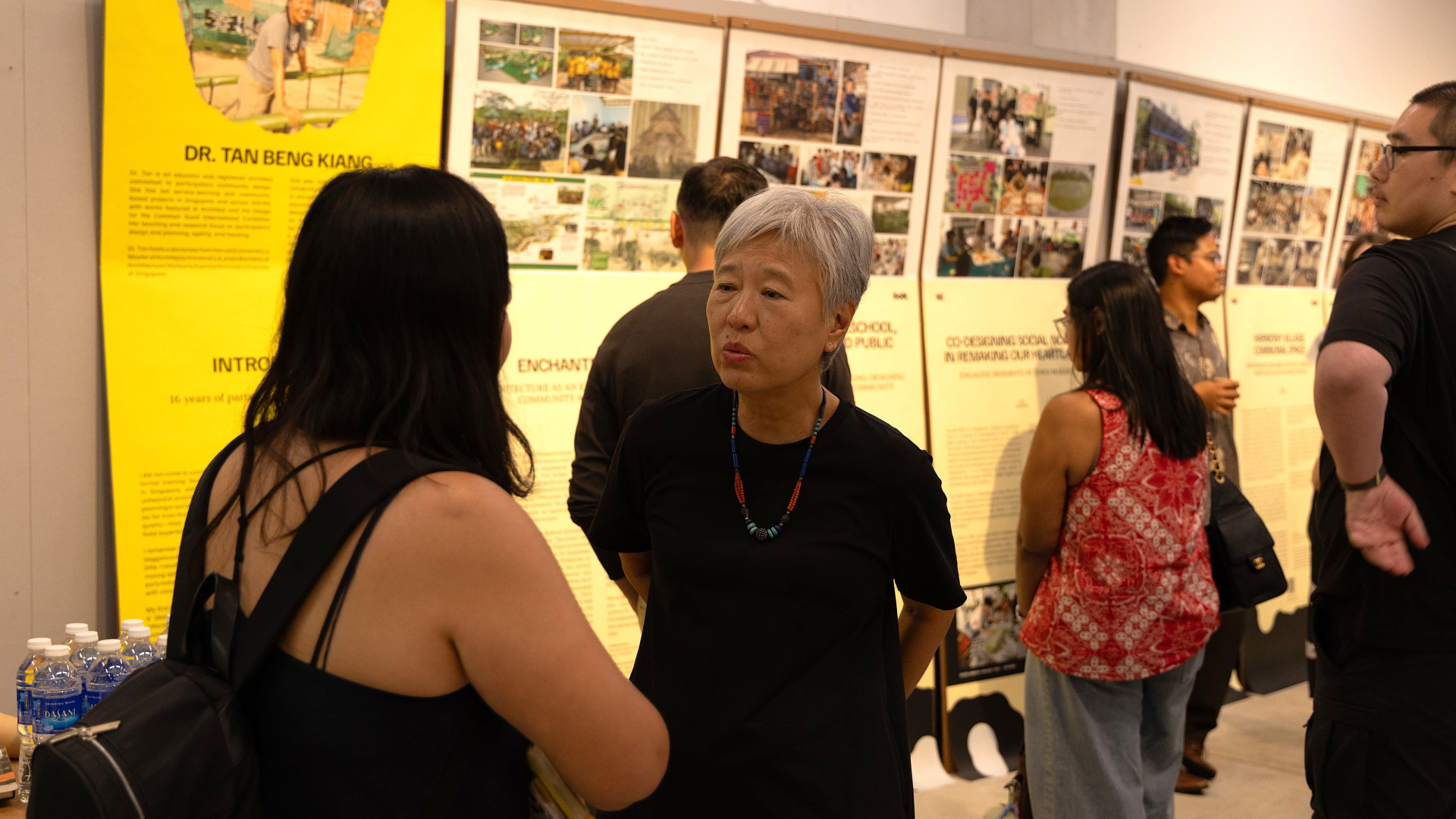
Among the architects featured was Associate Professor Tan Beng Kiang from the NUS Department of Architecture, who was behind the Remaking Our Heartland project, a national rejuvenation scheme that upgraded older towns to support evolving community needs. She also worked with residents, non-governmental organisations, and government agencies to restore a 25-year-old makeshift drink stall in Pulau Ubin.
The exhibition also highlights Mr Emmanuel Pratt, co-founder and executive director of the Sweet Water Foundation. The Chicago-based non-profit built the Thought Barn in 2017, a community gathering space in a once blighted city block on Chicago’s South Side. It is also behind the Communiversity, which educates the public on the practice of regenerative neighbourhood development.
Another prominent exhibit is the Community Maintenance Club (CMC), founded in 2023 by architects Ms Rosy Tam and Mr Spike Chen. The London-based organisation worked with residents in London’s Boundary Estate in Shoreditch to identify recurring defects and priority repairs, reframing maintenance as a form of collective care and civil participation.
By featuring these architects, Assoc Prof Kong hopes to inspire stakeholders to “recognise care, maintenance, and repair as essential forms of civic and environmental intelligence”.
“The goal of bringing these initiatives together is not to create a single, final solution,” he said. “Rather, it’s about creating a supportive network that connects different groups and ideas — embracing their disagreements, shared goals, and tensions — in order to spark new insights and powerful collaborations.”
For the list of speakers at the “Designing the Social” conference, see Annexe A.
For the list of exhibitors at the “Assembling the Social” exhibition, see Annexe B.
