


Singapore’s national marine research facility broadens scope to lead marine science collaboration across Southeast Asia
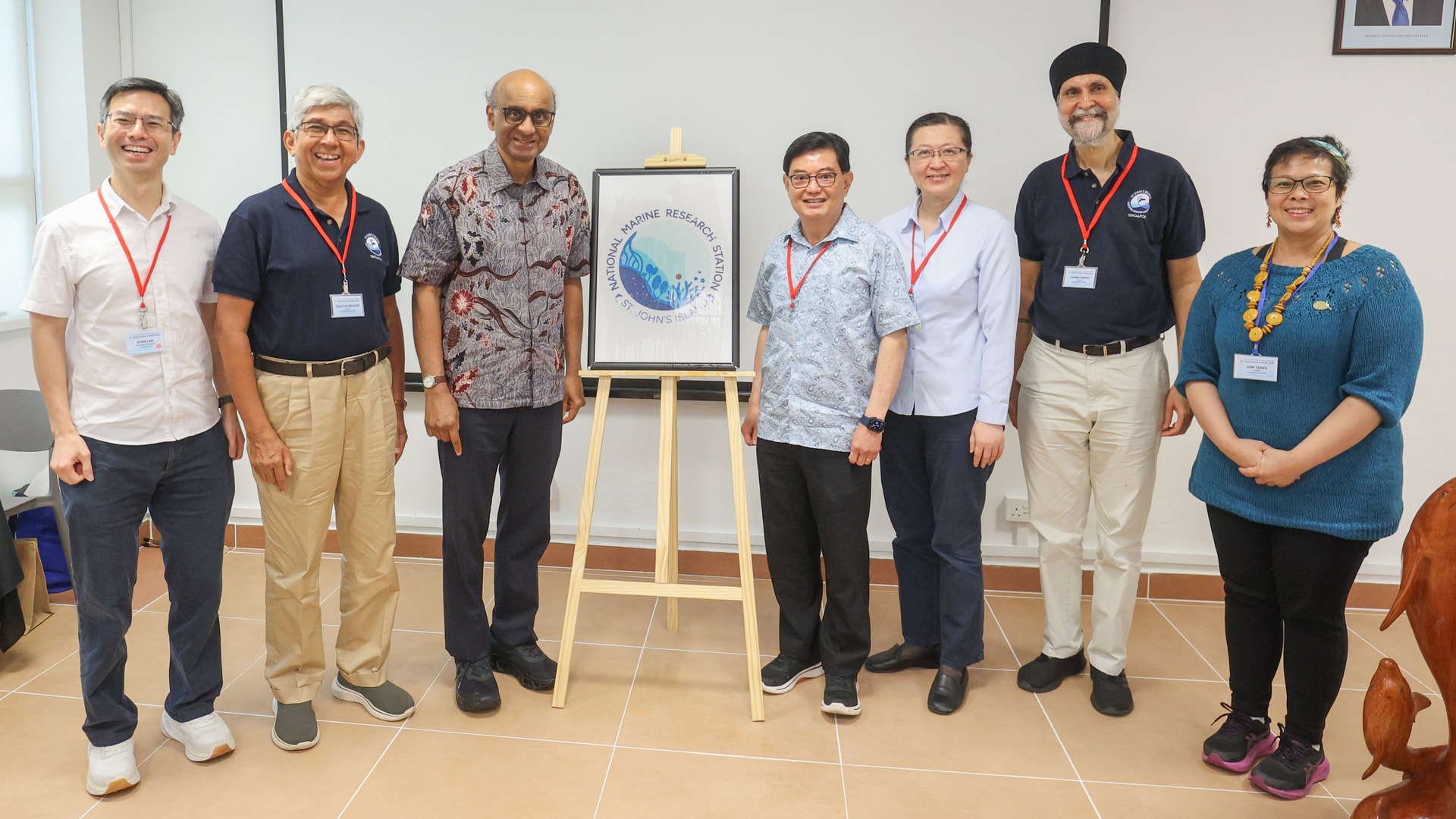
The St John’s Island National Marine Laboratory (SJINML) is expanding its scope beyond Singapore’s waters to lead regional efforts in marine science. As part of this expanded role, the facility has been renamed the National Marine Research Station (NMRS), and will lead the newly established Southeast Asia Marine Research Stations (SEAMaRS) network, the first of its kind in the region.
Hosted by the National University of Singapore (NUS), NMRS is Singapore’s first and only offshore National Research Infrastructure dedicated to marine science. The Station is funded by the National Research Foundation (NRF) under the Research, Innovation and Enterprise 2030 (RIE2030) plan. Building on a decade of enabling research in Singapore, NMRS will now serve as a regional platform where researchers across Southeast Asia can share facilities, data and expertise to address challenges facing the region’s shared seas.
The expanded role of NMRS was launched at the start of the Marine Science Week by Guest-of-Honour Tharman Shanmugaratnam, President of the Republic of Singapore. Marine Science Week, held from 25 November to 2 December 2026, celebrates a decade of progress in marine science since SJINML’s establishment in 2016.
President Tharman said, “Climate change, the loss of biodiversity and the health of our oceans are not separate problems, but deeply connected. Building on a decade of scientific work at NMRS, the new SEAMaRS network will bring together scientists from across Southeast Asia to learn from one another, and strengthen our collective ability to look after our seas, an effort that will matter even more in the years ahead.”
A new name that reflects an expanded role
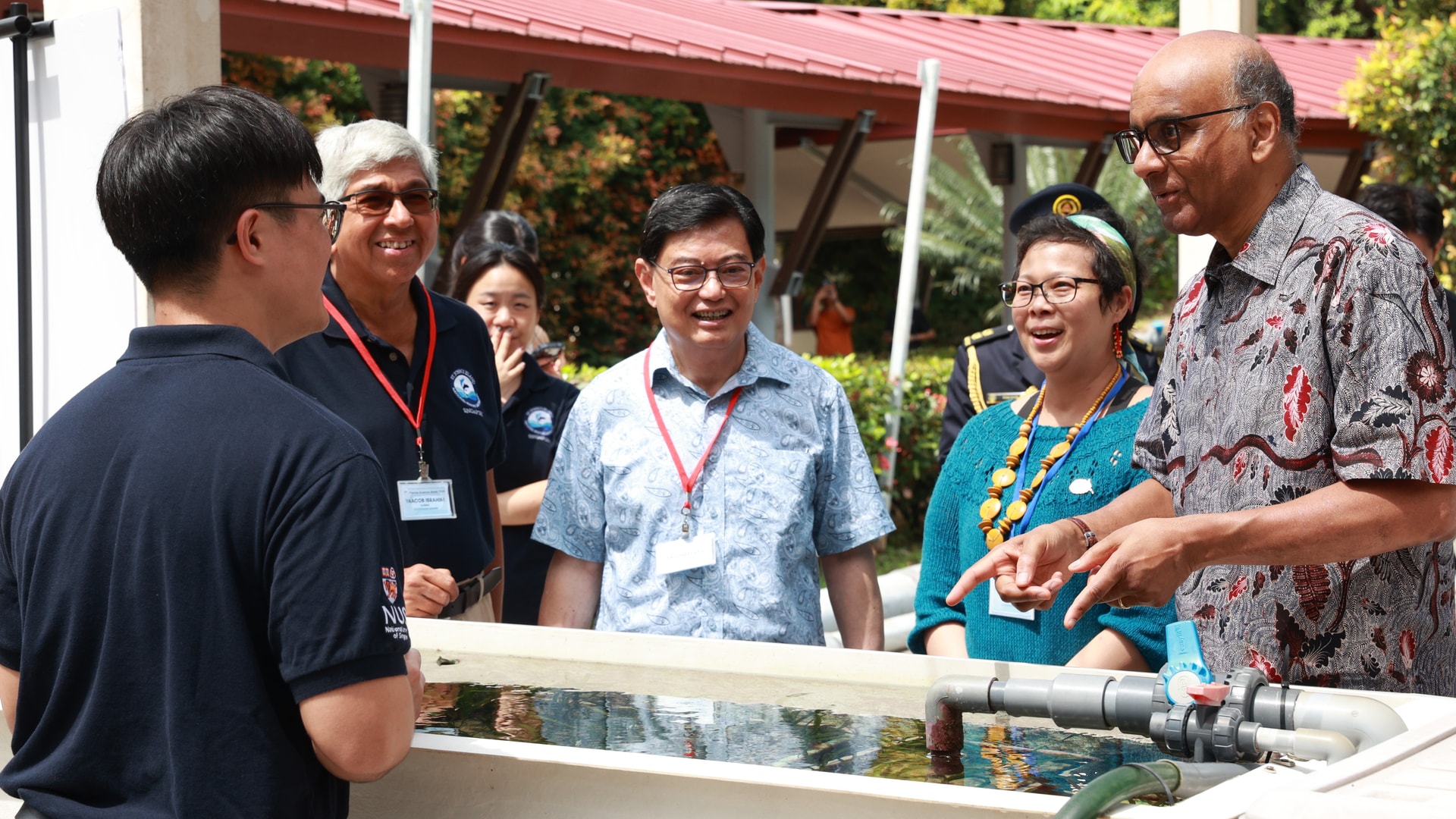
The renaming from SJINML to NMRS reflects how the facility has evolved as a National Research Infrastructure. Beyond providing laboratories and aquaria for research and development, NMRS now functions as a marine observatory, a platform for scientific training, an avenue to communicate science to the wider public, and a base where people, disciplines and ideas intersect, both in Singapore and beyond. It also serves as an offshore sentinel monitoring Singapore’s urban waters and climate impacts.
To enable future research, NMRS will be equipped with a new research vessel, which will succeed the existing RV Galaxea[1]. The new research vessel will have a larger deck, a moonpool, a safer diving platform for rough weather and fittings to deploy and test equipment at sea. It will also carry a dinghy to reach shallow coastal areas and have a better design for seabed sampling efforts.
NMRS will also bring in two new imaging instruments to strengthen plankton research. The Imaging FlowCytobot will take continuous, automated images of microscopic algae (phytoplankton), so researchers can track seasonal and long-term changes and spot sudden shifts in the marine environment. The FlowCam Macro will capture larger plankton and particles, so NMRS can study plankton of all sizes. Together, these tools will replace slow manual microscopy and help researchers identify plankton faster and more accurately.
Dr Jani Tanzil, Director of NMRS, said, “The renaming to NMRS captures what our facility has naturally grown into over the past decade. We have become a dynamic platform where science, policy, and technology converge. Our oceans are seamlessly interconnected and marine currents and ecosystems do not stop at national borders. Going forward, NMRS will not only support the best science needed to safeguard Singapore’s marine environment but will also act as an operational nexus for Southeast Asia. By leading the development of the SEAMaRS network, we aim to pool resources, share knowledge, nurture talent, and build collective action to address shared marine and coastal challenges."
Uniting the region via the SEAMaRS network
As the first network of its kind in the region, SEAMaRS addresses the need for greater coordinated research, shared facilities, capacity development, and integration of regional knowledge. Presently, NMRS brings together over 10 core member institutions across Indonesia, Malaysia, the Philippines, Thailand and Singapore[2]. It serves as a shared regional platform to enhance cooperation and coordination among marine research stations, laboratories and field facilities across Southeast Asia, particularly ASEAN member countries.
As the network’s lead and current Secretariat host, NMRS will establish working groups around priority areas aligned with its objectives:
Advance regional collaboration and joint research towards strengthening science-policy linkages: Address shared marine and coastal priorities and promote the use of scientific knowledge in policy and decision-making.
Facilitate sharing of infrastructure, resources and expertise: Encourage shared access to research facilities, vessels, equipment and technical expertise.
Strengthen the regional marine science community as a whole: Enhance its visibility and facilitate partnerships, resource mobilisation and collaborative funding opportunities.
Build regional capacity and facilitate science mobility: Support training, student and researcher exchanges, fellowships and professional development.
Strengthen marine observation, data and knowledge sharing: Promote long-term marine monitoring, harmonised observation systems, data sharing, interoperability and open science practices, where appropriate.
NMRS will advance multidisciplinary marine science research and technical training across Singapore and Southeast Asia. To meet evolving environmental needs, it will widen access to advanced facilities, expertise and specialised training, working closely with scientists, industry partners and government agencies. Through stronger international collaborations, NMRS aims to build local capabilities, drive impactful breakthroughs and become a leading marine research station.
The Marine Science Week celebrates the decade of progress, which lays the foundation for NMRS’ next phase. Since NRF designated the St John's Island facility as a National Research Infrastructure in 2016, the station has transformed marine science research and education in Singapore through:
Discovery of new species: Station-based scientists have discovered more than 20 species new to science in local waters, such as Gymnophelia sakijang (sea anemone), and Chironex blakangmati (box jellyfish), discovered in the past five years, alongside numerous regional discoveries.
Research enabling node: Supported local and international researchers, facilitating multidisciplinary projects across numerous academic institutions, industry partners, and government agencies.
Education & lifelong learning: Conducted scientific training and workshops, research seminars, and learning journeys to inspire future generations of marine scientists.
Please refer to the Annex for more information on these research domains.
[1] Over 18 years, the RV Galaxea has supported a wide range of fieldwork, from seawater sampling and ecological monitoring to diving and testing marine robots and sensors.
[2] These include Universitas Maritim Raja Ali Haji, Bintan, Indonesia; Institut Marine Borneo, University Malaysia Sabah, Malaysia; Coastal Oceanography and Climate Change Research Center, Prince of Songkla University, Thailand; and Center for Marine Science Studies, Holy Name University, the Philippines.
