


NUS Cities Symposium 2024: Creating sustainable cities in challenging times
Would you be a “successful ancestor”? This unusual poser presented at the distinguished keynote of the National University of Singapore (NUS) Cities Symposium 2024 drew laughter from the audience of more than 700 participants. But behind the light-hearted moment, the keynote speaker, Professor Brian Collins, Emeritus Professor of Engineering Policy at University College London, had a serious point to make.
City planning is a long-term undertaking and responsibility, involving an overwhelming list of challenges from volatile global trade to technology changes. A “successful ancestor”, as such, is one who tackles these for posterity’s sake, he said.
Strategic city planning is key to solving these challenges, but it requires an intergenerational, multidisciplinary approach with partnerships between many stakeholders. This collaborative spirit was central to the discussion at the Symposium held on 18 September 2024, a highlight of the NUS Sustainability Connect Festival.
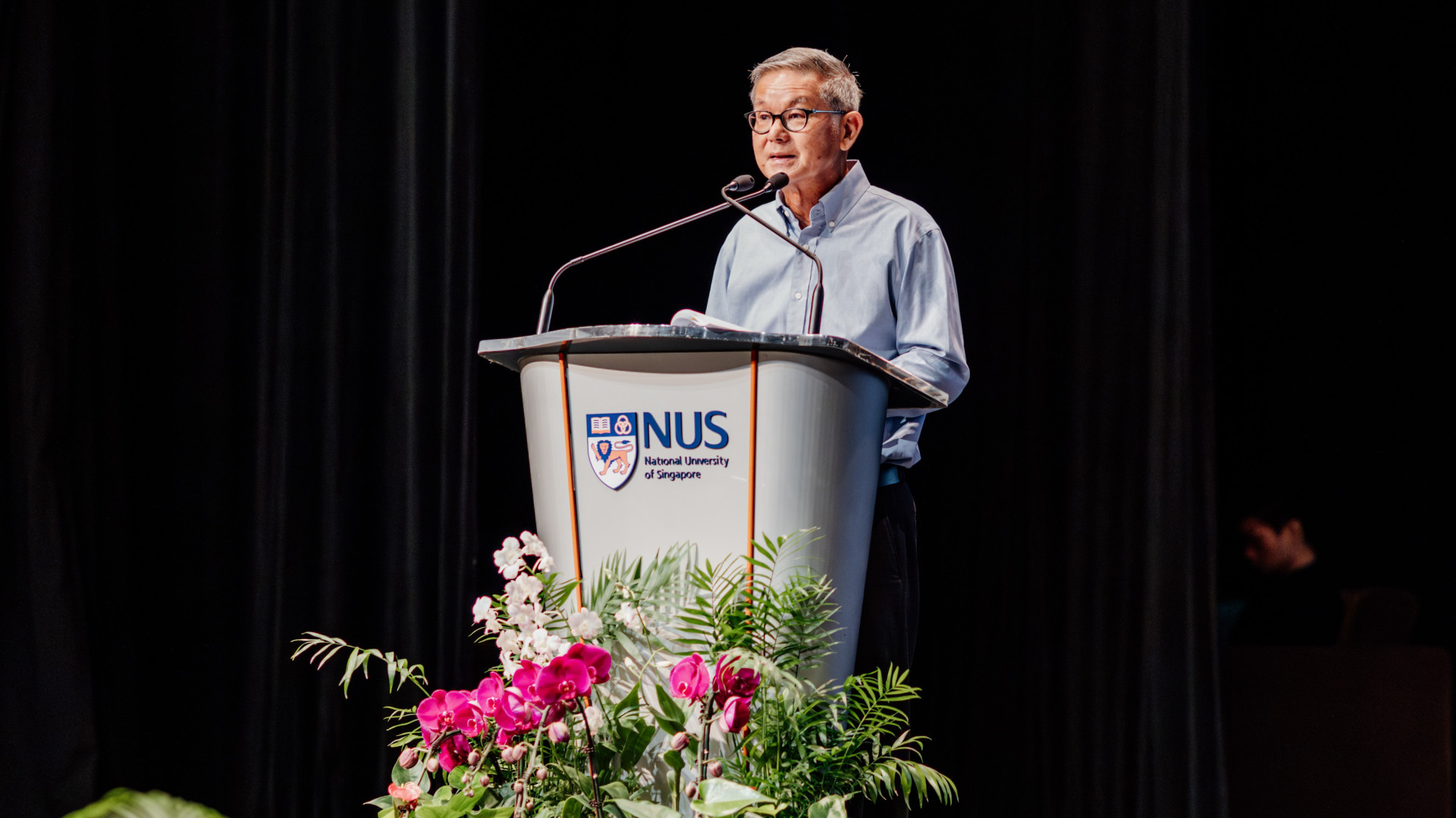
“Our cities should not just be liveable, but also sustainable to endure for generations to come, resilient to survive crises like COVID-19 and other upheavals,” said Professor Khoo Teng Chye, Director of NUS Cities, in his Welcome Address to an audience of industry practitioners, tertiary students, policymakers and academics gathered at the University Cultural Centre Ho Bee Auditorium.
Navigating complex trade-offs in Singapore
City planning in the land-scarce Lion City is fraught with difficult decisions and trade-offs, noted Mr Desmond Lee, Minister for National Development and Minister-in-charge of Social Services Integration in his speech as the Symposium’s Guest-of-Honour. He underscored the competing housing and industry needs – “potentially unlimited wants” made even more challenging by the country’s small size.
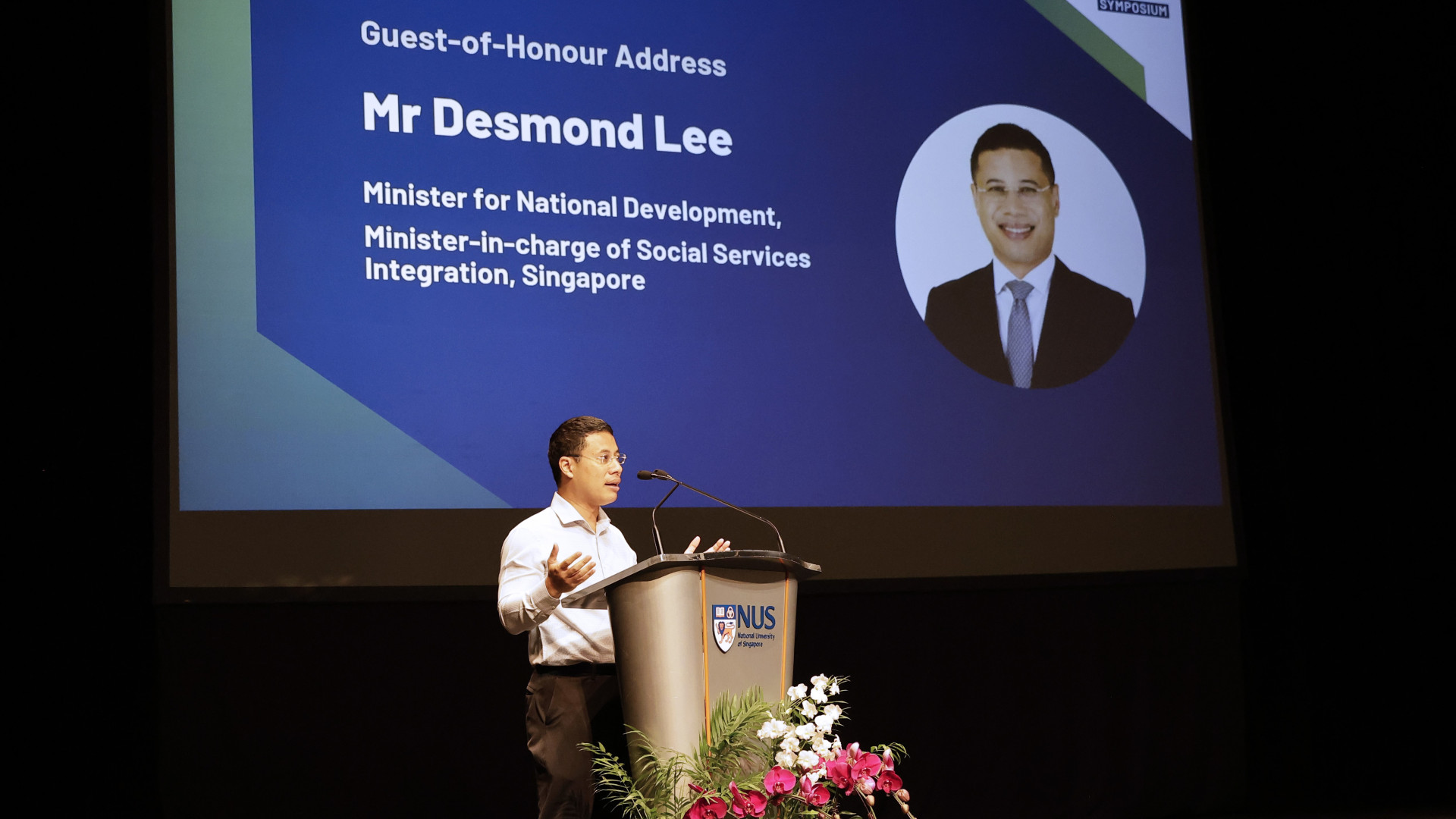
“Our planners and policymakers do not have an easy task, but it is not impossible,” he said. “We must be able to turn challenges into opportunities.”
To achieve this, bold steps must be taken to ensure a more sustainable Singapore. One such measure, announced by Minister Lee in his speech, was a new initiative offering incentives for companies to adopt district cooling systems – a more energy-efficient alternative to individual buildings having their own chillers.
He also emphasised the importance of a consultative approach, such as how the government is engaging the public in the URA Draft Master Plan 2025, which maps out Singapore’s land-use plans for the next 10 to 15 years.
Trust driven by data
This inclusive, data-driven style of policy-making would help build trust between a government and its people. And it is this tight social compact that will help cities weather crises, said Professor Lily Kong, President of the Singapore Management University.
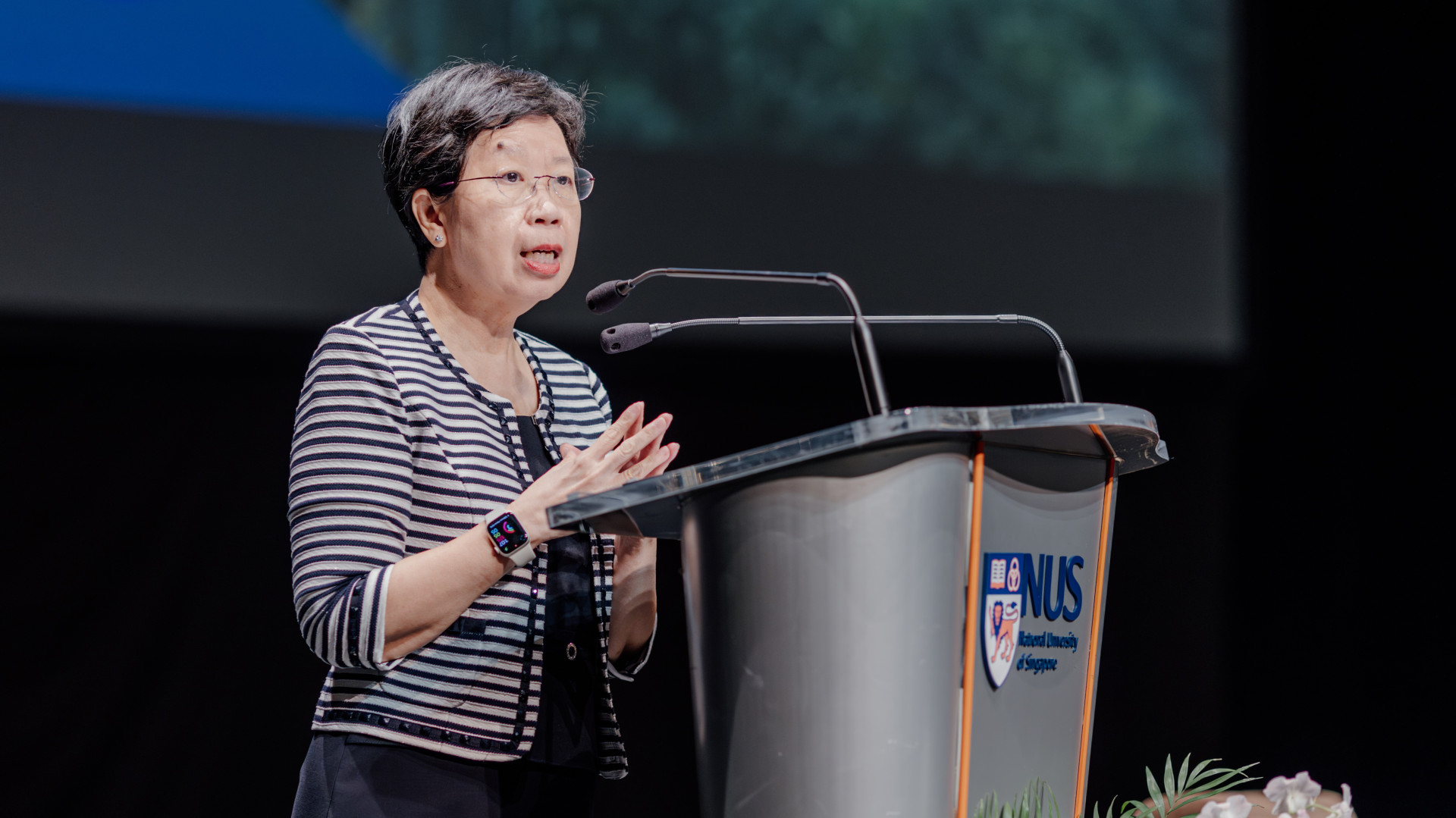
Her keynote, the second of three Distinguished Keynotes of the day, explored how city planning is both a science and an art, requiring not just smart technologies but also social cohesion. “Relying on technology and infrastructure is critical, but it is not enough. Investment must be made in shoring up social resilience and community cohesion,” said Prof Kong.
Equally important is the collaboration between academia and the public sector. Data and science help to boost the credibility of policies, as discussed in the second plenary session, “How Can Our Cities Be Adapted for Climate Change?”, moderated by Assistant Professor Pearl Li from the Department of Civil and Environmental Engineering at College of Design and Engineering (CDE) at NUS.
For instance, through the use of state-of-the-art sensors, Associate Professor Yuan Chao shared how even individual buildings in Singapore can be identified as hot spots. The Director of Research at NUS Cities also studies how heat affects vulnerable groups like the elderly, to achieve more inclusive and equitable climate action.
“By conducting this research, we provide deep climate science to support government planning and designs,” said Assoc Prof Yuan, who is also from the Department of Architecture at NUS CDE.
His points on public-private partnership built on what was discussed in an earlier plenary session, named after the Symposium’s theme of “Creating Liveable Cities in Uncertain Times”.
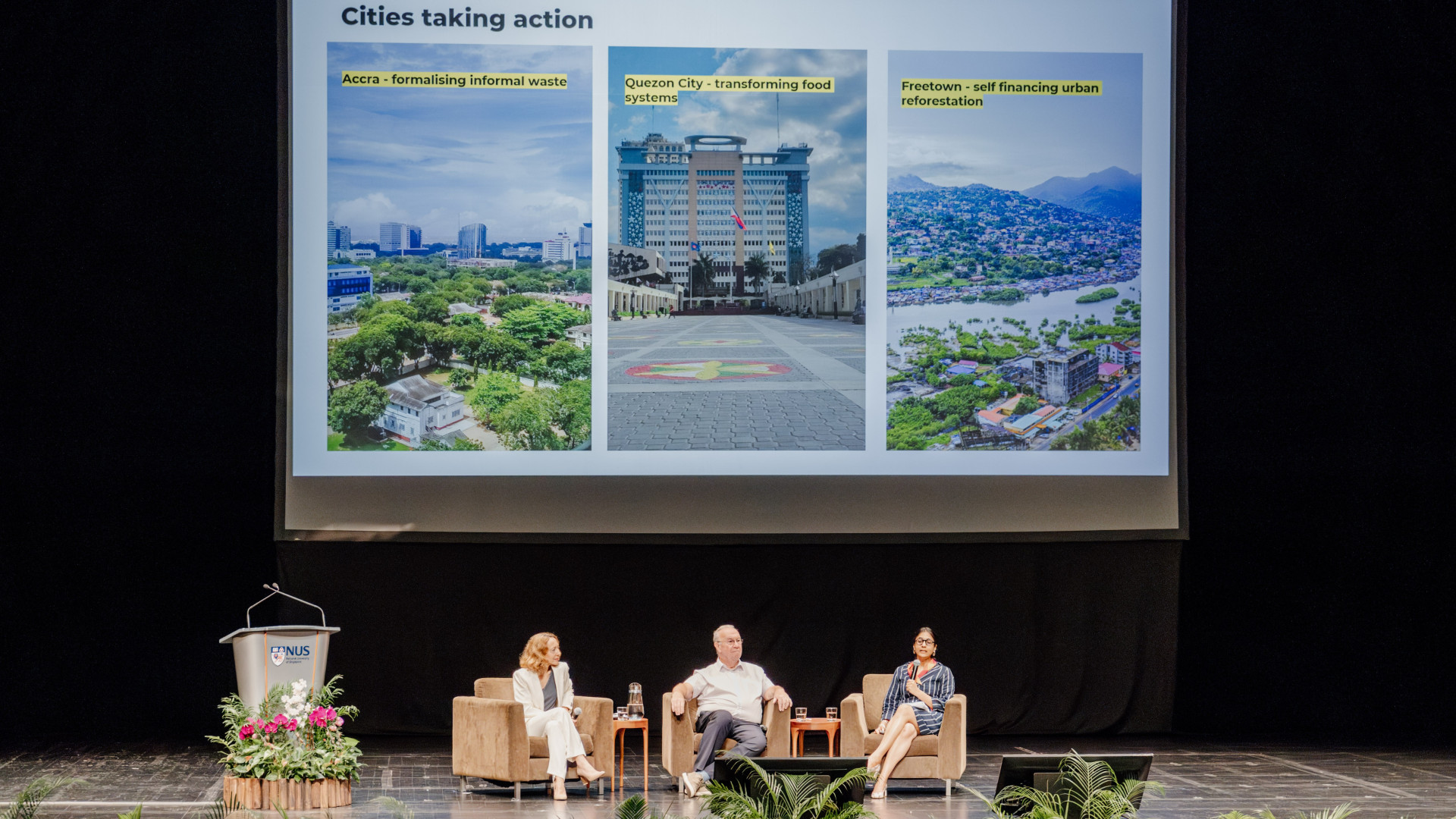
“What data-driven, evidence-based climate action plans do is provide that data to cities and their leaders (to make decisions),” said panellist Ms Shruti Narayan, Managing Director of Regions and Mayoral Engagement, and Regional Director of South and West Asia at C40 Cities, a global network of about 100 city mayors. She added that a scientific breakdown of costs and benefits is especially useful when leaders weigh trade-offs, as “you can’t manage what you can’t measure”.
Planning today for a more sustainable tomorrow
Time is another key metric. Take, for example, Singapore’s commitment to reach net-zero emissions by 2050. To hit such targets, action at the city-planning level has to take place now.
The generational effects of city planning was a theme that echoed throughout the Symposium, from Prof Collins’ speech to the third plenary session on intergenerational equity in city planning – “Liveable Cities Which Are Healthy and Age-friendly: Dream or Reality”.
A thread running through the latter discussion was how to design a city that embraces ageing, especially with Singapore attaining “super-aged” status in 2026, when a fifth of the population will be 65 years old and above.
Associate Professor Emi Kiyota, Deputy Executive Director at the NUS Centre for Population Health and a faculty member of NUS CDE’s Department of Architecture, described how the built environment is a “manifestation of our minds” – that if society sees seniors merely as a vulnerable group to be looked after, it could perpetuate more facilities that may see them age in isolation instead of as part of the community. This insight underscores how city planning melds art and science, with social perceptions often shaping the infrastructure.
Vital to seniors thriving in society is the “20-minute town” concept, where amenities are close to homes, commutes to work take just 45 minutes, and nearby residential towns are only 20 minutes away – a topic discussed in the following plenary session “The 20-minute Town”.
The discussions aptly concluded with the Young Leaders Panel, which featured the likes of social media entrepreneur Kong Man Jing, an NUS Life Sciences alumna who is better known by her online persona “Biogirl MJ”, whose popular science channel dishes out fun facts on nature and biodiversity.
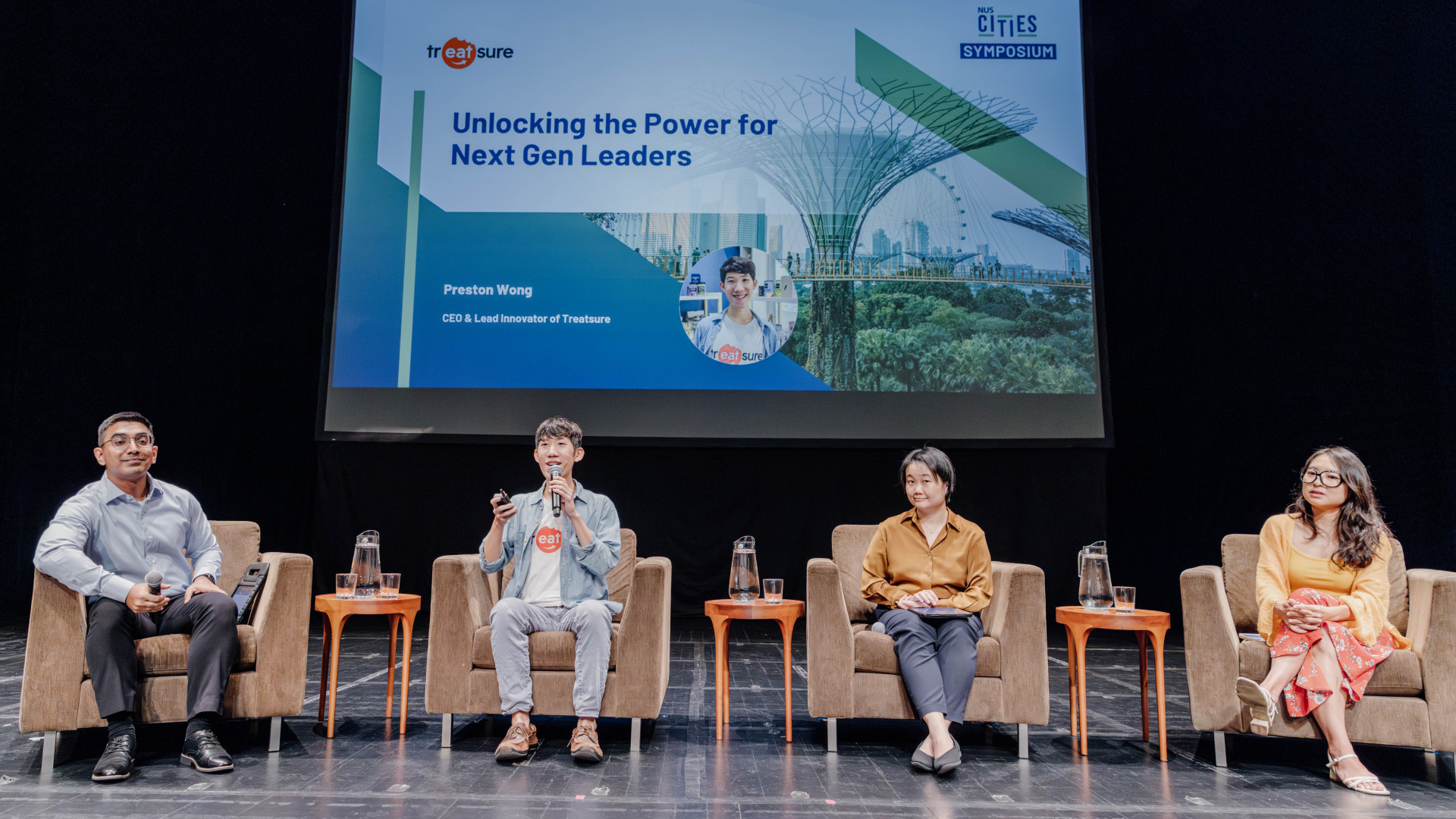
Indeed, the NUS Cities programme aims to groom more leaders for a brighter future, having trained more than 4,000 NUS undergraduate students in city-planning skills so far. Prof Khoo added that NUS Cities is also planning for a Masters in Cities and an executive programme for city leaders like mayors.
“We hope to produce a pipeline of people who will be more ready to face the challenges of cities,” he said, envisioning a future generation of “successful ancestors”.
