


NUS graduates are 9th most sought-after employees by companies worldwide
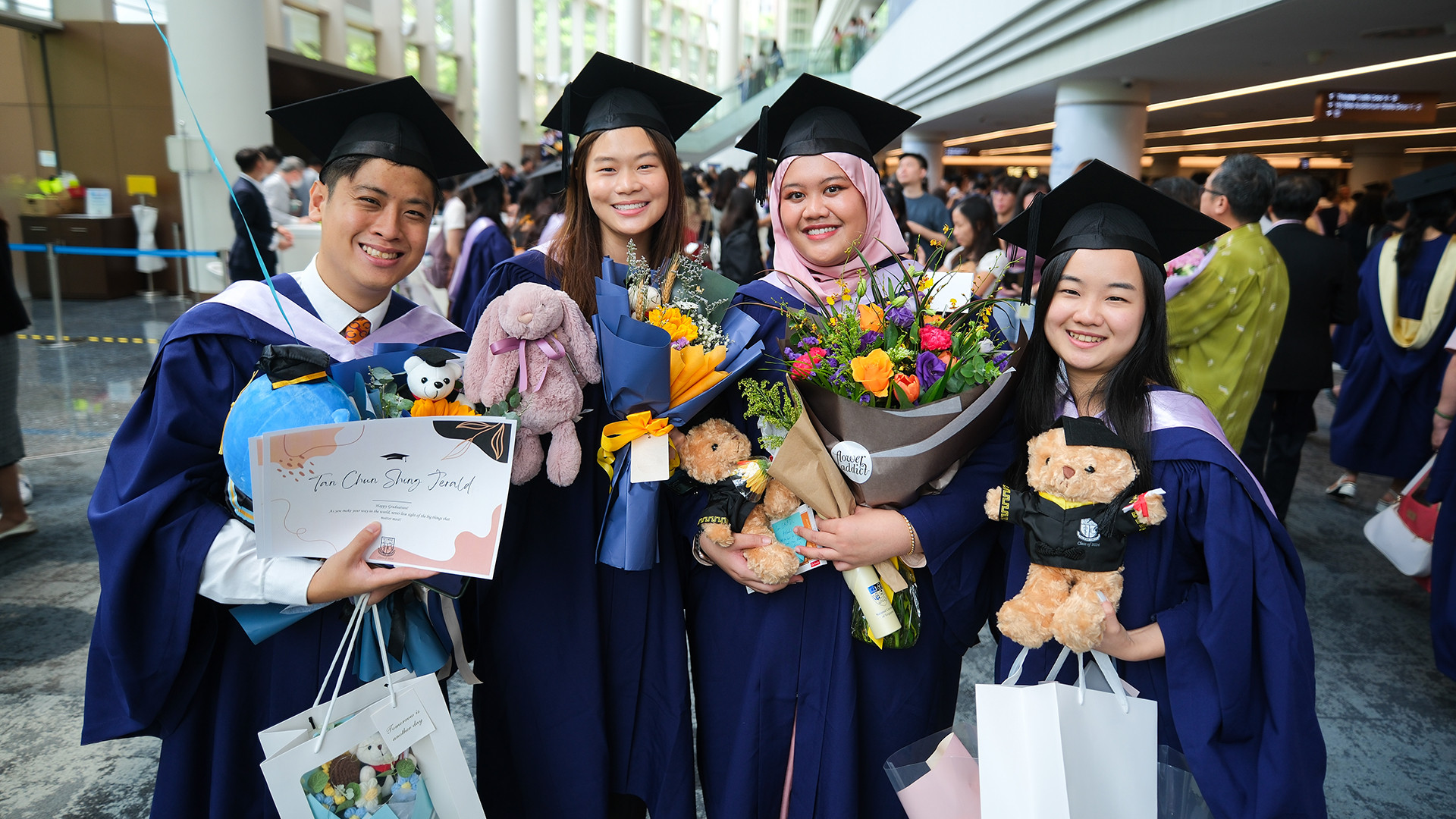
NUS graduates are regarded as the ninth most employable in the world, according to the Global Employability University Ranking and Survey (GEURS) 2025.
Produced by French consultancy Emerging and published by the Times Higher Education, the annual study gathers global employer insights to rank the top 250 universities that are the best at developing career- and workplace-ready graduates.
NUS has been consistently ranked in the top 10 since 2020. This year, it ranked second-highest in Asia behind eighth-placed The University of Tokyo. The first, second and third spots in the overall ranking went to the Massachusetts Institute of Technology, California Institute of Technology and Stanford University respectively.
Professor Aaron Thean, NUS Deputy President (Academic Affairs) and Provost said, “The NUS educational experience nurtures in our students a keen sense of curiosity, critical thinking, data-driven analytical skills, and global sensibilities. Strongly grounded in academics with market and global exposure, they are highly sought after across industries in Singapore and internationally, confident and ready to create impact and change. With technological disruptions now the norm, NUS is actively integrating skills and knowledge of fast-developing domains like AI and data analytics into our curriculum so that our students are future-ready.
“Our consistently high rankings in the Global Employability University Ranking and Survey are a testament to the quality of our interdisciplinary education and the outstanding capabilities of our graduates, who continue to thrive and lead in the competitive global workforce,” he added.
According to Emerging’s Co-founder and Managing Director Ms Sandrine Belloc, the three main drivers that positioned NUS in the top 10 were graduate skills, digital mindset and academic performance. With employability becoming a key benchmark for universities, NUS’ ranking reflects its commitment to preparing students for the future, she added. “By offering a combination of essential skills, a powerful network, and real-world job opportunities, they ensure students are ready to thrive in the workforce and excel in the years ahead."
Conducted between June to September 2024, the 2025 survey was expanded to include 13,240 international employers from 33 countries across five continents who recruited 1.3 million young graduates for non-technical, business, IT and engineering roles in 2024 to 2025.
Universities are assessed across 35 criteria, from which the following seven key employability drivers were identified: academic excellence, specialisation, graduate skills, digital mindset, focus on work expertise, social impact and leadership, and internationality
Nurturing diverse skills to prepare students for the future workplace
NUS has placed a strong emphasis on nurturing workplace-ready graduates. Earlier this year, the University launched the NUSOne initiative to foster a holistic and well-rounded university experience that integrates formal learning with student life and other out-of-classroom experiences to encourage greater self-directed personal growth and development.
Key features of the initiative include the Transition to Higher Education Programme, which offers courses to equip first-year students with academic and non-academic skills related to the science of learning and the use of generative AI tools; dedicating Wednesday afternoons for students to participate in non-academic activities, as well as the addition of a new sports-themed hostel named Valour House that seeks to build an active and inclusive community bonded through shared athletic experiences.
The University has also been intensifying efforts on equipping our students with career competencies to excel in the workplace. The NUS Centre for Future-ready Graduates supports students with a four-year career-readiness roadmap to encourage early career planning while broadening their exposure to industry.
They offer an impressive suite of resources and initiatives such as opportunities for overseas internships and study trips to fast-growing economies in Southeast Asia, India and China; career-readiness programmes including programmes like Career Booster and Career Advancement which advance students’ job search, interview, and workplace skills; access to a University-wide jobs and internships portal, mentorship programmes, dedicated career advisors, in addition to regular career fairs and recruitment talks.
