NUS Open House 2026: From the future of learning to the pulse of student life
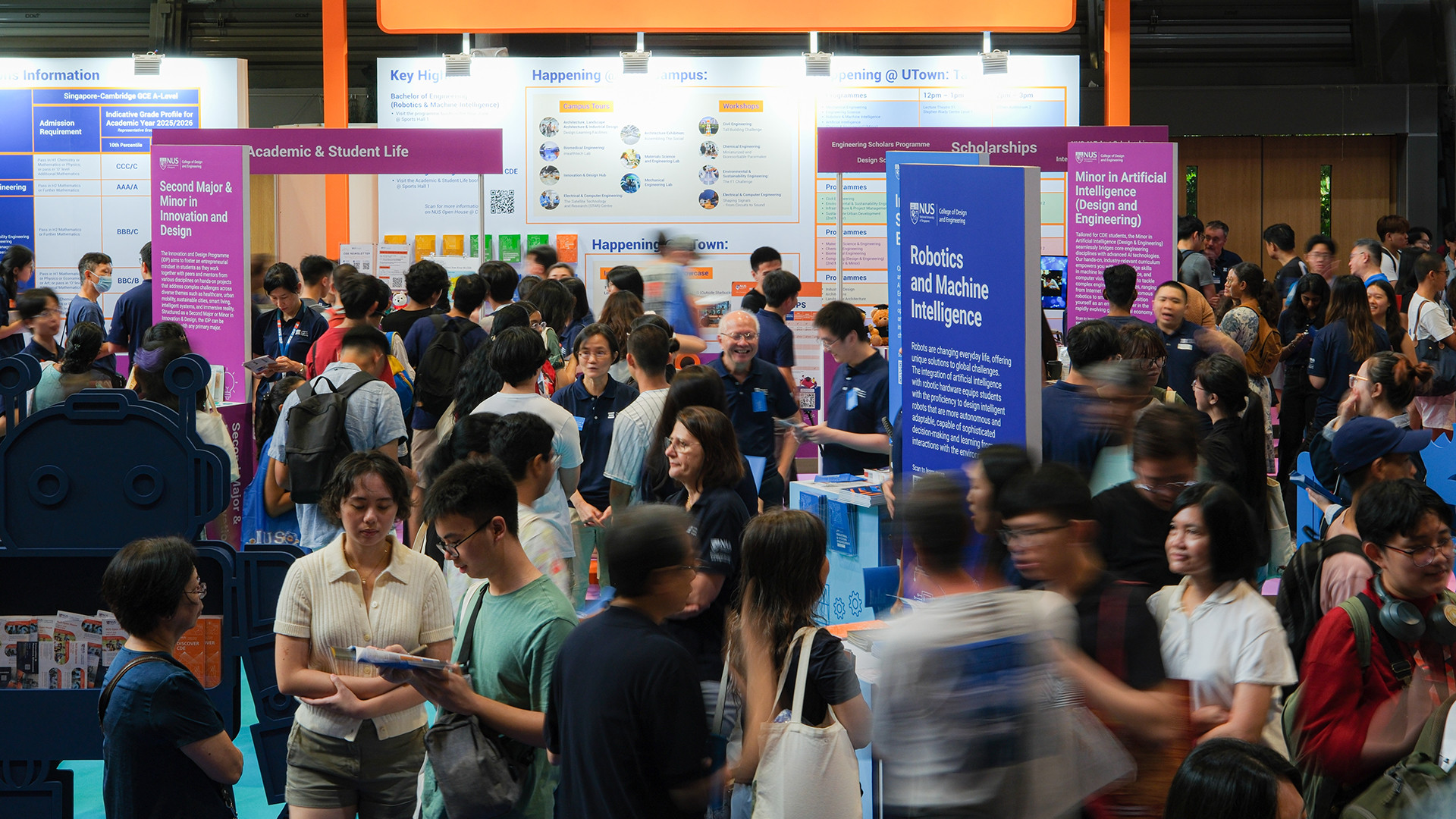
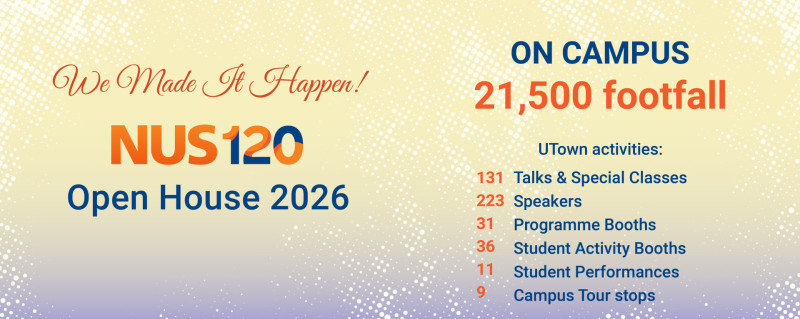
Prospective students turned out in force for the NUS Open House 2026, one of the University’s largest events of the year, with some 21,500 visitors packing University Town on 7 March for a first-hand look at the University’s distinctive academic programmes and its vibrant campus community.
Featuring an extensive line-up of programme booths, faculty talks, special classes, and campus tours, this year’s event – which spotlighted NUS’ suite of AI-focused programmes, cutting-edge innovations, and a sampling of student performances – also marked a new chapter for NUS Law, which hosted its entire showcase at UTown for the first time since moving to Kent Ridge in January.
Complementing the full-day showcase was a six-day virtual segment featuring online talks on global and career opportunities, as well as information sessions by NUS Business School, NUS Pharmacy, and the Yong Siew Toh Conservatory of Music.
“I found the programme talks and student sharing sessions especially enjoyable and informative because they provided real insights into student life and the academic experience at NUS,” said Suriya Selvarayar, a Ngee Ann Polytechnic student who is interested in applying to technology-related programmes.
New “AI+X” degrees for emerging careers
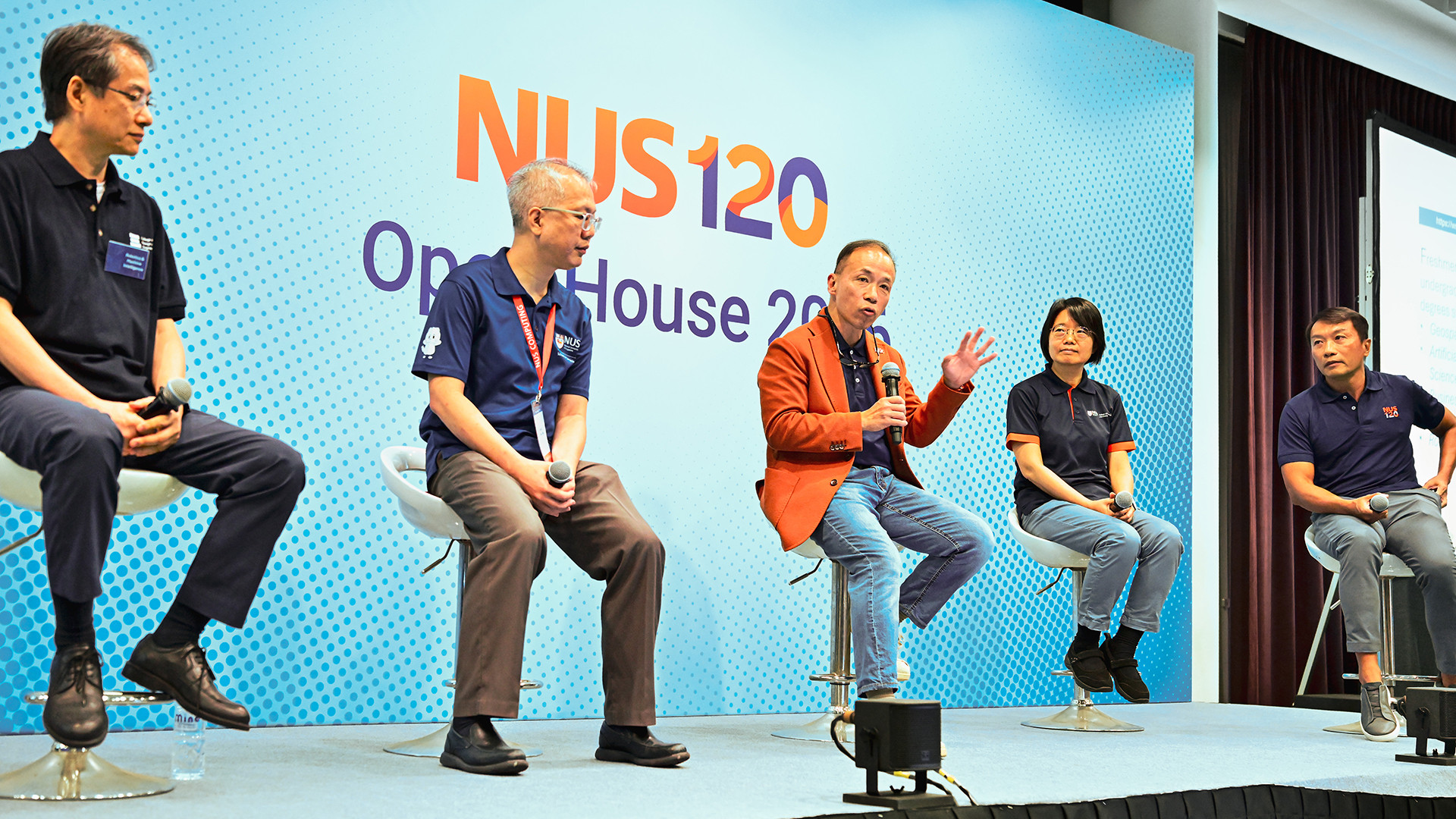
At a panel led by NUS Deputy President (Academic Affairs) and Provost Professor Aaron Thean entitled “Earth, Space, Data and AI: Degrees that Launch You into the Future”, visitors were introduced to NUS’ expanding slate of “AI+X” programmes, designed to integrate AI across diverse disciplines to meet the demand for new careers and fields driven by the technology.
Its latest effort is the new Bachelor of Science (Honours) in Geospatial Intelligence Cross-Disciplinary Programme (GIX), the first bachelor’s degree of its kind in Asia, which welcomes its first cohort in August 2026. Co-hosted by the Department of Geography at the College of Humanities and Sciences (CHS) and NUS Computing, it will train students to synthesise earth, space, and environmental data – such as those collected by satellites, drones and mobile devices – with AI tools to tackle challenges in urban planning, transportation, and climate change. With courses spanning geography and computer science, and an emphasis on integrated problem-solving, the programme opens doors to sectors including smart cities and sustainable development, as well as the space and satellite industries.
Three other “AI+X” degrees were also highlighted. Admitting its second intake in August, the Bachelor of Computing in Artificial Intelligence provides students with deep technical expertise, preparing them to design solutions to real-world problems using AI systems and models, grounded in a critical understanding of AI governance.
Formerly known as Information Systems, the revamped Bachelor of Computing in Business Artificial Intelligence Systems integrates AI systems with business expertise to solve enterprise challenges and drive digital innovation.
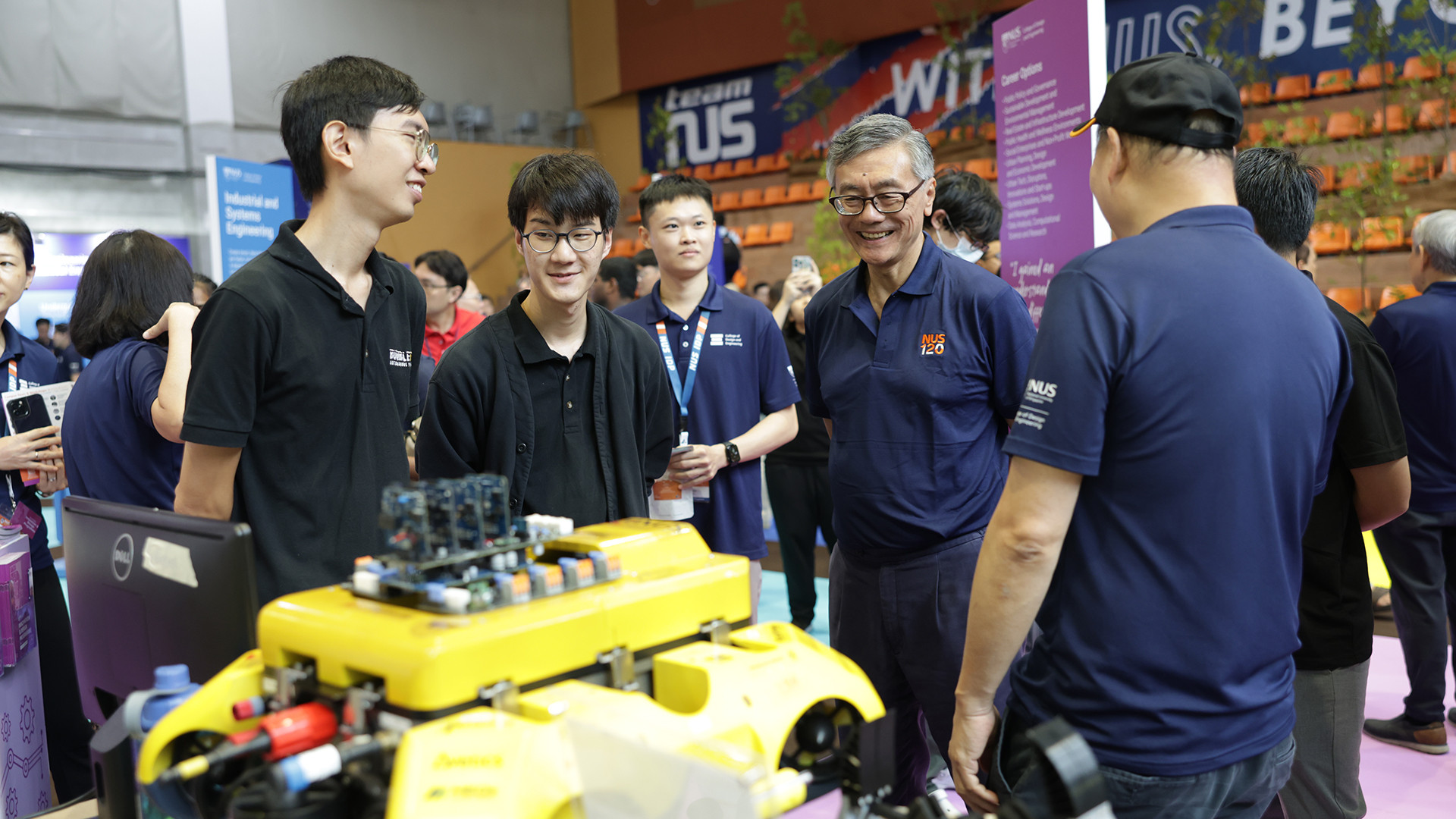
Also welcoming its second cohort in August is the College of Design and Engineering’s (CDE) Bachelor of Engineering in Robotics and Machine Intelligence programme. Combining hardware, software, and AI, it prepares students to lead the applications of AI-enabled robotics – systems capable of sophisticated decisions and learning from their environments – in markets that are fast expanding beyond manufacturing to sectors such as healthcare, agriculture and logistics.
Prof Thean emphasised that while NUS seeks to produce graduates who can capitalise on AI, the human element remains essential. “New jobs and careers are emerging, and the question is how we prepare for them,” he added, noting that the ultimate goal is for graduates to be adept at using the tools while possessing the critical thinking, decision-making and creativity to excel in the AI era.
Future-ready engineering
Aside from showcasing the new robotics and machine intelligence degree, CDE delivered a comprehensive overview of the available programmes tailored to the evolving landscape – from Mechanical Engineering to the Minor in Artificial Intelligence (Design and Engineering).
The Mechanical Engineering talk explored AI’s applications in a wide range of industries, from aeronautics and urban transportation to sustainable energy and future cities. Students were given an overview of their career prospects, ranging from thermal R&D engineers to process development scientists.
Another exciting new programme highlighted was the Artificial Intelligence minor. In the light of AI’s position as a national priority in Singapore, prospective students got a snapshot of the industry landscape, as well as how the minor’s industry-focused approach provides hands-on learning experiences in fundamental AI concepts like machine learning, natural language processing, and computer vision.
Innovations in action
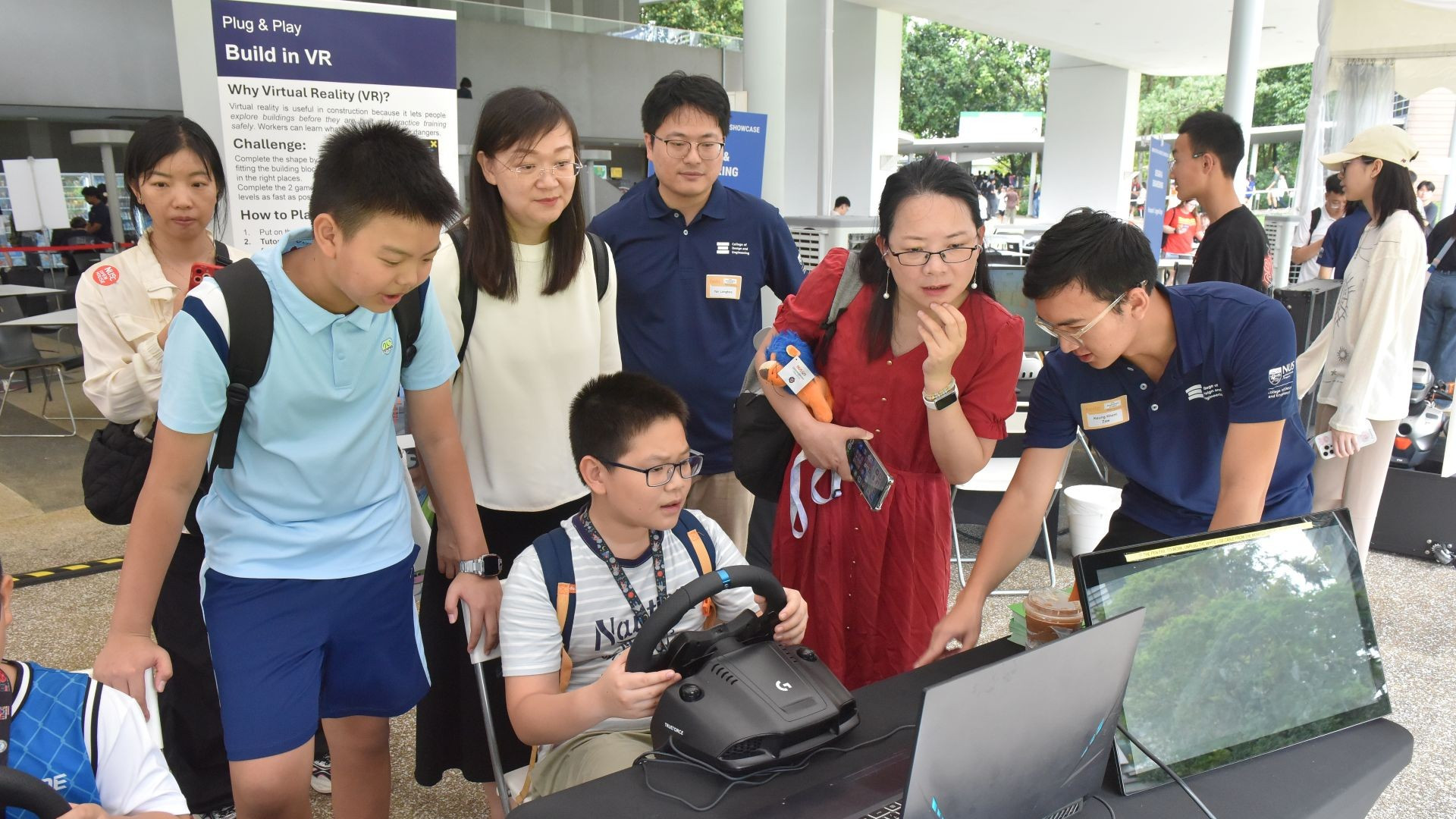
An interactive experience awaited visitors at the Innovation and Robotics Showcase, which featured futuristic projects by faculty and students at CDE, NUS College (NUSC), and the Centre for Quantum Technologies (CQT) that exemplify the spirit of cutting-edge innovation at NUS.
CDE presented an array of technologies making an impact in the real world, from virtual reality simulations that help users identify safety hazards in the construction industry to robot dogs that assist in search and rescue operations in hazardous terrain.
NUSC’s “Gut Guard”, a gamified learning Impact Experience project that tackles misconceptions about gut health, as well as CQT’s technologies developed for Singapore’s National Quantum-Safe Network testbed, were also on display.
Exploring real-world connections at CHS
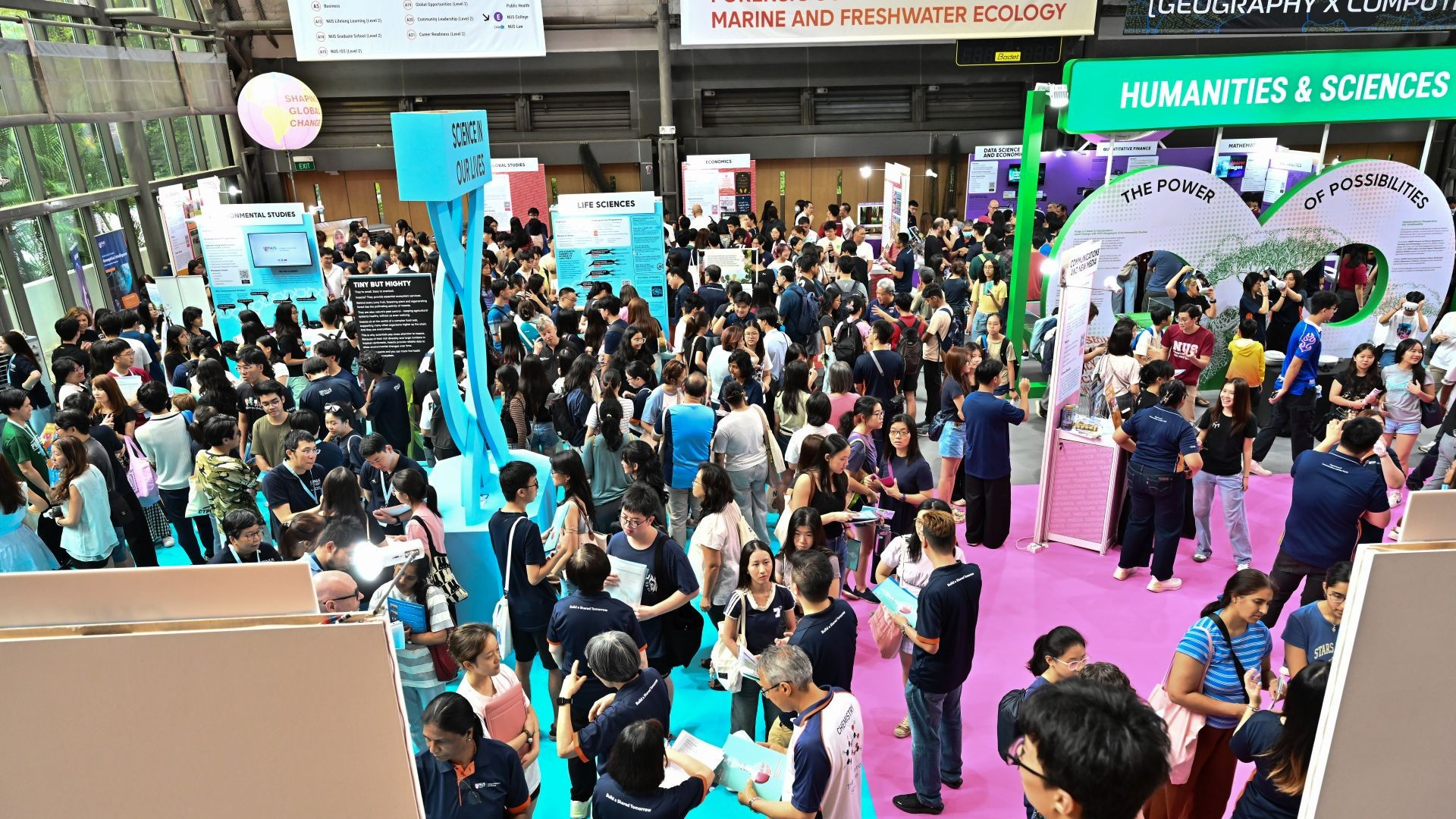
CHS, which brings together the Faculty of Science and the Faculty of Arts and Social Sciences, traded individual programme booths for immersive thematic zones, allowing visitors to understand how diverse disciplines converge in the real world as part of a new approach that brought its interdisciplinary ethos to life.
In “Understanding People and Societies”, which linked anthropology with sociology and psychology, they explored the role of these social sciences in understanding human behaviour, while “Science in our Lives” demonstrated the interconnected fields of chemical, biological and pharmaceutical science in contributing to better therapies.
Underscoring this approach was “Beyond the Textbook: Play, Policy, and Plants”, a panel which gathered faculty members from three interdisciplinary courses to discuss timely issues such as the importance of play in learning, the multifaceted aspects of drug regulation, and the study of plants as a lens for examining Southeast Asia’s ecology, communities, and livelihoods.
A new chapter at UTown
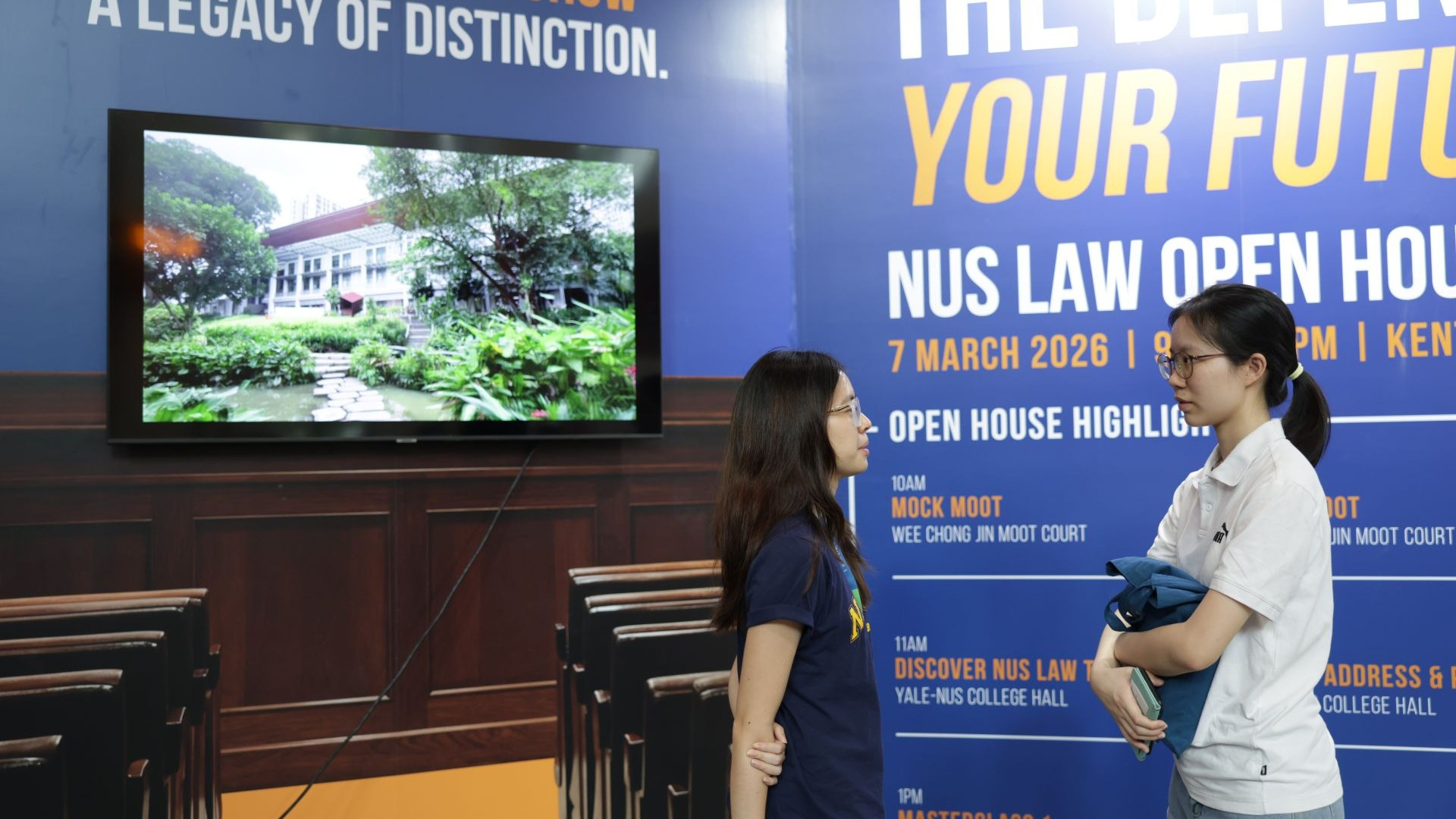
Following its relocation from Bukit Timah to Kent Ridge, NUS Law offered prospective students a one-stop shop of what the faculty had to offer, with mooting sessions, thought-provoking masterclasses, and talks that highlighted its world-class faculty and illustrious alumni network.
Unlike previous years, visitors no longer needed to shuttle between both campuses to explore all the Open House activities, said Mr Justin Tan, NUS Law’s Vice-Dean (Student Affairs), who gave a welcome talk to prospective students. Remarking on the vibrant setting of its newly upgraded campus, he said, “I think (visitors) will really love the fact that there are literally thousands of people living in UTown’s apartment blocks, all within a few minutes’ walk of our new campus. This translates to endless possibilities for a fantastic undergraduate life!”
Beyond the books
NUSC, the University’s honours college, held sessions showcasing its Global Experience (GEx) programme, which immerses students in 14 overseas sites for a month to engage deeply with their themes. In GEx New York, students examine its identity as a global city, investigating its urban development and cultural heritage through interactions with high-level diplomats, non-government organisations, and industry professionals.
NUS Nursing held special classes where users learned empathetic communication in palliative care by conversing with an AI chatbot, and showcased its new Concurrent Degree Programme, which combines the Bachelor of Science (Nursing) (Honours) with the Master of Science (Biomedical Informatics).
Meanwhile, NUS Medicine offered a hands-on look at the future of medical education through clinical simulations, virtual reality stations, and insightful talks on its curriculum.
Inside scoop on residential life
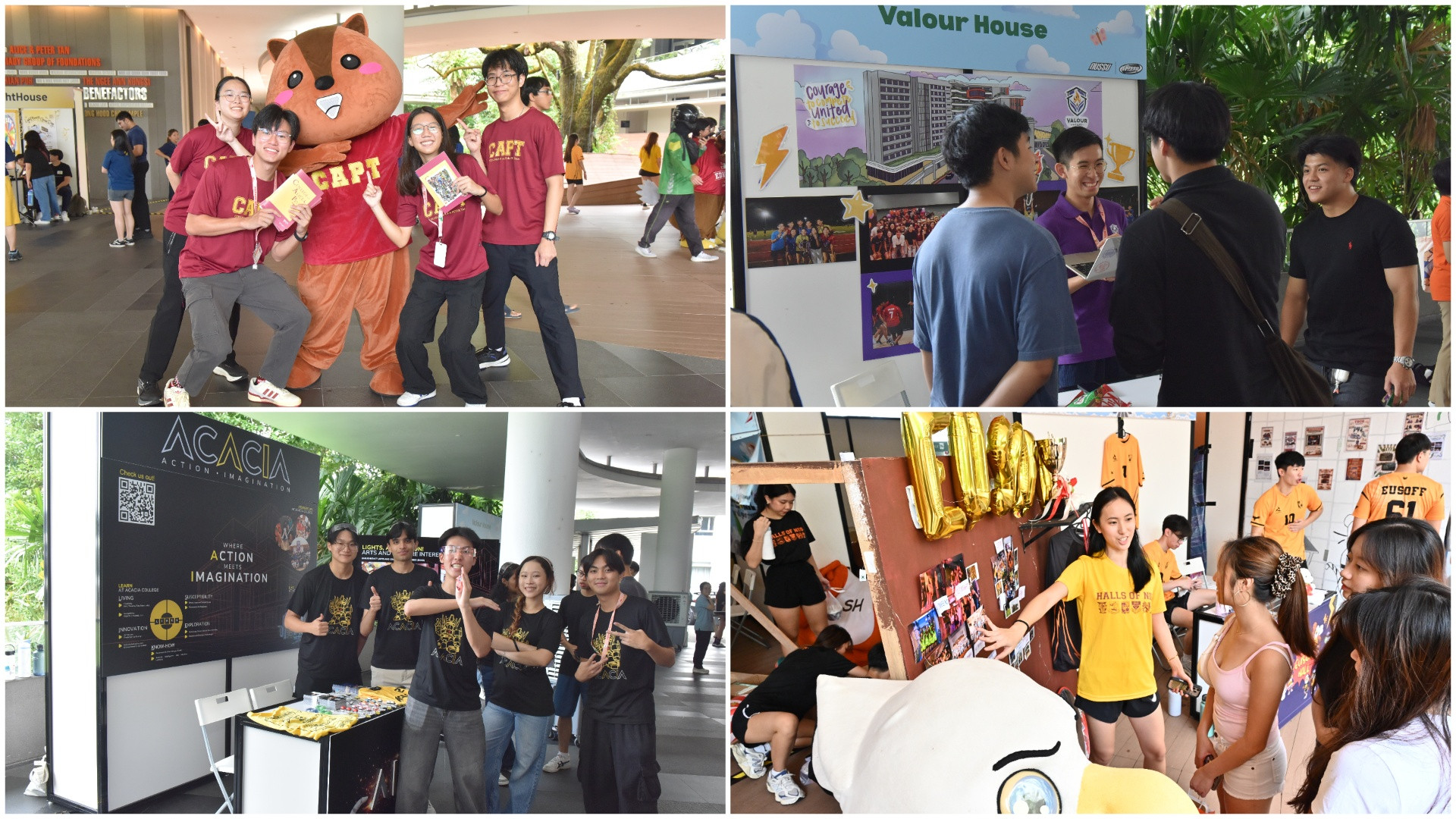
Through talks, booths, and guided tours, Masters, Resident Fellows, and student leaders from the Residential Colleges, Halls, and Houses offered prospective students insights on the culture of their residences, the partnership between resident fellows and residents, and the vast array of student-led initiatives that foster vibrancy, community spirit, and inclusivity.
NUS’ newest hostel, the sports-themed Valour House, highlighted its key pillars of courage, strength, and resilience – characteristics not just of athletes but of students – to demonstrate its culture of supporting sporting achievements and encouraging residents to step out of their comfort zones.
Vibrancy of NUS student life
A dynamic line-up of performances and showcases, spotlighting some of NUS’ finest talents in the performing arts, was presented by the various student clubs and interest groups at the Student Village. From upbeat, catchy tunes by NUS Fingerstyle Guitar and a capella groups NUS Resonance, RHythm from Raffles Hall, and Eusoff Chorapella from Eusoff Hall to skilful renditions by Helix House’s Helix Band and Sheares Hall’s Sheares Band, visitors were treated to a glimpse into the vibrant student experience at NUS beyond academic pursuits.