


Into the deep: NUS researchers set sail on 24-day mission with OceanX to study marine biodiversity
NUS and OceanX have embarked on a 24-day voyage to the Monsoon Rise in the Christmas Island Seamount Province, a largely unexplored seamount chain in the eastern Indian Ocean. This is Singapore’s first deep-sea scientific expedition since signing the United Nations Biodiversity Beyond National Jurisdiction (BBNJ) Agreement.
A concerted effort to explore unchartered waters
On board the state-of-the-art research vessel − the OceanXplorer − 14 NUS researchers are joined by 2 researchers from NTU, 2 from Indonesia, and 1 each from Thailand, Vietnam and Fiji.
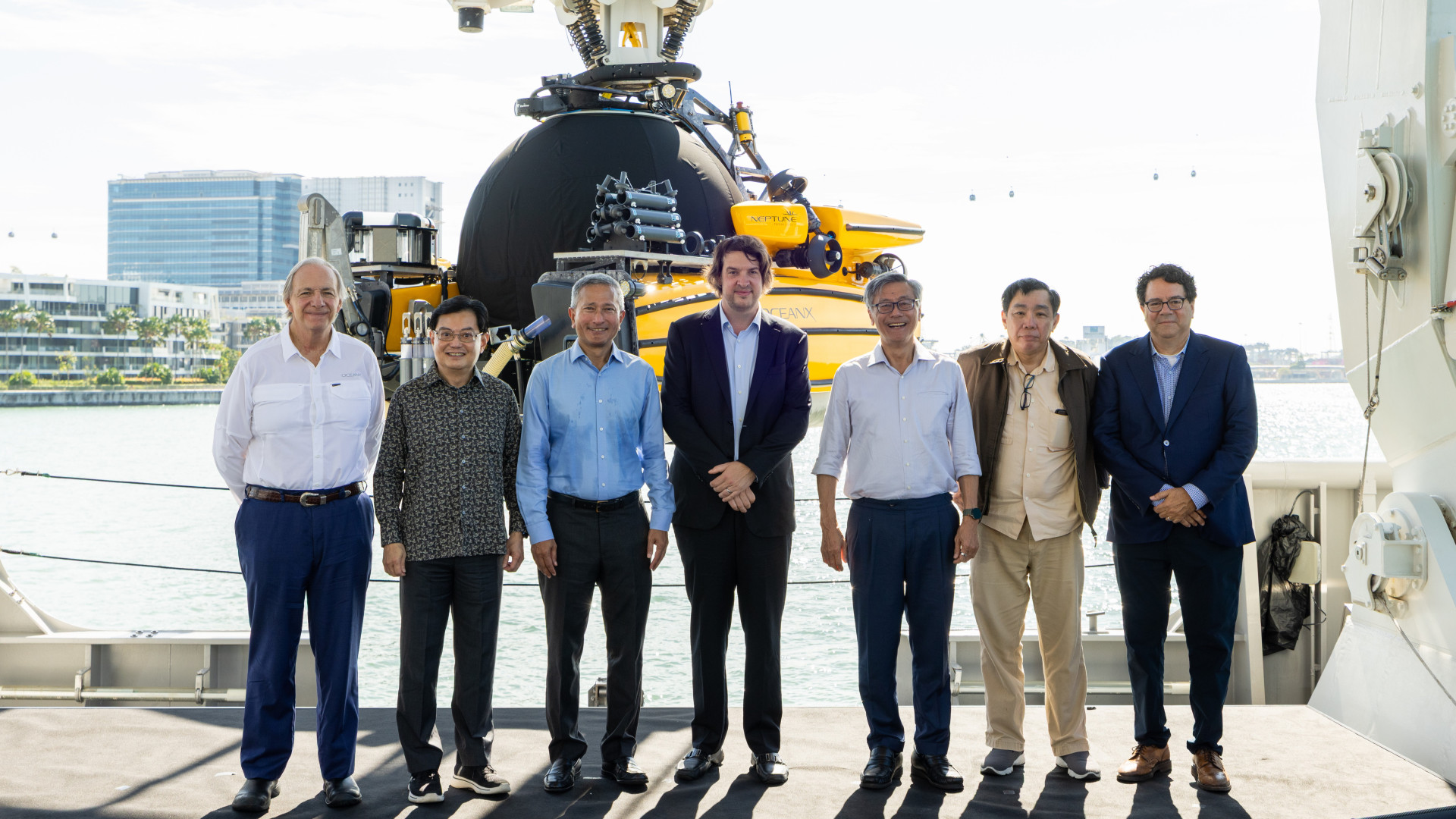
On 4 October 2025, a ceremonial send-off on the OceanXplorer at Marina @ Keppel Bay was graced by government leaders, scientists, and partners. Dr Vivian Balakrishnan, Minister for Foreign Affairs; Mr Heng Swee Keat, Chairman of National Research Foundation (NRF); Professor Tan Eng Chye, NUS President; Mr Ray Dalio, Co-Founder of OceanX; and Mr Mark Dalio, Co-Founder and Co-CEO of OceanX, were among the distinguished guests who attended the event.
“This expedition demonstrates Singapore’s commitment to the conservation and sustainable use of marine biodiversity in areas beyond national jurisdiction, especially following the adoption of the BBNJ Agreement in 2023 and its imminent entry into force in January 2026. Such cutting-edge research is critical in building the scientific foundation needed to understand, protect, and preserve marine biodiversity,” said Dr Balakrishnan.
“Singapore is committed to the inclusive implementation of the BBNJ Agreement which taps on the expertise of ASEAN and Small Island Developing States. The collaborative approach will contribute to capacity building, and the fair and equitable sharing of benefits from marine scientific research in the high seas,” added Dr Balakrishnan.
This expedition and the development of deep-sea research capacity in Singapore is supported by a S$6 million grant from the NRF.
“This mission is more than a voyage of discovery — it is a contribution to advancing collaboration and ocean conservation, for a better future of our planet,” said NUS President Prof Tan.
Diving into greater depths
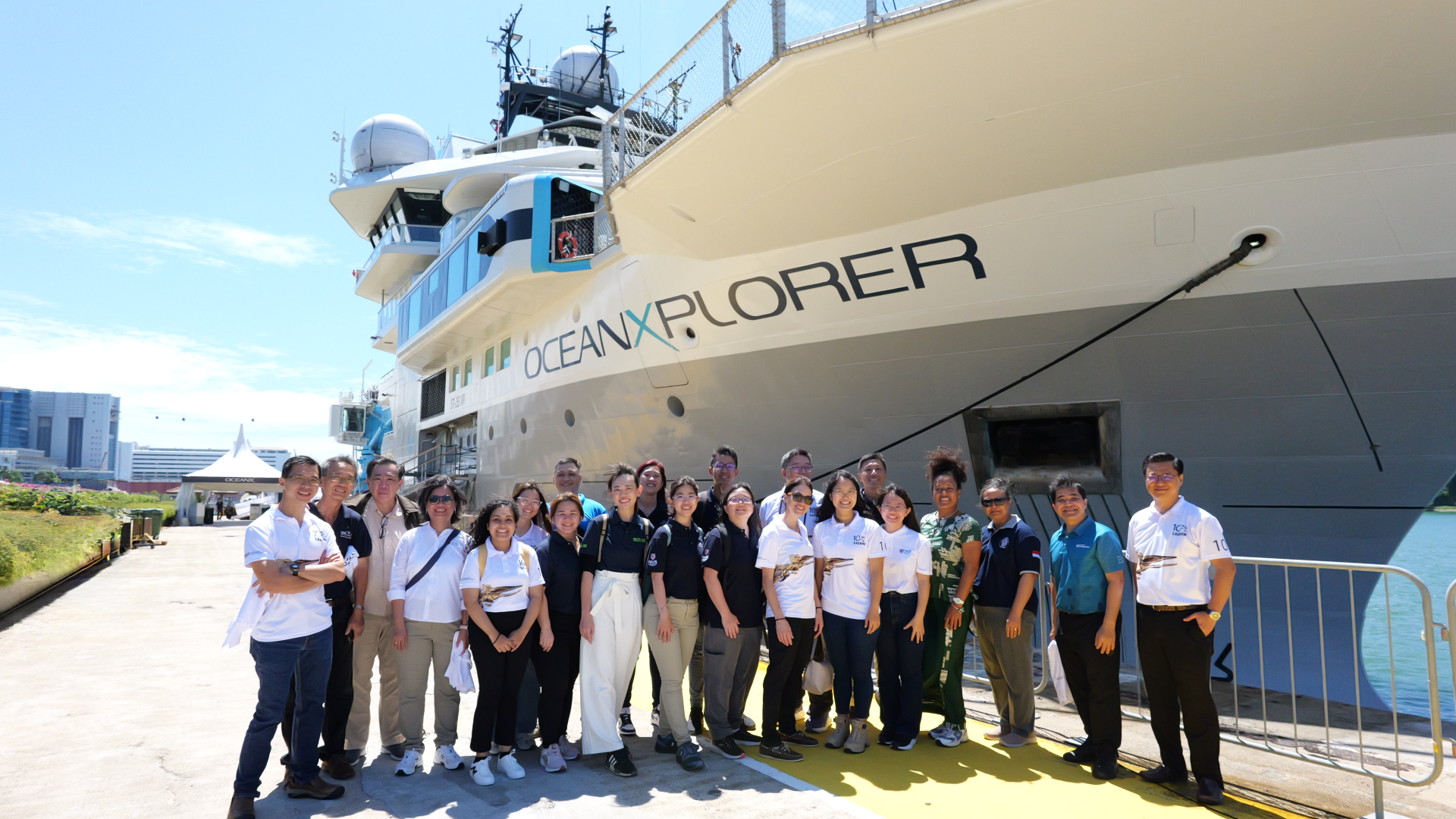
Launched in 2016, OceanX is a nonprofit initiative that combines ocean exploration, science, education and storytelling to uncover the mysteries of the ocean, unlock its potential and inspire greater protection of it. A floating laboratory equipped with remotely operated vehicles and submersibles that can reach maximum depths of 6,000m and 1,000m respectively, the OceanXplorer have since conducted expeditions in the Red Sea, and in the seas around Malaysia, Indonesia and Africa.
“OceanXplorer was designed as a platform to unite exploration, science, media, and education. Partnering with NUS on this mission allows us to expand knowledge of one of the last great unknowns of our planet and inspire people across Asia and the world to protect it,” said Mr Mark Dalio, Founder and Co-CEO of OceanX.
Led by Dr Tan Koh Siang, Chief Expedition Scientist and Head of the Marine Biology and Ecology Laboratory at the NUS Tropical Marine Science Institute (TMSI), the 24-day mission also includes researchers from Vietnam National University, Indonesia’s Diponegoro University and National Research and Innovation Agency, Thailand’s Kasetsart University, and Fiji’s Social Empowerment Education Programme.
“For Singapore and NUS, this expedition is both a scientific breakthrough and a regional milestone. It strengthens our deep-sea research capacity, builds collaboration across ASEAN, and positions Singapore as a hub for international marine science,” said Professor Peter Ng, mission lead from the Lee Kong Chian Natural History Museum (LKCNHM) and TMSI at NUS.
Uncovering seamount secrets
Seamounts are massive underwater mountains with steep sides rising from the seafloor. Often formed by extinct volcanoes, seamounts are known to be teeming with marine life. Their solid surfaces allow corals and sponges to grow, providing small sea creatures with a home, which in turn attracts larger predators. Although there are over 10,000 seamounts globally, these underwater oases remain poorly documented. Establishing a scientific record of the marine life in these deep-sea regions is crucial for shaping conservation and sustainable management strategies.
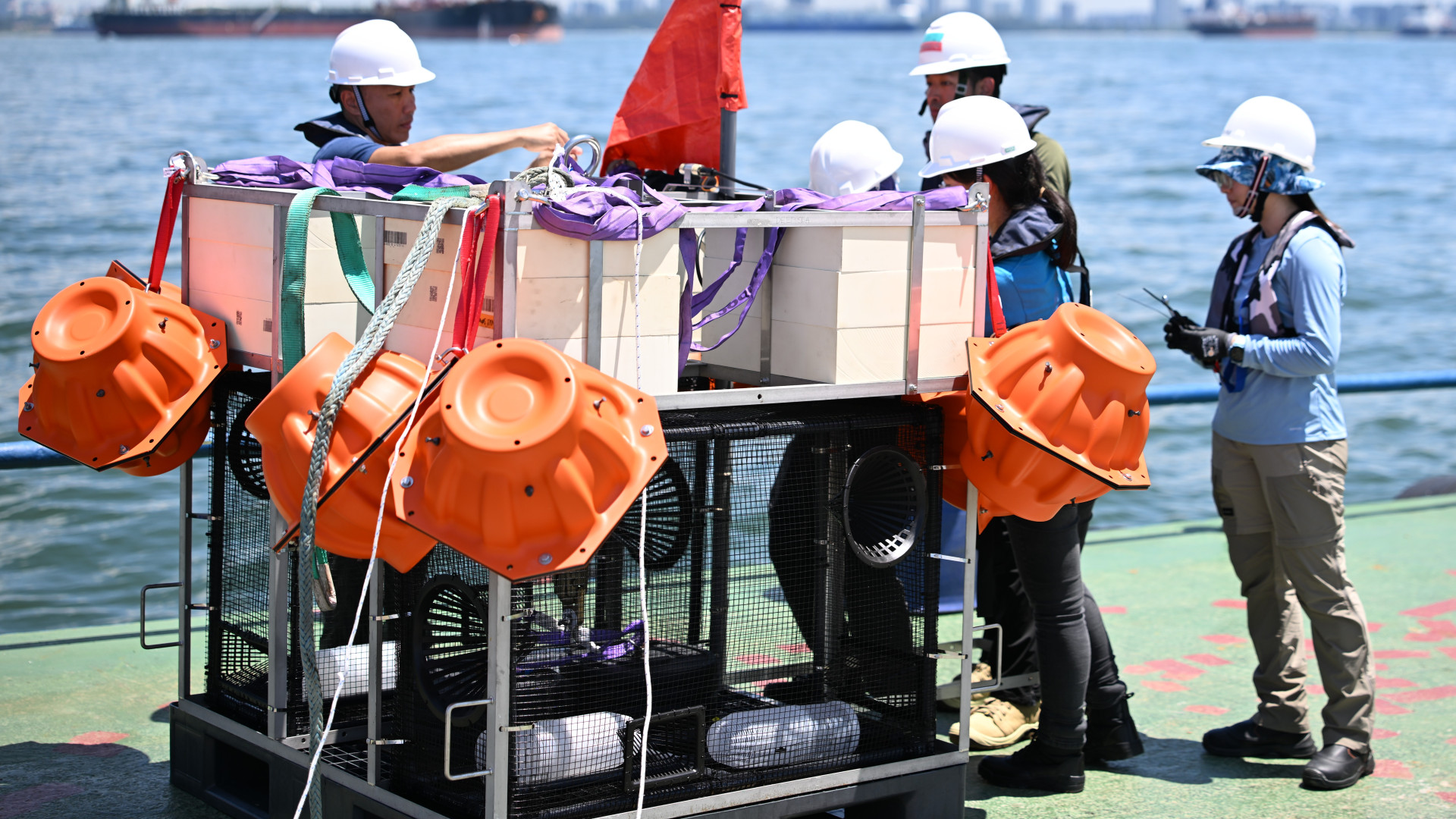
The expedition aims to characterise the biodiversity over more than 17,000 square kilometres of deep-sea terrain. Specially constructed traps – made of a system of traps within a trap – will be deployed to ensure that captured fish will be separated from their predators. Samples of seawater from different regions will also be collected to study eDNA (environmental DNA) – the trace amount of DNA shed by organisms from their skin, body fluids or waste. Extracting eDNA from water samples for sequencing and genetic analysis allows scientists to detect biodiversity without direct capture.
Specimens discovered from the expedition will be curated at LKCNHM and findings will be published in peer-reviewed and open access journals to support international ocean conservation and management efforts.
“The Indian Ocean remains one of the least studied parts of our planet. This mission gives us an unprecedented opportunity to gather insights that can transform how we understand biodiversity in this region,” said Dr Vincent Pieribone, Co-CEO and Chief Science Officer of OceanX.
In 2018, LKCNHM and TMSI collaborated with the Indonesian Institute of Sciences for a 14-day deep-sea biodiversity expedition. South Java Deep Sea Biodiversity Expedition (SJADES) surveyed 63 sites over a remarkable distance of 2,200 kilometres, yielding over 12,000 specimens from 800 species, including sponges, jellyfish, molluscs, starfish, worms, crabs, prawns and fish. Among these, more than 12 new species were discovered, and over 40 species were new records for Indonesia.
Last year, two NUS students had the privilege to live on board the OceanXplorer in the OceanX Education Young Explorers Programme (YEP) for 5 days, travelling from Jakarta to Bali. Participating in activities like seminars, lab work, job shadowing and even snorkelling, the eye-opening experience ignited their passion for marine biology and deepened their connection and understanding of the ocean.
