


NUS Sustainable Futures Forum explores cross-sector climate solutions

In a world of rising sea levels, record-high temperatures and more frequent extreme weather events, climate change knows no borders and addressing this requires urgent, wide-ranging solutions. NUS is stepping up to the plate with the launch of NUS Sustainable Futures (NUS SF) — a new initiative that encourages experts across different disciplines to work together to tackle green issues.
It aims to break down academic silos and foster collaborative research to develop solutions to complex sustainability challenges, said Professor Koh Lian Pin, NUS Vice President (Sustainability and Resilience) and Chief Sustainability Scientist, who heads the NUS SF team, in his welcome address at the launch.
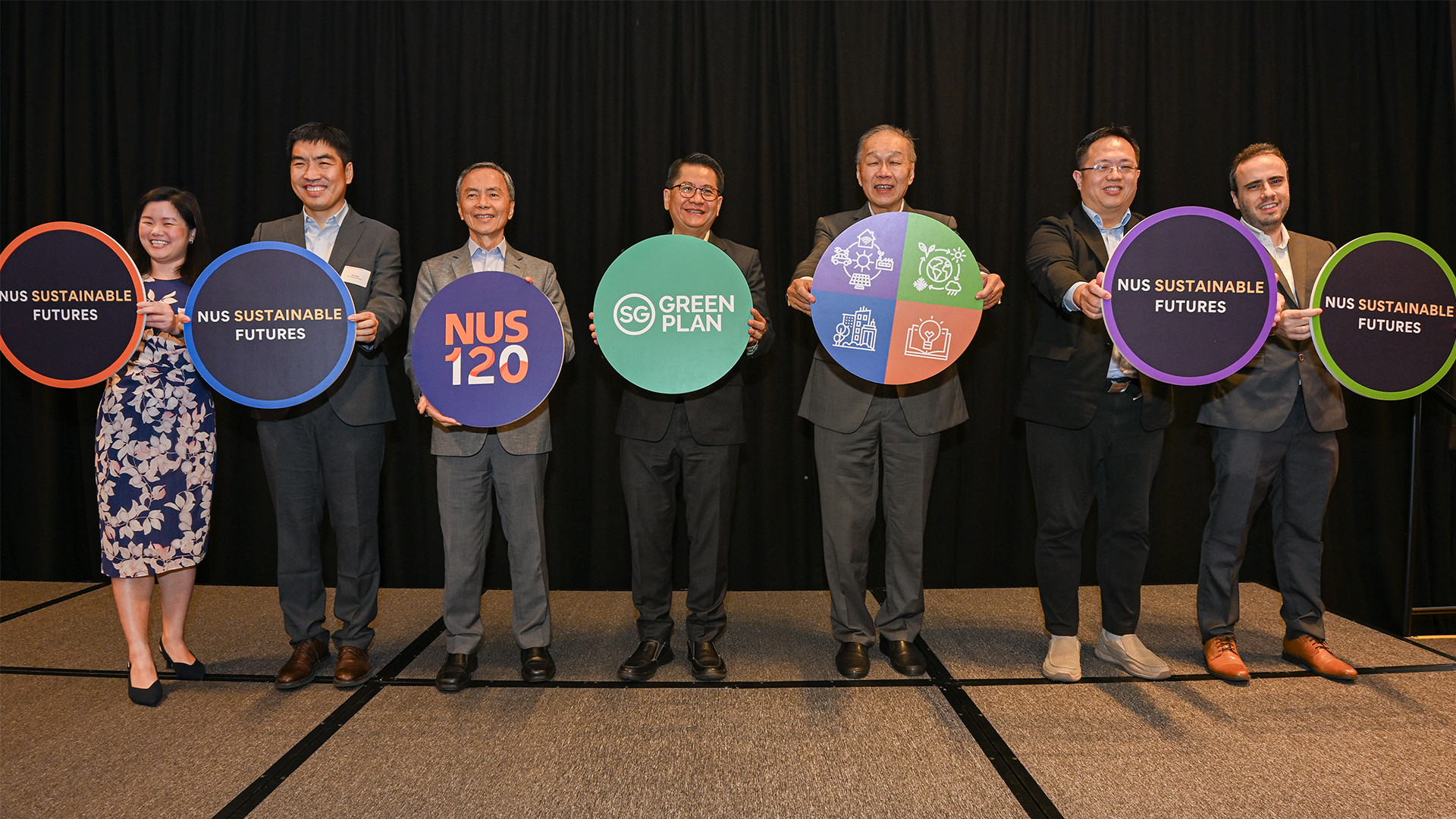
Climate-related challenges are “amplifying the tensions and trade-offs among the competing priorities of society, creating wicked problems”, observed Prof Koh, adding that solving these challenges will require researchers and partners from different fields to work together.
The new NUS SF will answer that collaborative call. As a show of commitment, the University will invest S$10 million to support training and research, focusing on the areas of building energy resilience, addressing climate and nature-related challenges, and enhancing urban sustainability. It also aims to secure additional funding from the government and industry partners over the next 12 months.
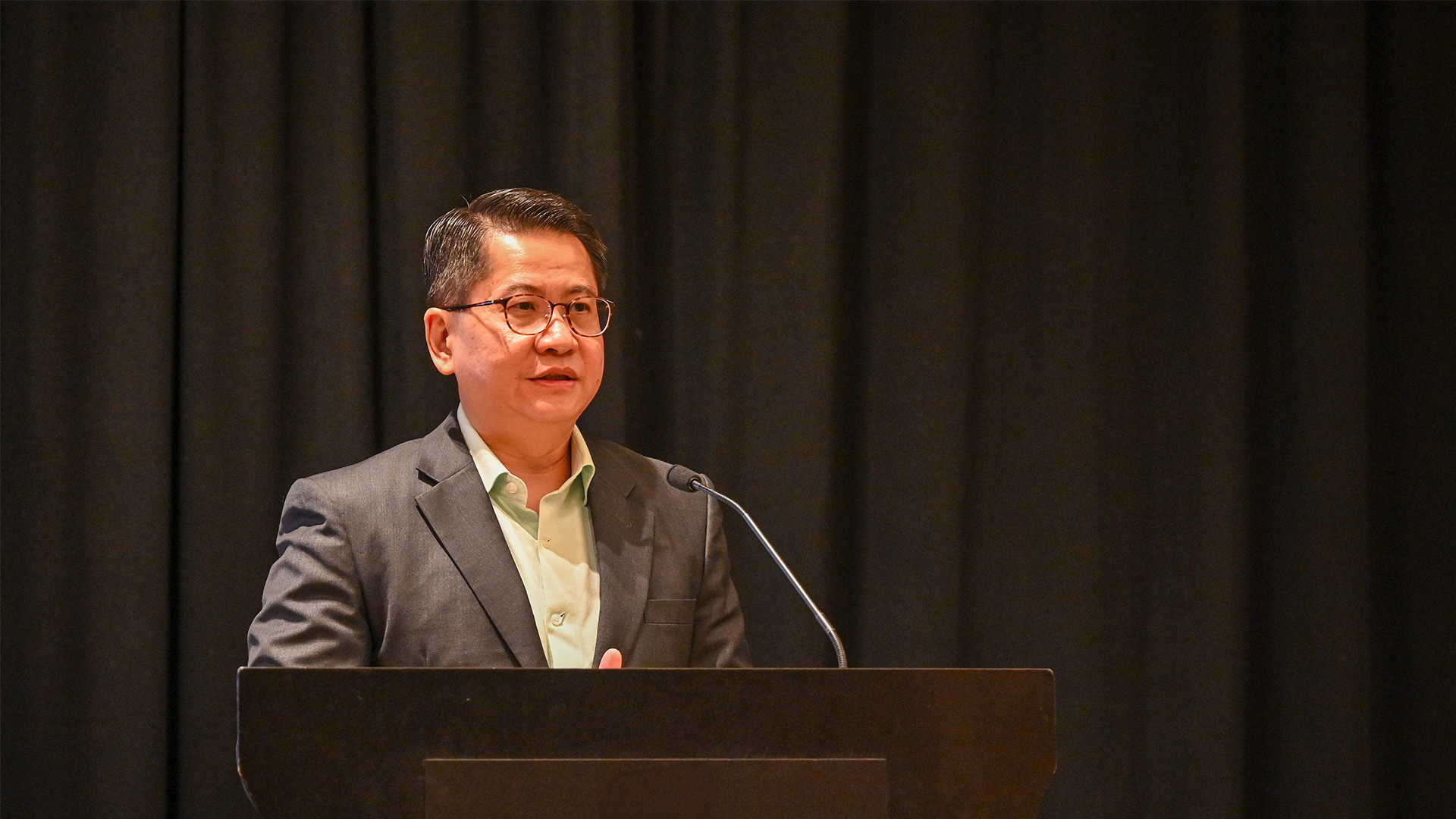
In his opening address, the event’s Guest-of-Honour, Mr Stanley Loh, Permanent Secretary for Sustainability and the Environment, highlighted that the urgency for collaborative initiatives is real. Following the United States’ recent withdrawal from the Paris Agreement, an international treaty which pledges to cap global warming at 2 degrees Celsius above pre-industrial levels, there was a notable shift leading to some uncertainties around global climate commitments.
“But what has not changed is the speed of climate change,” he stressed, adding that the government will not be able to solve challenges alone. “The public, private, and people sectors need to work together to co-create projects, systems, and mindset changes required for this huge transition.”
Additionally, a new NUS Sustainability Academy will complement NUS SF’s education and capacity-building arm. Jointly established with the NUS School of Continuing and Lifelong Education, the Academy will curate programmes to upskill professionals on sustainability topics such as climate, energy, nature, and green finance. An example is the newly launched Professional Certificate in Carbon Services and Trading that is developed in collaboration with industry professionals and government agencies such as the Singapore Economic Development Board and Enterprise Singapore.
Also under the NUS SF umbrella is a Sustainability Plaza that will showcase NUS’ sustainability research and thought leadership, as well as facilitate engagements between the University and various external stakeholders in exploring partnership and entrepreneurial opportunities.
NUS Sustainable Futures Forum: Accelerating science translation through Public-Private-People partnership
The launch of NUS SF, held during the NUS Sustainable Futures Forum, brought together industry leaders, academics, and government officials across four panel discussions aligned with the key pillars of NUS SF:
- Advancing Grid Modernisation and Renewable Energy Integration for a Sustainable Future moderated by Professor Lee Poh Seng, Co-Director of the NUS Energy Solutions Hub, NUS SF;
- Transformational Changes for Climate-resilient Agriculture in Southeast Asia moderated by Associate Professor L. Roman Carrasco, Co-Director of Initiatives for Climate, Oceans & Nature, NUS SF;
- Capacity Building Track by NUS Sustainability Academy moderated by Ms Melissa Low, Head of the Academy, NUS SF; and
- Inclusive Cities for a Sustainable Future: Community, Health and Social Capital moderated by Associate Professor Yuan Chao, Co-Director of Integrative Urban Solutions, NUS SF.
Breaking down silos
Dr Su Bin, Senior Research Fellow and Division Head of NUS Energy Studies Institute (ESI) and panellist at the forum, said that energy modelling can inform policy and investment decisions across countries.
One of ESI’s key findings is that an integrated ASEAN power grid could reduce total system costs by up to 12 per cent. There is growing momentum in this area, with Singapore doubling its capacity to import electricity from Laos and Malaysia in 2024.
Such collaboration should be extended beyond energy to the field of agriculture, which is the foundation of food security and sustainability. Yet, agriculture practices often come with an environmental cost — from deforestation to soil and water pollution as well as the loss of biodiversity — so how can we meet our food security needs while mitigating these harmful consequences?
In response, Associate Professor Janice Lee from Nanyang Technological University’s Asian School of the Environment suggested working directly with smallholder farmers to improve their green footprint, but cautioned that this needs to be complemented by strong governance that protects biodiversity.
There is, however, reason to be optimistic, said Assistant Professor Remi Luo from NUS’ Department of Geography. For instance, he noted that research has shown that oil palm production can be doubled by closing yield gaps without the need for deforestation. Yield gaps refer to the difference between a crop’s actual and potential yield.
“Some answers are already out there. We just need significant effort to pick them up and implement them,” he said.
Education and equity in climate action
Panellists also discussed ways to mitigate the impact of climate change on different segments of society, by relooking policies, education and urban development.
In the sinking capital of Jakarta, Indonesia, the wealthy are able to relocate to avoid rising sea levels, said Professor Yu Qin from NUS’ Department of Real Estate. The poor have no choice but to stay. Such “market failures” necessitate re-examining policies to see how they can help lower-income groups better adapt to the effects of climate change, she said.
But there are also opportunities for everyday folk to play their part, especially in the healthcare sector. As healthcare itself contributes significantly to carbon emissions –– more than aviation or shipping globally –– engaging healthcare workers in sustainability is crucial, said Adjunct Assistant Professor Amanda Zain, Deputy Director at the NUS Centre of Sustainable Medicine.
Given their trusted position in society, healthcare workers can be a “significant lever for climate action”, she said. For example, they can help to decarbonise the sector by switching to more environmentally friendly anaesthetic gases.
There is, however, a gap between will and action. While 80 per cent of global healthcare professionals expressed willingness to adopt sustainable practices, only about one-third knew what their country’s net-zero target was, she added.
NUS aims to improve awareness by enhancing sustainability education. For example, the NUS Sustainability Academy recently refreshed its flagship Climate Change and Sustainability 101 Course for Public Officers, which has been expanded to include additional topics on green supply chain and procurement, water sustainability as well as waste recycling.
The Academy has also partnered with the London-based Task Force on Nature-related Financial Disclosures to launch its first regional “Train the Trainers” programme in Singapore, which aims to communicate nature-related financial disclosures to industry players in a more consistent way.
Sustainability, however, is a long game. The impact of sustainability education should be measured over extended timeframes, said Professor Lawrence Loh, Director of the Centre for Governance and Sustainability at the NUS Business School.
“We need three, five, 10-year follow-ups with our learners. Ultimately, we should bring them back for continuous learning as their career needs evolve,” he said.
