


Putting sustainability into practice: How NUS powers its green vision through a multi-pronged approach across campus operations

In this series, NUS News explores how NUS is accelerating sustainability research and education in response to climate change challenges, and harnessing the knowledge and creativity of our people to pave the way to a greener future for all.
At the University, sustainability is more than a guiding principle – it is built into the way the University operates. From campus infrastructure to information technology (IT) systems and procurement practices, administrative units across NUS are advancing a collective vision and taking a multi-pronged approach for a greener future, leveraging innovations to make a tangible impact.
Greening infrastructure for a more resilient and nature-connected campus
Leading the charge to tackle sustainability challenges, NUS University Campus Infrastructure (UCI) has developed the Campus Sustainability Roadmap 2030, which anchors its efforts strongly on climate action across its five pillars: Design, Defend, Decarbonise, Dematerialise, and Dialogue.
“Sustainability is at the heart of what we do across campus infrastructure, operations and services,” said Mr Koh Yan Leng, NUS Vice President (Campus Infrastructure). “Together with our staff and student community, we will advance our campus sustainability goals to shape a more resilient and sustainable campus for future generations.”
To decarbonise a growing campus, UCI has initiated a three-year plan to cut greenhouse gas emissions towards the 2019 baseline level by around 2027. Central to this plan is to significantly reduce the energy use of energy-intensive buildings and to design low-carbon, climate-responsive buildings of the future that are connected to nature and are people-centric.
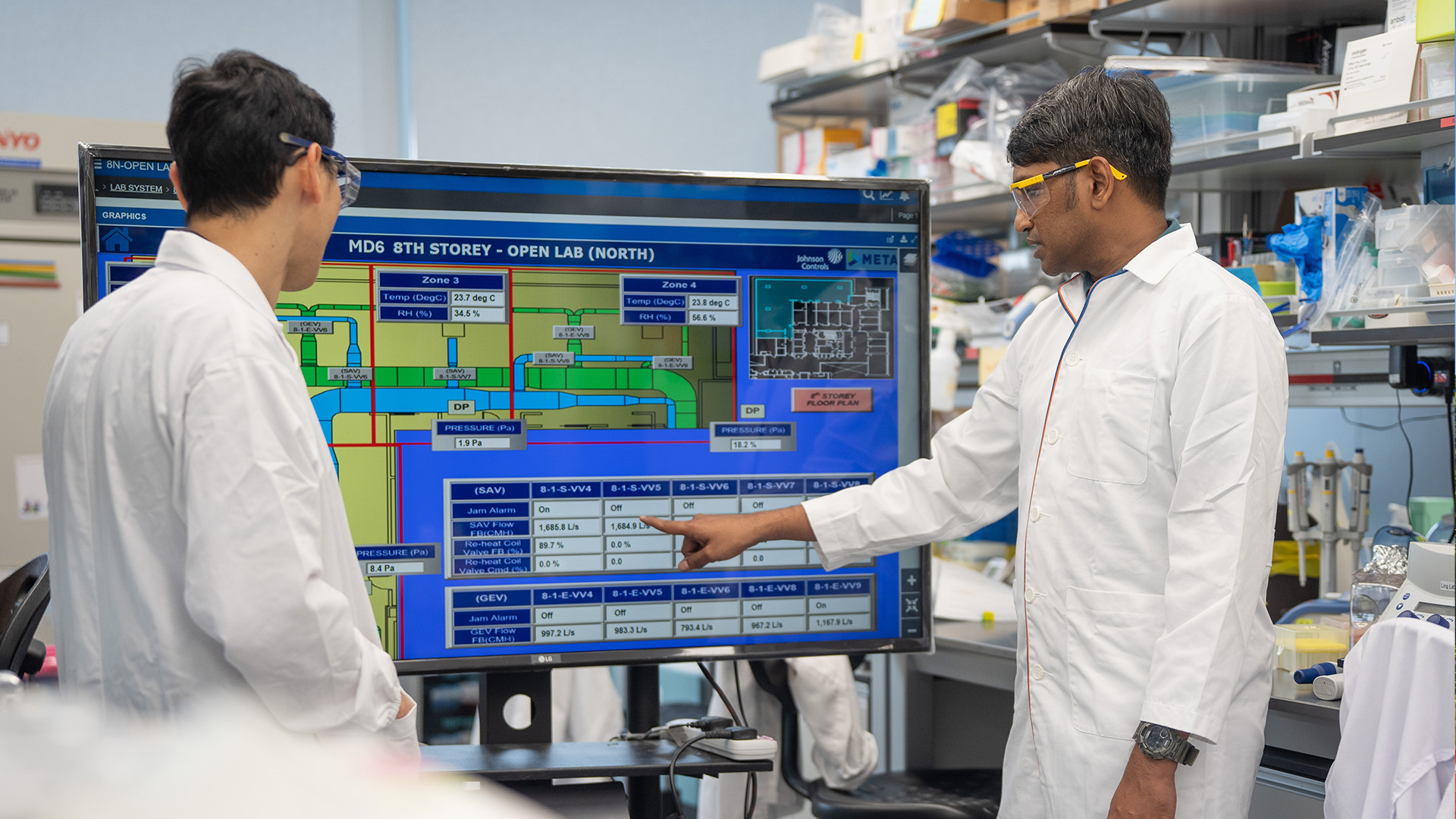
For example, UCI and NUS Medicine are piloting a dynamic ventilation system at MD6, an energy-intensive lab building, with a goal of reducing energy consumption by 20 to 30 per cent by 2028. The building is on track to achieve a 15 per cent reduction by next year, marking a significant step toward its long-term sustainability targets.
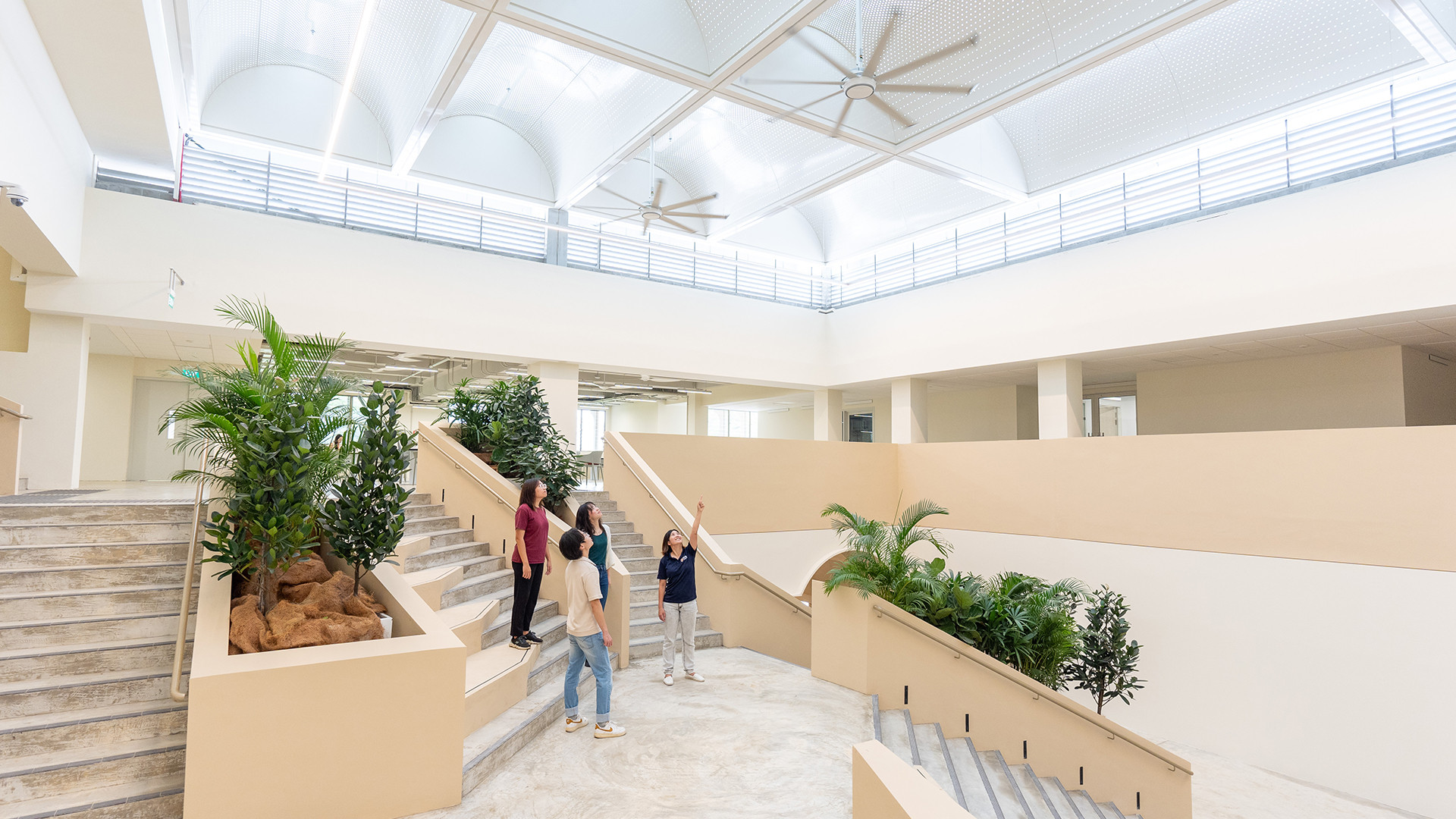
When upgrading older buildings, the University makes a conscious effort to prioritise energy-efficient designs and minimise embodied carbon. One key example is the refurbished Yusof Ishak House (YIH), now a net-zero energy targeted building, with enhanced energy efficiency and on-site solar generation. Most of the original 1970s structure was retained to preserve heritage and embodied carbon, and the rejuvenated building allows more daylight and generous views of the Ridge – the secondary rainforest on campus. YIH joins SDE 1, 3 and 4 as one of the best-in-class energy performance buildings on campus.
More rooftop solar photovoltaic systems have also been installed across campus, generating 11 gigawatt-hours annually, which is equivalent to powering 2,500 four-room HDB flats.
To enhance climate resilience, UCI partnered with researchers from the College of Design and Engineering (CDE) to install 49 microclimate sensors – the densest sensor network on any local campus – to assess the effectiveness of heat mitigation strategies like cool paint and greenery. At the same time, the University continues to intensify campus greening efforts, having planted over 50,000 trees since 2018, expanding its tree canopy coverage to cover 60 per cent of the campus.
Solar-powered outdoor Wi-Fi and energy-efficient data centre
NUS IT is not only responsible for delivering secure, high-performance digital services—it’s also reimagining how tech infrastructure can achieve sustainability goals.
Recognising that the traditional approach of laying underground power and fibre optic cables for outdoor wireless coverage is a labour- and resource-intensive process, NUS IT sought to innovate an outdoor solution that covers 150 hectares of open spaces across all three NUS campuses.
In 2023, NUS IT partnered with StarHub to install solar-powered Wi-Fi outdoors, extending the seamless digital connectivity enjoyed indoors to the campus’ open spaces. What makes this outdoor network special is its self-sustaining factor, drawing power from solar energy!
These outdoor Wi-Fi units are equipped with solar panels to harness renewable energy, an IoT (Internet of Things) platform that optimises power consumption based on surrounding lighting conditions, and a simple build that eliminates the need for any ground excavation during installation.
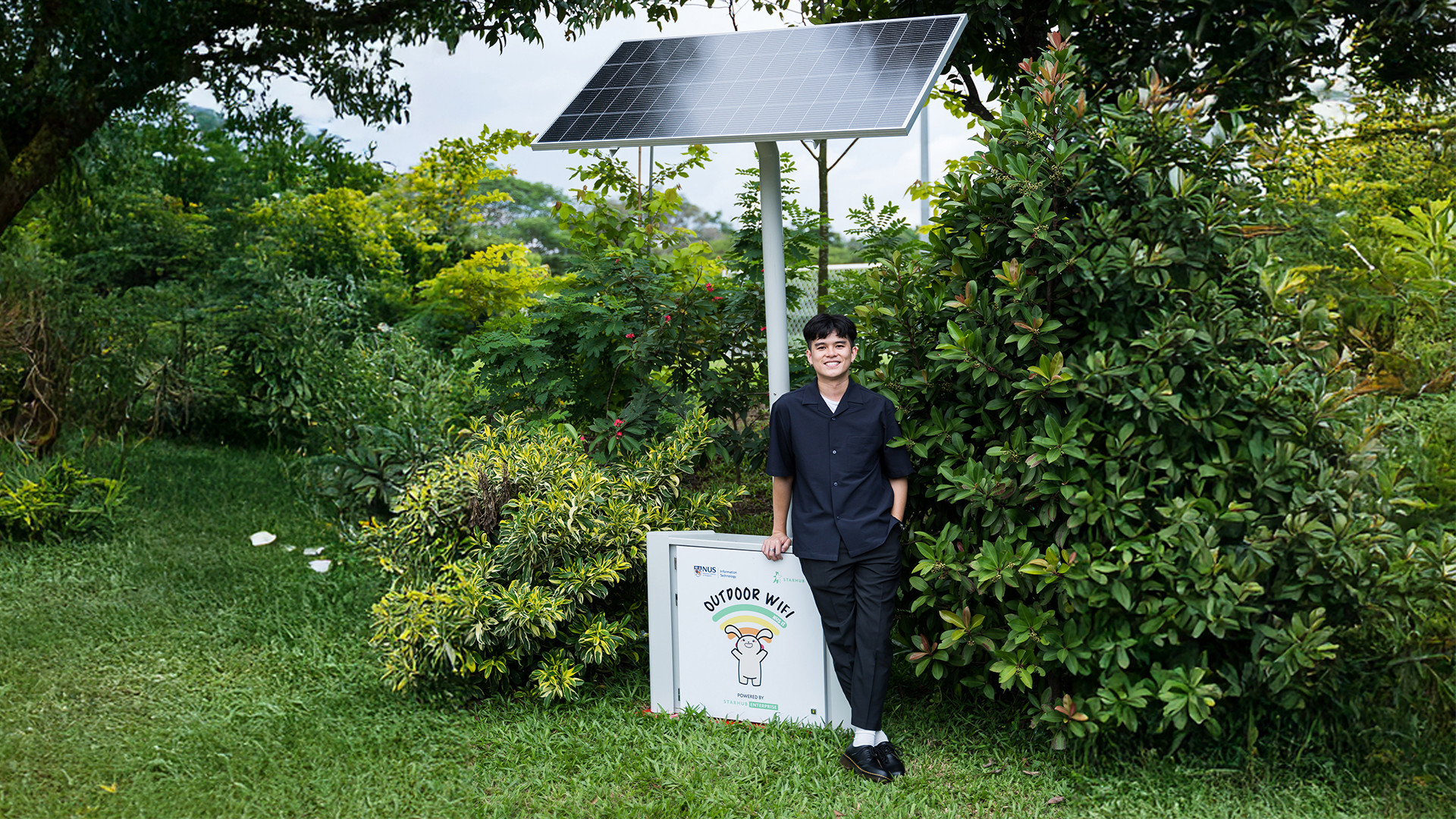
To generate campus-wide awareness of this green initiative, NUS IT held a design competition in May 2023 inviting students to rethink and redesign the outdoor Wi-Fi setup while balancing functionality, durability and sustainability needs. Wong Eng Geng, who was then a Year 4 undergraduate from CDE, emerged as the winner of the competition. His design has been rolled out gradually, replacing those that are worn out while keeping those that are still in good condition to reduce wastage.
While data centres are typically energy-intensive, NUS IT set out to challenge this norm by making its operations more environmentally friendly. The Temasek Lab Data Centre houses a central high-performance computing facility, which supports compute-intensive research, AI workloads and stores important university-level computing hardware. NUS IT was determined to reduce the carbon footprint of the Centre and made enhancements including installing energy-efficient cooling systems, modernising the Building Management System and Data Centre Infrastructure Management platforms, and replacing legacy systems with newer more energy-efficient systems.
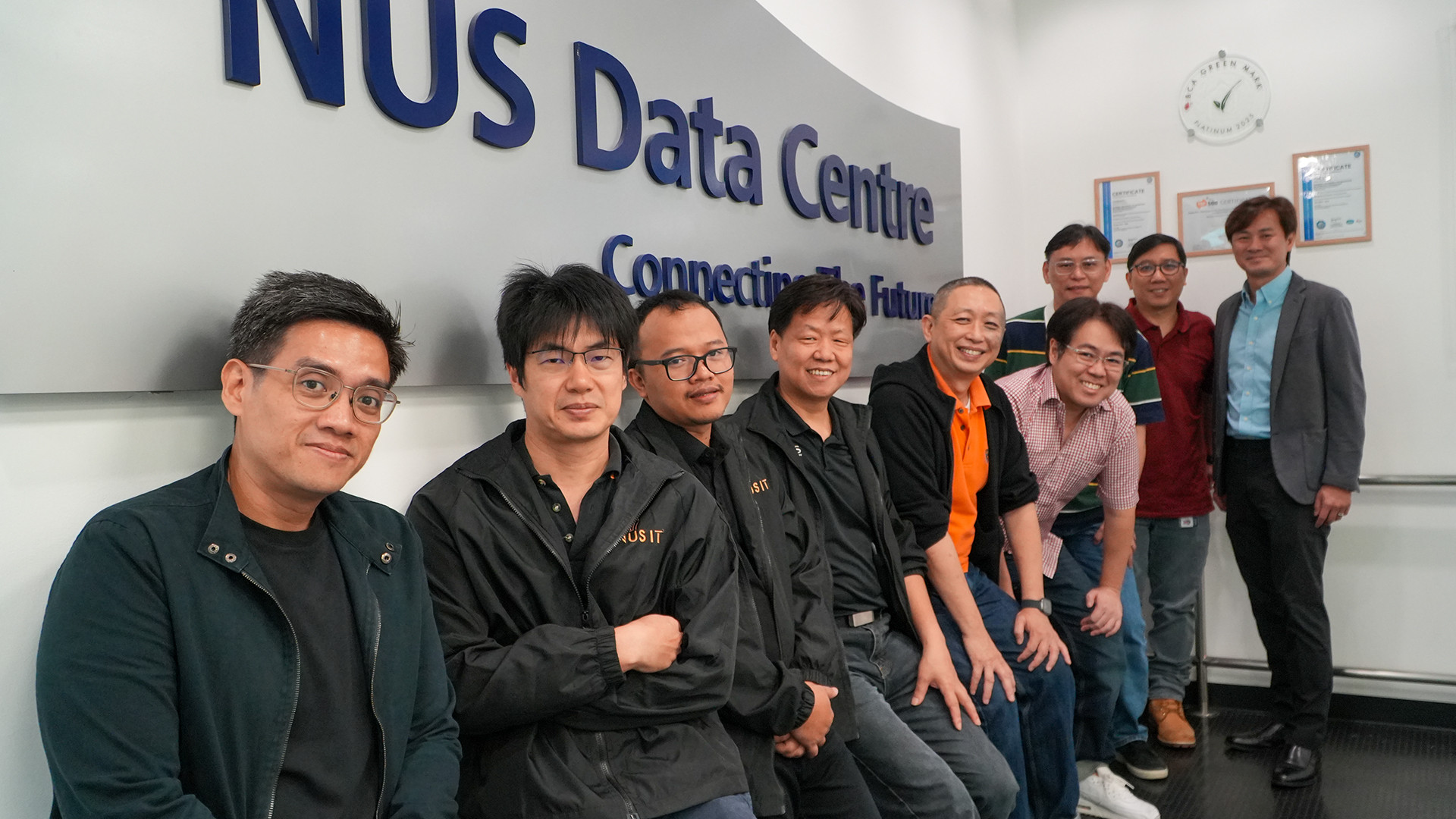
Together, these enhancements helped improve energy usage, reduce waste and support proactive management and extend the lifespan of critical equipment. The Centre also achieved three sustainable certifications ― SS564 Sustainable Data Centre, ISO 50001 Energy Management and the Building and Construction Authority’s Green Mark Platinum ― in recognition of its greening efforts!
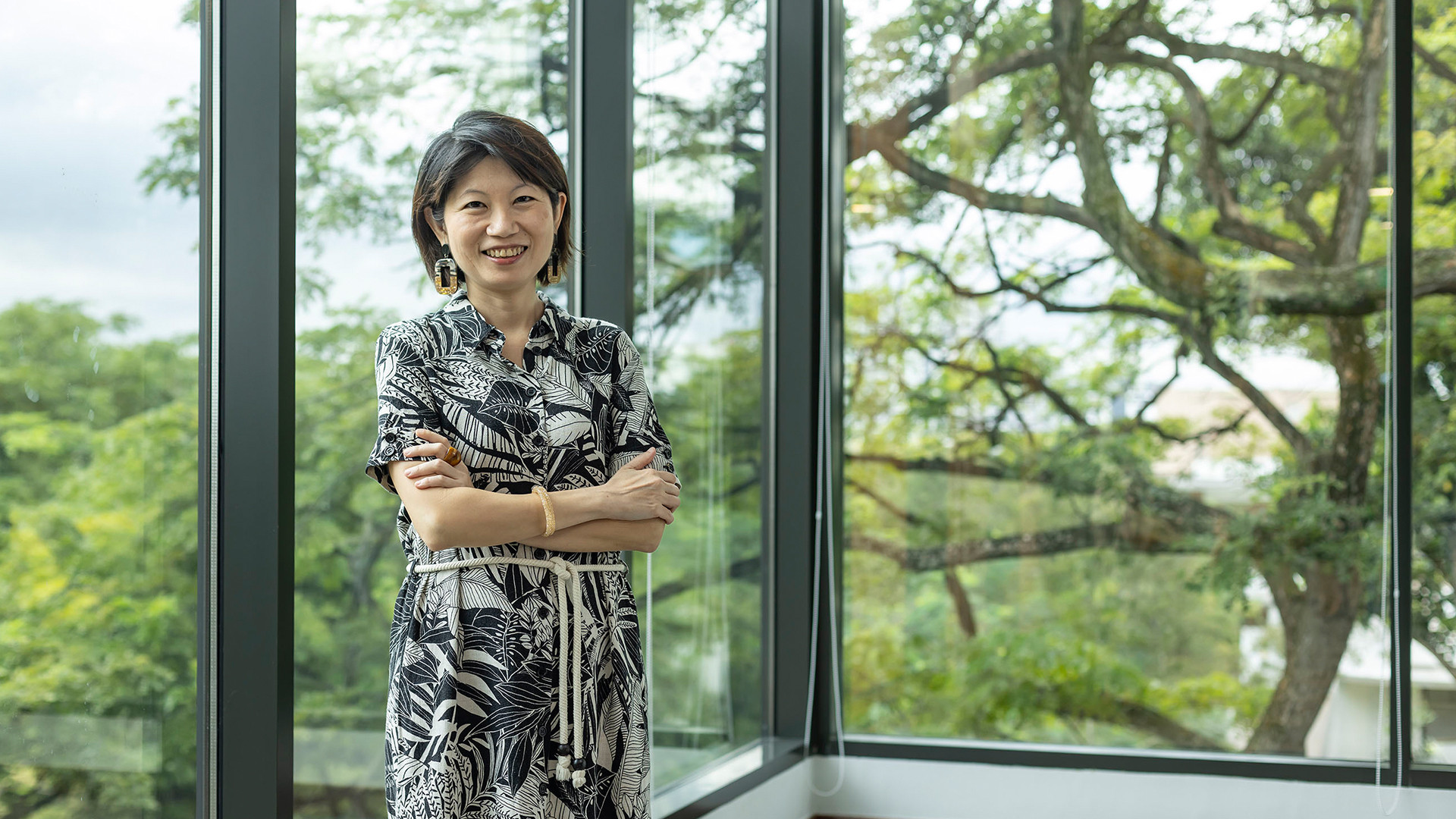
Chief Information Technology Officer of NUS IT Ms Tan Shui-Min said, “I believe true sustainability is achieved when innovation, collaboration, and responsibility converge. At NUS, we embed sustainability into every facet of our digital transformation—from solar-powered Wi-Fi and green data centres to empowering our community to code and create with environmental consciousness. Our journey is not just about reducing our footprint, but about inspiring every stakeholder to embrace sustainable practices as a way of life, shaping a smarter and greener future for all.”
Sustainable procurement practices
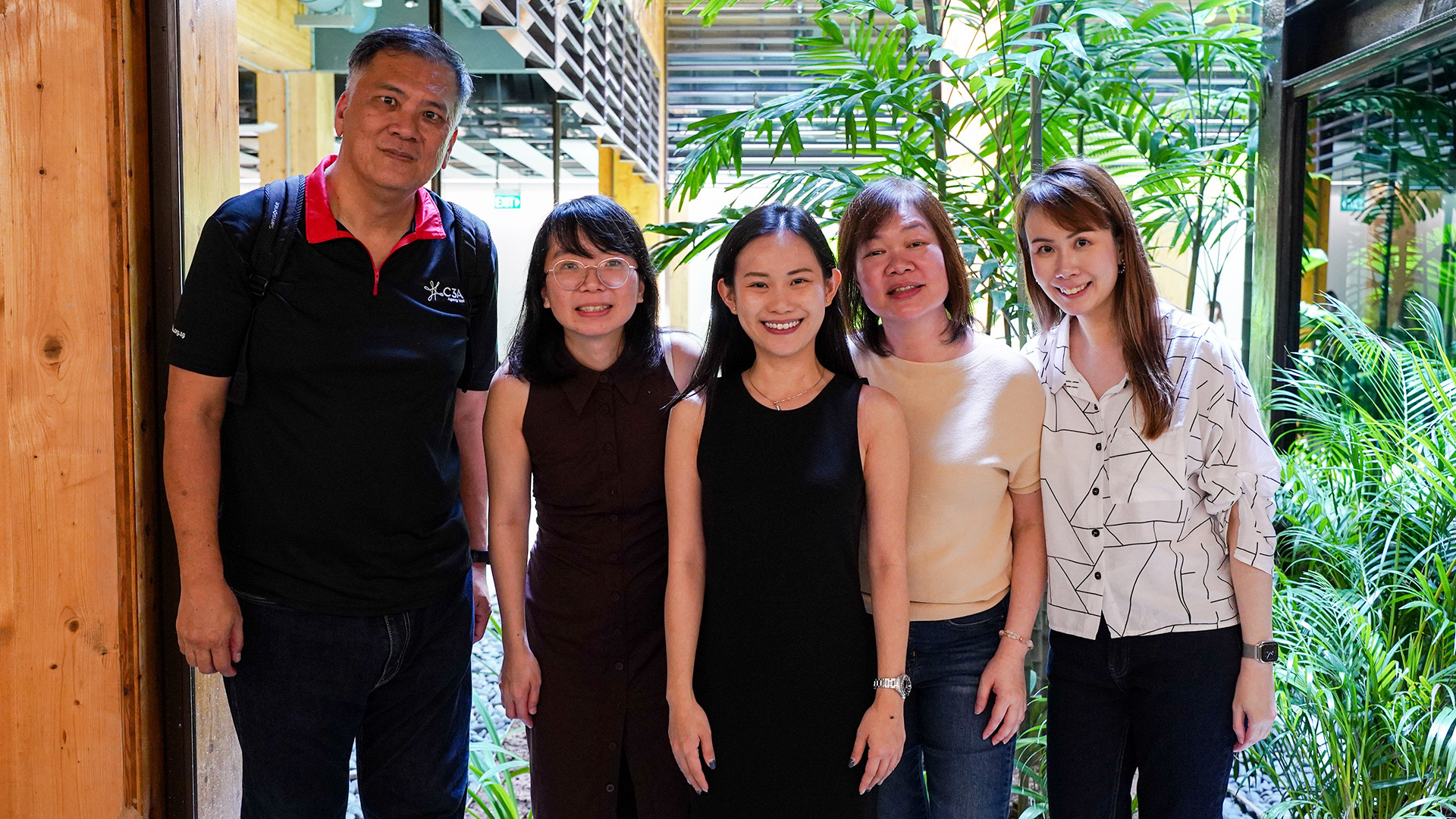
The NUS Central Procurement Office (CPO) is transforming the way the University handles procurement of goods and services. To embed environmental, social and ethical considerations into purchasing decisions, CPO has launched NUS' first Sustainable Procurement Framework — a strategic blueprint aimed at aligning procurement practices with the University’s broader sustainability goals.
Key initiatives under the framework include:
Supplier Code of Conduct: This sets clear expectations for responsible sourcing, ensures that goods and services procured align with the University’s values on sustainability and ethical standards.
Greener equipment: Adoption of energy-efficient laboratory equipment and appliances to reduce the University’s energy footprint.
Phasing out of packaged water: To encourage the NUS community to adopt more eco-friendly habits such as bringing their own drinking tumblers.
Working with suppliers to collect, recycle or reuse retired resources such as toner and printer cartridges to reduce waste.
Looking ahead, Chief Procurement Officer Mr Pang Chong Ning said, “As we continue to embrace sustainability, our focus on sustainable procurement will only grow stronger in the coming years. We remain committed to refining and expanding our practices to further reduce our environmental footprint, support ethical sourcing and drive innovation in supply chains.”
Such future initiatives include strengthening monitoring and tracking of sustainability performance to translate data into actionable insights, promoting more sustainability initiatives across the supply chain, refining the Sustainability Procurement Framework to ensure market alignment and adopting circular economy principles to minimise waste.
