


Shaping policies and improving health outcomes: Prof Teo Yik Ying takes health engagement to the global stage
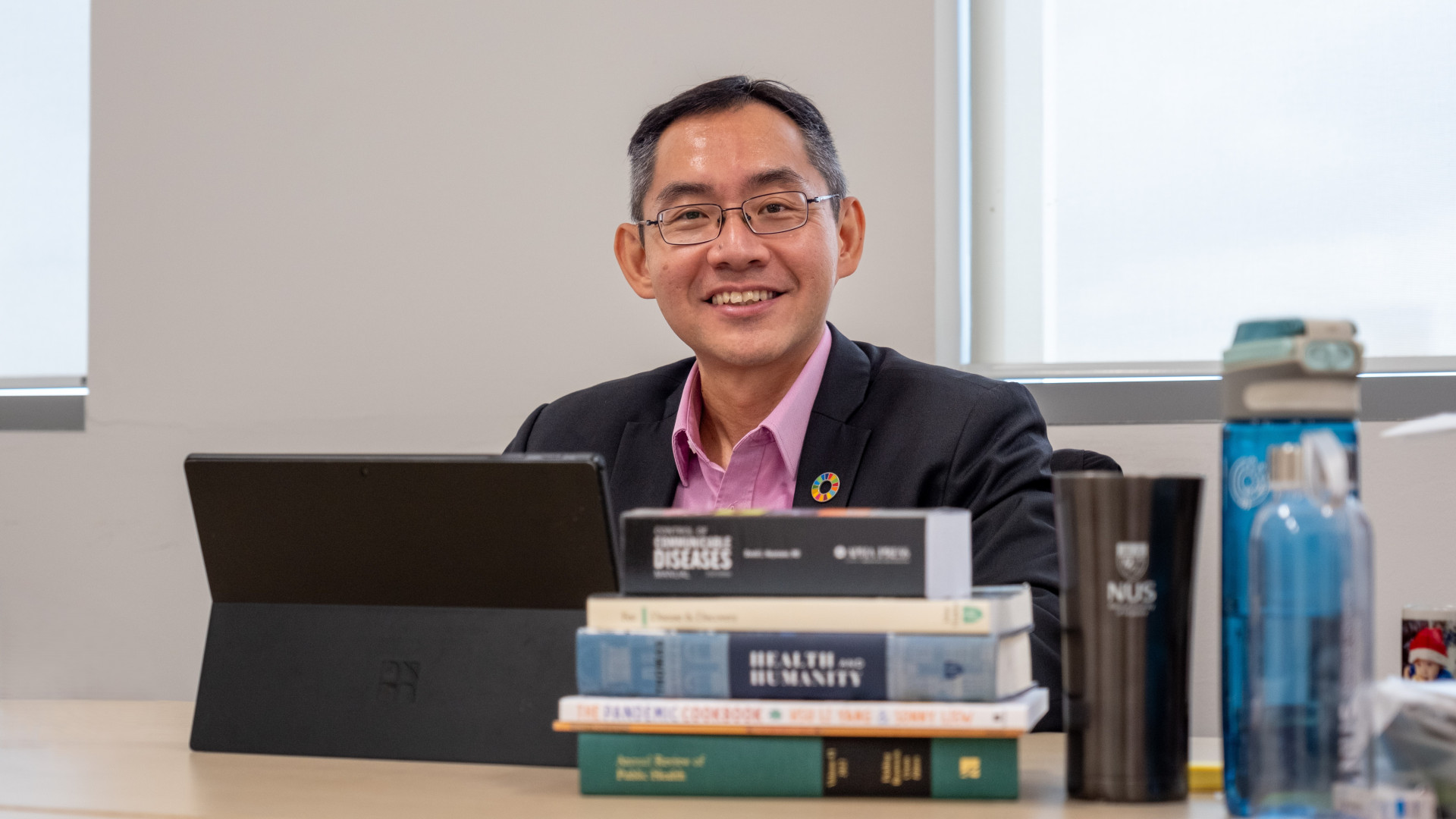
At the core of the newly-created Office of Global Health is a man with a vision that transcends borders and disciplines—Professor Teo Yik Ying, an internationally renowned biostatistician who is also Dean of the NUS Saw Swee Hock School of Public Health.
Established under the Office of the President at NUS, the Office of Global Health is the vanguard in NUS’ global health push: it leads NUS’ health engagement efforts on the global stage, empowering NUS to shape policies and health outcomes in the region, in an effective, sustainable and equitable manner. The multidisciplinary nature of global health – which spans intersecting domains such as biology, engineering, and the social and behavioural sciences – calls for a whole-of-university effort that will consolidate and amplify our reach in an ever-shifting global health landscape.
Prof Teo, an eminent scholar, leader, and apparent amiable conversationalist, embodies the spirit of interdisciplinary collaboration and global engagement. As Vice President (Global Health), a new role he assumed in September 2023, he has taken on a simple yet profound mission: to leverage the vast intellectual and technological resources of NUS to tackle health issues that affect millions worldwide. His approach is holistic, integrating insights from medicine, public health, engineering, law, social sciences, and more. This multidisciplinary ethos is the cornerstone of the Office, giving it a unique focus to impact lives.
A vision beyond academia
Prof Teo's vision for the Office is not merely academic but deeply rooted in real-world impact. In the interview with NUS News, he emphasises that NUS should not be seen as just a typical university focused on enterprise, start-ups, and research, but as an institution with a core element of social impact. "The Office of Global Health is about how NUS can actually contribute to provide solutions to some of the world's problems," he said, underscoring one of its roles to turn academic research into tangible benefits for populations across the globe.
Of particular attention is the Sustainable Development Goals (SDGs) framework developed by the United Nations, which is a universal call to action to end poverty, protect the planet, and ensure that all people enjoy peace and prosperity. Prof Teo believes that NUS, through the Office, can play an instrumental role in achieving these goals, particularly those related to health. By bringing together diverse faculties and disciplines, the Office aims to address issues such as food security, water safety, and public health policies, not just in Singapore but globally.
Building partnerships for global health
One of Prof Teo's key strategic aims of the Office of Global Health is fostering partnerships, both within NUS and with external stakeholders. He talked about a robust network where, for example, technical solutions from the College of Design and Engineering, innovations from NUS Computing, and insights from the Faculty of Arts and Social Sciences come together to create comprehensive health solutions.
"Within NUS, we have the School of Public Health, the Faculty of Law, the School of Computing, and many more, all producing new ideas and innovations. The challenge is to bring these together and benefit the health of populations," Prof Teo explained.
This collaborative spirit will reach beyond NUS – Prof Teo shared a vision for the Office where it would actively engage with regional governments, international organisations like the World Health Organization (WHO), UN Children’s Fund (UNICEF), and United Nations Development Programme (UNDP), as well as other academic institutions worldwide. Integrating expertise with external bodies will allow the Office to leverage its networks to understand the health needs of different regions and tailor solutions accordingly.
Addressing regional health challenges
Prof Teo is particularly keen on addressing health challenges in the ASEAN region and is acutely aware of pressing regional issues such as tobacco control, access to essential drugs, and capacity building in public health. A multi-layered approach among the various ASEAN governments is essential, Prof Teo noted.
"The regional approach is powerful. We can achieve a consensus on issues like tobacco control, taxation of unhealthy products, and collective drug procurement, which can significantly reduce costs and improve access to essential medications," Prof Teo said.
Capacity building and training
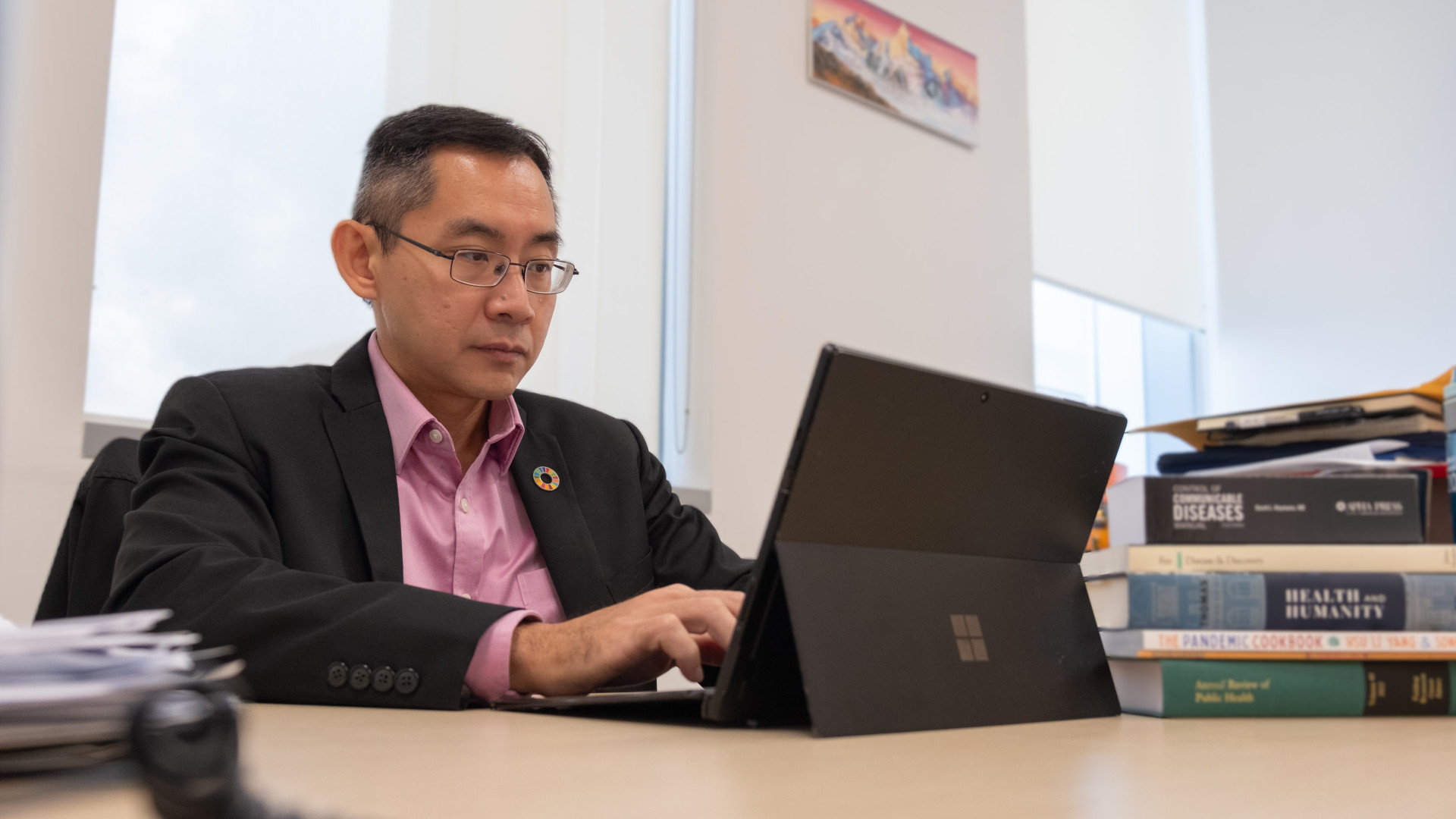
Capacity building is another crucial area where Prof Teo's influence is evident. He emphasises the importance of equipping local health professionals with the skills needed to evaluate and improve their health systems.
"It's about enabling countries to track their health systems' changes, evaluate their effectiveness, and make informed decisions. This skill is vital for sustainable health improvements,” Prof Teo explained. The Office's training programmes are designed to be sustainable, with a focus on empowering local institutions to eventually conduct this training independently.
Driving sustainable innovation
While the Office does not drive innovation directly, it plays a critical role in utilising existing innovations from NUS to address health issues. Prof Teo prefers a solution-based approach, focusing on deploying proven technologies that have already undergone rigorous testing and validation. This strategy ensures that when the Office introduces a technology to a country, it is ready for immediate impact, with clear cost-benefit analyses and implementation plans.
"Our role is to showcase NUS' proven technologies that can solve real-world problems," Prof Teo shared. This approach avoids the risks associated with untested innovations and ensures that the solutions provided are both effective and sustainable. For instance, the Office has upcoming plans to deploy water purification technologies in countries facing severe water safety issues, significantly improving public health outcomes.
One of the many exciting initiatives under the Office is a project in Laos in collaboration with Wateroam, an NUS-backed start-up founded by NUS Business alumnus David Pong and Environmental Engineering alumni Lim Chong Tee and Vincent Loka that develops portable water filtration systems.
The journey began in January this year, when Prof Teo and a representative from Wateroam travelled to Laos to develop the project with authorities there. The response was overwhelmingly positive, with all parties expressing strong interest in the initiative.
The project looks to deploy Wateroam's filtration systems in 10 provinces across Laos, focusing on district hospitals, schools, and community water collection points. "This will ensure that these facilities now have safe, clean water that is pathogen-free," Prof Teo explains. The project will be carried out in three phases, starting with the installation of the systems in select sites, followed by training local partners to deploy the systems independently.
In July, the team, led by Prof Teo, successfully installed the first water filtration system at Vang Vieng District Hospital, marking the launch of a project to deploy similar systems in at least 14 sites across the country. The initiative aims to ensure long-term access to safe drinking water in rural Laos.
To support sustainability, local staff are being trained to maintain the filtration systems. The project is powered by Wateroam’s innovative water filtration technology, which has been used globally in disaster-hit areas and regions with limited access to clean water.
Measuring success through impact
Prof Teo's metrics for success go beyond traditional academic indicators. While publications and funding are important, he places greater value on the social impact of the Office's work. Success is measured by the Office's ability to attract international funding for health initiatives, successfully deploy NUS innovations in various countries, and influence health policies at regional and national levels.
"The true measure of our success is in our social impact," shared Prof Teo. "It's about improving health, saving lives, and contributing to global well-being. This is how we fly the NUS flag—by demonstrating that we are not just an academic institution but a force for positive change in the world."
