


‘Being Human’: How NUS endeavours to become a great place to work
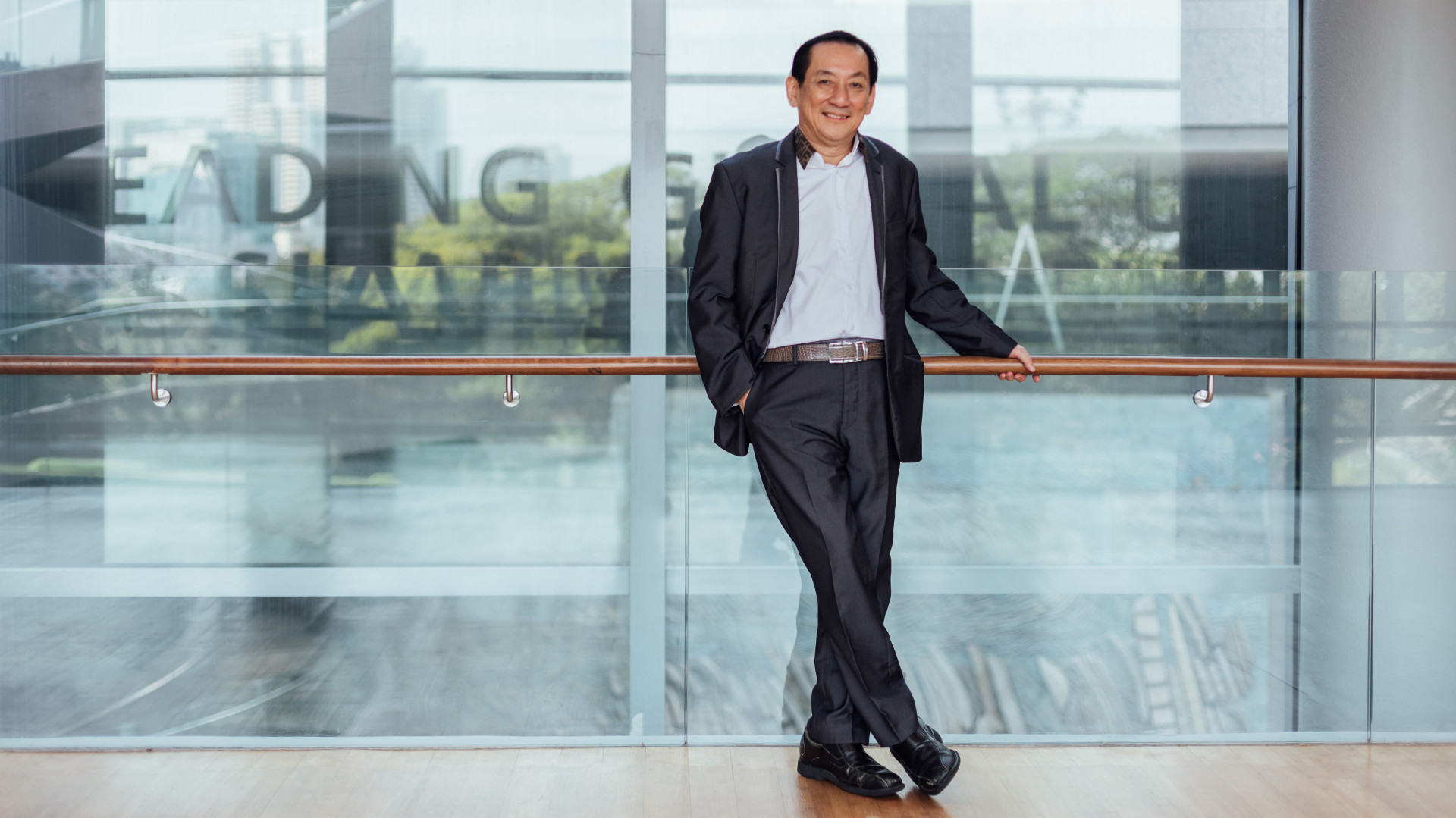
When Dr Janson Yap was a young manager at cosmetics company Avon in the 1980s, he received a piece of advice from his managing director that has remained with him throughout the years. “You are obviously very hardworking,” the older man told him. “But smile more.” This offhand remark contained a kernel of wisdom that Dr Yap firmly believes in – hard skills are important, but so is the human touch.
Today, as Chief People Officer at NUS, humanity and empathy are hallmarks of his leadership as he oversees the human resources needs of its 13,000-strong administrative, teaching and research community. In fact, one of his department’s slogans is “Being Human”. It infuses everything he and his team do, from talent development and initiatives focusing on diversity and inclusion to events where staff give back to the community.
The first 100 days as Chief People Officer
After more than two decades in the corporate and consulting world – most recently as Deloitte’s Southeast Asia Regional Managing Partner of Risk Advisor Services – he was coaxed out of retirement to join NUS as its Chief Risk Officer in 2020 to develop its enterprise risk framework.
Later, he was asked to be its Chief People Officer (CPO) and took up the appointment in January 2023. While he does not come from a human resources background, he brings more than 20 years of people and business management experience to the table.
“I saw it as yet another opportunity to balance between the very transactional nature of human resources, and its transformative (role) to support the vision of the University,” said Dr Yap, who has a Doctor of Professional Studies from the University of Southern Queensland, Executive Masters of Business Administration from the University of New South Wales as well as a Bachelor of Science and Post-Graduate Diploma in Education from Monash University.
“You want to ensure people have a service mindset, as well as a strategic mindset to be able to pivot.”
When he came on board as CPO, he had a game plan: the first 100 days of the job would be crucial. He drew inspiration from former United States President Franklin D. Roosevelt, who introduced 15 major bills in the first 100 days of assuming office to pull the country out of the Great Depression.
During that period, Dr Yap ran a work culture survey and then came up with a People’s Future Package, as well as a slew of initiatives to be rolled out over three years till 2025.
This included new Artificial Intelligence (AI) strategies to boost productivity; a week-long People’s Festival where staff take part in events and attend talks by successful people from other industries; as well as sports events such as NUS STARS (Staff Talent in Athletics and Recreational Sports) programme.
On the Talent Management (TM) front, Dr Yap and the TM team developed a BIDEA (‘Build, Identify, Develop, Engage & Advise, Enabler’) model which aims to address key issues in talent management. This includes formulating staff career development pathways and a Competency Development Framework so as to equip individual staff with the competencies that are required at various career or life stages. Other key goals within the model include succession planning for critical leadership roles and coming up with leadership programmes for the development of the University’s future administrative leaders.
Learning and Development (L&D) is another initiative that has been making steady progress. Dr Yap and the L&D team have progressively rolled out core programmes such as the Data Literacy Programme (DLP Basic), Artificial Intelligence Competency Course (AICC Basic) and Design for Agility Course to all administrative staff to ensure that they are equipped for the opportunities and challenges that the future of work will bring.
Beginning with DLP and AICC, these foundational programmes are designed to provide an entry point for staff to understand new technologies and consider the applications to their work.
“Staff well-being is increasingly an important factor for NUS. Our view of wellness is holistic, and encompasses social, emotional, and physical well-being. Participating in sports and recreational activities has been shown to elevate these dimensions. At NUS, we want you to be at your best so you can hit the mark at work and in life,” Dr Yap explained.
Workplace of the future
At the NUS Office of Human Resources (OHR), AI bots do a fair share of the heavy lifting when it comes to talent acquisition – from doing an initial screening of job applicants to generating their offer letters. Introduced in 2023, the bots have sped up the hiring process.
“It is 3.6 times more efficient than (a human), with higher quality and consistency,” Dr Yap revealed.
Soon, the University will also be introducing an AI chatbot to answer frequently asked questions about its policies and procedures.
All this means that the University will need employees with relevant skills to manage these new tools. “We are using a lot of bots now and we are trying to encourage our people who are data literate and have the skill set of AI competency to bring all these productivity tools to the bots,” he shared.
“You have to change the way you work with the workforce, especially in the next five to 10 years,” noted Dr Yap, who won Executive of the Year – Education at the Singapore Business Review Management Excellence Awards in 2023 for spearheading these AI initiatives.
Unleashing the full potential
There’s a lot more that can be done to unleash the full potential of NUS staff, and that is one of Dr Yap’s priorities for 2024. To tackle this, he initiated a HR Partners (HRP) Engagement study to improve the experience and engagement of HRPs with their “customers” who are the different colleges, faculties, schools and administrative departments. “My intention is to bring these people into projects, make it part of their performance goals and appraisal system, so they are recognised for their contributions,” he explained.
“Besides their major role as, say, a HR Partner, they have the chance to refresh and use their skills on other projects. Should there be a vacancy in other units, we can (re)deploy them. I’m borrowing a concept from National Service – (having) reserves who can be deployed on demand.”
Continuous training is an important part of staff development, with internal programmes in areas ranging from business re-engineering to design thinking; as well as an Early Career – Management Associate Programme, he added.
Caring and inclusion
To foster a culture of caring for the community, staff volunteers from OHR joined hands with community partners to host lunches for elderly residents at the Choa Chu Kang Community Centre (CC), Henderson-Dawson CC and Radin Mas (CC) during the Chinese New Year (CNY) festive period this year. In addition, they raised S$3,500 for the residents of Buona Vista, including solitary seniors, vulnerable individuals, and low-income families during the CNY period.
In conjunction with the NUS’ People’s Day on 19 April 2024, OHR staff assembled 25 bicycles which were donated to underprivileged children under the care of Yayasan Mendaki and Muhammadiyah Welfare Home.
True to his commitment to succession planning, Dr Yap has already started grooming several potential successors for the core units and the departments.
Meanwhile, he hopes to create an environment where the University’s talented workforce can thrive and do their “best work”. “We want to have fun along the way. It's not all hard work,” he said.
“I want ‘alumni’ (former staff) to remember that the best time in their career was at NUS,” he added with a smile. “And that the training they received here was nothing but world-class.”
