


Crossing borders, shaping minds: Asian Undergraduate Symposium marks a decade of nurturing youth leaders
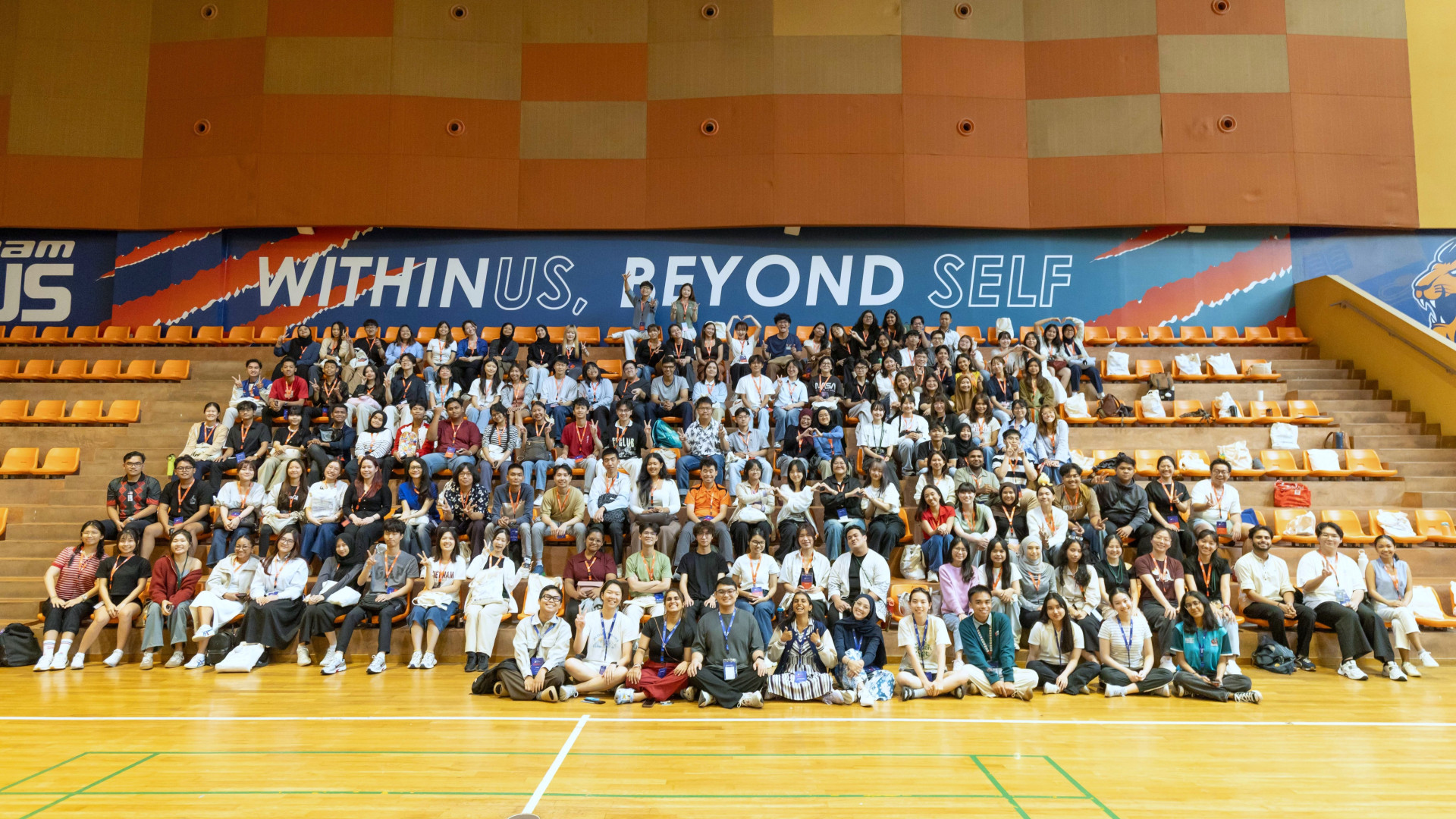
It all started in 2015 as an ambitious student-led international programme that rallied about 100 ASEAN undergraduates to tackle real-world challenges faced by communities in the region. Ten years later, the Asian Undergraduate Symposium (AUS) has grown into an impactful platform that has connected more than 2,000 youth leaders and changemakers across Asia.
Over the past decade, it has brought together students from 90 universities across 17 Asian nations and become a fixture of the ASEAN University Network’s AUN Summer Camp Programme, contributing to efforts by universities across the region to equip ASEAN students with the competencies and knowledge to be leading global talents.
The programme’s success has exceeded expectations for founding chairperson Goh Seng Chiy, who graduated from the former University Scholars Programme with a degree in Chemical Engineering in 2017. “People would only continue something like this if they see value in it, and I’m glad to see that people feel what we started has value,” Mr Goh reflected.
He hopes that a key takeaway for participants will remain the cross-cultural friendships and perspectives they gain over the two weeks of mingling with regional counterparts. “You may not remember the specific topics, but if the way you think about the region has evolved so you understand the challenges, constraints and decisions of our ASEAN neighbours better, that’s a big mindset shift that will stick,” he said. “Like a university education, the impact may not be easily quantifiable, but the benefit lies in how it shapes your worldview and your thinking.”
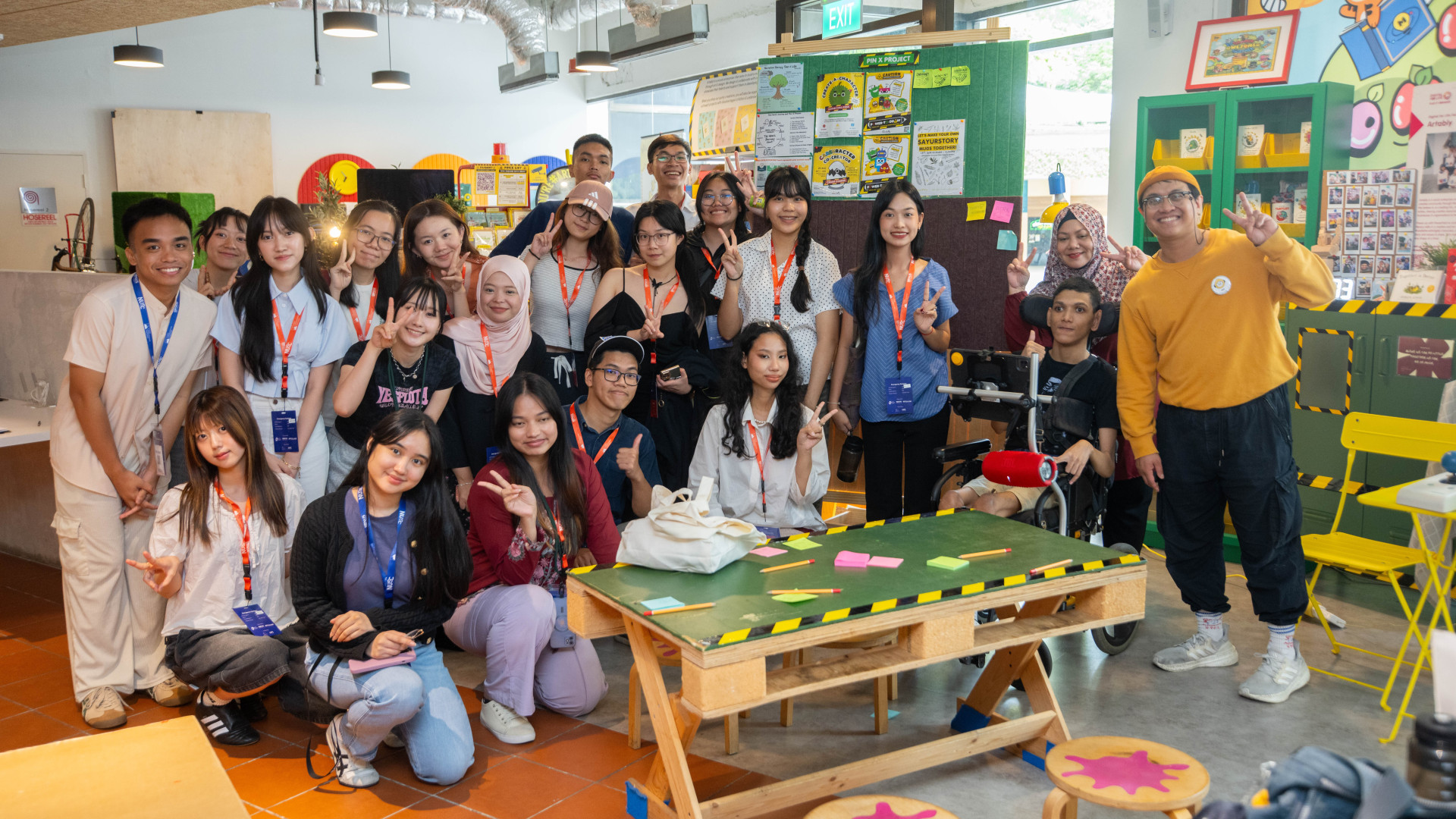
The 2025 AUS, which took place from 7–19 July 2025, was jointly organised by NUS and NUS College (NUSC), the honours college of NUS. The 10th anniversary edition of AUS brought together more than 300 students from 55 universities across Asia to collectively envision and shape a better future. It had a main theme of Interconnected Communities and featured three subthemes of Sustainability and Regeneration; Diversity, Equity and Inclusion; and Heritage and Culture.
Designs that prioritise life
AUS 2025 broadened its sustainability agenda by including the concept of regeneration, a dimension of sustainability that aims to go beyond halting environmental degradation to restoring and improving ecosystems, and encouraging participants to incorporate it into their project proposals.
“Regeneration isn’t new. Across Southeast Asia, our ancestors have done this before,” said Ms Bernise Ang, Principal and Chief Alchemist at Zeroth Labs and an adjunct lecturer at NUSC, who cited the subak system of water management in Bali as an example of a traditional solution that exemplifies regeneration. Under this system, rice farmers meet regularly at water temples to coordinate their planting schedules in a way that ensures sufficient water for the crops while also controlling pest populations.
This practice was disrupted in the 1970s by the “Green Revolution”, a global push to boost food production with high-yield seeds, fertilisers and pesticides. Although such efforts temporarily yielded more crops, the negative repercussions emerged within just a few seasons — farmers found themselves grappling with pollution, soil degradation, water shortages and exploding pest populations. The Indonesian government eventually recognised that the new methods were unsustainable and ordered a return to the subak method that allowed people and nature to exist in harmony.
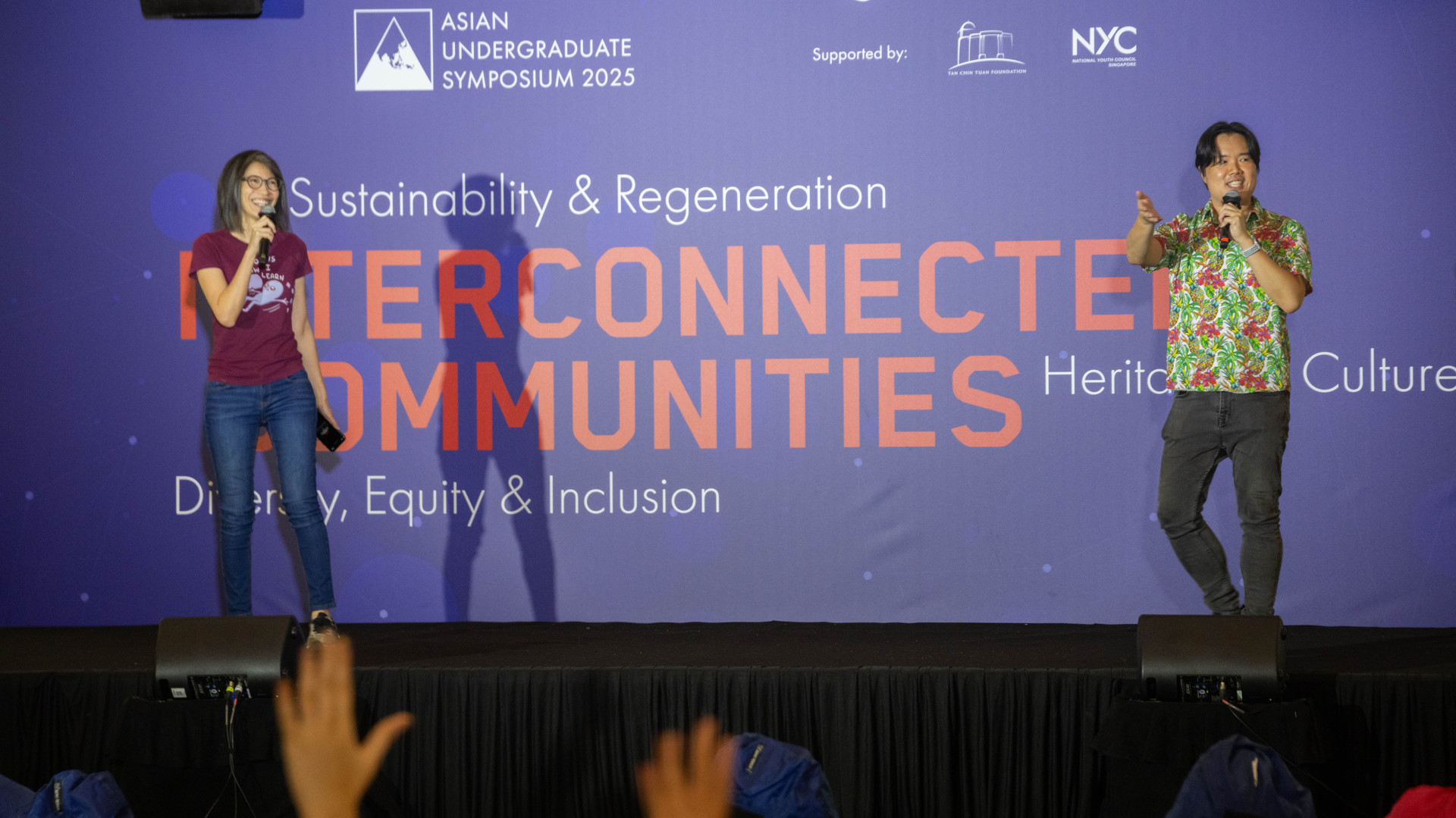
Said Ms Ang: “Every system we’ve inherited was once imagined, which means we can imagine things differently. Regeneration means remembering that we belong to living systems and can design as if life matters.”
The inaugural Regen Asia Summit (RAS), an intensive two-day programme held immediately before AUS, gave some 200 AUS participants a head start on understanding regeneration and the approaches needed to design effective regenerative solutions. Their knowledge was further augmented in an AUS workshop titled “From RAS to AUS: Towards Regenerative Action” that ensured all attendees at the symposium had a shared understanding of the concept and how to apply it.
The power of collective action
Through presentations and dialogues with expert practitioners and learning journeys to local communities, participants learnt that implementing regenerative solutions involves efforts from all quarters, including individual consumers, community groups, governments and international bodies.
Dr Farrah Shameen Ashray, CEO of the Malaysian Timber Certification Council, gave participants an overview of green product certification, which businesses earn by meeting certain requirements for economic viability, environmental protection and social responsibility. She urged participants to seek out certified products and explore how they can contribute to the work of product certification through their chosen fields of study.
“Certification is about compliance with laws and regulations, and the compliance sector needs auditors, social impact assessors, sociologists, safety and health officers, lawyers and more. You can make an impact that will be transferred through the certification process to the products and businesses behind them,” said Dr Farrah.
Dr Supatchaya “Ann” Techachoochert, senior environmental manager at Mae Fah Luang Foundation in Thailand, explained how one of the foundation’s projects revitalised the heavily deforested Doi Tung area in Chiang Rai by offering villagers sustainable jobs in horticulture, handicrafts and reforestation. This incentivised them to stop clearing trees to plant low-value crops and instead rebuild their environment and economy. Over 30 years, their efforts tripled the region’s economic value and restored enough forest to generate 220 tonnes of carbon credits, which the foundation uses to fund more restoration efforts.
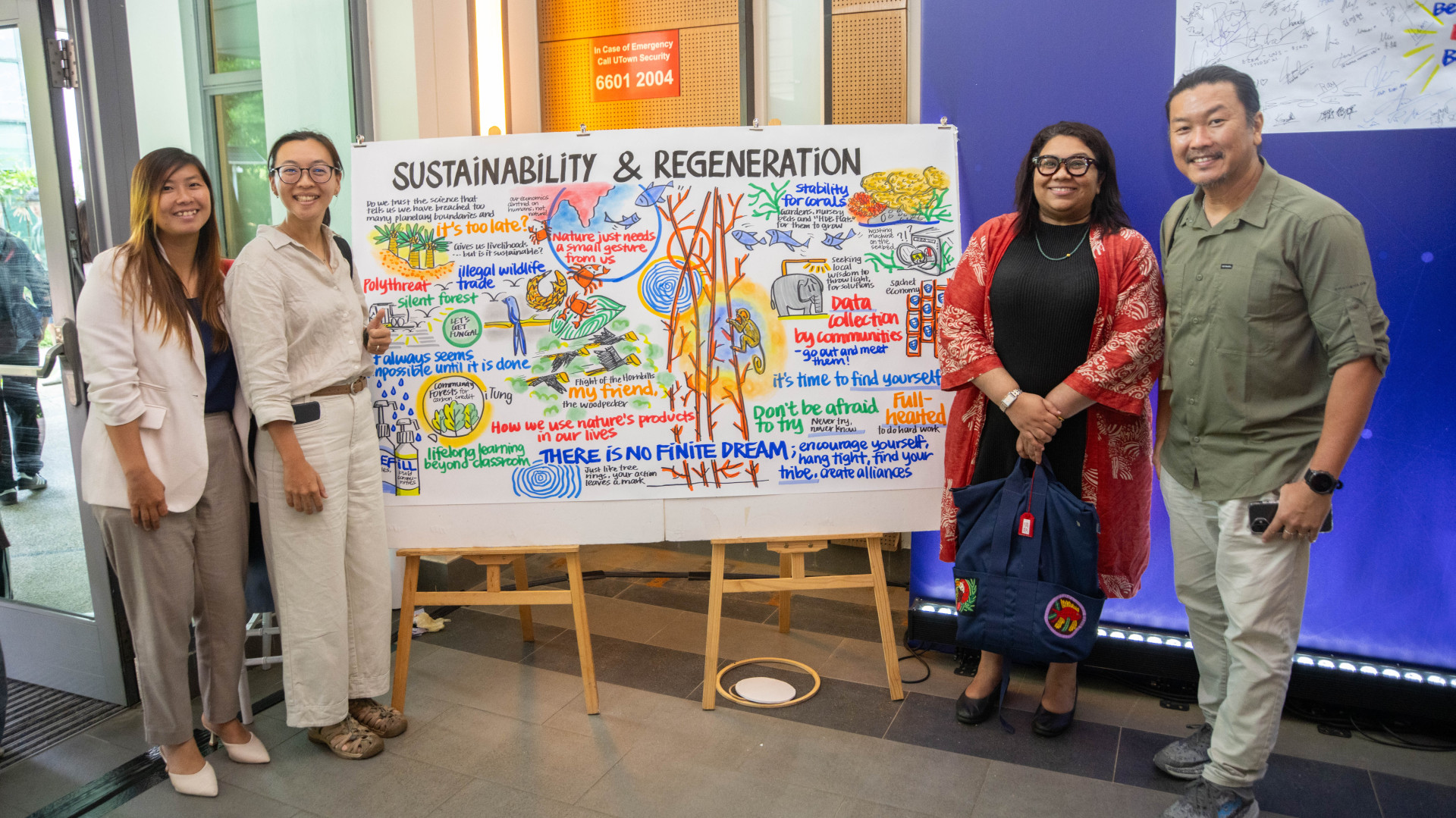
Associate Professor Adrian Loo, who is the deputy director of the NUS Centre for Nature-based Climate Solutions, shared stories of flora and fauna in Singapore that benefitted from small but impactful interventions by conservation groups, such as rope bridges that reduced mortality rates among Raffles’ banded langur monkeys by enabling them to safely cross roads between forested areas. He said, “It’s a small gesture, but that’s all nature needs – a small gesture in the right direction.”
While the impact is not always immediately visible, regenerative efforts for one species often create positive ripples for others. Marine biologist Sam Shu Qin, who also leads marine conservation-related projects and overseas trips as an educator at NUSC, dives daily in Singapore waters for coral restoration work like relocating corals from areas slated for development and monitoring their health and growth. She shared a video of a pair of cuttlefish laying eggs in an artificial reef structure under her team’s care, demonstrating the broader impact of coral restoration efforts on the marine ecosystem.
Translating lessons to solutions
Working in interdisciplinary and international teams, the students used their newfound knowledge to develop 40 project proposals for solving challenges in their communities. They presented their solutions in a session called Project World Café on 16 July, gathering feedback from their peers to further refine the proposals.
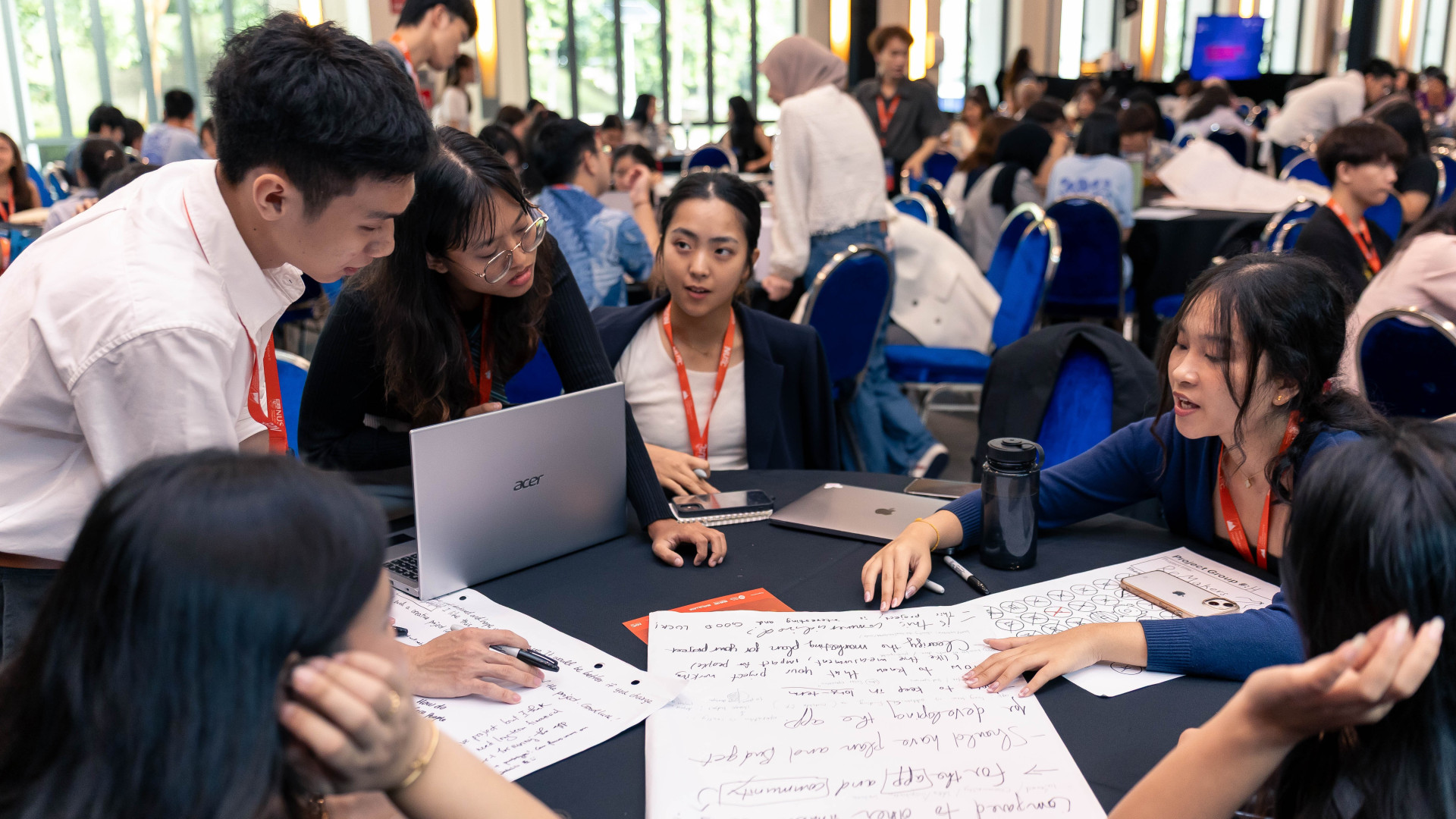
Many groups that tackled environmental issues incorporated regeneration into their solutions, such as a project on wild bee conservation in Cambodia that included plans for bee home kits to support the insects’ population growth. Another project proposed using bokashi balls made from soil and beneficial microorganisms to revive biologically dead rivers in the Philippines.
For Tiffany Cloa, a participant from the University of the Philippines, the collaborative experience was valuable in exposing her to a range of perspectives and providing opportunities for personal growth and reflection. “We have very different opinions, which is not a bad thing. It made me realise that we are all in our own vacuums, and I had to learn to navigate the paradox between discussing First World ideas of AI and technology and comparing that to what people in my country are going through, where they can’t even eat three meals a day.”
Following the symposium, the projects will be evaluated by an expert panel, which will select up to 10 of the most promising projects to receive a seed grant of S$5,000 to turn their concepts into reality in their communities of choice. Starting this year, these selected projects also stand to benefit from a new Impact Incubation Programme by NUSC, which will offer additional financial support, training and mentorship to help the teams go further in their efforts to bring positive change to communities.
Read the press release here.
