The human edge: Why learning to learn matters more than ever in the age of AI
As AI becomes more capable, knowing how to use it will not be enough. At the NUS Lifelong Learning Festival 2026, educators and industry leaders explored why judgement, adaptability and the ability to keep learning will become increasingly important — and how education and work will need to evolve.
The smarter machines get, the more distinctively human skills matter.
This is the paradox of the age of AI and one reason why lifelong learning is becoming increasingly important, said NUS President Professor Tan Eng Chye.
“AI can give us answers, but learning is actually more than just providing solutions,” he said. “It is about learning to learn. It is about the struggle of learning, asking questions, making detours, failing and then trying again, and the eureka moment when something finally clicks.”
The same applies to the workforce: as AI reshapes jobs, people need to embrace its capabilities while retaining the ability to understand and critique it, and apply good human judgement and sensing.
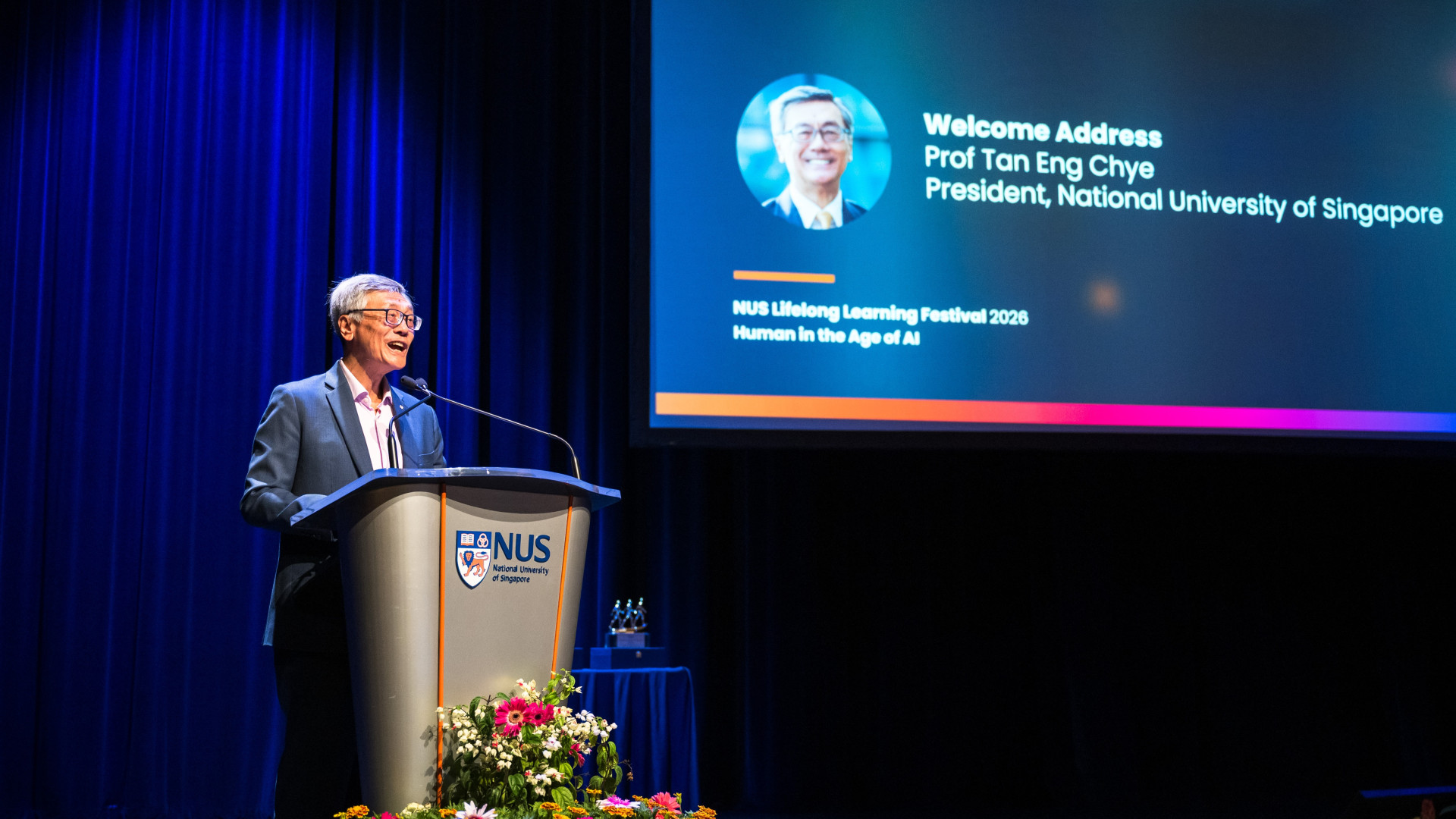
Prof Tan was speaking at the third NUS Lifelong Learning Festival on 28 September 2026. Themed “Human in the Age of AI”, the Festival brought together educators and industry leaders to explore how AI is reshaping work and learning, and what people need to do in response. It also marked the 10th anniversary of the NUS School of Continuing and Lifelong Education (SCALE).
Across the discussions at the Festival, a broader shift emerged: as AI makes knowledge and certain capabilities more widely accessible, the advantage will increasingly lie not simply in what people know, but in how they think.
NUS SCALE Dean Chai Kah Hin on making learning a habit for life |
Raising the ceiling as AI raises the floor
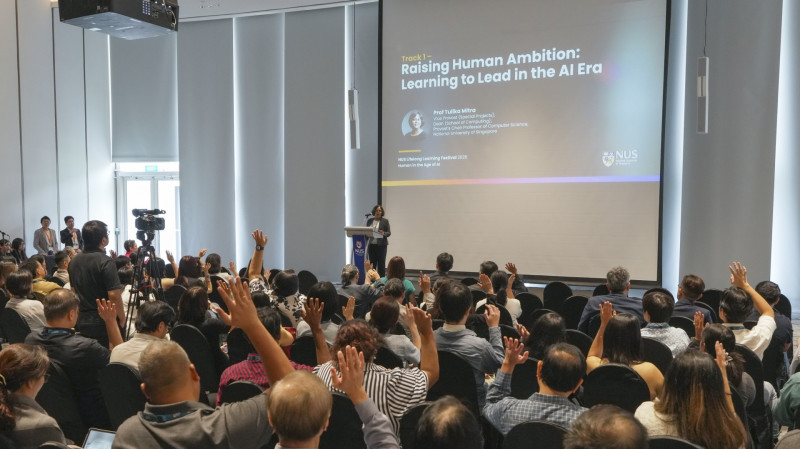
AI has already raised the “floor” of what people can accomplish, said Professor Tulika Mitra, NUS Vice Provost (Special Projects), Dean of the School of Computing and Provost’s Chair Professor of Computer Science.
Knowledge, analysis, coding and content creation are now far more accessible — even to novices. But rather than lowering human expectations, Prof Mitra said that this should prompt people to raise the ceiling.
“When AI can answer questions, who asks the right question? Who frames the right question?” she asked, highlighting the growing importance of discernment and the ability to imagine new possibilities.
This also means moving beyond using AI simply to perform existing tasks faster. Prof Mitra described this as accelerating “yesterday’s work”: useful for productivity, but not necessarily transformational. The larger opportunity is to redesign workflows and ask what can now be achieved that was previously impractical or impossible.
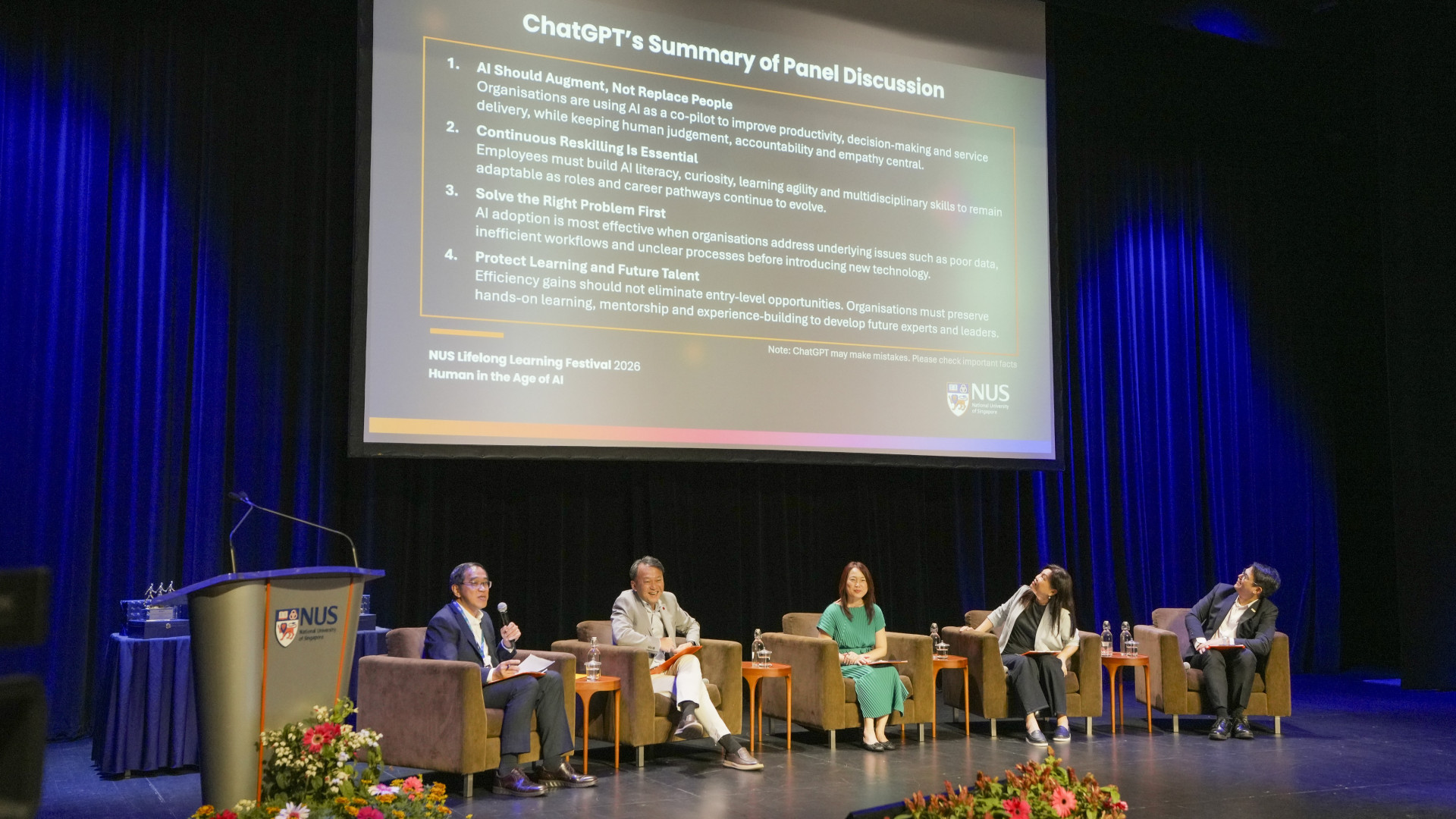
The shift is already playing out in workplaces. Panellists from Singtel, Raffles Medical Group, ST Engineering and NUS-ISS described approaches ranging from workforce-wide AI training and experimentation to deploying AI agents and developing specialist capabilities. Mr Victor Chua, Deputy Chief Executive Officer of NUS-ISS, described AI as a “force multiplier” — a co-partner or co-pilot rather than an autopilot.
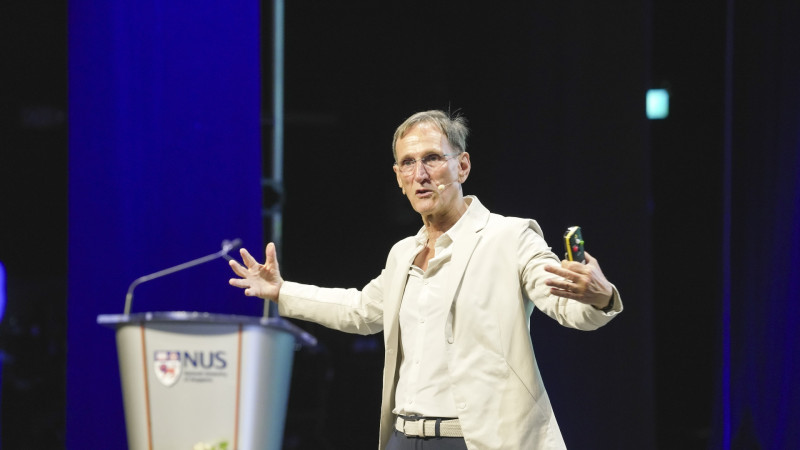
The next wave could take these capabilities from the digital into the physical world. Professor Jochen Wirtz, Vice Dean (MBA Programmes) at NUS Business School, highlighted how the convergence of large language models, large behavioural models and agentic AI could transform service robots, enabling them to converse more naturally, remember previous interactions, reason and plan, and autonomously execute service transactions.
No-code programming could also make it easier for employees to teach robots new ways of performing tasks, with that learning potentially shared across an entire fleet. Such technologies could help alleviate labour shortages while freeing employees for higher-value human interactions.
The question, then, is not simply which tasks AI can perform, but how work can be redesigned around new combinations of human and machine capabilities.
Accountability matters more, not less
Greater AI capability does not mean people can relinquish responsibility.
Professor Simon Chesterman, NUS Vice Provost (Educational Innovation), offered a colourful analogy: generative AI should be treated as a “very smart intern with a drinking problem” — capable of impressive work, but prone to hallucinations and requiring supervision. Humans remain responsible for deciding what to delegate, scrutinising the results and intervening when necessary.
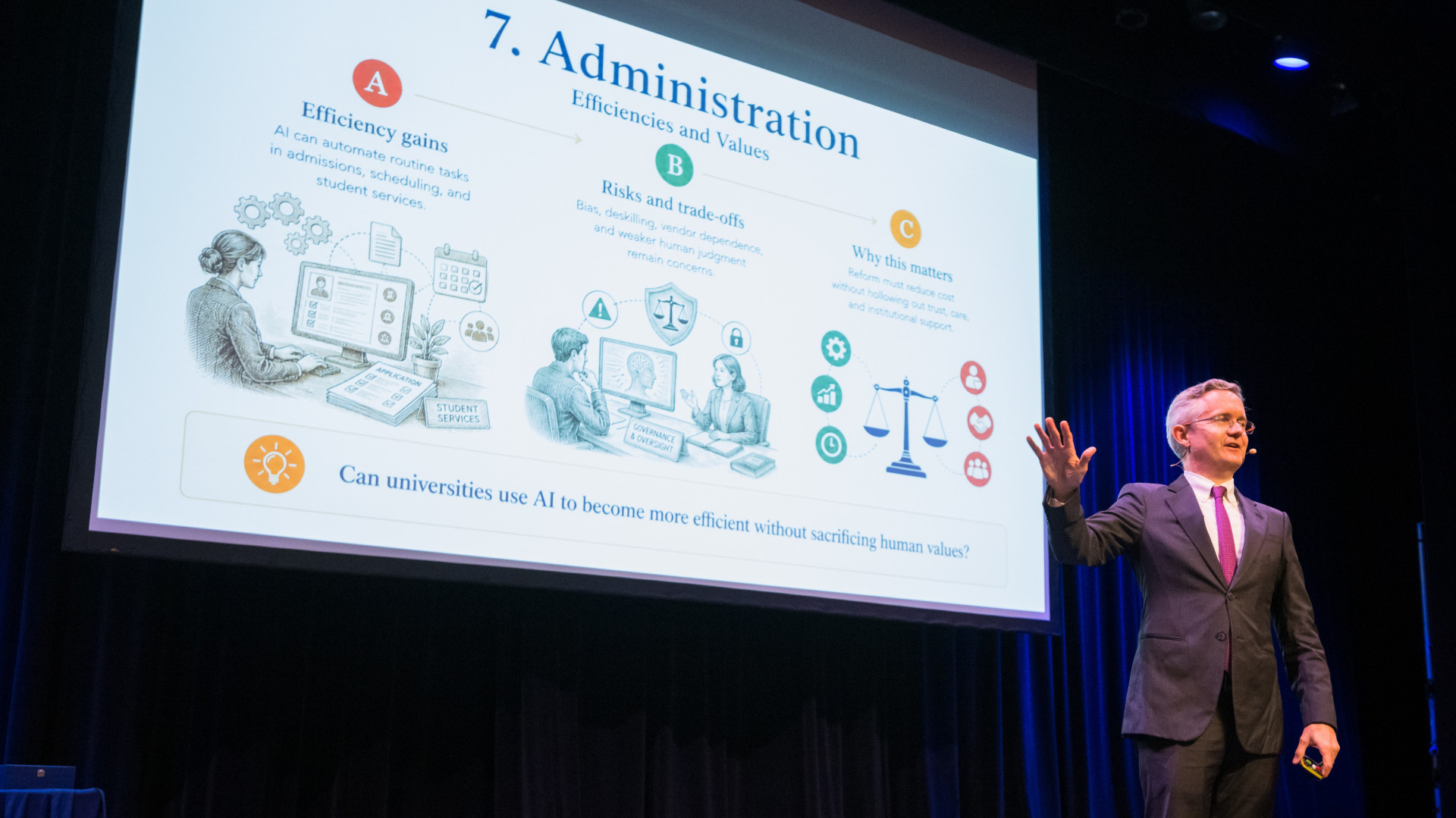
Prof Mitra made a similar point about AI agents. Once tasks are delegated to them, she said, the ownership still belongs to the user: “We can delegate the actions to AI agents, but accountability needs to really stay with the people.”
These questions become even more consequential as AI moves into physical environments. Prof Wirtz highlighted risks involving ethics, fairness, privacy, agency, and health and safety. Managing increasingly autonomous systems would therefore still require human oversight, including for exceptions, auditing, errors and escalations.
This places an increasing premium on expertise and judgement.
While degrees will remain important, Prof Chesterman observed that as AI enables people to perform some cognitive tasks at a higher level, credentials and grades alone may become less effective differentiators. The “human edge” will increasingly encompass soft skills including creativity, empathy, teamwork and leadership.
This does not diminish the importance of disciplinary expertise. Prof Mitra stressed that strong foundations remain essential for evaluating AI’s outputs: “If you have zero foundation, you multiply it by AI, you still end up with zero foundation.”
Prof Chesterman described NUS’ approach as “X plus AI” rather than “AI plus X” — starting with a person’s expertise and asking how AI can enhance it, rather than treating AI as the starting point.
How workers can open up new career possibilities
If the capabilities required at work are changing more quickly, careers themselves may also become less linear.
Ms Aileen Tan, Group Chief People and Sustainability Officer at Singtel, suggested that workers with longer careers may need to pivot into different areas several times rather than expect to progress continuously up a single career ladder.
Instead of thinking only about promotion, employees should consider “career optionality” — building skills that allow them to move between different roles and domains. Curiosity, a growth mindset and the ability to keep learning will be crucial to navigating those transitions.
More fundamentally, Prof Mitra suggested that lifelong learning in the AI era should not be seen simply as reskilling or upskilling to catch up with technological change, but as continually “discovering new possibilities” as AI opens up new ways of working.
This changes the role of universities too.
“The idea that... a few years at university will give you everything you need for a career, that ship has sailed,” said Prof Chesterman. In an AI-mediated world, universities will increasingly need a “lifelong conversation” with their graduates, with stackable credentials and other opportunities enabling them to acquire new capabilities and reinvent themselves.
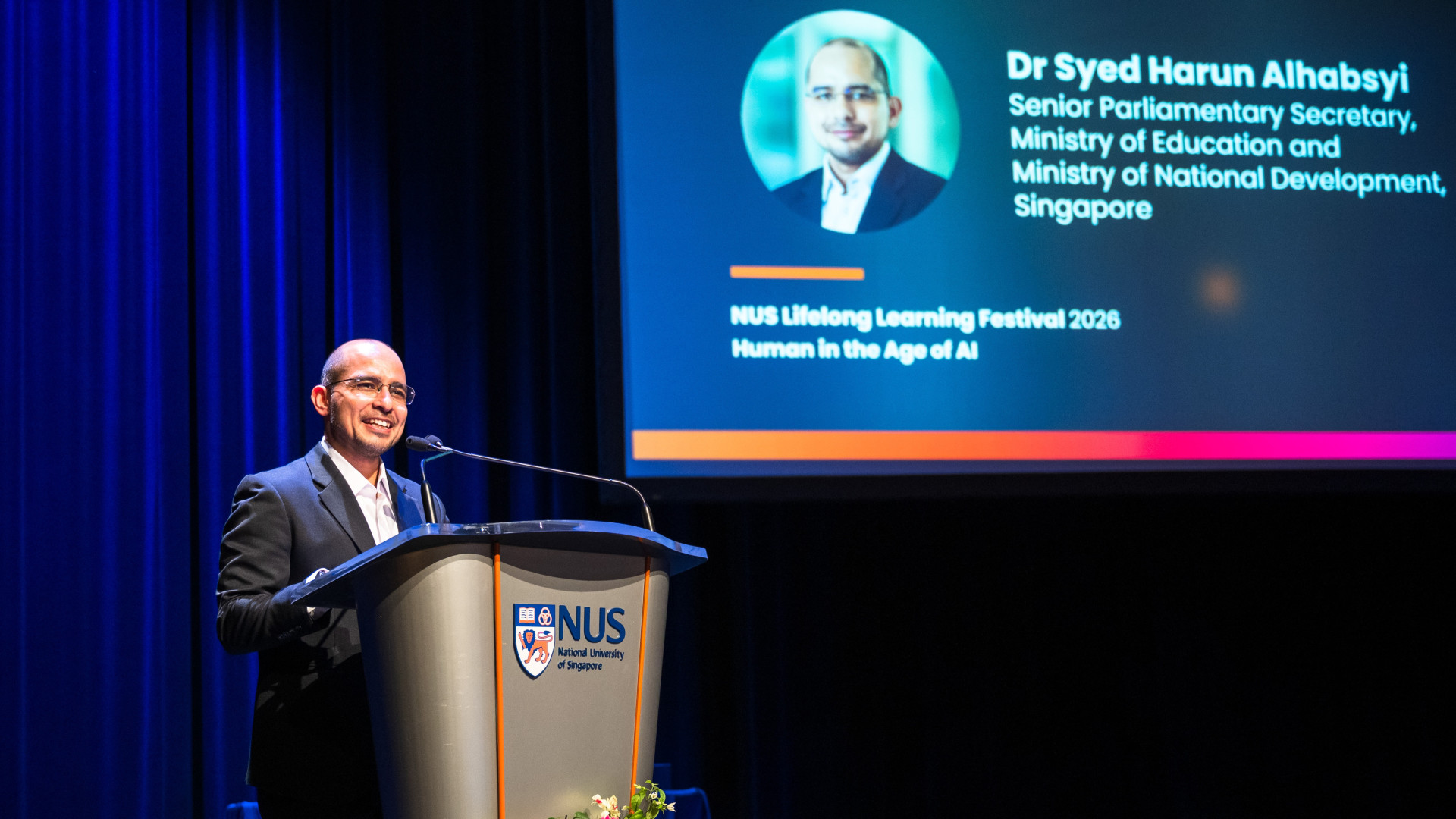
Senior Parliamentary Secretary for Education and National Development Dr Syed Harun Alhabsyi said Institutes of Higher Learning need to do more than simply offer more courses. They must help learners acquire deep and relevant skills that employers recognise and value, design flexible pathways for diverse adult learners, and partner with companies on workforce and enterprise transformation.
“New skills deliver their greatest value when companies are also ready to redesign jobs, adopt technology, and deploy workers differently,” he said. “The next frontier is to help individuals and businesses adapt and grow together.”
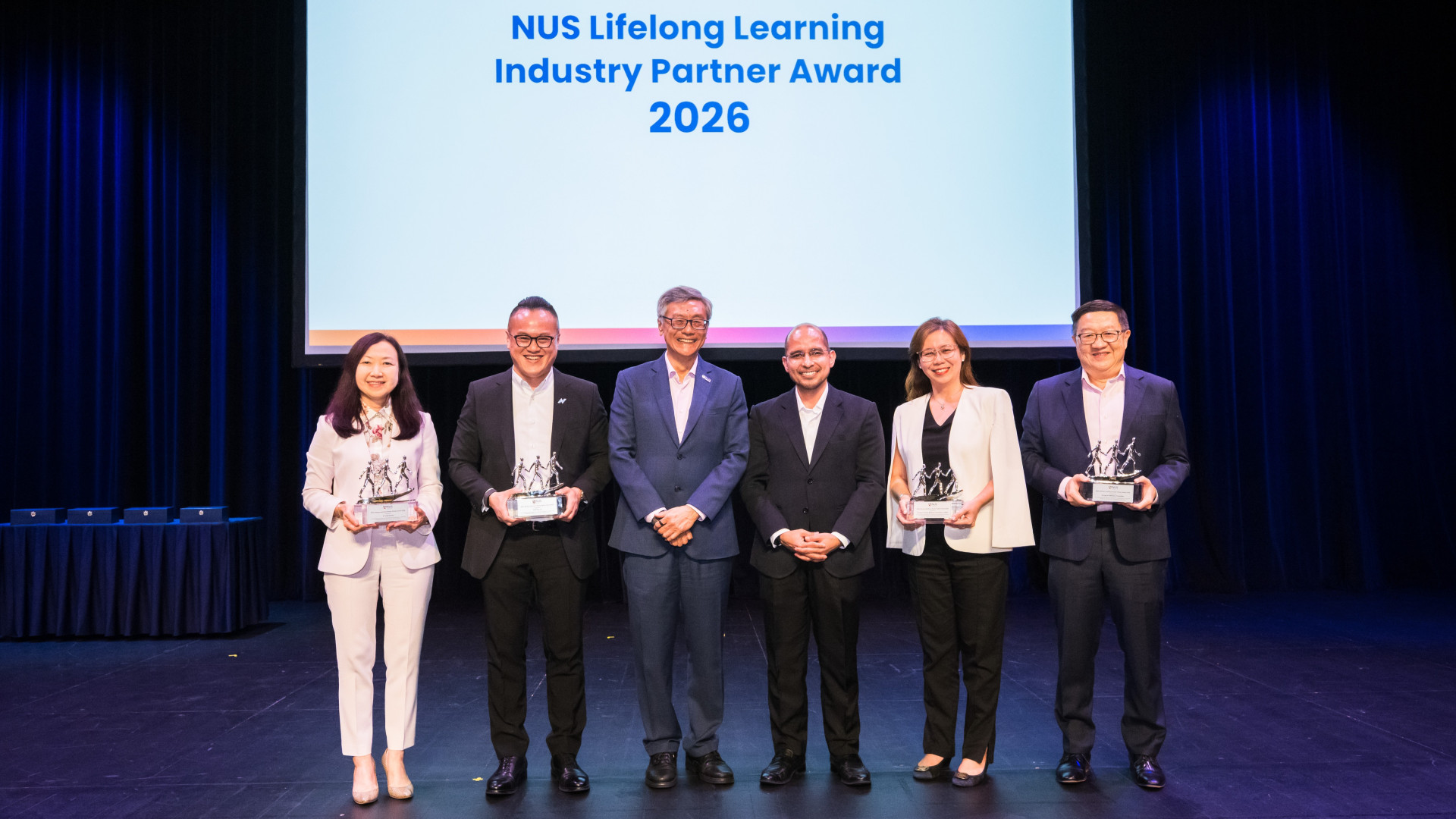
This closer partnership between learners, employers and universities has underpinned NUS’ approach to lifelong learning. Over the past decade, the number of NUS schools and institutes working with the Skills and Workforce Development Agency to offer courses has grown from two to 14, with some 550 courses and more than 130,000 training places offered today. Collaborations with employers have also strengthened. At this year’s Festival, NUS recognised four organisations through the inaugural NUS Lifelong Learning Industry Partner Award for their strong commitment to the learning and growth of their workforce, and for driving innovative approaches to workforce transformation.
Yet amid changing technologies, skills and careers, one constant remains.
“As AI grows more capable, our job is to keep growing ourselves alongside it. Education starts with something intrinsically human, which is curiosity. Technology will change. New skills will emerge. The way we learn must also evolve,” Prof Tan said.
“But our desire to learn — this has to stay with us always.”