


Illuminating the cell nutrient transport system
NUS researchers discover the molecular mechanisms that transport micronutrients to our cells, setting the groundwork for new therapeutic approaches for neurological diseases
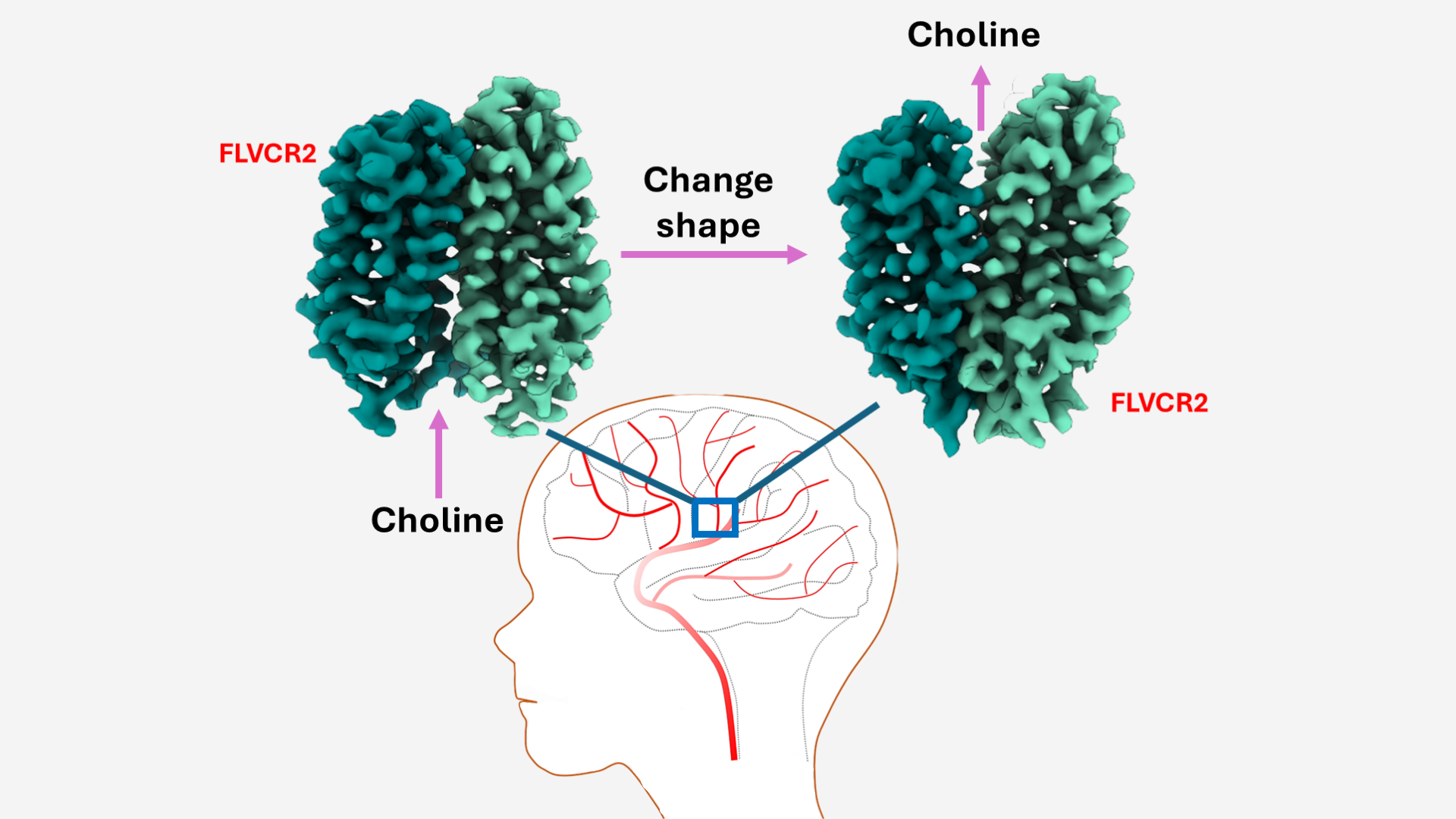
A research team led by Associate Professor Nguyen Nam Long from the Department of Biochemistry under the NUS Yong Loo Lin School of Medicine has revealed how two cell transporters, FLVCR1 and FLVCR2 (also known as Mfsd7b and Mfsd7c), transport essential micronutrients across the cell membrane of the cells in our body.
Distortions in these cell transporters are known to be related to various neurological diseases, including PCARP, HSAN and Fowler syndrome. Recent studies have also demonstrated that FLVCR2 is a potential drug target for the treatment of Alzheimer’s disease, prompting the researchers to dive deeper to understand how these transporters deliver micronutrients across the cell membrane of the cells in our bodies, which potentially pave the way for new drug targets for neurological diseases.
The research was conducted in collaboration with structural biologists from the Max Planck Institute of Biophysics in Frankfurt, Germany.
The molecular structure of the cell transporters and the micronutrient transportation mechanism discovered from this study were published in Nature on 22 May 2024.
Examining the molecular preferences for cell transportation
Choline and ethanolamine are essential micronutrients for the body, and they can be obtained from foods such as egg yolks and radishes. To examine how these key nutrients are absorbed by our cells through FLVCR1 and FLVCR2, the researchers adopted cutting-edge techniques to analyse the changes that occur in the molecular architecture of the two cell transporters while transporting choline and ethanolamine into cells.
The researchers used an advanced imaging technique known as Cryo-Electron Microscopy to illuminate the three-dimensional structure of the molecules at near-atomic resolution. Through their molecular-level analysis, the team observed detailed atomic structural differences between the two cell transporters, which allow FLVCR1 to have greater affinity to transport ethanolamine and FLVCR2 to have a higher affinity to transport choline. The research team also used molecular dynamics simulations to develop working models to demonstrate how these cell transporters would work in the human body.
Findings from this present publication add to an initial study conducted by NUS researchers where they identified the important role of FLVCR2 in exporting choline from the brain through the blood-brain barrier.
“The knowledge gathered from this study provides the structure of these cell transporters, which will pave the way for developing new therapeutic approaches for neurological diseases. Our next mission will be to discover compounds such as small molecules that target FLVCR2 in the blood-brain barrier for treatment of various conditions, including ageing and Alzheimer’s disease,” said Assoc Prof Nguyen.
