


Inspiring women in STEM: Innovators, scientists, and role models shaping the future
The International Day of Women and Girls in Science is observed globally on 11 February every year, aiming to promote full and equal access and participation in Science, Technology, Engineering and Mathematics (STEM) fields for women and girls. This year, the initiative embraces the theme “Unpacking STEM careers: Her Voice in Science”, emphasising the importance of amplifying the experiences, insights, and contributions of women in STEM.
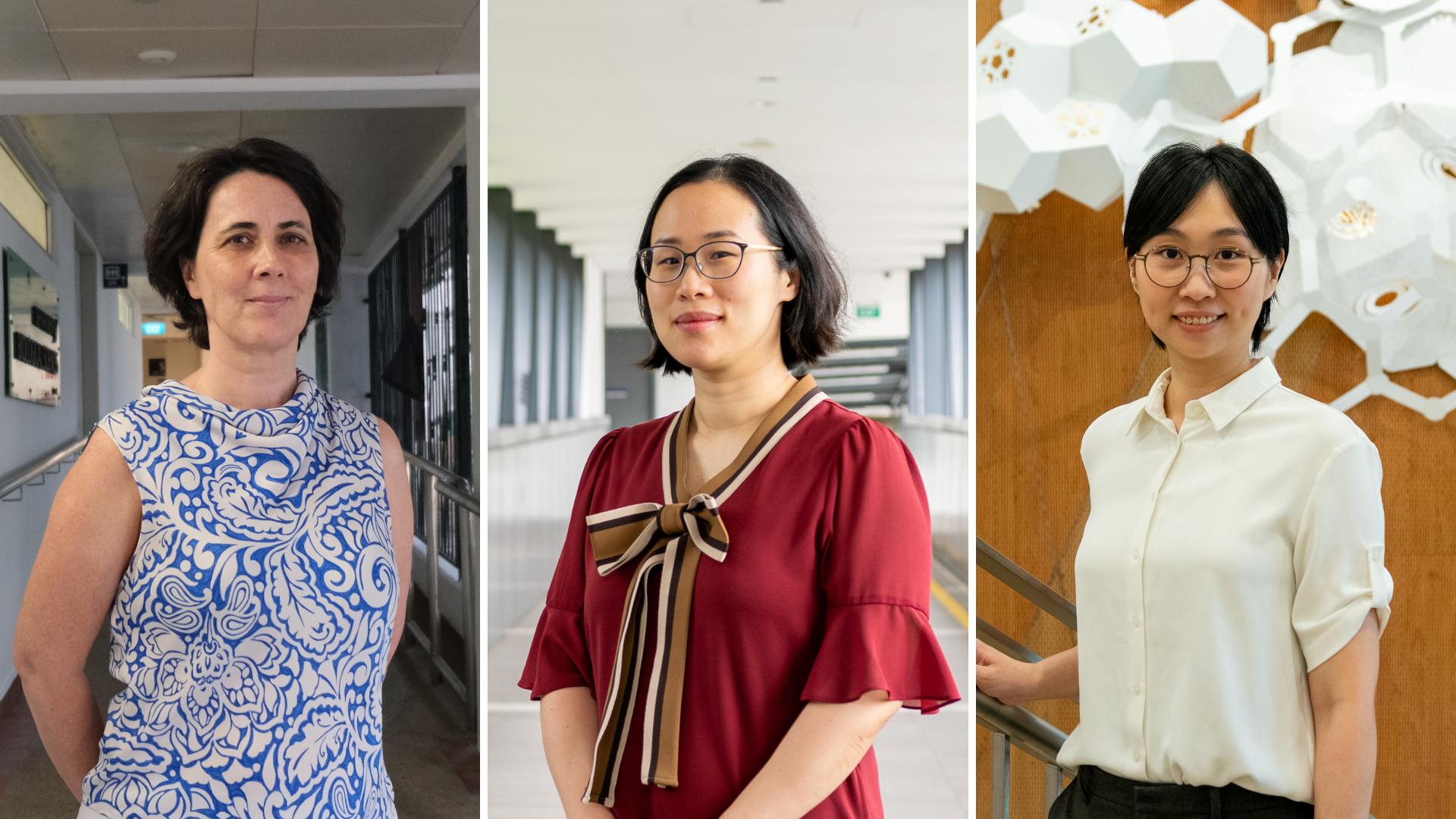
To commemorate the 10th anniversary of the International Day of Women and Girls in Science, we highlight the inspiring journeys of three women in STEM from NUS: evolutionary biologist Professor Antonia Monteiro, AI scientist Associate Professor Angela Yao, and mechanical engineer Assistant Professor Tan Yu Jun, to showcase their passion for research in STEM and tenacity in breaking barriers, reimagining possibilities, and paving the way for the next generation of girls and women to pursue rewarding STEM careers.
Unveiling the secret lives of butterflies
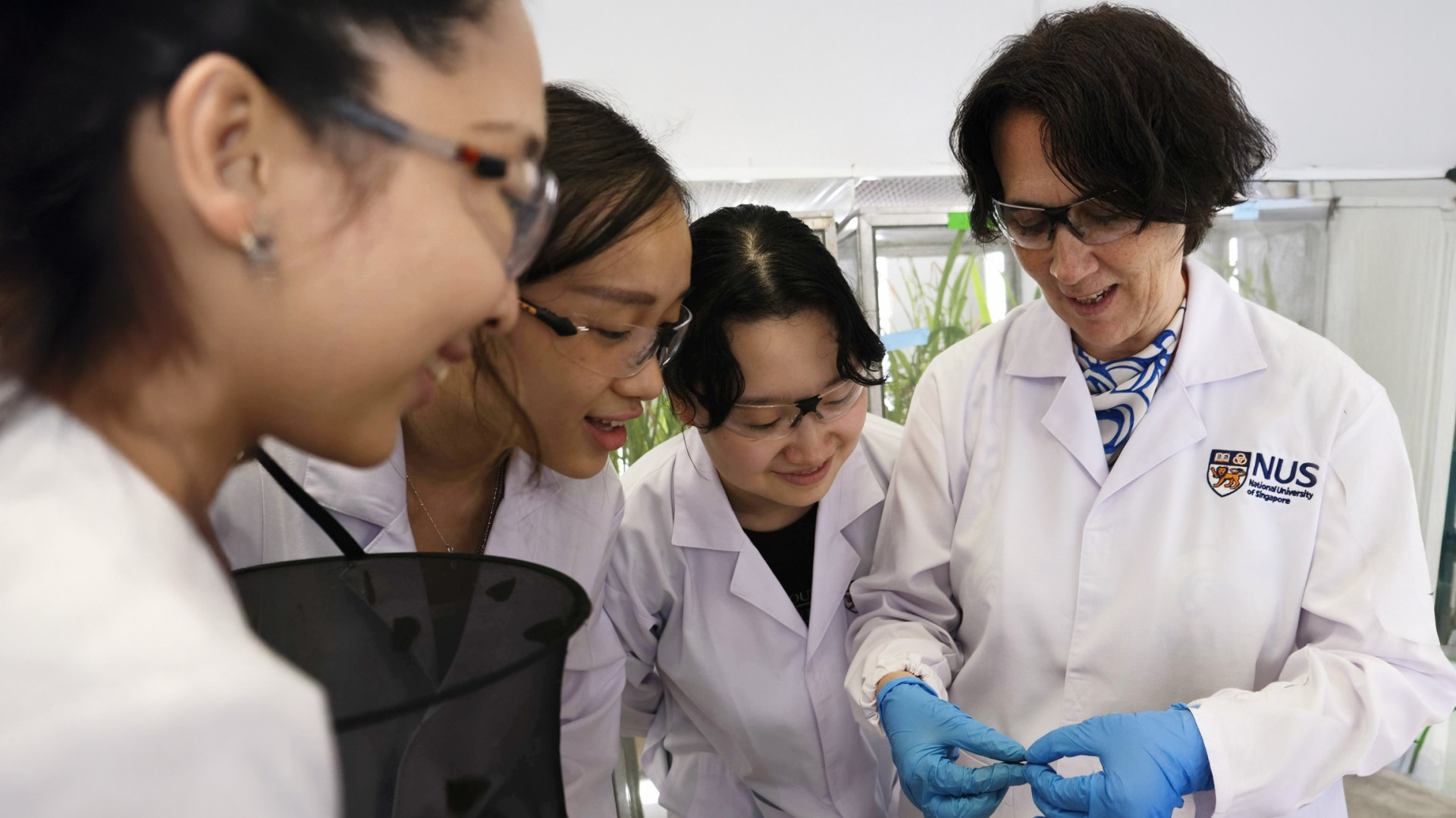
Professor Antonia Monteiro, an evolutionary biologist from the Department of Biological Sciences at the NUS Faculty of Science is intrigued by butterflies and their remarkable evolution. Together with her team, they uncover the lives of butterflies, studying the genetic links to their wing colours, their behaviour, and the behaviours of their offspring.
“Early in my career, I focused exclusively on investigating the genetic and developmental mechanisms behind the wing patterns of butterflies. But after hosting a few students that pushed to work on behavioural projects, I got hooked in studying this facet of butterflies’ lives. Studying the genetics of behaviour is equally, if not more, fascinating than studying static wing patterns. It is as if we are studying genes responsible for producing a ‘movie’ rather than a still ‘picture’,” explained Prof Monteiro.
Prof Monteiro’s STEM journey began in high school, where she met an engaging biology teacher who ignited her interest in the many wonders of biology. This experience inspired her to study biology in college where she delved into evolutionary biology.
“I found evolutionary biology most interesting as it could explain and unite all of biology into a cohesive framework,” said Prof Monteiro. “It was during an internship at an evolutionary biology laboratory, in my final year of college, which made me discover all the intriguing projects that researchers were pursuing in this area of biology that convinced me that I really wanted to pursue a research career in evolutionary biology.”
When she was pursing undergraduate studies in Lisbon, Prof Monteiro had the opportunity to work in an evolutionary biology lab in the Netherlands, as a visiting Erasmus student. “I picked that lab because they said they worked ‘on natural selection experiments in tropical butterflies’. This just sounded fabulous and different from other more mundane topics,” she added.
During her earlier college years, Prof Monteiro would go on field trips in Portugal, and she always found the colours and patterns of the birds and butterflies there completely mesmerising. “I got hooked on working with butterflies in my senior year of college and have worked on them ever since,” she said.
Prof Monteiro describes venturing into a STEM career as “immensely rewarding and never boring”. “Except when repeating the same experiment multiple times to obtain a good estimate of the typical outcome or it effect size,” she quipped.
“Having a STEM career in research demands enormous amounts of creativity, deep thinking, perseverance, and bravery. It is also fun! The flexibility of the job makes it very compatible with having a family,” added Prof Monteiro, who has one daughter, who is now working as a science videographer.
As she leads her research team, she hopes to inspire her students and researchers by engaging them and helping them to explore what interests them. “By delving deeper into their topic of interest, I hope to guide them to designing experiments to investigate those questions and to discover their full potential as researchers.”
Harnessing artificial intelligence to understand human movements
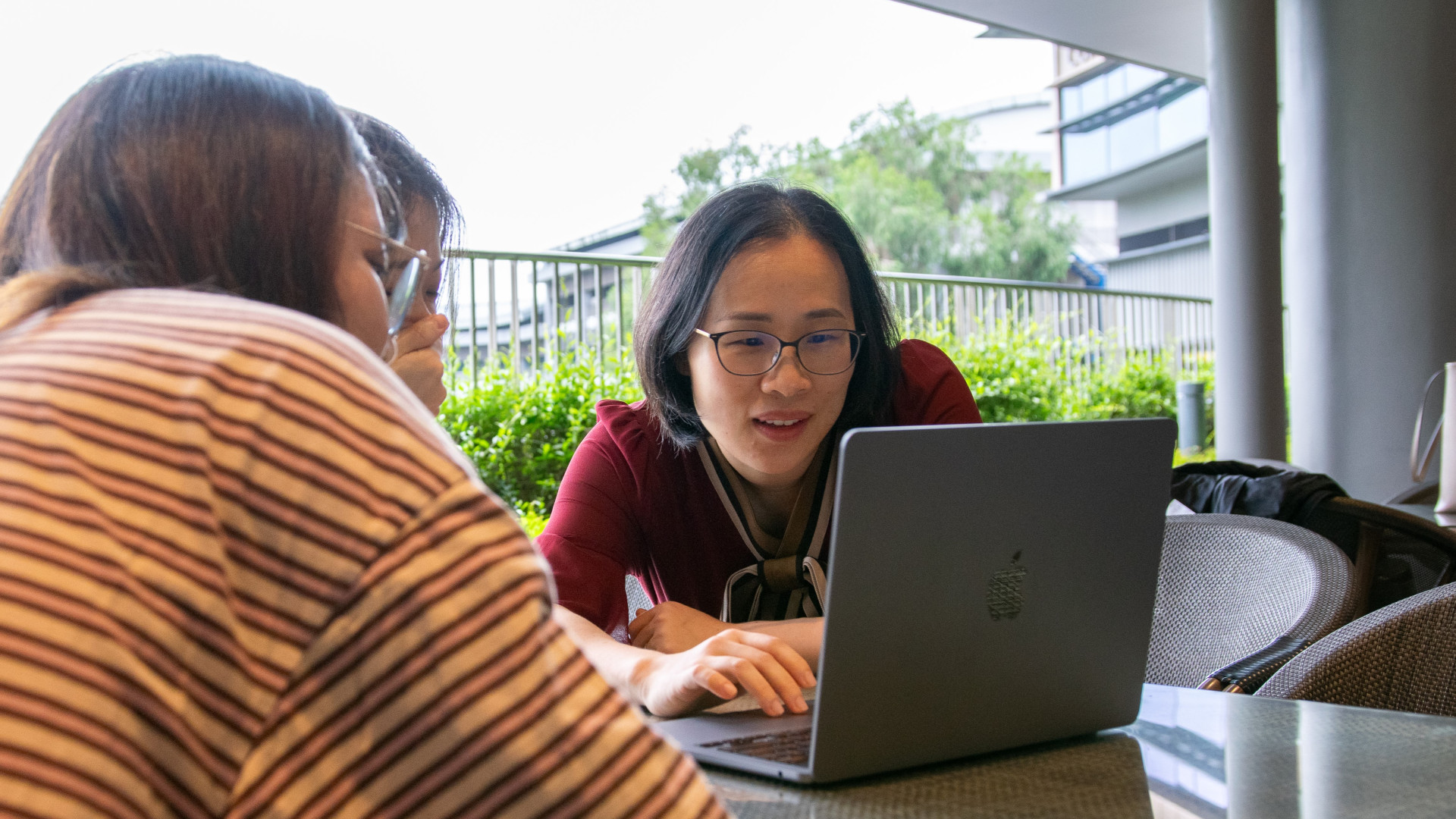
Associate Professor Angela Yao from the Department of Computer Science at the NUS School of Computing centres her research on the visual perception of people. Assoc Prof Yao works alongside her team to understand videos relating to human actions and human 3D modelling.
One of Assoc Prof Yao’s research projects looks at estimating the 3D joint positions of various human hand poses as it performs everyday tasks in recorded videos. The team employs weakly-supervised and self-supervised learning to train data sets and build artificial intelligence (AI) models to predict how the human hand moves and interacts. Her work was earlier awarded funding from the MOE Academic Research Funding (AcRF) Tier 2 scheme in 2021, and the team is now leveraging this model to develop real-world applications.
Assoc Prof Yao began her STEM journey specialising in Engineering during her undergraduate and master's studies, with a strong interest in signal processing, multimedia, and machine learning. Her thesis projects applied machine learning for prosthetics control, which led her to explore image and video analysis and later, pursue a PhD in Computer Vision. Assoc Prof Yao’s PhD thesis focused on human action recognition, which involved developing AI algorithms to interpret human activities in images and videos — a topic which she continues to research on today.
Throughout her academic journey, Assoc Prof Yao has been inspired by strong role models at different avenues of her life – from her mother, who helped her spark an early interest in math to supportive university professors who demonstrated the real-world impact of research. Assoc Prof Yao’s passion for both research and teaching made academia a natural career choice. Now, Assoc Prof Yao strives to lead by example, showing her students that STEM is for everyone.
Assoc Prof Yao’s message to girls and women looking to pursue a career in STEM is simple: “Just go for it! Believe in yourself, because you are strong and capable. STEM careers are fun and exciting — you get to be at the forefront of new discoveries and technology, and your work can make a significant and meaningful impact on the world.”
Revolutionising engineering through sustainability and inclusion
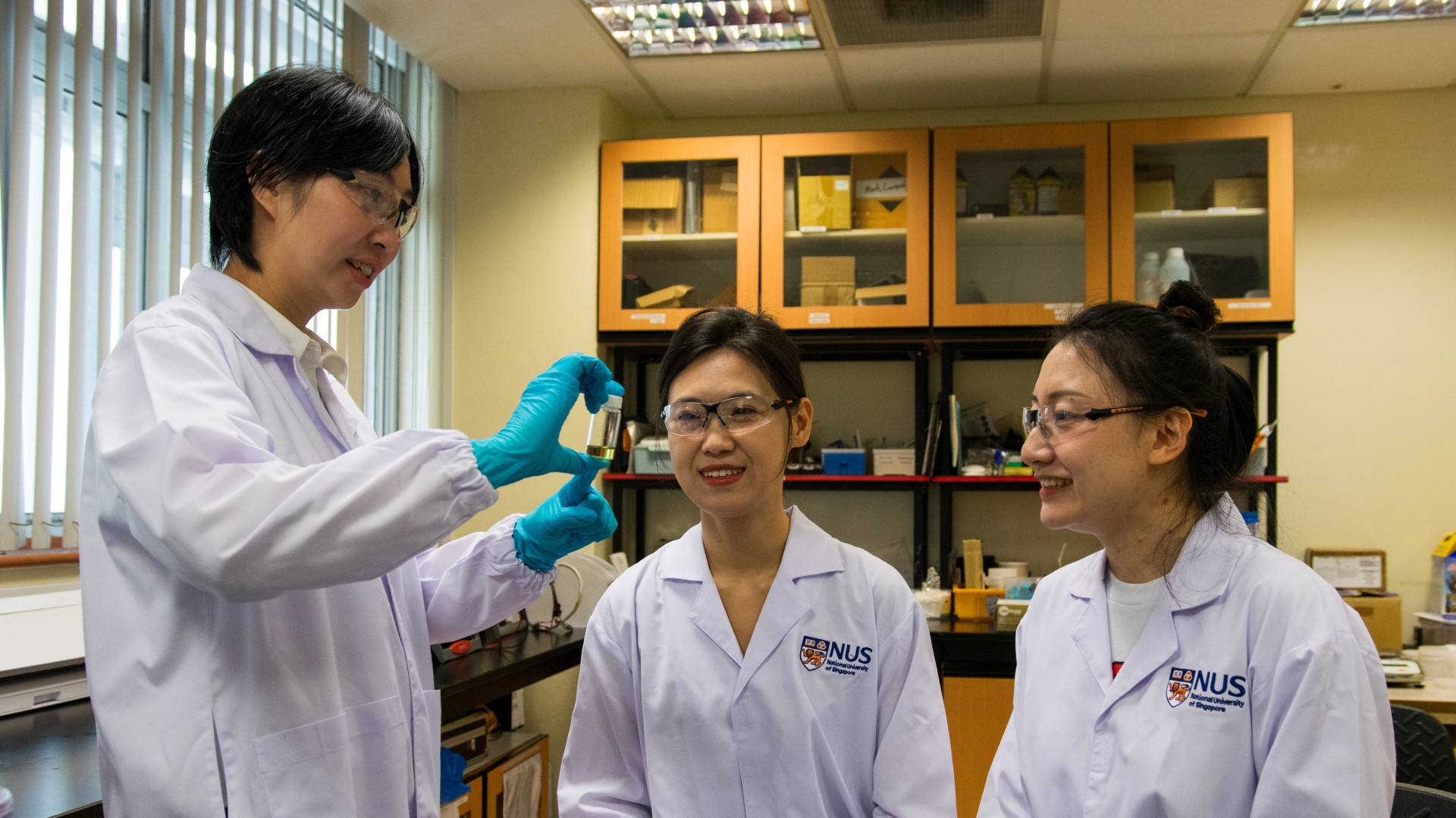
Assistant Professor Tan Yu Jun from the Department of Mechanical Engineering at the College of Design and Engineering in NUS focuses her research on applying principles from biomaterials science to develop sustainable, functional materials for flexible sensors, biocompatible implants, and soft robotic systems, all aimed at advancing the circular economy.
“When people think of mechanical engineering, they often picture cars, heavy machinery, or rigid robots. However, my research takes a different approach by harnessing the properties of natural materials, transforming them into valuable and functional products, such as self-healing devices and developing recyclable and biodegradable materials for these devices and soft robots, ensuring that our innovations align with sustainability goals,” said Asst Prof Tan.
From a young age, Asst Prof Tan enjoyed watching documentaries and was captivated by nature’s ability to create complex, efficient structures. She found it fascinating that biological systems can generate both soft and hard materials, while seamlessly integrating function with sustainability.
“Unlike conventional manufacturing processes, nature constructs materials without relying on extreme conditions or harmful chemicals. This piques my curiosity: could engineers replicate these natural processes to develop more sustainable technologies?” remarked Asst Prof Tan.
This desire to blend the natural world with engineering led her to pursue a career in mechanical engineering. Asst Prof Tan is deeply appreciative of her mentors, who guided and shaped her academic and professional journey, instilling in her the importance of creativity, perseverance, and interdisciplinary thinking. These qualities have proven to be crucial to her research.
Recognising the importance of mentorship in shaping the next generation of STEM leaders, Asst Prof Tan aims to provide the same support and encouragement her mentors gave her, helping future engineers and scientists realise that creativity and collaboration are essential for progress in both STEM fields and society.
“STEM fields thrive on diverse perspectives, and by encouraging more women to contribute their unique insights, we can drive innovation that would benefit society. My goal is to continue breaking stereotypes and contribute to a future where women in STEM are no longer the exception, but the norm,” said Asst Prof Tan.
Offering some wise advice to young girls and women considering a career in STEM, Asst Prof Tan said, “Seek out mentors who can guide and encourage you. Don’t be afraid to ask questions and dive deeply into the topics that spark your curiosity.
“And most importantly, believe in yourself. If STEM is where your passion lies, pursue it with confidence. The world needs your creativity, your perspective, and your innovative ideas – it’s waiting for you to shape it in your own unique way,” she added.
