


LKYSPP Festival of Ideas 2024: Fostering insightful discourse on policy issues
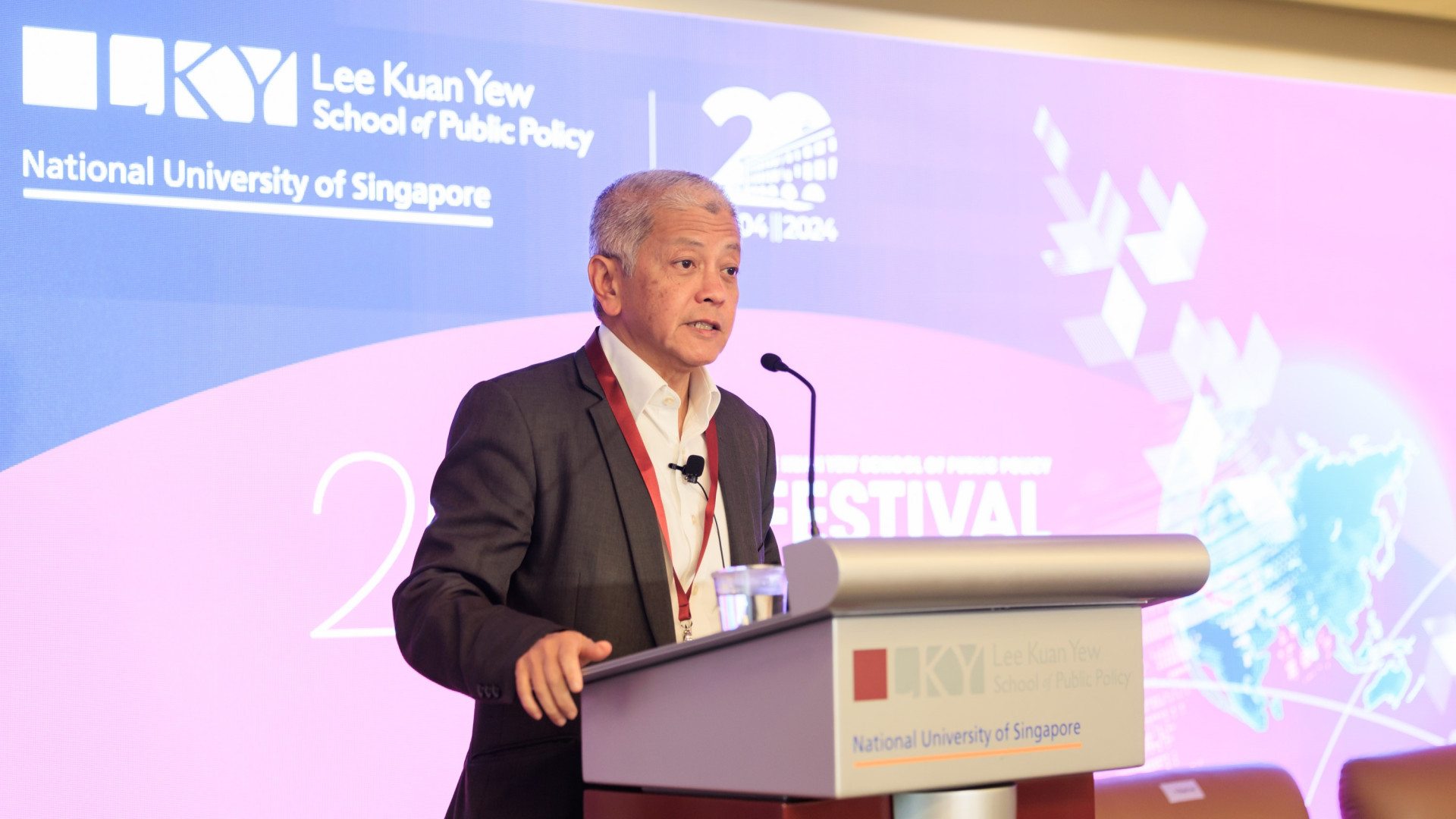
Ideas, research findings, and real-world results came together in a flurry of intellectual exchanges at the Festival of Ideas 2024 from 16 to 20 September, an event organised by the Lee Kuan Yew School of Public Policy (LKYSPP) to promote dialogue that inspires and shapes solutions to pressing policy issues.
The third edition of the biennial flagship event, which coincides with the School’s 20th anniversary, discussed the theme “Navigating a World in Crisis: Transforming Governance through Asia.” The 130 speakers ranged from LKYSPP academics who research and teach public policy to policymakers and industry practitioners who are directly impacted by policy decisions in their daily work.
“The Festival is an engagement on the great ideas and the most pressing issues of our time,” said Professor Danny Quah, Dean of LKYSPP, adding that it is an occasion for the School to showcase its thinking, for its PhD and Master’s students to display their work, and for colleagues from LKYSPP and around the world to engage in conversation. “This is all part of the school mission – that we inspire changemakers and leadership, we help improve the well-being of people around us and further afield, and we help transform Asia through the experience of good governance.”
Prof Quah was speaking at the opening session of the Festival, which explored China’s role in a shifting global order and the US-China rivalry through a dialogue with distinguished guests Ambassador Chan Heng Chee, Ambassador-at-Large and Professor at the Lee Kuan Yew Centre for Innovative Cities; Mr Lee Yi Shyan, Former Senior Minister of State and Chairman of Business China; and Assistant Professor Selina Ho, Co-Director of the Centre on Asia and Globalisation at LKYSPP. Their discussion touched on the role of smaller nations and the Association of Southeast Asian Nations (ASEAN) in helping to mediate the rivalry, as well as China’s domestic drivers and its ideal world order that inform the superpower’s perspective.
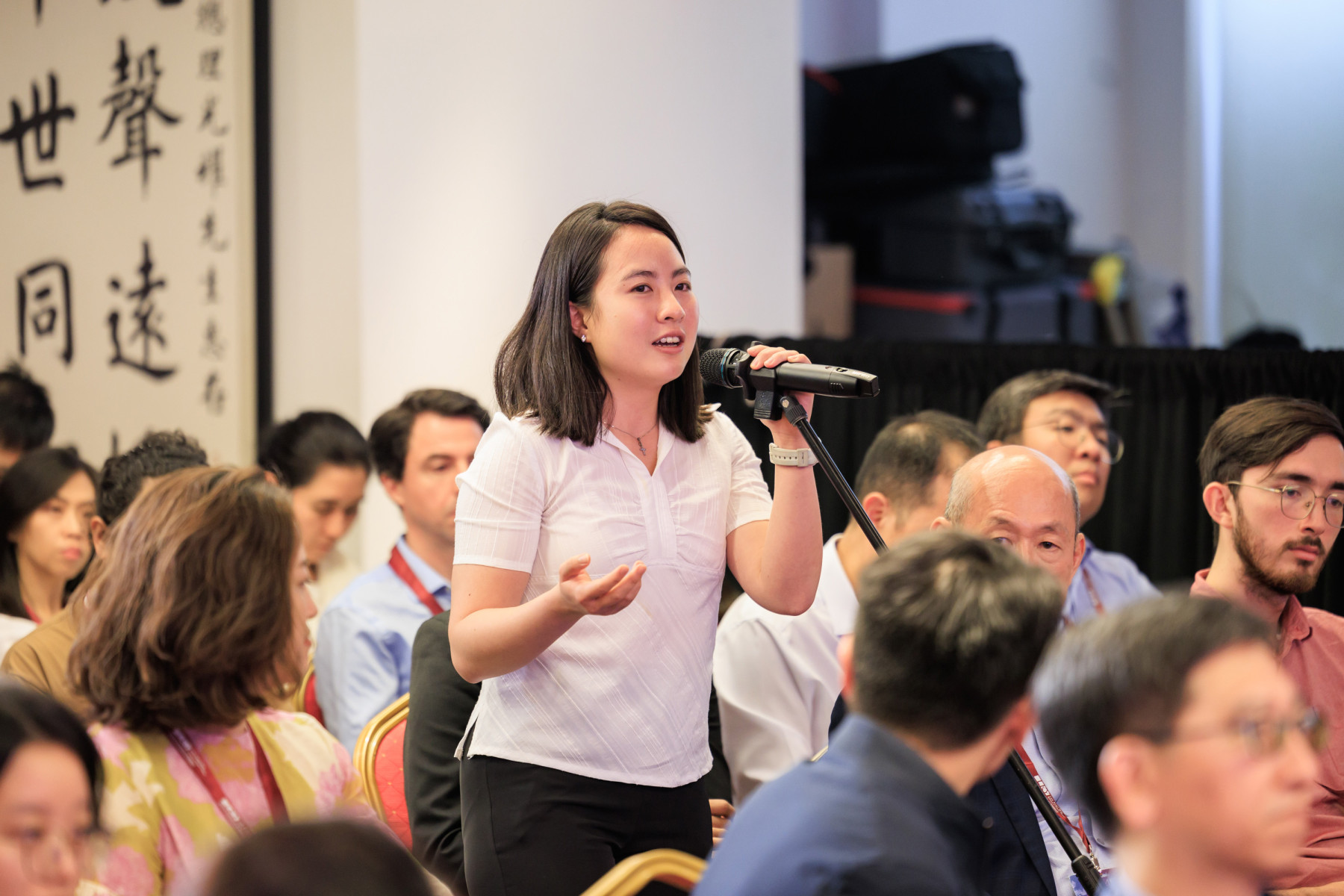
The session set the stage for the rest of the programme, which comprised 42 sessions over five days with various session formats such as lectures, workshops, panel discussions, and book launches. Some of the sessions ran concurrently, and most were accompanied by moderated Q&A segments that yielded valuable insights for the audience, which included NUS students, current and retired politicians, and members of the public interested in policy and governance issues.
On the final day, highlights included sessions that discussed artificial intelligence (AI) governance, the current global state of conflict and peace, and Singapore’s policy approach to managing its most precious resource – its people.
AI and governance in a time of disinformation
In the session on AI and Governance in a Time of Disinformation, representatives from government, media, and major players in the AI industry discussed the complexities of designing and implementing AI governance. The discussion was moderated by Dr Carol Soon, Principal Research Fellow and Head, Society and Culture at the Institute of Policy Studies.
Dr Janil Puthucheary, Senior Minister of State in Singapore’s Ministry of Digital Development and Information, explained that Singapore is handling the disruption from AI similarly to other types of technological disruption. “We have an imperative to make sure that Singapore's people, our economy, our businesses, the jobs, the social cohesion and structure that we have, are able to benefit from whatever technological disruption is coming towards us,” he said.
However, there are unique challenges in this arena, such as the heavy reliance of Singapore’s economy on technology and the country’s close connections to the rest of the world through international policies and practices, globally accepted standards for technological interoperability, and more. Consequently, Singapore will feel the impact of new developments and regulations in AI almost instantly as they continue to emerge.
“We need to be able to develop our approach in real time as the promise as well as the pitfalls of AI play out in the world around us,” said Dr Janil.
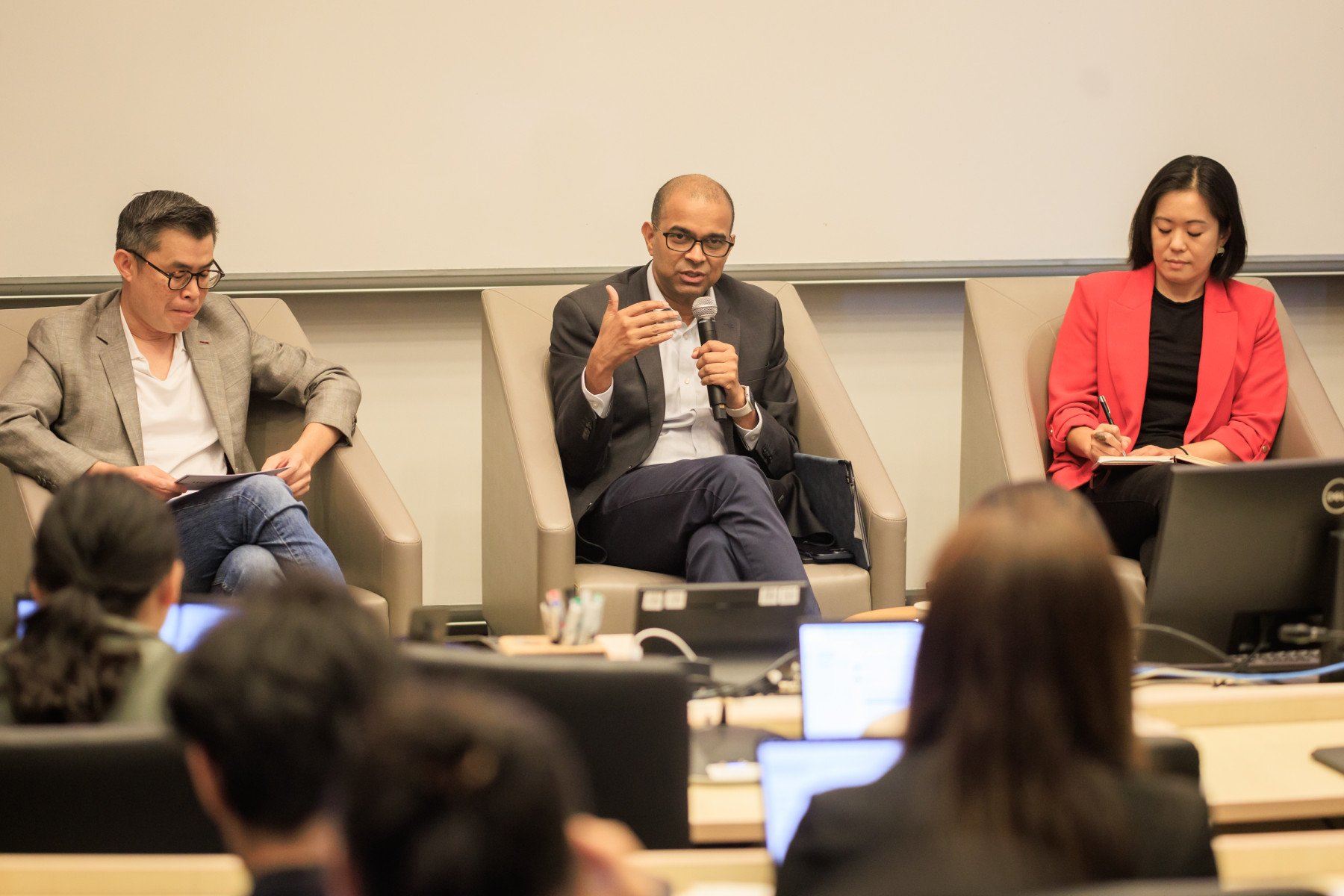
A question from the audience about the need for an international AI agency prompted two panellists to share their experience of working with international organisations and why they do not feel such an agency is necessary.
“Instinctively, most people would feel that there is a need for international collaboration and cooperation,” said Mr Jaime Ho, Editor of The Straits Times. “But whether or not the formal structure of an agency is going to help, I seriously doubt it will, based upon the experiences we’ve seen in recent years. People need to agree to be part of it, and an agency is only worth its salt if it’s able to enforce certain things.”
Ms Eunice Huang, Google’s Asia-Pacific Head of AI and Emerging Tech Policy, highlighted that the AI ecosystem comprising governments, industries, and civil society is working on regulations and standards via annual AI Safety Summits and the International Organization for Standardization (ISO). “A lot of international coordination can be done without the need for a new international organisation to be set up, because that entails a lot of investment and administrative things, and the politics of it also gets in the way,” she said.
Conflict and peace in the 21st century
Amid the global focus on ongoing conflicts, speakers at a panel discussion on Conflict and Peace in the 21st Century, moderated by Associate Professor Francesco Mancini, Vice Dean (Executive Education) and Associate Professor in Practice at LKYSPP, called for a greater emphasis to be placed on studying and investing in peace.
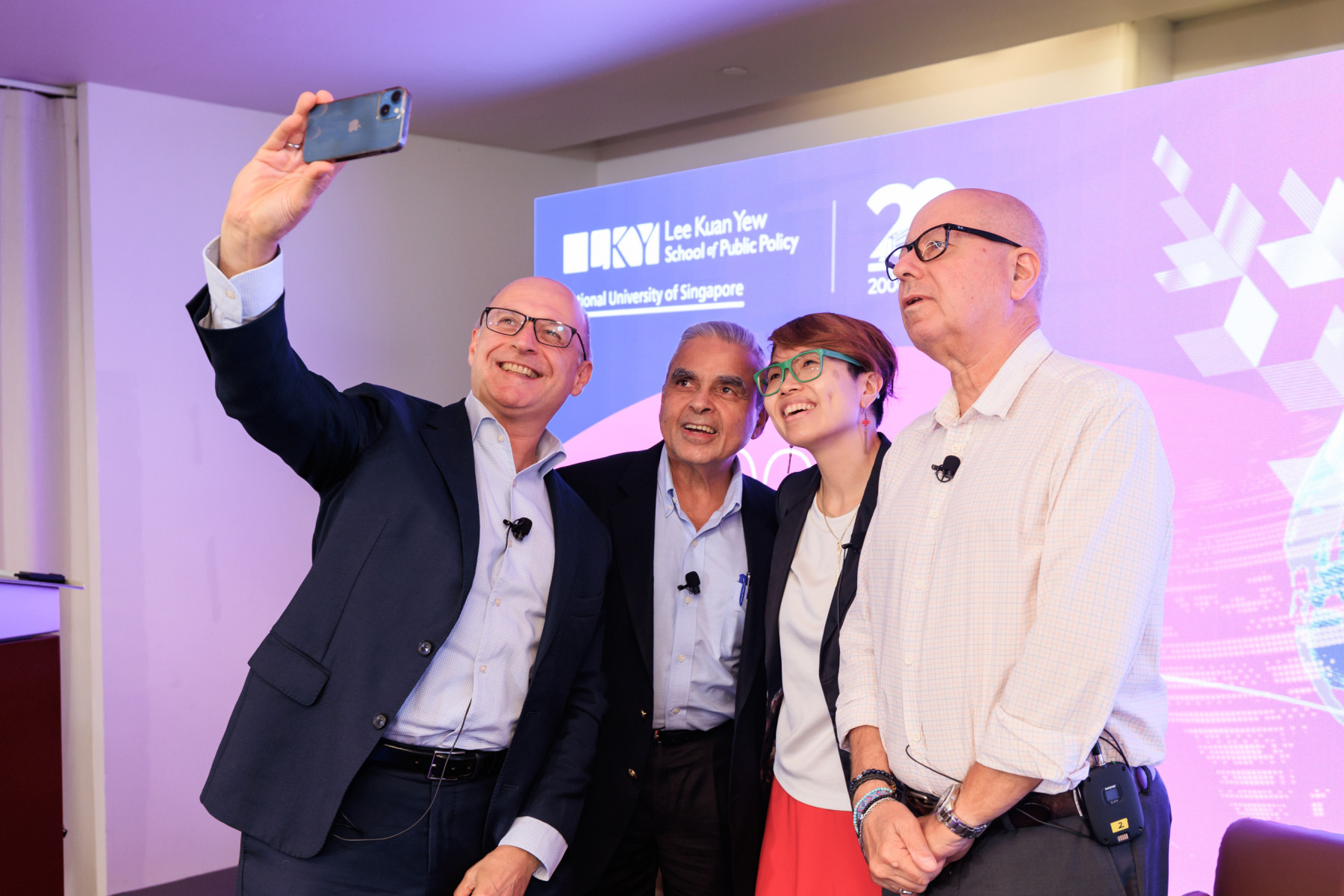
Ms Wu Ye-Min, Regional Director, South and Southeast Asia, Centre for Humanitarian Dialogue, urged countries to invest meaningfully in peace by training and placing peacemakers and impartial mediators in the field, which has proved successful in southern Philippines. In Sulu, such initiatives have resulted in decreased violence and allowed local tourism to thrive, with beach resorts being opened in formerly dangerous areas.
Teaching youths about peace-making and de-escalation will not only equip them with the skills for peace, but also bring discussions of conflict resolution into schools, workplaces, and homes to effect local change.
Former diplomat Mr Kishore Mahbubani, Distinguished Fellow at the NUS Asia Research Institute, and Dr Michael Vatikiotis, Senior Advisor, Centre for Humanitarian Dialogue, highlighted the unusual peace that Southeast Asia has enjoyed for the past 45 years. They noted the success of ASEAN in creating positive regional relations, boosting overall economic development, and enabling the region to protect its interests and reduce unwanted interference from other countries.
The speakers warned that climate change is increasingly important as a conflict driver, with the effects already visible in the Sahel region of Africa. Peace-making efforts will be needed to resolve climate-related challenges like fish stock depletion as conditions prompt ocean life to relocate, an example that Ms Wu shared.
Said Mr Mahbubani: “If humanity was intelligent, it would realise that the message from climate change is that… climate change doesn't respect borders at all. We've got to realise that all 8 billion of us are on the same boat; we've got to work together to deal with climate change.”
Closing dialogue with Minister Tan See Leng
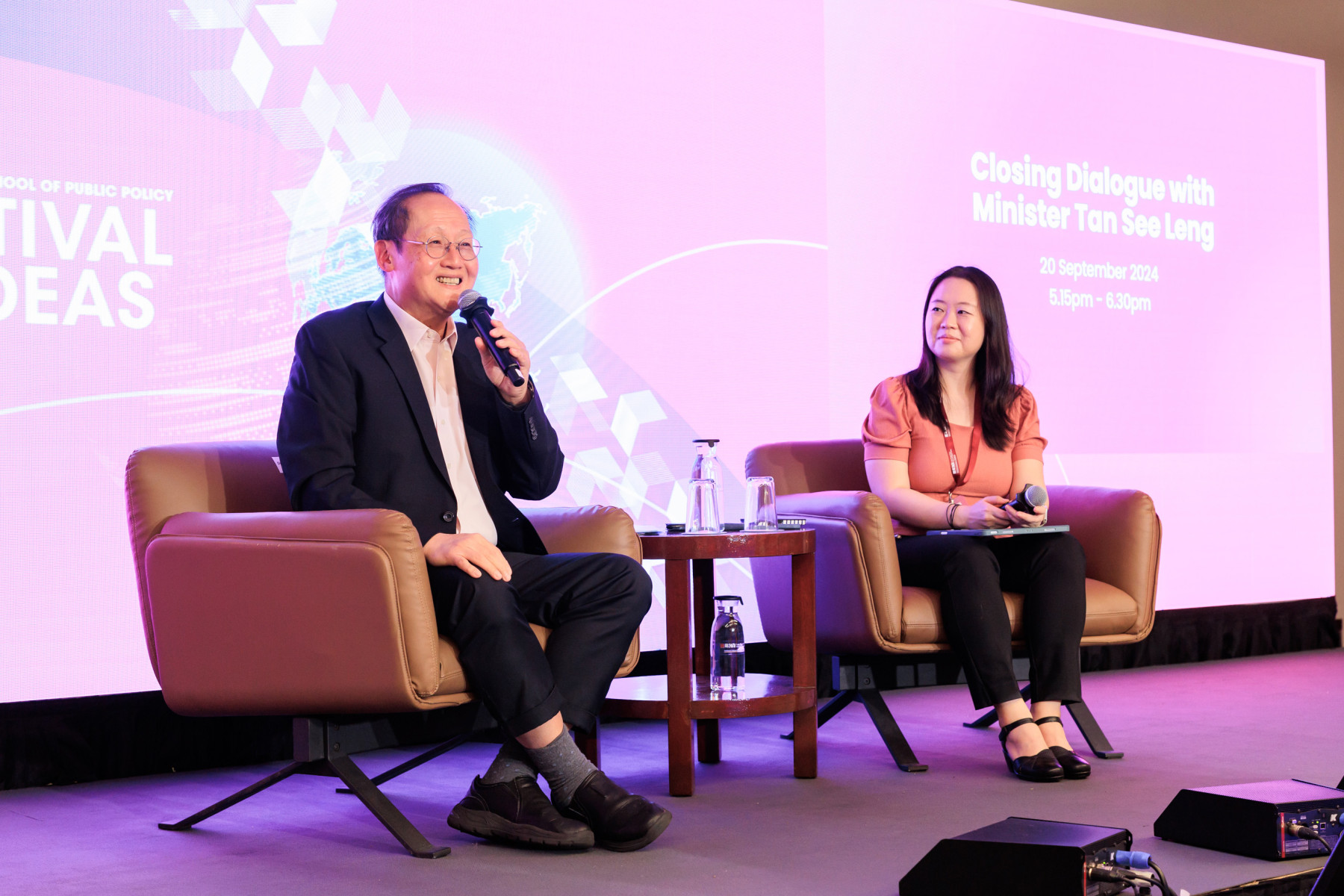
The last session of the festival was a dialogue with Dr Tan See Leng, Minister for Manpower and Second Minister for Trade and Industry, Singapore.
In his speech and responses to questions from the audience, Dr Tan shared insights into how Singapore has managed to thrive despite its size and lack of natural resources, by carefully designing and implementing manpower policies like the Central Provident Fund (CPF) and creating a unique tripartite partnership between the government, workers, and businesses.
While the shared values that made Singapore’s success possible remain relevant, the government recognises that the employment landscape and workers’ aspirations and expectations have changed over the years. Hence, the Ministry of Manpower (MOM) will shift its policy approach accordingly, he said.
“From the creation of the CPF system to our unique tripartite partnership, we have shown that innovative policies guided by strong values like meritocracy and fairness will lead to success,” Dr Tan said. “Through the times, MOM will continue to evolve, will continue to adapt.”
“Our singular focus will always be on supporting workers and businesses, driving growth, and fostering inclusive workplaces. I'm confident that as long as we hold true to our ideals and we are bold enough to try out new ideas, we can thrive in this ever-changing world.”
