


Nursing a dream: One army medic’s journey from SAF to NUS valedictorian
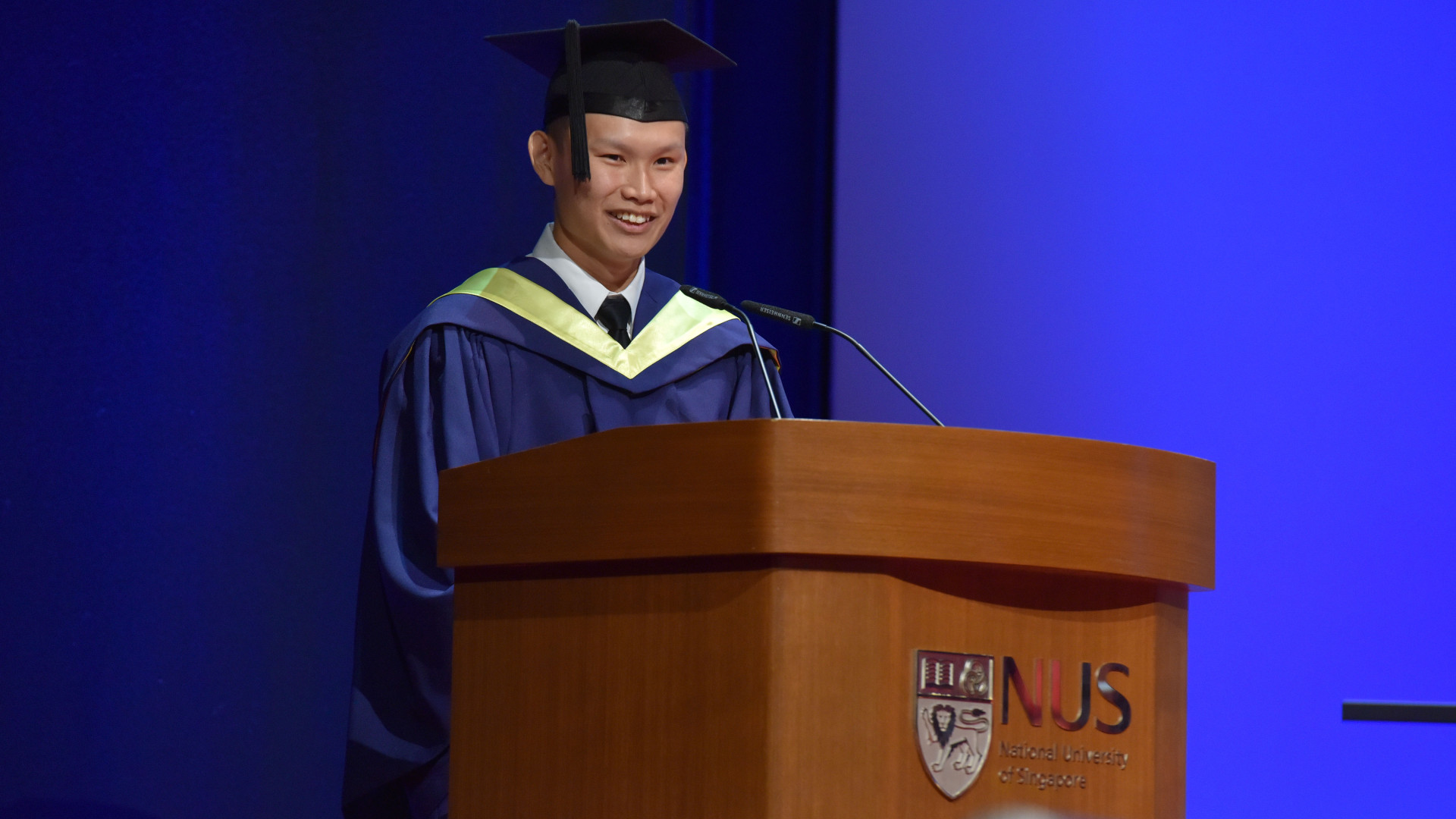
It isn’t every day that you get to see the material in your textbooks come to life. For Bernard Liang, this year’s valedictorian from the NUS Alice Lee Centre for Nursing Studies (NUS Nursing), it was an experience he would never forget.
The undergraduate, then 27, was about to sit his second-year mid-term exams on Women and Children’s Health. At 3am a few days prior, he had to rush his pregnant wife to the hospital as her contractions intensified. By afternoon, their daughter was born; by evening, he was back to his lecture notes, preparing for his exams. On the day his wife was discharged from the hospital, he sped to school for his exams after sending his family home — and aced them.
While his university life was not always so dramatic, it was an intense balancing act between family and studies during his time at NUS. Over four years, the Singapore Armed Forces (SAF) Medical Corps regular welcomed two children, renovated his home, stayed combat fit — and, to top it off, graduated as valedictorian.
“I am deeply grateful to my wife, my family, my mentors, and everyone else who helped me in this journey. This is a validation of the sacrifices that not just me, but everyone supporting me, had to make,” said Bernard, 30, who received his Bachelor of Science (Nursing) (Honours) degree on 10 July 2025.
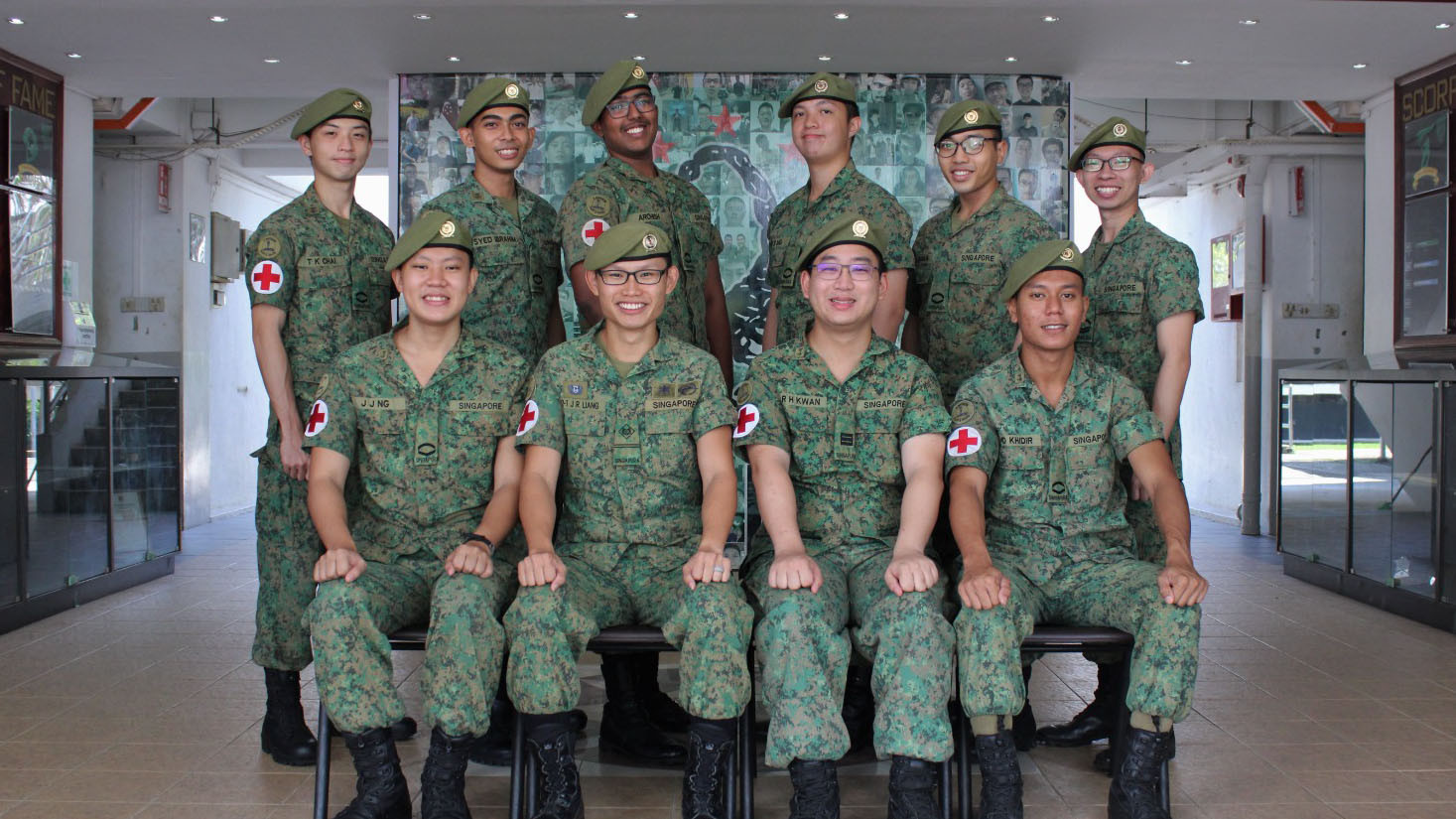
The army medic’s journey to NUS Nursing began six years into his time in the medical corps. Bernard, who had a diploma in veterinary technology, decided he wanted to “close the gap” between himself and his peers who were nursing-trained.
The NUS programme offered a good mix of theoretical knowledge and hands-on clinical work, noted Bernard, who received the SAF Military Domain Expert Scheme Study Award.
A hands-on approach to patient care
Transitioning from the rigours of military life to university took some getting used to at the beginning. “That time away from academia made it slightly challenging to readjust to the mindset of a student,” admitted Bernard.
But he soon hit his stride — armed with intellectual maturity, a steely resolve to soak up new knowledge, and existing skills in areas such as emergency resuscitation and triage.
He also benefitted from the guidance of NUS Nursing mentors such as Associate Professor Shefaly Shorey, who advised him on his thesis; as well as Assistant Professor Catherine Dong, whom he assisted with data collection, sample processing and more in-depth research studies such as the Heart-Brain Connection Translational Research Programme.
His clinical attachments left a deep impact. “We were taught theoretical frameworks — anatomy, physiology, how to assist doctors in providing better care. But an unexpected takeaway (was) how our patients taught us as well, because they have that lived experience of their own conditions,” he added.
He recalled encounters during home visits to patients as a student research assistant in Year 3, when he asked elderly stroke patients if they knew whether their condition had been caused by a blocked blood vessel or bleeding in the brain.
“When we asked them in (these) layman terms, they replied to us using medical terms, such as ‘ischaemic’ or ‘haemorrhagic’ stroke,” he said.
This experience taught him to view the patient-nurse dynamic in a different light.
“Instead of trying to micromanage them or (simply) educate them on their condition, we can shift to having a partnership with them,” he noted. “We should try to respect their knowledge and empower them to better manage their conditions.”
It takes a village
Beyond his studies, Bernard found time to captain the NUS Shooting Team — building on his leadership experience in the SAF, where he had led COVID-19 vaccinations at Selarang Camp and coordinated emergency preparedness for the National Day Parade.
He earned the NUS Achievement Award (Merit) for excellence in academics and sport, and also appeared on the Dean’s List.
Bernard credits his success to a robust support system at home, from his wife — the main caregiver of their children — to his parents and in-laws who stepped in regularly to help.
While an undergraduate, he carved out pockets of time to focus on schoolwork. After getting home in the evening, he would spend time with his daughter, before hitting the books from 10pm till as late as 2am after she had gone to bed. His NUS peers accommodated his schedule, agreeing to late-night Zoom meetings when they had to discuss groupwork.
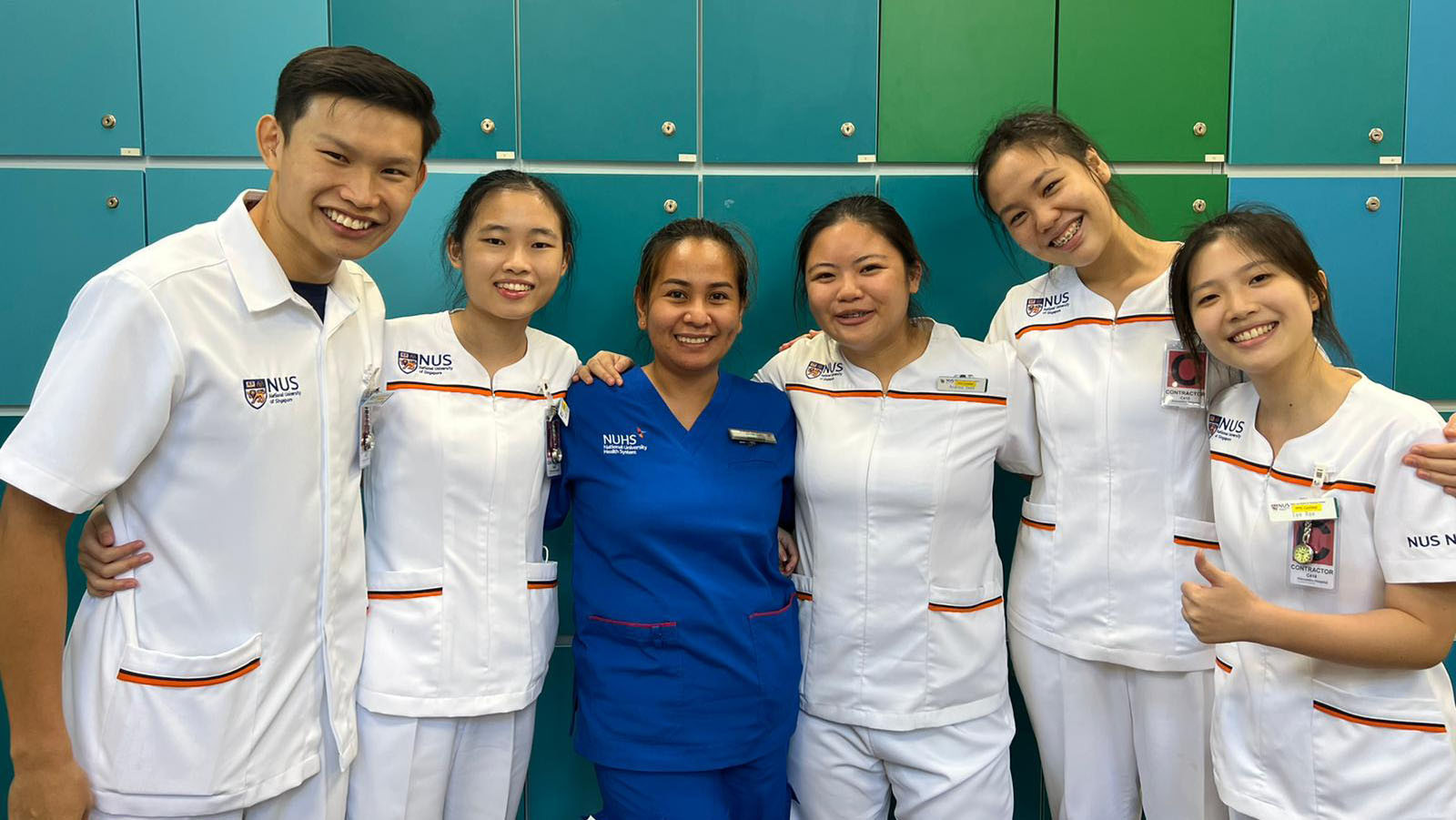
Now back in the SAF Medical Corps and currently a Military Expert 4 Apprentice, Bernard believes his nursing training has given him a fuller, more patient-centric perspective of care.
“I hope I can be a leader who truly inspires trust and cultivates resilience in my men, and be someone who can champion continuous learning so we do not lose sight of our medical knowledge,” he added.
“My goal is to contribute towards advancing the standard of military medicine and integrate evidence-based care into our daily SAF operations.”
This story is part of NUS News’ coverage of Commencement 2025, which celebrates the achievements of our graduates from the Class of 2025. For more on Commencement, read our stories and graduate profiles, check out the official Commencement website, or look up and tag #NUS2025 on our social media channels!
