


Greener buildings, healthier people: NUS Cities event looks at the future of living spaces
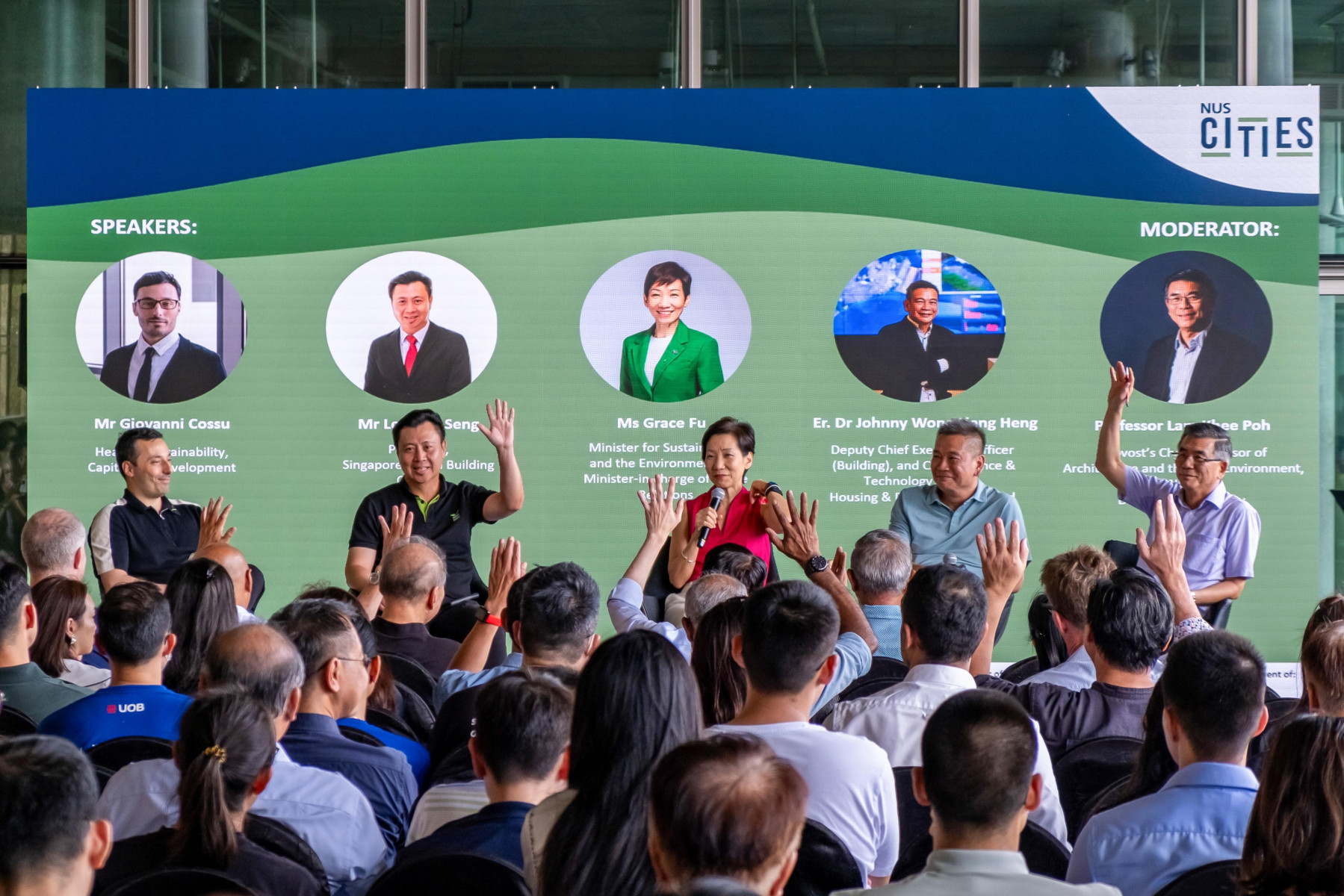
“Universities have a critical role in showing us the way to go,” said Ms Grace Fu, Minister for Sustainability and the Environment and Minister-in-charge of Trade Relations, who was speaking at a panel discussion at an NUS Cities event, “Towards a Healthy Singapore: Green Building Impact on Public Health”, on 26 August 2024.
“If the country has to decarbonise by 2050, we need (to think about) solutions now,” urged Ms Fu as she highlighted four important areas in the decarbonisation drive: policies to create change, new technology, capital, and international collaboration. With Singapore’s carbon emissions still on the rise, urgent action in these areas is required for Singapore to meet its net-zero targets.
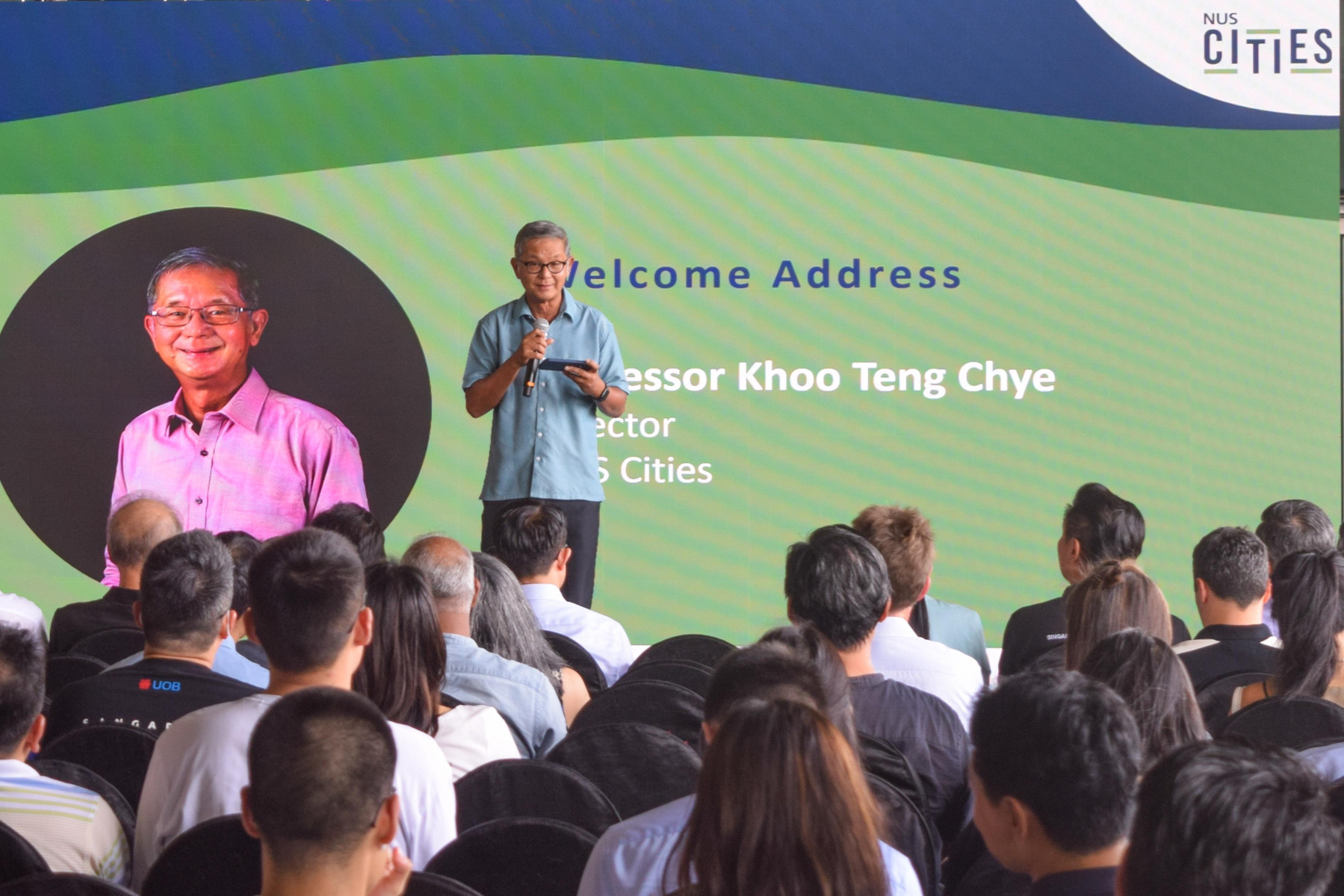
Indeed, higher education institutes and multi-disciplinary platforms such as NUS Cities are just some of many vehicles that will help Singapore achieve net-zero, said Professor Khoo Teng Chye, Director of NUS Cities and Practice Professor at the NUS College of Design and Engineering (CDE) in his welcome address.
“Universities play a very crucial role in undertaking education and research to understand the challenges, to find innovative solutions, and to prepare our next generation for climate adaptation,” he told the 350-strong audience at NUS’ SDE4, Singapore’s first net-zero building that was built from scratch.
The event also saw the launch of a partnership between NUS Cities and CapitaLand Development (CLD) to promote joint research and development activities in the area of sustainable urban planning and design.
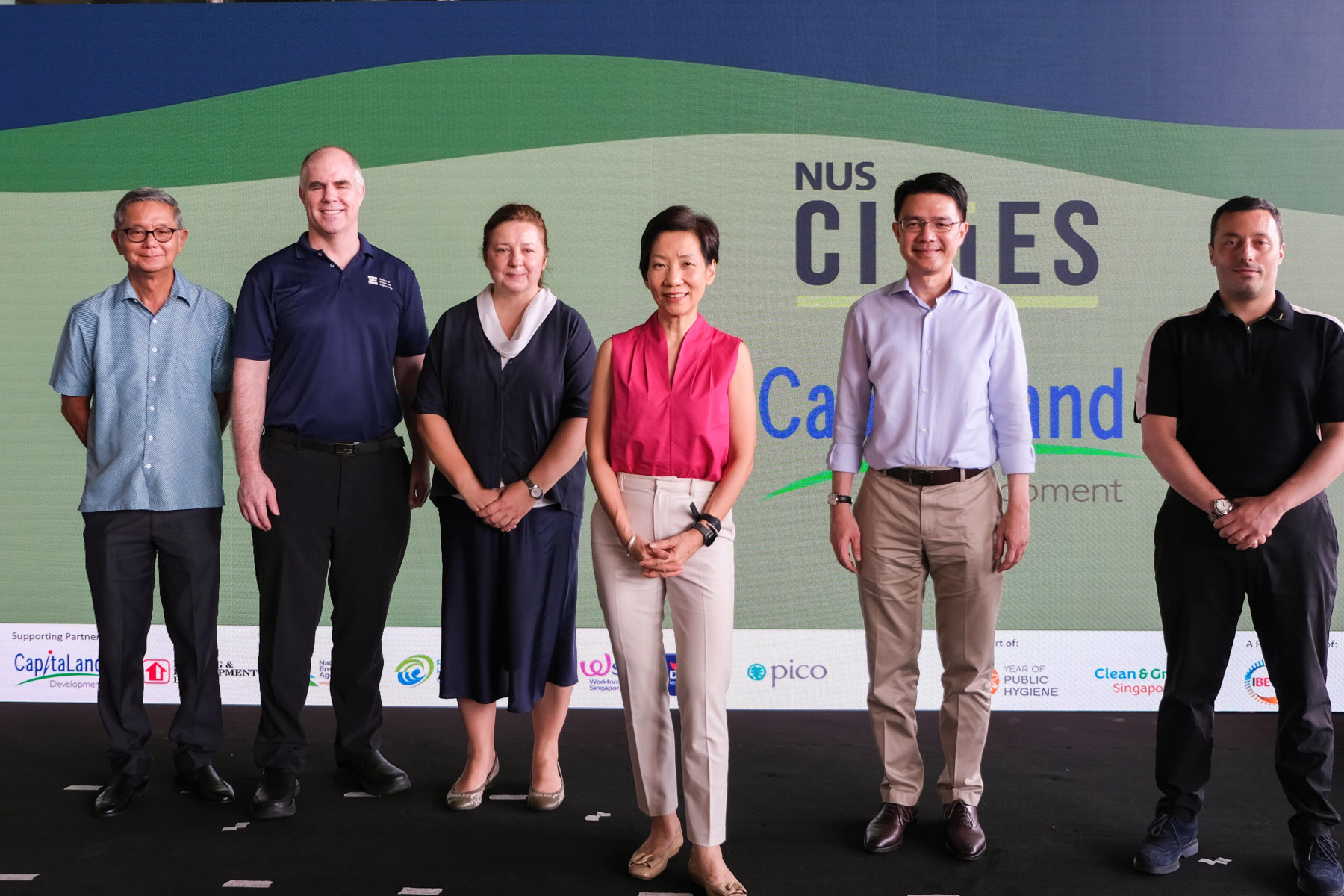
Launch of partnership between NUS Cities and CapitaLand Development
NUS Cities’ mission, Prof Khoo said, is to create an open and inclusive platform for education, research, and advisory services. This is necessary to address the complex challenges of today’s urban environments. “With CapitaLand Development being part of our eco-system of public-private partnerships, it will definitely support our core mission especially in the areas of sustainable development.”
The joint areas of cooperation include sustainability-focused awareness and engagement programmes, such as the annual NUS Cities Symposium; sustainable urban solutions that integrate CLD’s development expertise with NUS Cities’ research capabilities; and sustainability expertise and sponsorship efforts to grow capabilities and nurture the next generation of urban planning leaders.
“We are pleased to embark on this collaboration, which leverages CapitaLand Development’s expertise in real estate and sustainable development and NUS Cities’ academic and research prowess,” said Mr Jonathan Yap, CEO, CapitaLand Development (Singapore). “Together, we look forward to enhancing synergies for sustainable development and innovative urban solutions that will contribute to the environmental and social well-being of communities.”
Walking the green talk
With growing population density, and challenges such as climate change and a rapidly ageing society, urban planning is more vital than ever, Prof Khoo noted.
“Built environment professionals are crucial in shaping environments that encourage healthy behaviours such as walking, cycling, and outdoor activities,” he said. “Well-designed spaces and amenities also foster a sense of belonging and community cohesion, and are especially vital for vulnerable groups.”
The public and private sectors are exploring myriad solutions to make spaces greener and more conducive to the health of their occupants, according to panellists at the event.
For instance, the Housing & Development Board’s (HDB) 2020 Green Towns Programme set an ambitious target to cut energy consumption in HDB estates by 15 per cent by 2030.
It is also promoting well-being in various ways, such as introducing intergenerational playgrounds to encourage social interaction and using biophilic design to lower temperatures and bring nature closer to residents.
“We want to see how we can make spaces more conducive for people to exercise naturally,” said HDB’s Deputy Chief Executive (Building), Er Dr Johnny Wong Liang Heng. This is being explored in Health District @ Queenstown – a multi-stakeholder pilot programme led by NUS, the National University Health System, and HDB, and working with other partners to promote residents’ well-being across different stages of their life.
The private sector is keeping pace with these trends too, exploring options such as the adaptive reuse of old buildings and cleaner energy sources like green hydrogen, noted Mr Lee Ang Seng, President of the Singapore Green Building Council.
Since the COVID-19 pandemic, there has been greater awareness of the relationship between public health and the quality of indoor environments, added Mr Lee. Mr Giovanni Cossu, CapitaLand Development’s Head of Sustainability, agreed, pointing to a global demand for “wellness real estate” focusing on physical and psychological health.
Implementation is key
While green initiatives help push the sustainability agenda, it is important to ensure that they are effectively deployed, noted the panel moderator, Professor Lam Khee Poh, Provost’s Chair Professor of Architecture and the Built Environment at NUS CDE.
For instance, in the case of carbon capture, where carbon dioxide emissions are captured and isolated to prevent them from reaching the atmosphere, “investing in the right foundation, technology, and infrastructure is important,” he added.
Understanding public mindsets and needs is crucial too, said Er Dr Wong, who is also HDB’s Chief Science & Technology Officer. He recounted how a pneumatic waste conveyance system for household waste – an underground network of pipes using air suction that is more environmentally friendly – encountered roadblocks when it was piloted at Yuhua estate in 2015.
Unaware that bulkier items such as books and pillows could not be thrown down the chute, residents ended up clogging the chute and causing it to emit a smell. But these pilot projects and experimentation are important.
Government agencies are working together on sustainable policies and practices, said Ms Grace Fu. “We have an inter-ministerial committee on climate change that brings together all the major ministries involved,” she added, noting that the committee regularly reviews if changes are needed.
Meanwhile, the quest to go green continues. “Talk is easy, doing the hard work (is not),” concluded Prof Lam at the end of the panel discussion. “Let us work hard, stay well, and keep each other healthy.”
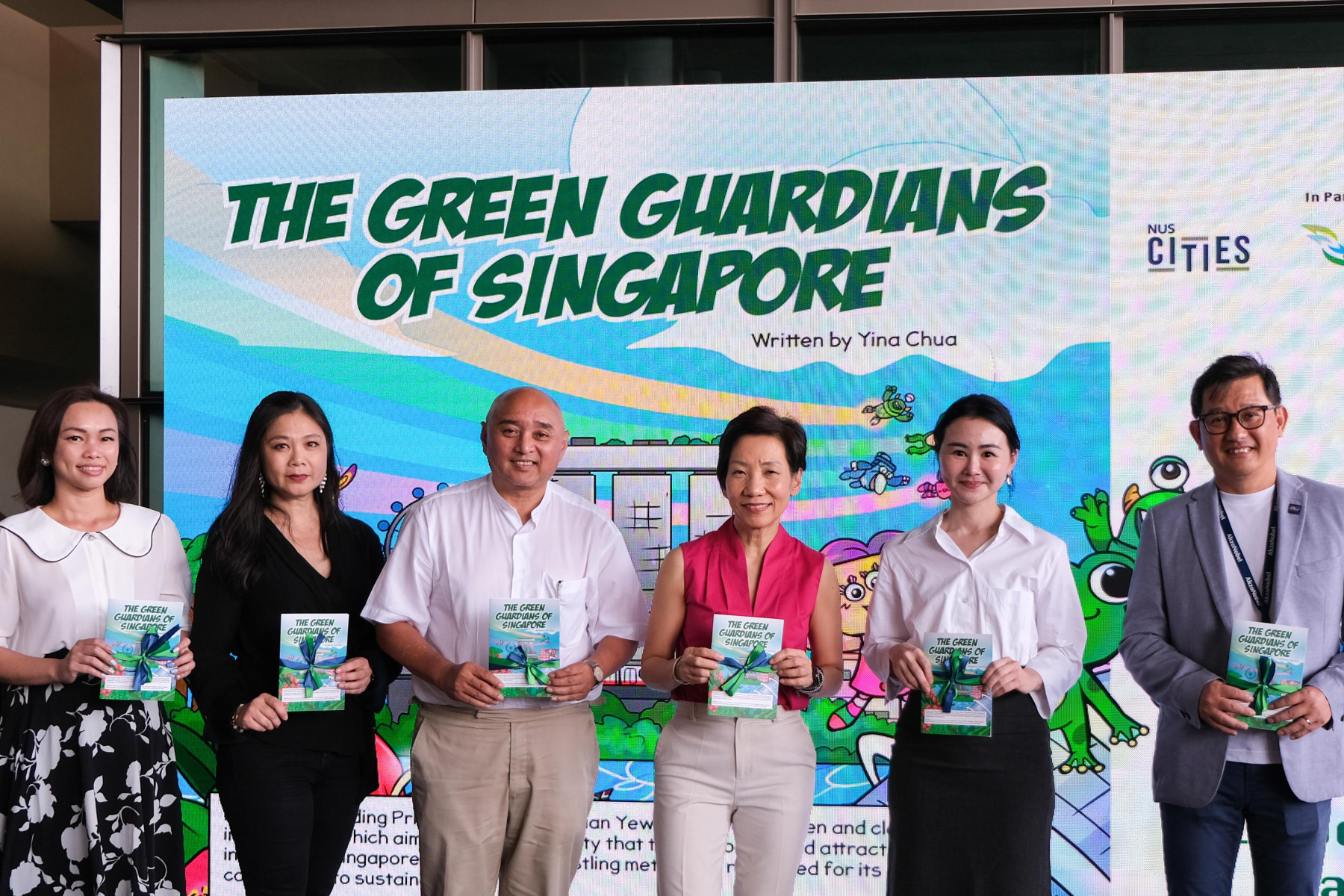
At the event, NUS Cities also launched The Green Guardians of Singapore booklet, which tells of an environmental crisis wreaked by alien invaders. Written by Ms Yina Chua, Associate Director of NUS Cities, and illustrated by Mr Alan Bay, the booklet was produced with the National Environment Agency (NEA) and Public Hygiene Council and aims to encourage the public to go green.
The illustrated book is hosted on NEA’s Clean and Green website and can be viewed here.
