NUS Enterprise accelerates deep tech growth with new co-investments and Stanford collaboration at i³ building opening
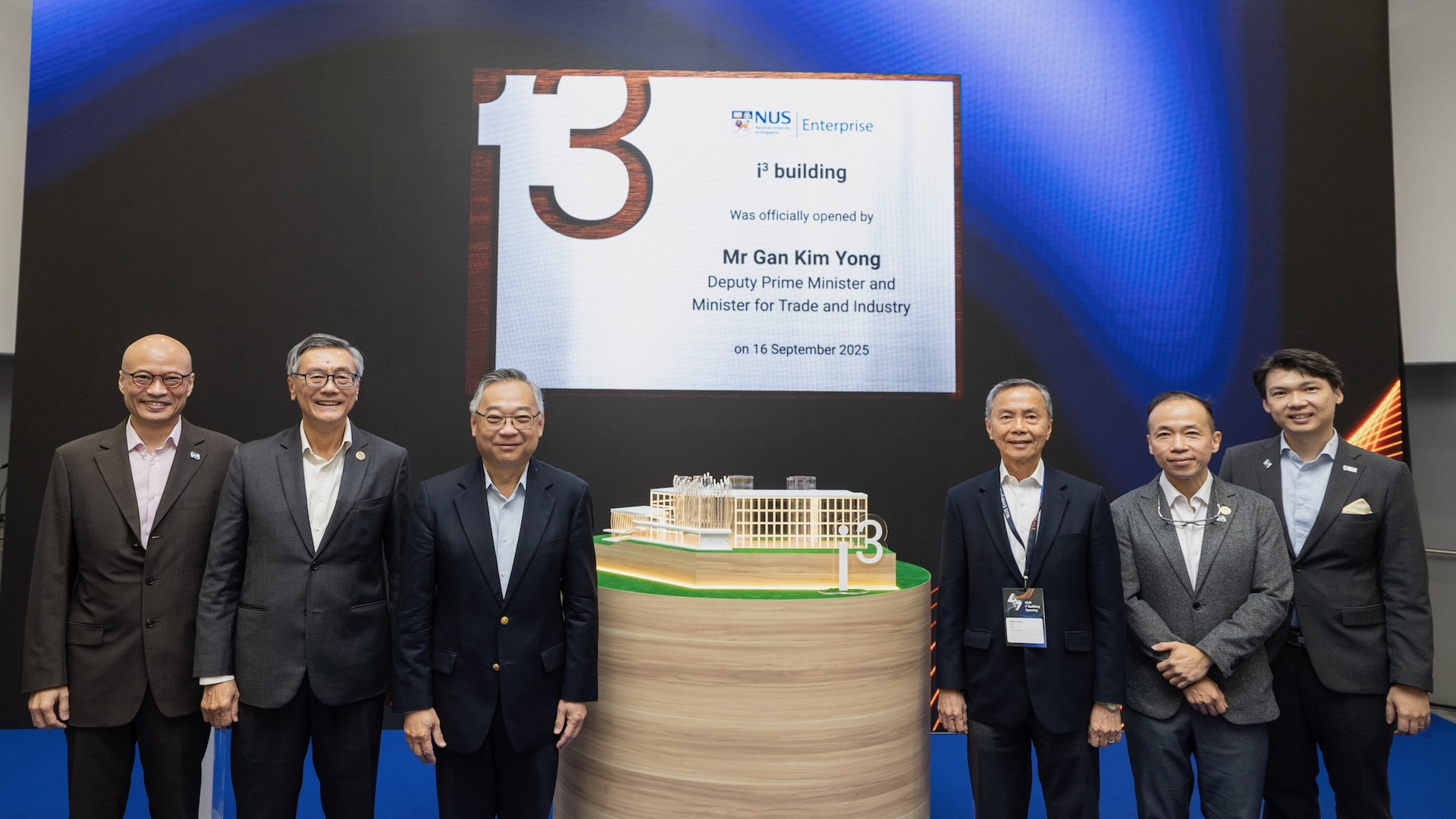
NUS Enterprise’s revitalised i³ building, a launchpad for innovation and impact, officially opened on 16 September 2025, ushering in a new chapter for innovation and enterprise at the University. The event also marked the launch of two major co-investment partnerships and an international education initiative that will further strengthen Singapore’s role as a global hub for deep tech innovation.
In his remarks at the opening ceremony, Deputy Prime Minister Gan Kim Yong, the event’s Guest-of-Honour, emphasised that Singapore’s long-term investments in education, research, and innovation are among the nation’s enduring strengths.
“NUS has been an important partner in Singapore’s development – nurturing generations of skilled graduates; anchoring world-class research; and helping to seed new industries that are critical to our economic competitiveness – and today, the opening of this building is yet another step forward in that journey,” said DPM Gan Kim Yong.
Expanding capital and partnerships for deep tech ventures
To accelerate the growth of deep tech start-ups, NUS Enterprise launched a co-investment framework with SG Growth Capital, the strategic investment platform of the Singapore Economic Development Board and Enterprise Singapore. This framework channels greater capital into deep tech ventures and selected venture capital funds, with SG Growth Capital matching NUS Enterprise’s investments based on fund evaluation.
In parallel, NUS Enterprise signed a S$20 million co-investment agreement with Lotus One Investment Pte Ltd, part of the Lotus Singapore Group. This partnership will support both NUS spin-offs and venture capital funds, with profits significantly reinvested to strengthen NUS Enterprise’s innovation and entrepreneurship programmes.
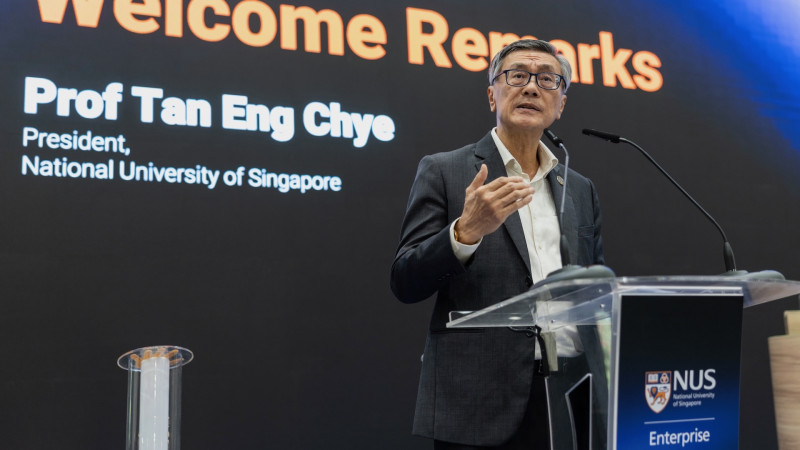
Together with the S$150 million NUS Venture Capital Programme launched in July 2025, these initiatives significantly expand support for NUS-affiliated start-ups. “NUS is committed to creating stronger pathways for deep tech start-ups to succeed,” said Professor Tan Eng Chye, NUS President.
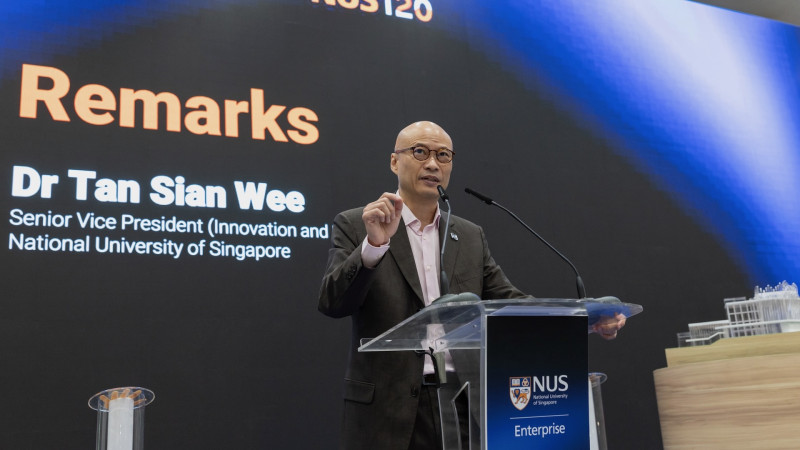
Dr Tan Sian Wee, NUS Senior Vice President (Innovation and Enterprise), added, “These partnerships strengthen our integrated ecosystem – uniting education, research, and venture creation – to attract outstanding talent and nurture start-ups that deliver innovation with lasting global impact.”
Under Dr Tan’s leadership, NUS Enterprise has developed an integrated ecosystem, or “flywheel”, that drives innovation and entrepreneurship. Each success nurtures talent, accelerates start-ups, attracts investment, creates jobs, and generates real-world solutions – momentum that powers the next wave of innovation. Guided by its “Three Ones” ambition, NUS seeks to achieve at least one venture generating over S$128 million (US$100 million) in annual revenue or creating 1,000 jobs; secure S$1.3 billion (US$1 billion) in financial returns from NUS ventures; and build enterprises that collectively improve the lives of one billion people worldwide.
Global learning opportunities with Stanford University
Building on this flywheel of innovation, NUS Enterprise has also catalysed a S$2 million pilot collaboration with Stanford University, made possible through a donation from the Khetan Foundation. The NUS-Stanford Khetan Foundation Launch Pad gives students from the College of Design and Engineering at NUS hands-on experience in international teams. They will collaborate with partners, including Meta and Venture Corporation, to co-create and prototype solutions to real-world industry challenges under the guidance of faculty from both universities.
Lessons from a global innovation leader
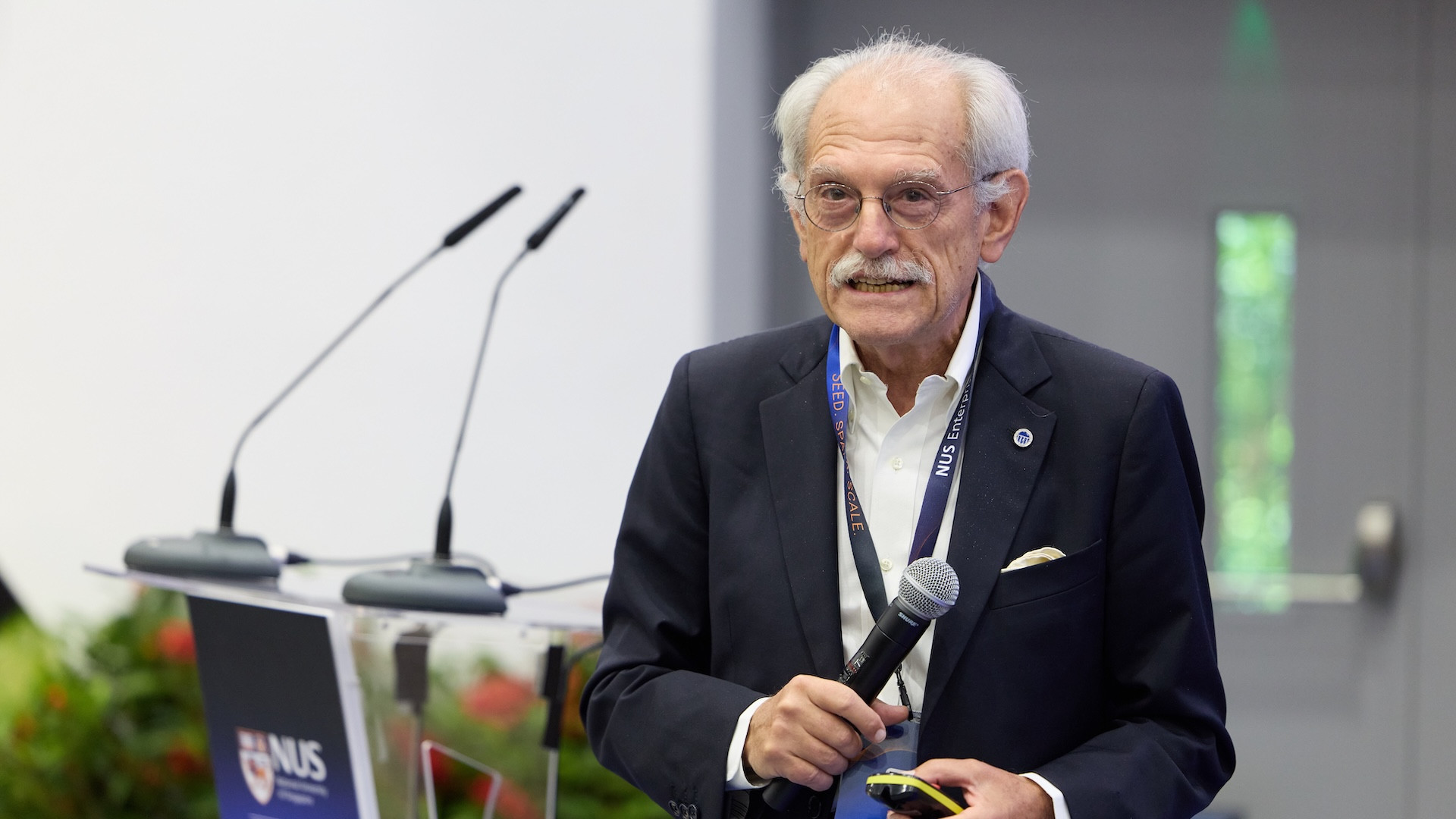
Against this backdrop of global partnerships, Professor Alberto Sangiovanni-Vincentelli, Edgar L. and Harold H. Buttner Chair of Electrical Engineering and Computer Science at UC Berkeley, shared his perspective on what drives innovation during his keynote address. He noted that while collaboration and experimentation are essential to advancing technology, the next wave of breakthroughs will come from translating research into enterprise with bold, long-term vision.
“When you start a company, you need a long-term vision. It’s not enough to say, I can do 10 times better than what exists. Ten times is not enough. It should be 100 times. Even better, you should aim for something that doesn’t exist yet. That’s what is so exciting about doing enterprise from research. You have a vision, and you want that vision to be implemented.”
Powering the flywheel through local initiatives
While global partnerships expand international exposure, the flywheel is equally powered by initiatives rooted in Singapore. At the event, NUS Enterprise spotlighted the latest education and research programmes, including the National Graduate Research Innovation Programme (National GRIP), which empowers Singapore innovators to transform lab discoveries into globally competitive, market-ready ventures.
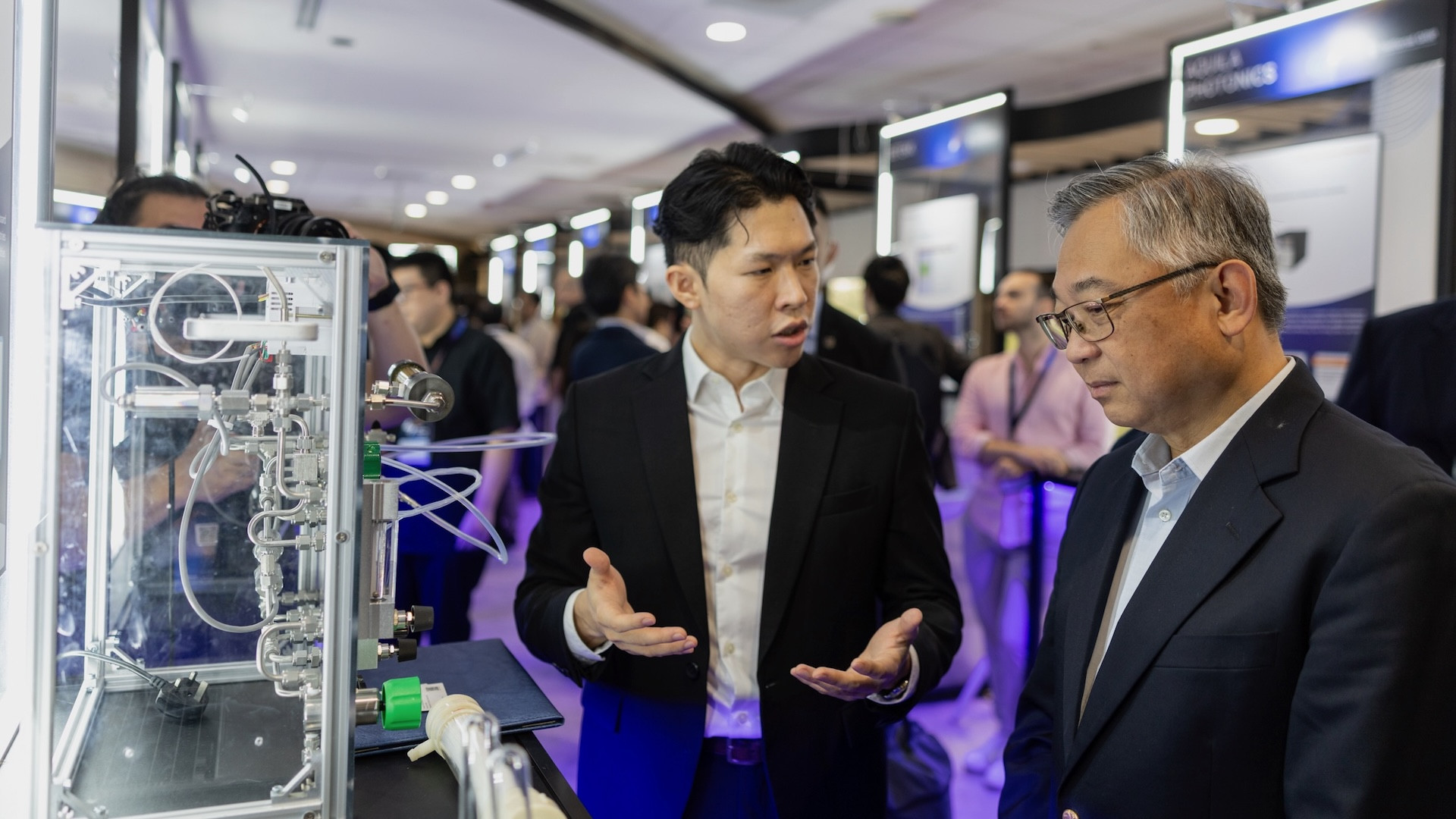
Inaugural National GRIP Showcase
The first cohort of 21 National GRIP teams from NUS and Nanyang Technological University, Singapore (NTU Singapore) debuted their solutions at the NUS Innovation Showcase, held across three levels of the i³ building. With strong mentorship and market validation, these teams are developing ventures in AI, health technology, sustainability, and more.
The showcase also featured 40 other NUS-affiliated start-ups and student innovation teams, presenting solutions across three innovation tracks: Future Matter (Physical Sciences, Materials, and Semiconductors); Future Logic (AI and Software); and Future Pulse (Healthcare). These tracks reflect NUS Enterprise’s strategic priorities and align closely with Singapore’s national interests and areas of venture capital focus.
National GRIP Labs
Supporting National GRIP teams and other deep tech ventures, both local and international, are the newly launched National GRIP Labs (NGRIP Labs). Located at the CREATE Tower on NUS Kent Ridge campus, these labs offer specialised facilities for any deep tech field of interest and comprehensive prototyping services with technical guidance to help start-ups speed up the development of their solutions.
NUS Innovation and Venture Creation Awards
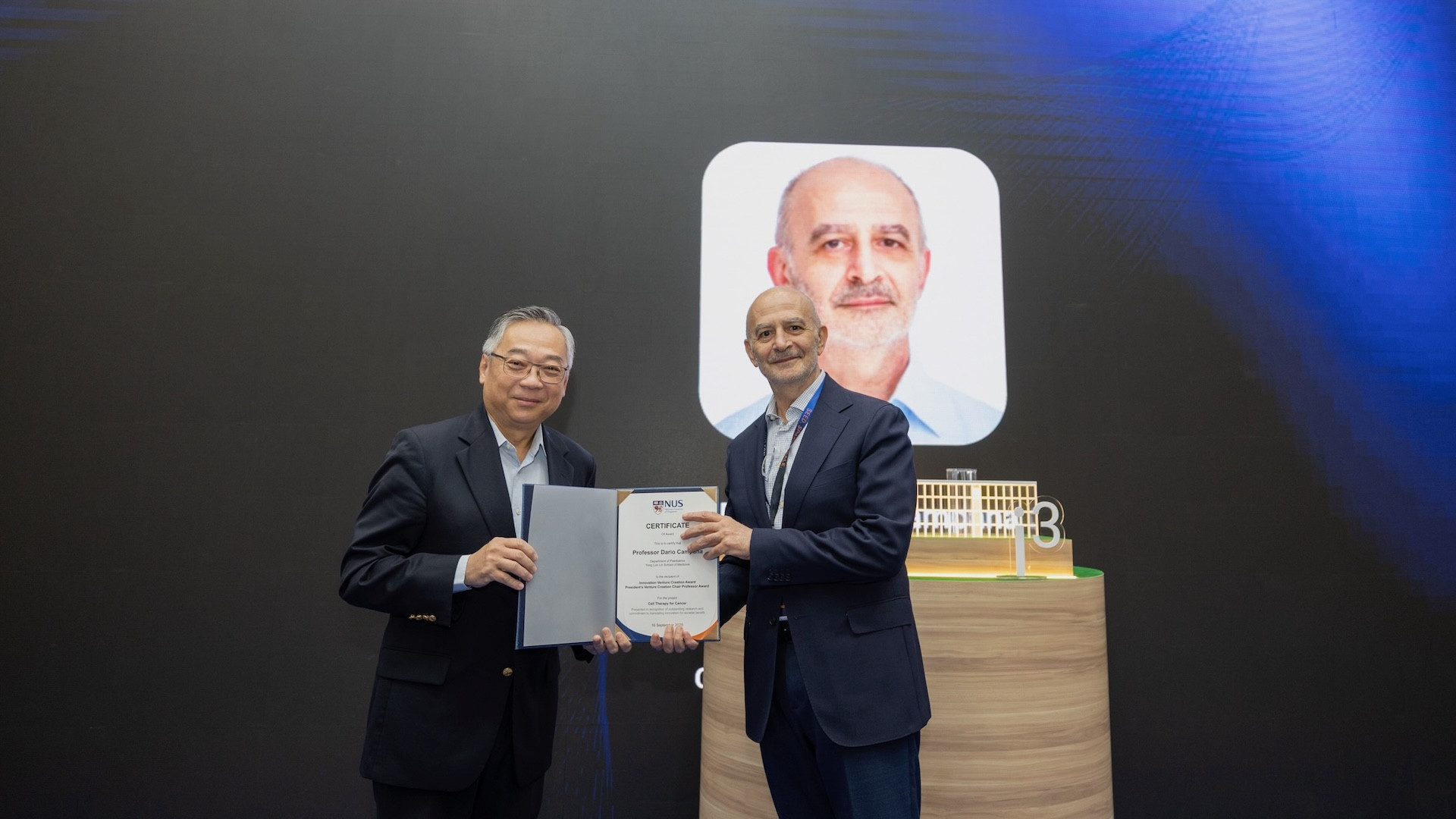
While facilities like the NGRIP Labs provide critical infrastructure, it is the ingenuity of NUS researchers and faculty that drives breakthroughs. To celebrate these achievements, NUS presented the NUS Innovation and Venture Creation Awards to eight winners, recognising faculty and researchers who are translating cutting-edge research into globally impactful solutions.
The future of innovation
Following a vibrant morning of celebrations, the afternoon sessions shifted the focus to charting the future of innovation. More than 20 distinguished international speakers shared their perspectives on breakthroughs in technology and discussed how the next generation of innovators can successfully navigate a rapidly evolving global landscape.
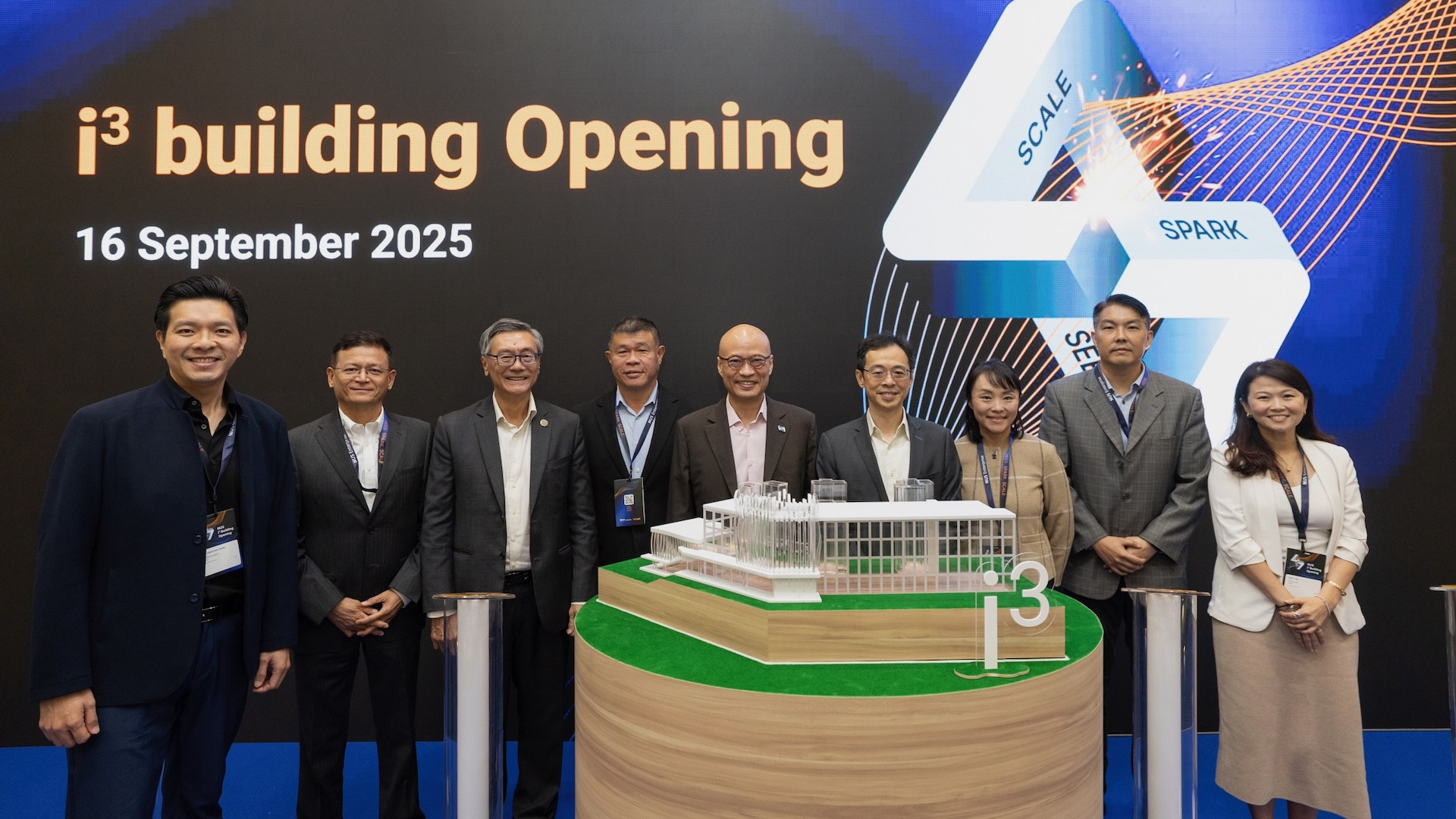
Three parallel discussion tracks were moderated by Dr Tan and NUS Enterprise advisors, Ms Donna See, a member of the NUS Board of Trustees, and Dr Patrick Ennis, Venture Partner at Madrona Venture Group (pictured left in each photo), respectively. The sessions explored geopolitical and market shifts, as well as strategies for nurturing and scaling start-ups. Speakers emphasised that successful ventures depend on strong research, product development, customer focus, and, most importantly, the people driving the venture.
As Dr Ennis reflected, “I used to think science is the most important part, and then you get a little more experience and realise it’s actually the product, engineering, and customers. And with even more experience, you realise it’s really about the people.”
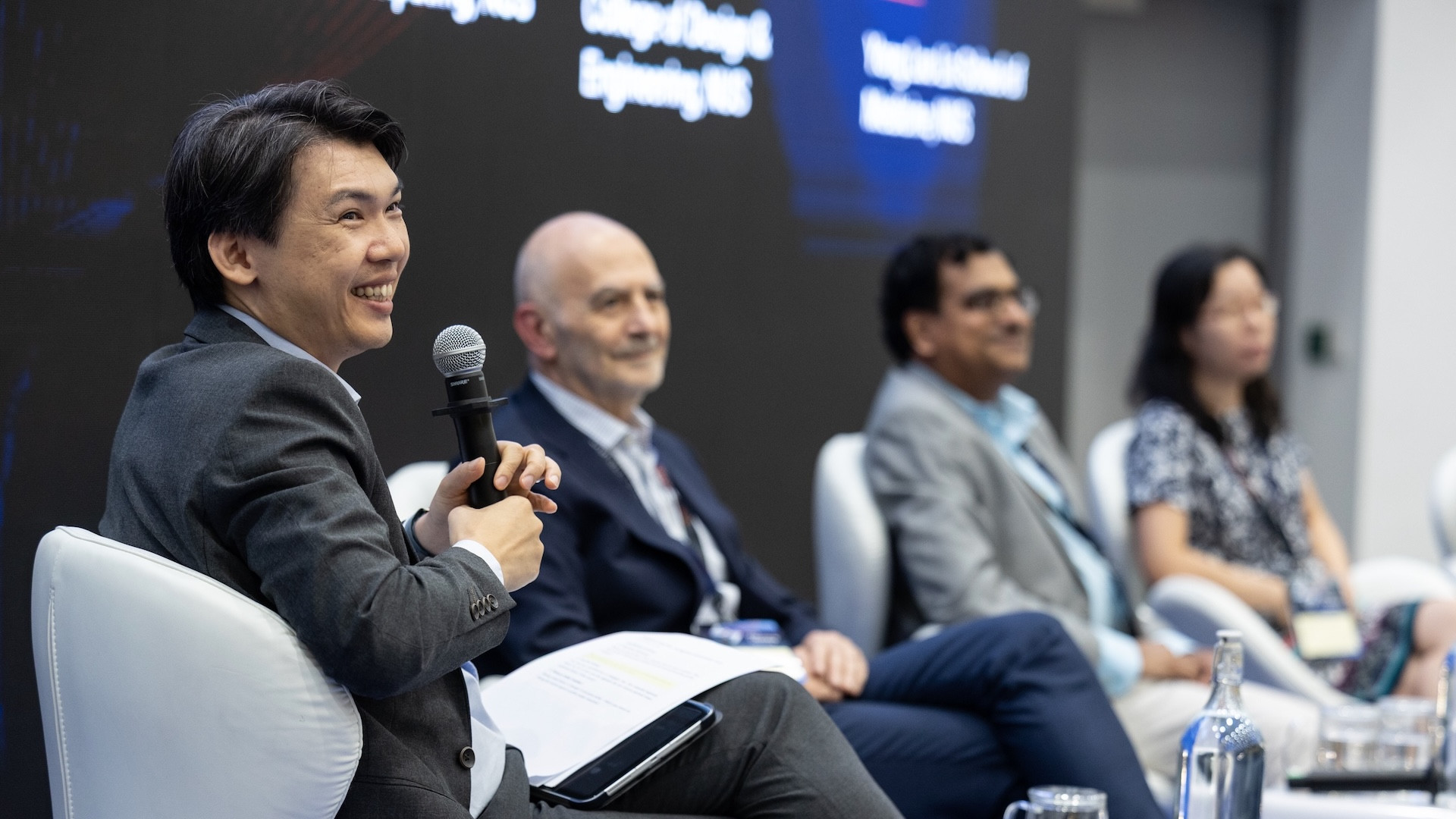
The day continued with the panel “Innovation Unplugged: Founders and Frontiers”, moderated by Associate Professor Benjamin Tee, Vice President (Innovation and Enterprise), NUS Enterprise (first on left in the photo above). NUS professors-turned-founders shared candid insights on the challenges of turning research into ventures. They reinforced the importance of making technology distinctive and telling your story effectively. One of the panellists, Professor Abhik Roychoudhury, Provost's Chair Professor of Computer Science at NUS Computing, illustrated this with the rapid acquisition of his AI start-up AutoCodeRover in just 10 months, beginning from a single tweet.
Adding another dynamic layer, the “Reverse Pitching” session turned the tables, with investors presenting their cases to founders and researchers, highlighting the critical factors that attract funding and scale ventures.
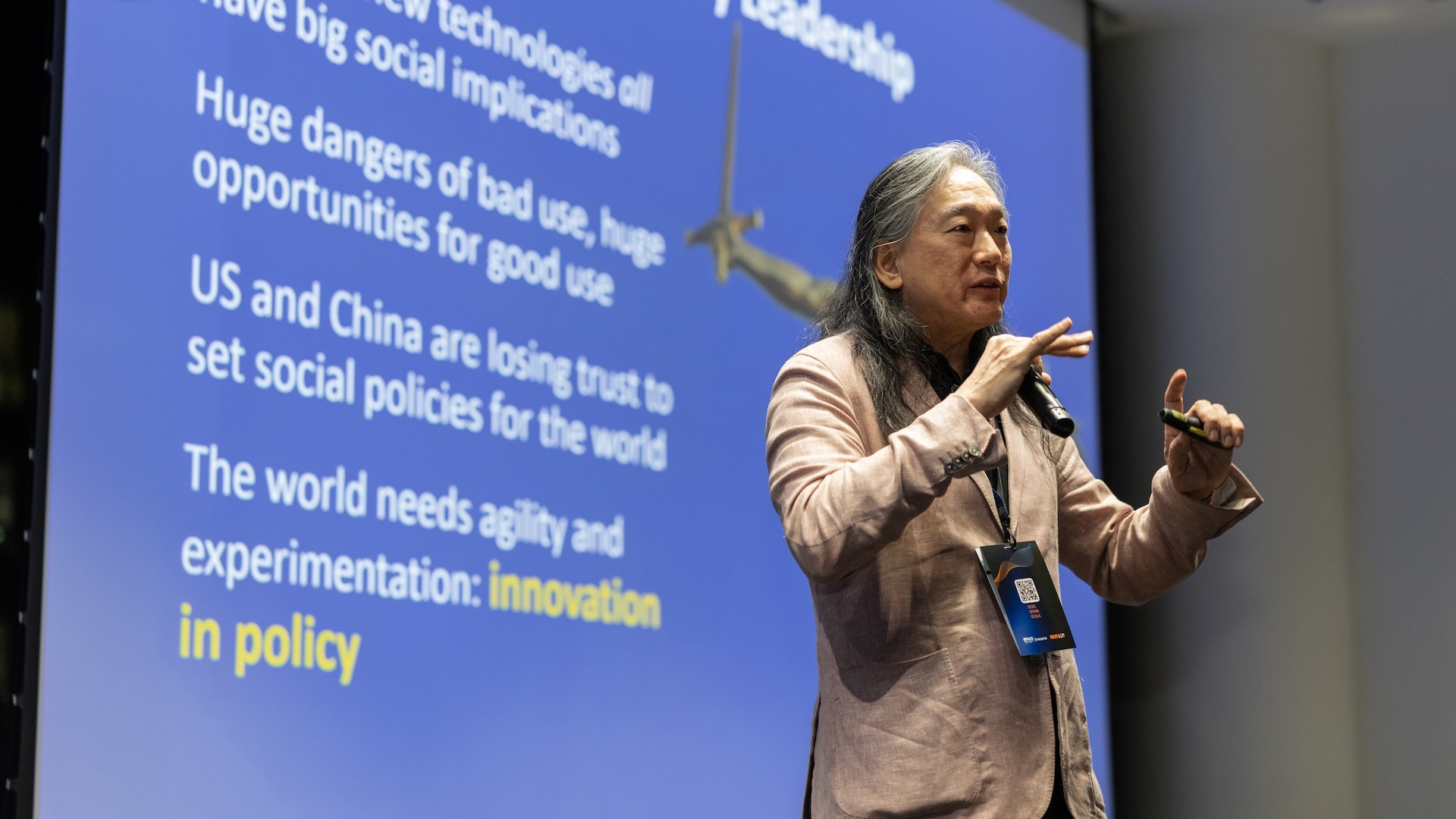
The evening concluded with a keynote by Dr Edward Jung, Co-Founder and Chief Technology Officer of Intellectual Ventures, during a dinner networking session. He brought the day’s conversations full circle, urging innovators to look beyond trends and focus on applications that deliver real value, emphasising that lasting impact comes from the synergy of vision, execution, and people.
i3 as a hub for entrepreneurship
More than a ceremony, the event was a celebration of curiosity, a spark for bold ideas, and a call to experiment together. “i3 is the nexus on which the NUS Enterprise flywheel spins. It brings together all the pieces in the ecosystem, fuelling the momentum to drive global impact and Singapore’s entrepreneurial success,” said Dr Tan.
By NUS Enterprise