What makes great teaching in the age of AI
Associate Professor Stephen Tay still remembers a lesson his father brought home from night class. His father’s teacher had said: “If you fail to learn…”.
Young Stephen guessed the ending: “Study more or read for another hour?” But his father revealed a different answer: “If you fail to learn, then I have failed to teach.”
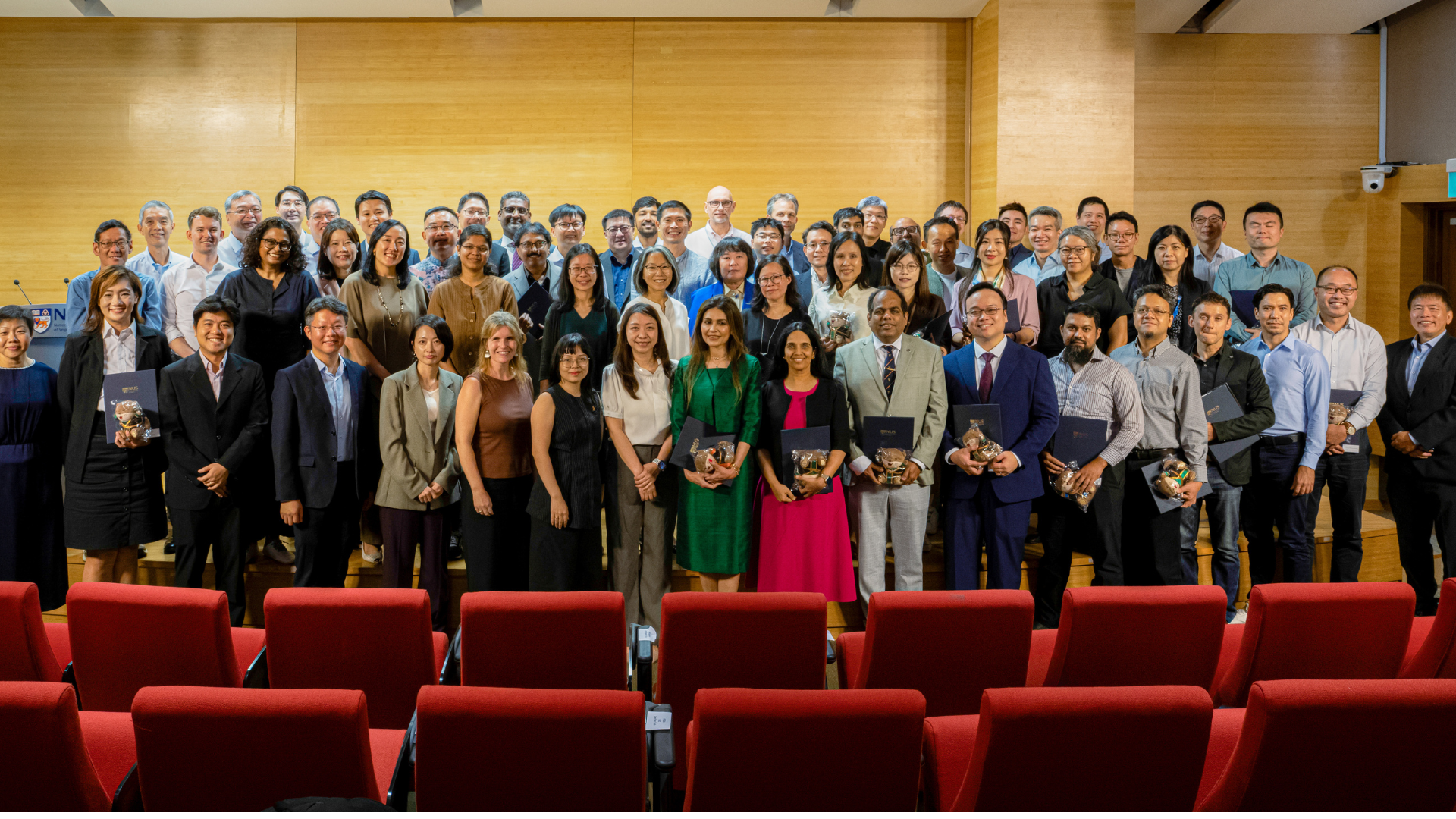
That lesson has shaped Assoc Prof Tay’s approach to education at the NUS College of Design and Engineering, where he teaches in the Department of the Built Environment. He was one of two faculty members recognised as exemplary educators at the University Teaching Award Ceremony and Outstanding Educator Award (OEA) Public Lectures 2026 last month. In his lecture, he shared his Contextualised Learning via Enquiring, Answering, and Reflecting (CLEAR) pedagogical framework, which encourages curiosity and critical thinking and has since been adopted across Singapore and five other countries.
Learning by questioning
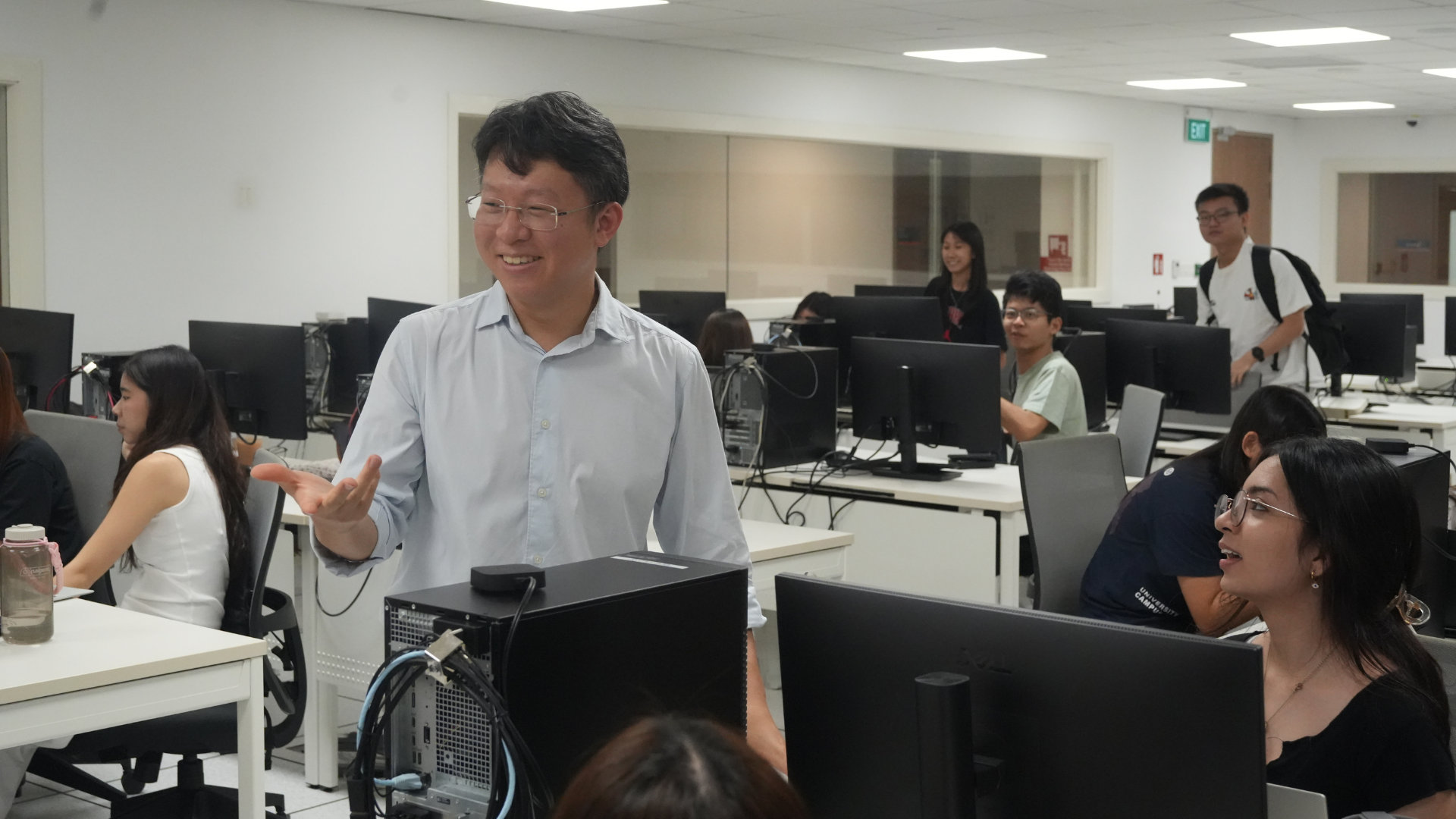
Early in his career, Assoc Prof Tay was troubled by students’ feedback that theoretical equations were difficult to follow.
“I began to question my efficacy as a teacher,” he told more than 100 participants.
Determined to improve, he acquired knowledge on pedagogy at the Centre for Teaching, Learning and Technology (then the Centre for Development of Teaching and Learning) to develop the CLEAR framework.
“Instead of giving students the tutorial questions, I guide them to generate the tutorial questions,” he explained. “Then we ask them to develop the answers to their tutorial questions using real-world examples before they teach their peers with the questions and answers developed.”
In one class, a group turned urban sustainability challenges into a game, casting classmates as adventurers solving real-world problems. The exercise helped students connect theory with practical applications.
CLEAR has since reached younger learners. Mr Ng Ee Noch, Head of Department of Information Communication and Technology at Boon Lay Garden Primary School, credited Assoc Prof Tay’s guidance in introducing the approach to primary school students.
“Assoc Prof Tay challenged me with thoughtful, critical questions as I explored using CLEAR with my students, and provided invaluable feedback on an application I developed to support the approach. I have learnt tremendously from the way he continually encourages me to reflect, question and improve,” said Mr Ng.
Teaching that changes you
Meanwhile, Associate Professor Robin Loon from the Department of English, Linguistics and Theatre Studies, NUS Faculty of Arts and Social Sciences, believes education should shape character, not just impart knowledge.
While skills can be forgotten, dispositions — the habits of mind that guide behaviour — take longer to develop but endure. And as AI makes information readily available, critical evaluation matters more than ever, though it also requires an open mind.
“You cannot make a wise critical judgement if your mindset is closed off,” Assoc Prof Loon said.
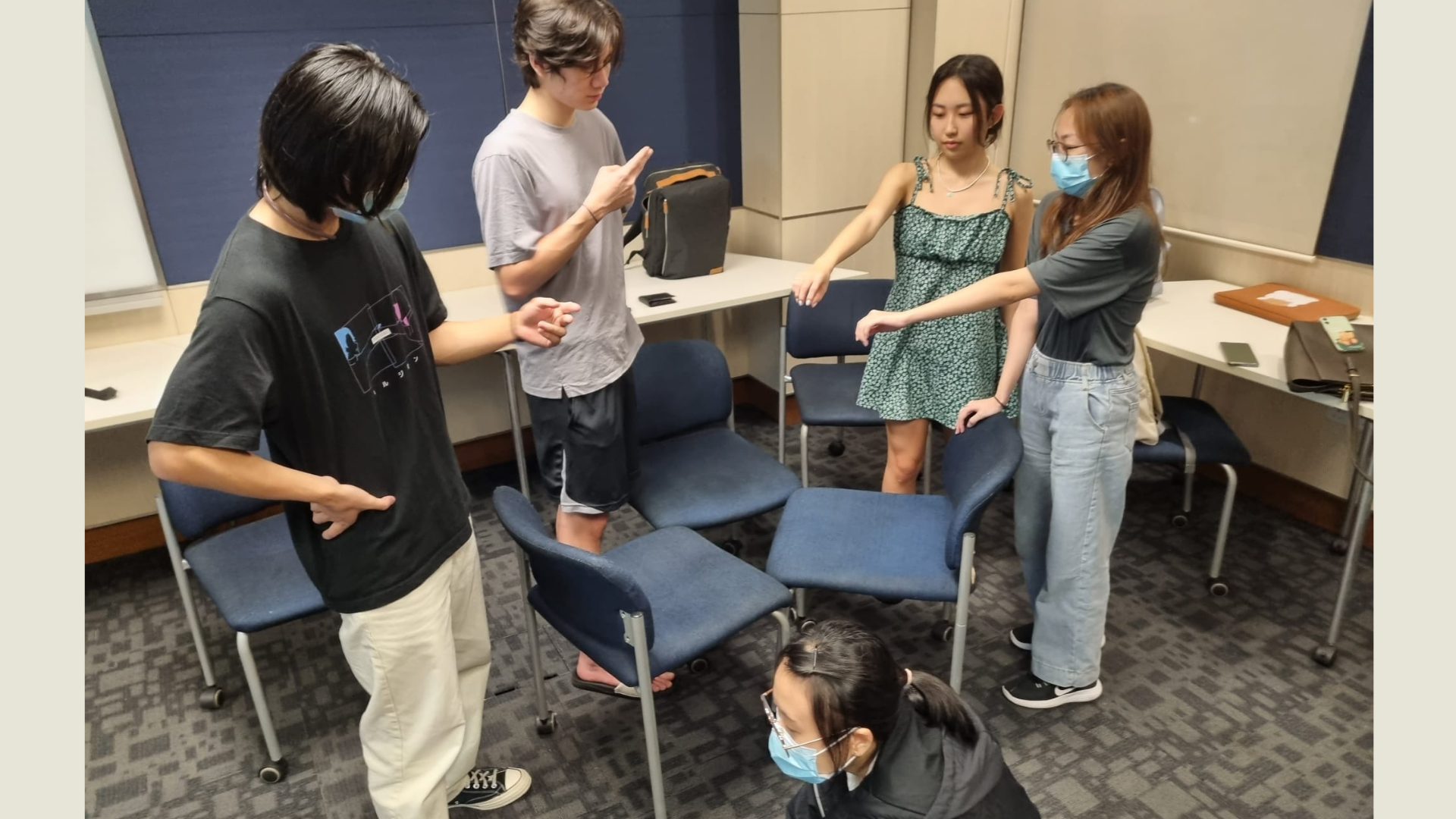
This philosophy underpins GEN2001 Theatre and Community Engagement, a course he co-designed. Through role play, process drama and community observation, students examine their assumptions and responses to everyday situations.
During a workshop exploring a moral dilemma, one student reflected on failing to offer a seat to a pregnant woman on a crowded train. “All I did was look and think: If neither she nor her partner asked for a seat, fine,” she wrote in a reflection. “That was what I convinced myself to think.”
That experience in Assoc Prof Loon’s class prompted her to question her response and consider whether she would act differently next time, demonstrating how this teaching approach can reshape how students engage with self and community.
After all, as Professor Peter Ho, Vice Provost (Undergraduate Studies & Technology-Enhanced Learning), said in his opening address, educators must place greater emphasis on nurturing critical thinking and character as AI increasingly takes on tasks from drafting syllabi to synthesising literature and generating content.
“What an algorithm cannot offer our students is judgement, resilience and character,” he said. “An algorithm does not care. It has syntax, but no stakes. Humans can care and we must care.”