NUS scores major sustainability milestone with landmark solar power project across campus
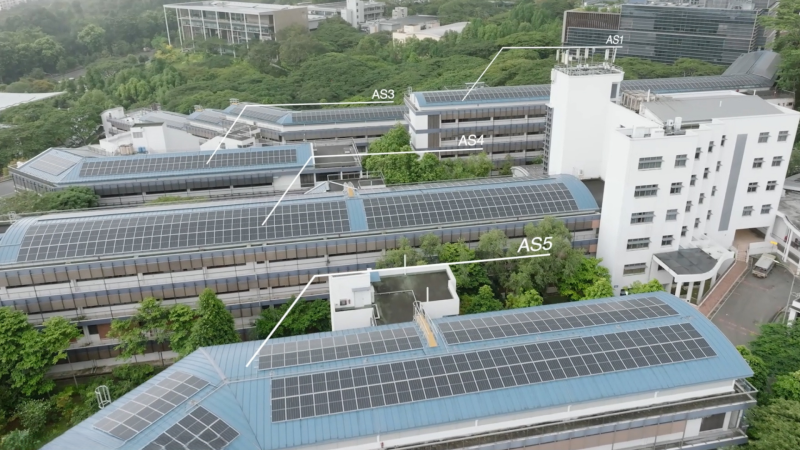
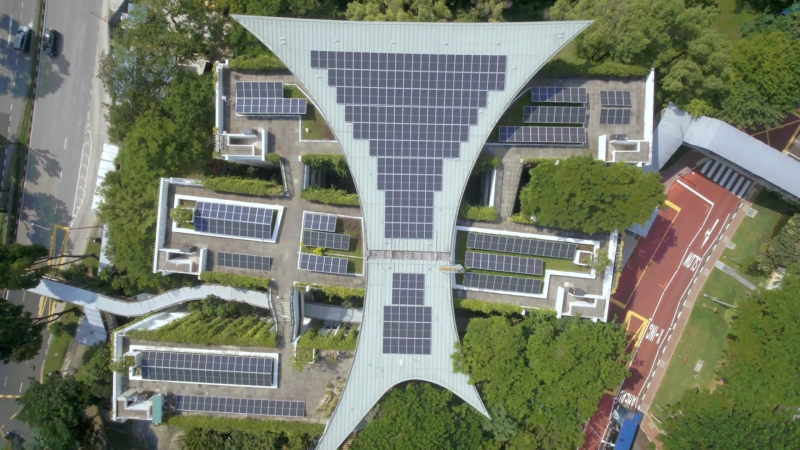
NUS has made a significant leap towards a sustainable future with the commissioning of a campus-wide solar photovoltaic (PV) installation project. It involved the installation of 20,425 solar panels across campus with an installed capacity of 9.2 megawatt-peak (MWp)1 , which can generate close to 10 gigawatt hours (GWh) of renewable energy annually. This is expected to reduce NUS' carbon footprint by more than 4,000 tons of carbon dioxide (CO2) annually.
This clean energy output will supply approximately four per cent of the University's total electricity consumption, the equivalent of powering 2,200 four-room Housing Development Board (HDB) flats for a year 2.
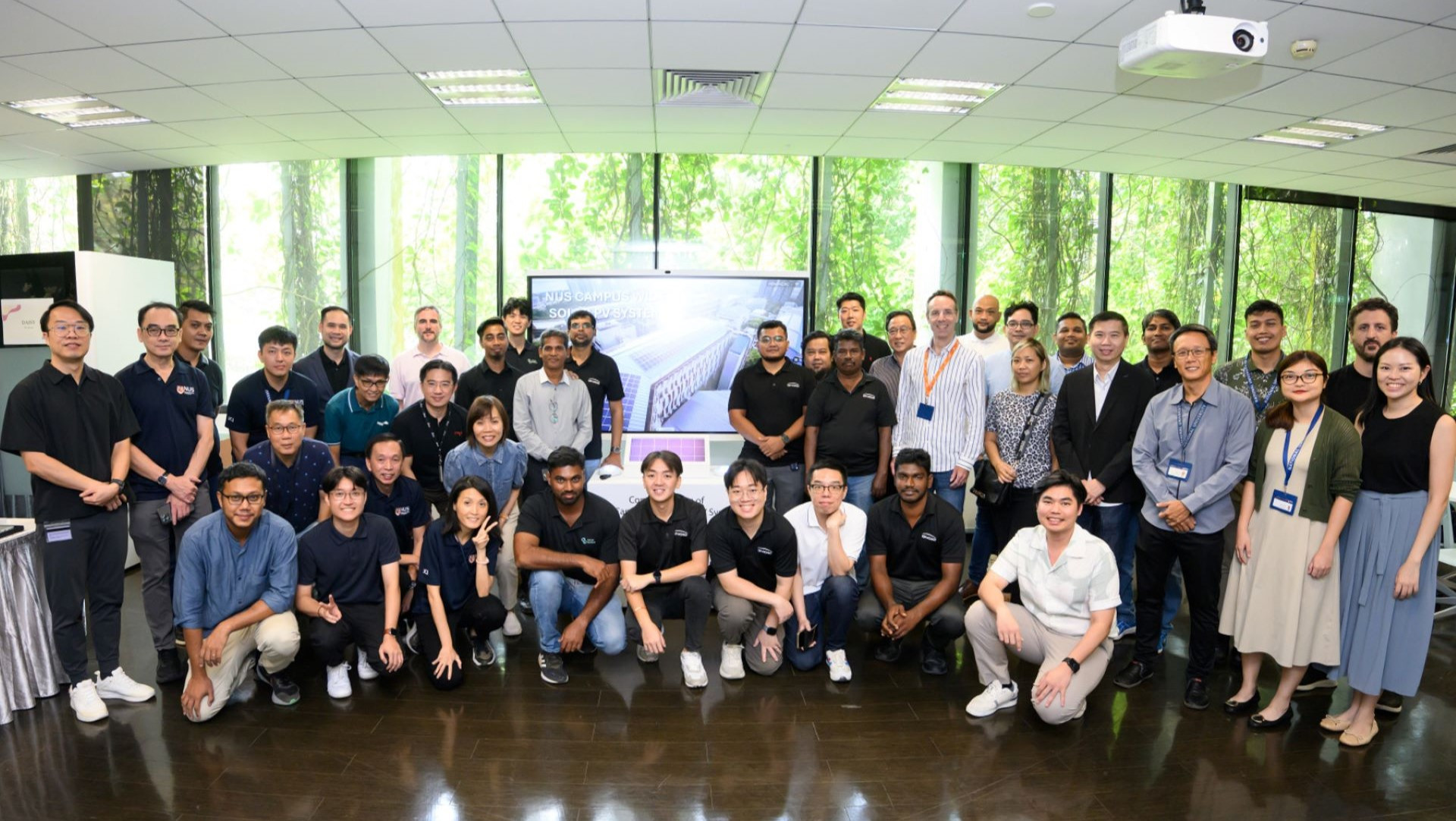
The completion of this ambitious project, spanning over 60 buildings across NUS’ Kent Ridge Campus and University Town, was celebrated at a commissioning ceremony held in October 2024, marking a major milestone in the University's sustainability journey.
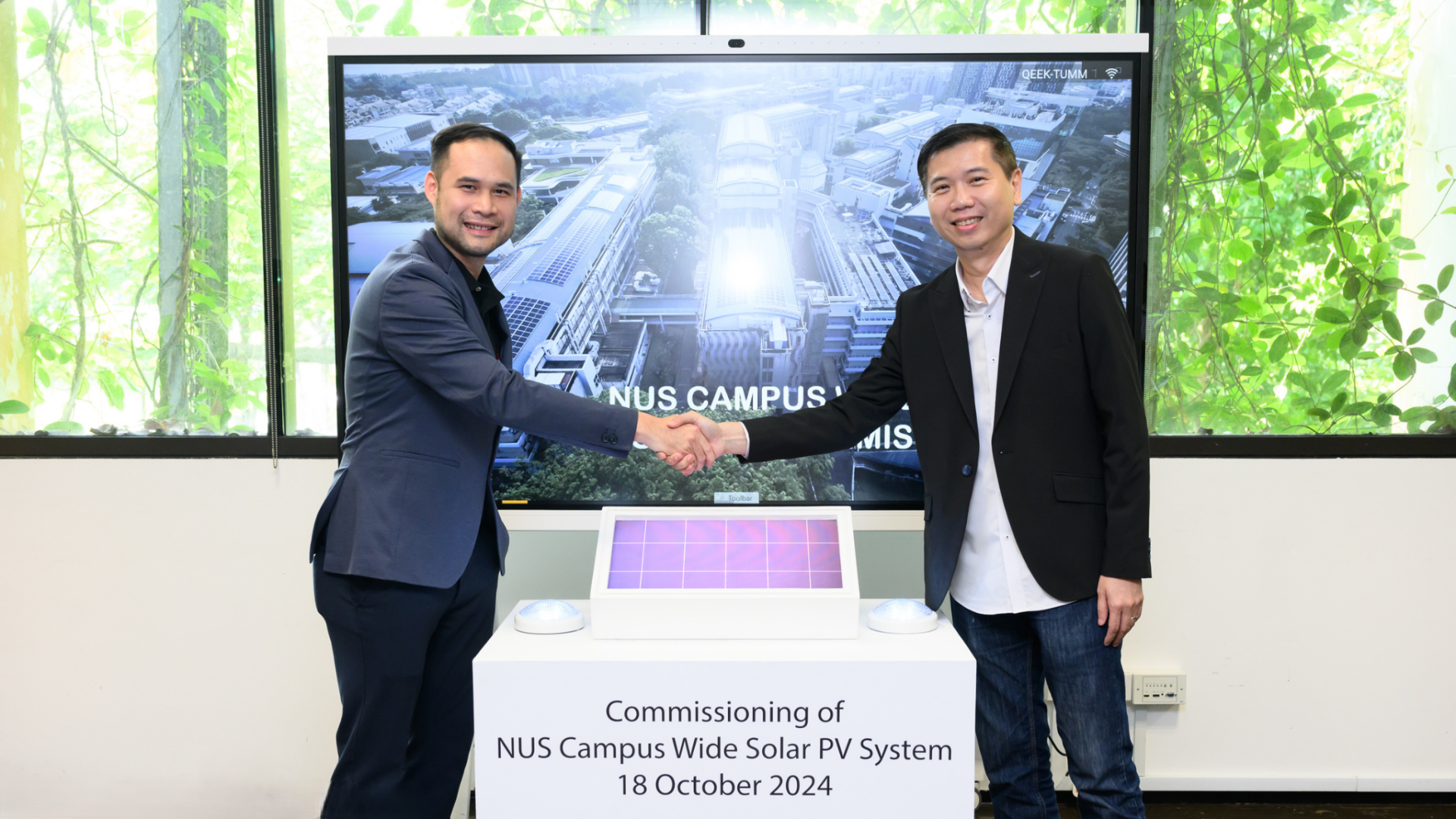
Speaking at the event, Mr Koh Yan Leng, NUS Vice President (Campus Infrastructure), emphasised the project's alignment with the University's sustainability roadmap. "This project represents our commitment to decarbonise and is a significant stepping stone towards achieving our goal of a 30 per cent reduction in Scope 1 and 2 emissions3 by 2030," he said. "We are continually looking into solarising more rooftops to increase our clean energy generation capabilities."
A key driver of the project's success is the collaboration between the NUS University Campus Infrastructure (UCI) team and the Solar Energy Research Institute of Singapore (SERIS) at NUS. Mr Lee Chun Tek, Senior Associate Director (Infrastructure Project) at UCI, who led the initiative, said, "The project began in 2018 when UCI collaborated with SERIS to do a feasibility study to install PV panels across campus. Despite numerous challenges and the disruption caused by the COVID-19 pandemic, the team persevered to bring this project to fruition in August 2024. It’s been a rewarding experience seeing our plans turn into a reality."
A cloud-based PV monitoring system, developed by SERIS, is used to track all PV systems across the NUS campus. Noting the vital role and functionality of the system, Mr Soe Pyae, Head of Monitoring at SERIS, said, "The monitoring system provides real-time data and insights on energy production across the campus, which are essential for reporting to authorities, optimising performance, and ensuring sustainability targets are met."
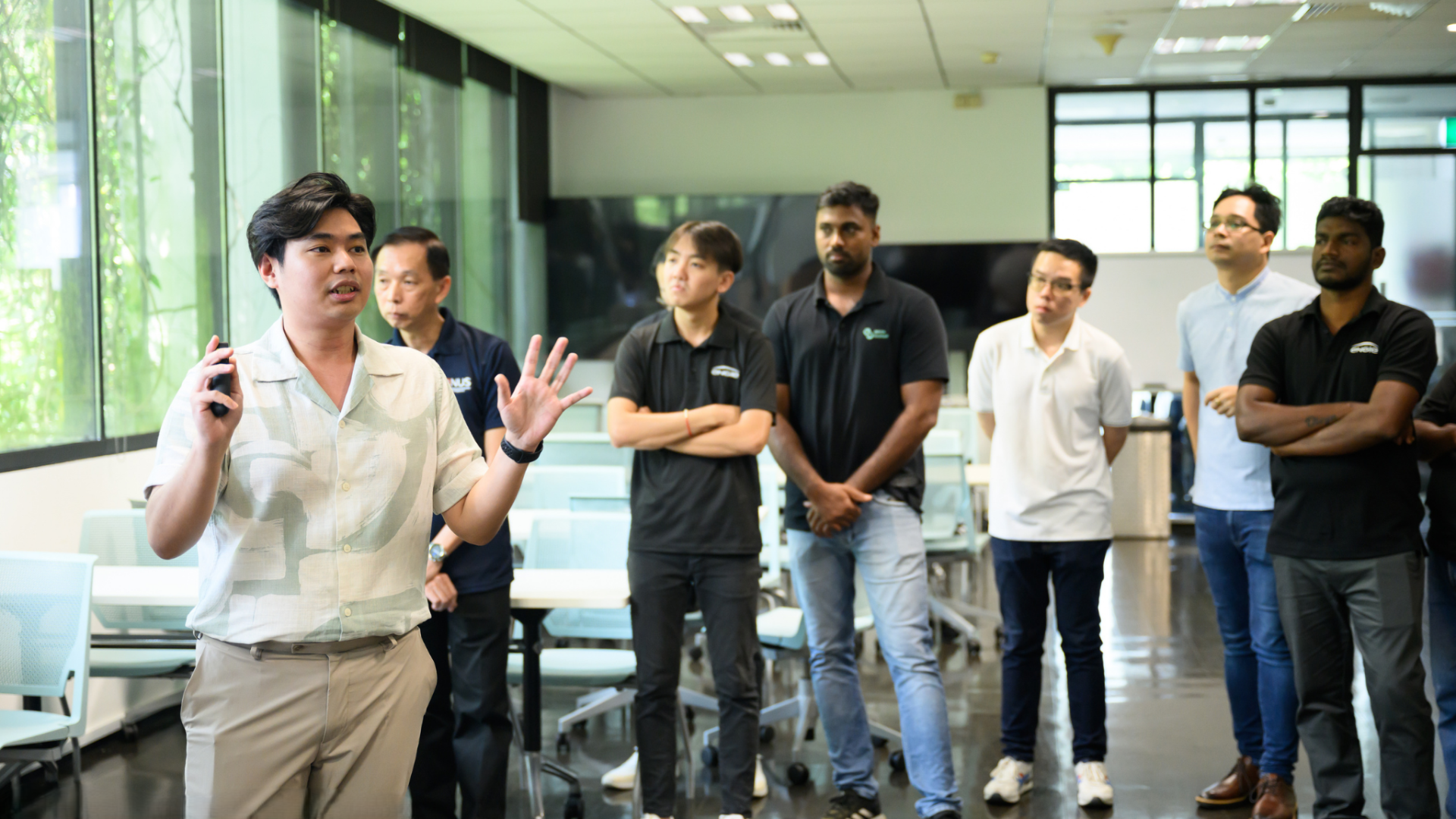
“This project exemplifies our commitment to tackling climate change through innovative solutions, setting a strong precedent for other institutions to follow. As part of our broader Campus Sustainability Roadmap 2030, it stands as a beacon of how educational institutions can drive impactful environmental change,” Mr Koh added.
By University Campus Infrastructure
---
1Megawatt-Peak (MWp) refers to the maximum power output of a solar power system under optimal conditions, typically in full sunlight.
2 Based on data from EMA’s Singapore Energy Statistics 2024 on energy consumption as of June 2024, the average monthly household electricity consumption for a four-room HDB flat is about 379kWh/month, and the estimated average annual consumption is about 4,550 kWh/year.
3 Scope 1 emissions are direct emissions from owned or controlled sources, such as fuel consumption and refrigerants. Scope 2 emissions are indirect emissions from the generation of purchased electricity.