


She speaks science: NUS women in STEM push frontiers and inspire the next generation

Every year on 11 February, the International Day of Women and Girls in Science honours the contributions of women in science and champions full, equal access and participation of women and girls in the fields of Science, Technology, Engineering and Mathematics (STEM). This year’s theme “From Vision to Impact: Redefining STEM by Closing the Gender Gap” underscores the need to build more gender-inclusive STEM ecosystems, not only in the interest of equality, but also to enhance the quality and impact of science, technology and innovation. Today, this remains highly relevant because in 2025, UNESCO reported that women make up only 1 in 3 scientists globally.
Here, we shine the spotlight on three accomplished women in STEM at NUS: quantum physicist Assistant Professor Yvonne Gao, materials scientist Associate Professor Daria Andreeva-Baeumler and computer scientist Assistant Professor Jane E, to celebrate their achievements, give insights on their research journeys and inspire young women and girls to set foot on the same path.
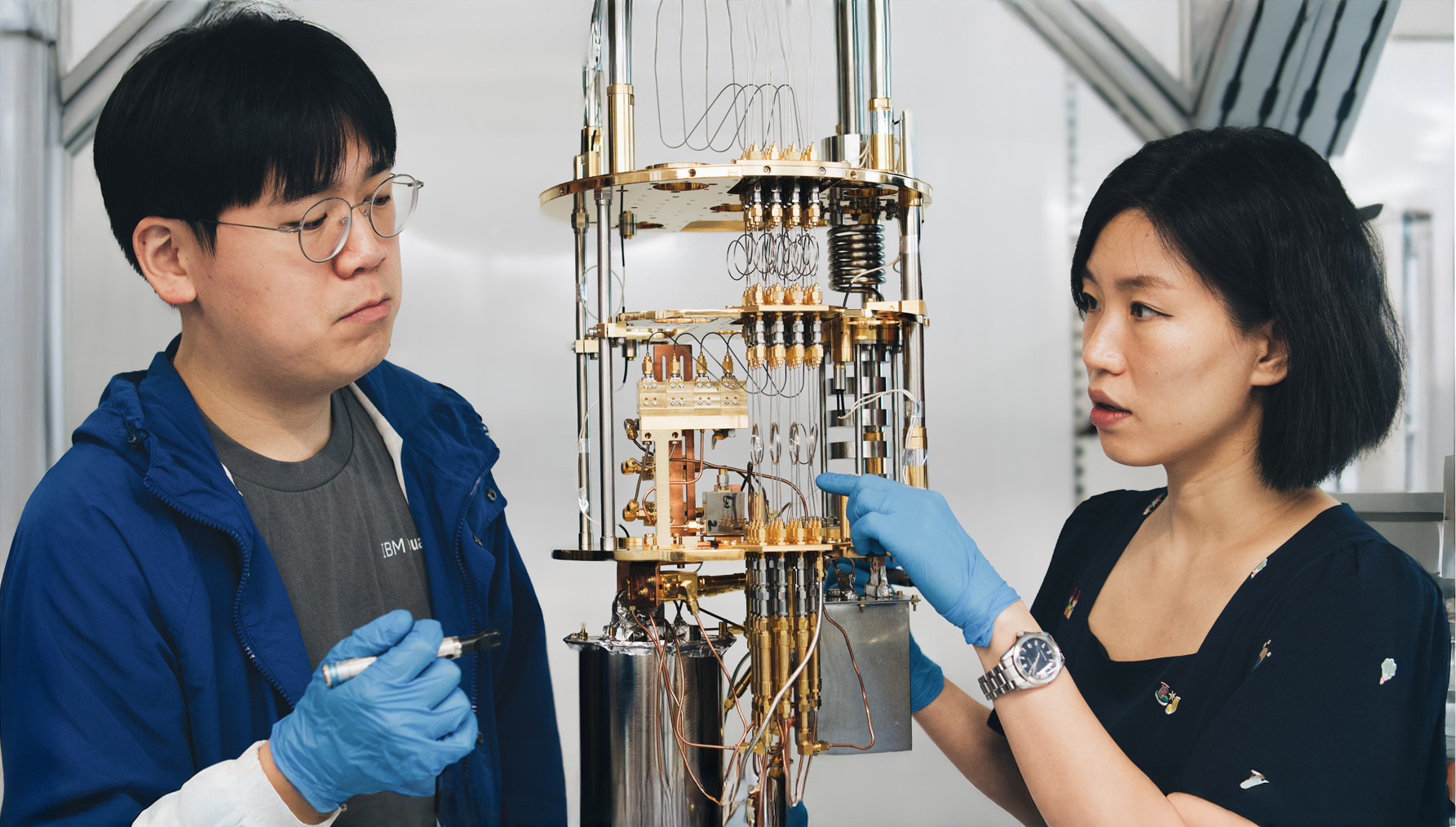
Taking the leap from natural phenomena to quantum computers
At the frontier of quantum physics, Assistant Professor Yvonne Gao, who is from the Department of Physics in the Faculty of Science and the Centre for Quantum Technologies at NUS, is not just investigating the fundamental rules of the universe — she is building the tools to test them. As a Presidential Young Professor, she leads a team creating quantum devices using electrical circuits to uncover the secrets of how light and matter interact. Through their experiments, her team gains important insights on natural phenomena and verifies abstract concepts in quantum physics, spearheading the development of powerful quantum computers. “It’s also really fun!” she gushed.
Asst Prof Gao’s passion in science stems from a lifelong love of tinkering and the daily thrill of innovation. “There isn’t a specific moment that led me to the path I’m on today,” she reflects, “but rather an accumulation of the excitements I feel each day when I see my own construction and ideas come to life in the lab.”
Beyond research and teaching, Asst Prof Gao is also a mother of two cheeky toddlers. “One thing I genuinely appreciate about academia is the flexibility — you still work hard, but you often can choose when you do the hard work,” she shared. Asst Prof Gao makes it a point to separate her professional and personal life. “I’ve learned not to feel bad about setting professional boundaries: for instance, I don’t schedule meetings on weekends or after 5.30pm. Having these guardrails helps me work more efficiently during work hours and gives me the time to be with my little ones in peace.”
As an accomplished and widely recognised scientist, her approach to inspiration is refreshingly simple and authentic. She hopes to empower the next generation of women by “just being myself, having fun in doing what I do every day and showing young women that a productive and enjoyable science career doesn’t require perfection.”
“Don’t be afraid to ask for help! Articulating what we don’t know is not a sign of weakness but a very good indication of maturity and mastery of knowledge,” she urged. “Have fun and keep exploring. Science is meant to be an exciting exploratory process.”

Turning smart membranes into real-world solutions
Since young, Associate Professor Daria Andreeva-Baeumler, Deputy Director (Academic Matters) at the Institute for Functional Intelligent Materials (I-FIM) and a faculty member in the Department of Materials Science and Engineering in the College of Design and Engineering at NUS, has been deeply curious about how the world works, especially how simple materials can give rise to complex and useful functions. As she learned more, she became increasingly fascinated by materials science because it sits at the intersection of physics, chemistry and engineering, and has the power to turn fundamental ideas into real solutions.
“A defining moment for me was when I realised that research could directly contribute to cleaner technologies and better healthcare,” said Assoc Prof Andreeva-Baeumler. “Science was not only intellectually exciting, but also a way to make a tangible difference.”
Presently, Assoc Prof Andreeva-Baeumler is a prolific materials scientist who has published more than 100 peer-reviewed scientific articles. Her research focuses on smart membranes and biointerfaces – functional and stimuli-responsive materials that can selectively interact with their surroundings – to address challenges in environmental sustainability and healthcare. By designing high-performing and eco-friendly materials, her work contributes to a future where technological progress advances in tandem with human health and environmental care.
Today, she is equally passionate about working with and mentoring young generations of scientists and engineers, inspiring students to translate curiosity-driven research into impactful technologies for society. With a rewarding STEM career behind her, Assoc Prof Andreeva-Baeumler aims to inspire aspiring women scientists by mentoring, teaching, and leading by example. “I want young women to know they can pursue ambitious research, build meaningful careers, and shape science in ways that align with their values.”
To encourage young women and girls who are considering a STEM career, Assoc Prof Andreeva-Baeumler shared, “Stay curious and don’t be afraid to take up space. You don’t need to be perfect to belong in STEM – what matters is your willingness to learn, ask questions, and keep going.”
“Trust yourself, seek mentors who support you, and remember that your voice and ideas truly matter,” she concluded.

Designing for human potential and empowerment
Assistant Professor Jane E, from the Department of Computer Science in the School of Computing at NUS, is just beginning to establish her research group, affectionately named the Palette Lab. Like an artist’s palette, where different colours come together and mix, she hopes her lab brings together students of diverse perspectives, disciplines, and lived experiences to shape how technology is designed.
Asst Prof E’s research in human-computer interaction asks how technology can support people in developing their own expertise. “Many tools today are designed to prioritise efficiency or productivity, and increasingly act on people’s behalf,” she explained. “While this can be useful, it can also risk reducing understanding, creativity, and autonomy.” In the Palette Lab, she and her students study how tools can guide attention, encourage reflection, and support learning across domains such as creativity, accessibility, and healthcare. “We aim to build systems that empower people, respect diverse ways of knowing, and strengthen—rather than erode—human agency, participation, and voice.”
Mentorship has been central to Asst Prof E’s career and motivation for becoming a professor. She credits two strong women in STEM—her mother and her research mentor—for showing her that careers in STEM can centre care and community. “I aspire to emulate both of these women in my own career and continue their legacy.”
She describes her mother as “someone who completely radiates love, care, and dedication”. While managing to pursue careers across several STEM fields, her mother has constantly found ways to advocate for others. Asst Prof E saw a similar commitment reflected in her late research mentor, Dr Floraine Berthouzoz, whom she described as “someone who actively fought for gender equality in education and deeply believed in building community”. Dr Berthouzoz worked to make entry into computer science feel less intimidating by creating opportunities for students and building safe spaces and communities for women in STEM. Together, they showed that a career in STEM can be both technically rigorous and deeply grounded in care for others and the communities one is part of.
Reflecting on her own experiences with imposter syndrome and anxiety, Asst Prof E encourages young women in STEM to “take time to pause and reflect so you can figure out what you are genuinely excited about” and to not “be afraid to ask for and find the support you need”.
