The Southeast Asia young people want to see
From transforming flood-prone communities into thriving blue economies to creating new opportunities for rural youth, 91 young leaders from across ASEAN are reimagining the region's future.
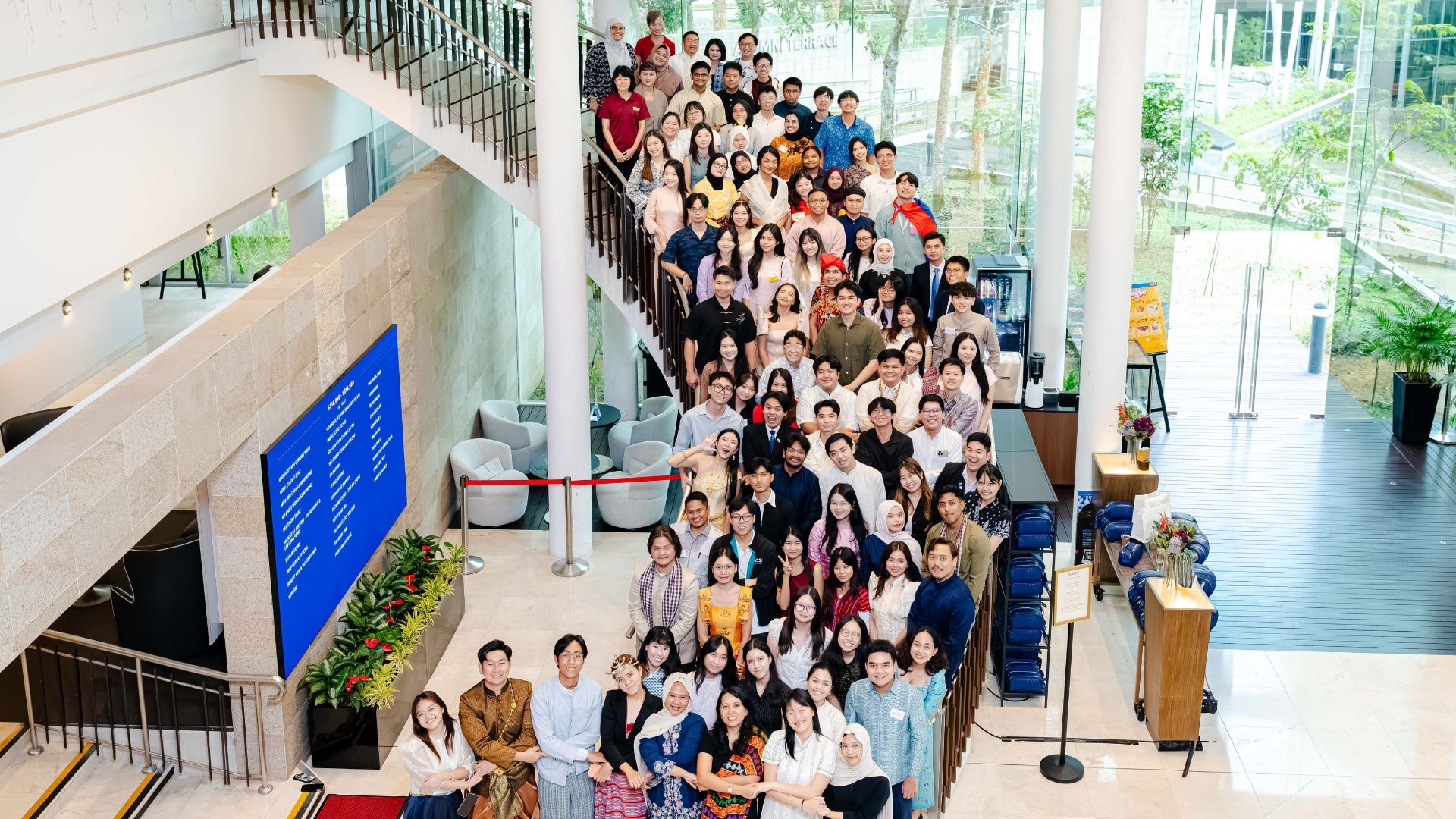
A region of immense possibilities, Southeast Asia also faces its fair share of challenges, ranging from climate change to unequal access to education and economic opportunities.
But what if its future could look different?
At the inaugural ASEAN Symposium for Youth Leaders, 91 young leaders from all 11 ASEAN countries came together to imagine new possibilities for the region, from creating blue economies to green education hubs. The participants, comprising undergraduate and postgraduate university students, were selected based on their interest in governance, public policy and international affairs. The event was organised by the Lee Kuan Yew School of Public Policy (LKYSPP) at NUS from 10 to 12 September 2026.
What if communities could turn floodwaters into opportunity?
In Hagonoy, Bulacan, a coastal municipality in the Philippines, rising tides and strong typhoons bring frequent flooding, affecting residents' lives and livelihoods.
Winning team SEAblings’s 2050 Flooding Mitigation and Adaptation Masterplan envisions transforming Hagonoy into the Philippines’ “Blue Economy Capital”, combining flood-resilient infrastructure and mangrove restoration with aquaculture and water-based tourism.
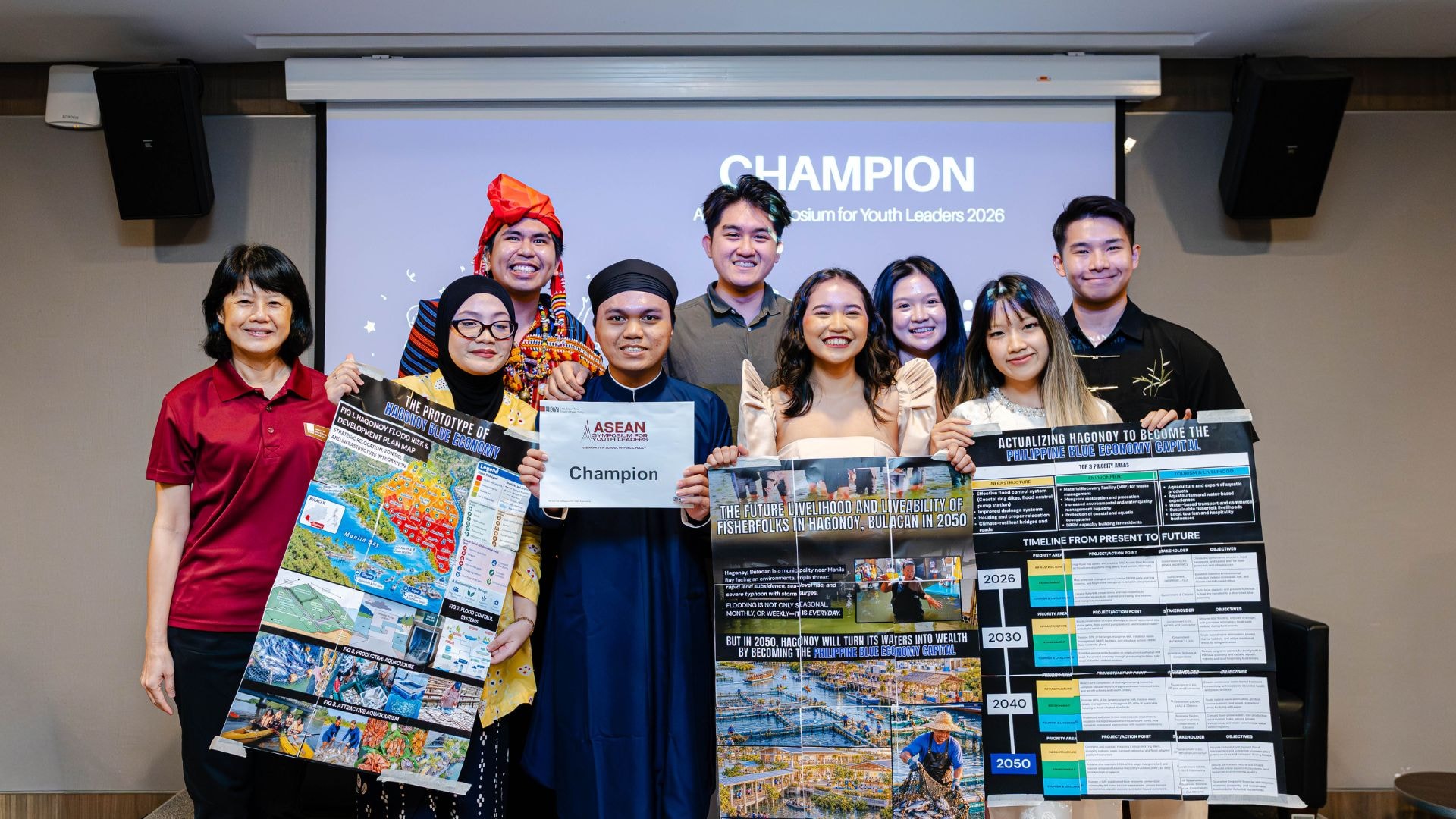
Mr Qjiel Giuliano Mikhl Zamora Mariano from the Philippines, who is pursuing a Master of Science in Sustainable Healthcare at NUS, explored how mangrove restoration could protect coastal communities while supporting livelihoods.
“This project reminded me that sustainability is not just about designing solutions that look good on paper. It’s about understanding what communities go through and creating solutions that work for them,” he said, explaining how flooding affects healthcare as families may require sea ambulances to reach hospitals during major typhoons.
Could Metro Manila harness its coastal waters for a cleaner, more resilient energy future?
In the Philippines’ densely populated capital, growing electricity demand, limited land and extreme weather make reliable, affordable power a challenge.
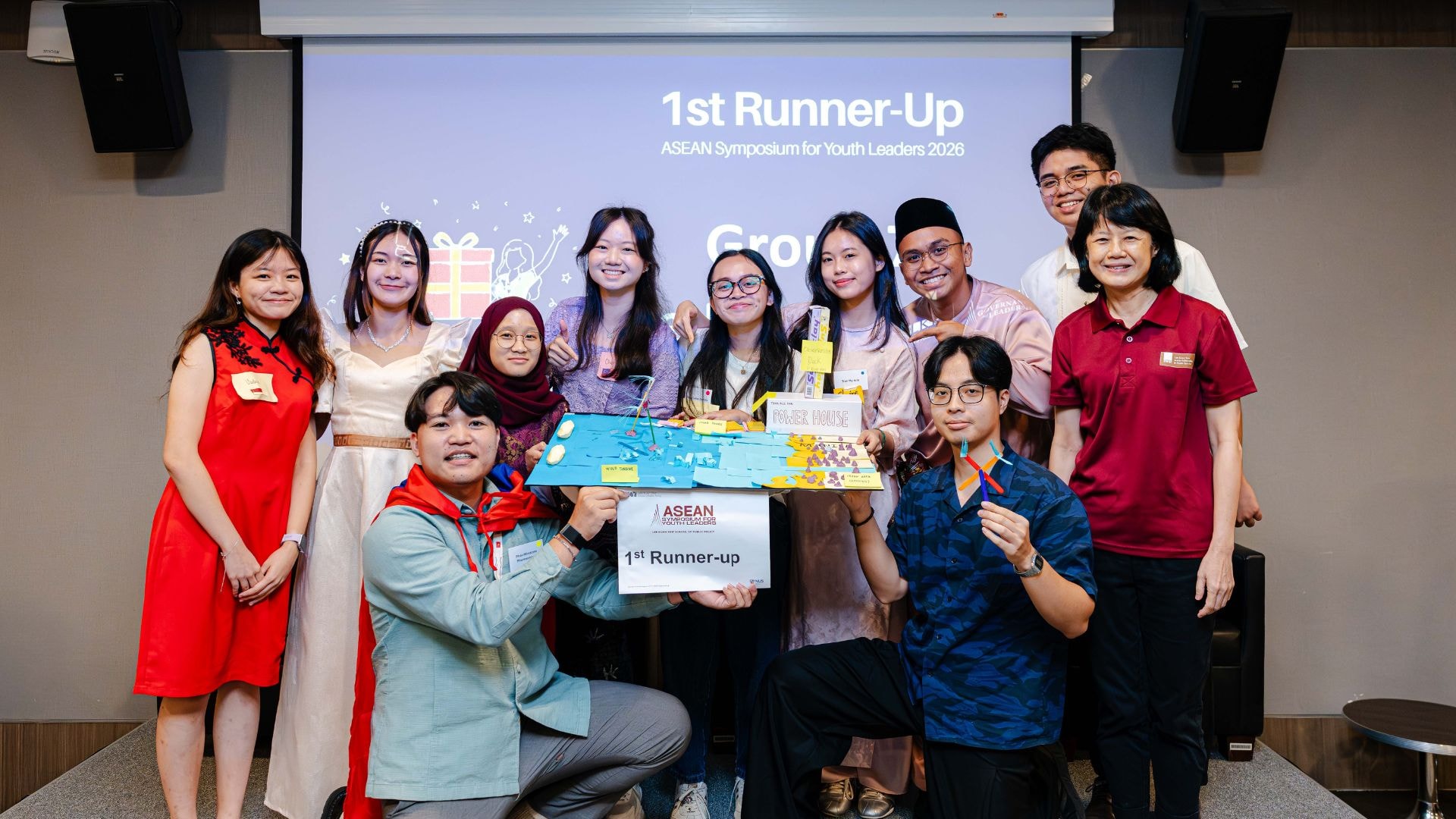
First runner-up team RICE FAM’s proposed Manila Urban Renewable Energy Network includes floating solar panels, wind turbines and technologies that harness wave energy. Electricity would be stored locally to support homes, schools and hospitals during power disruptions. When typhoons approach, a system that monitors weather conditions will automatically pull floating equipment into a protective structure onshore.
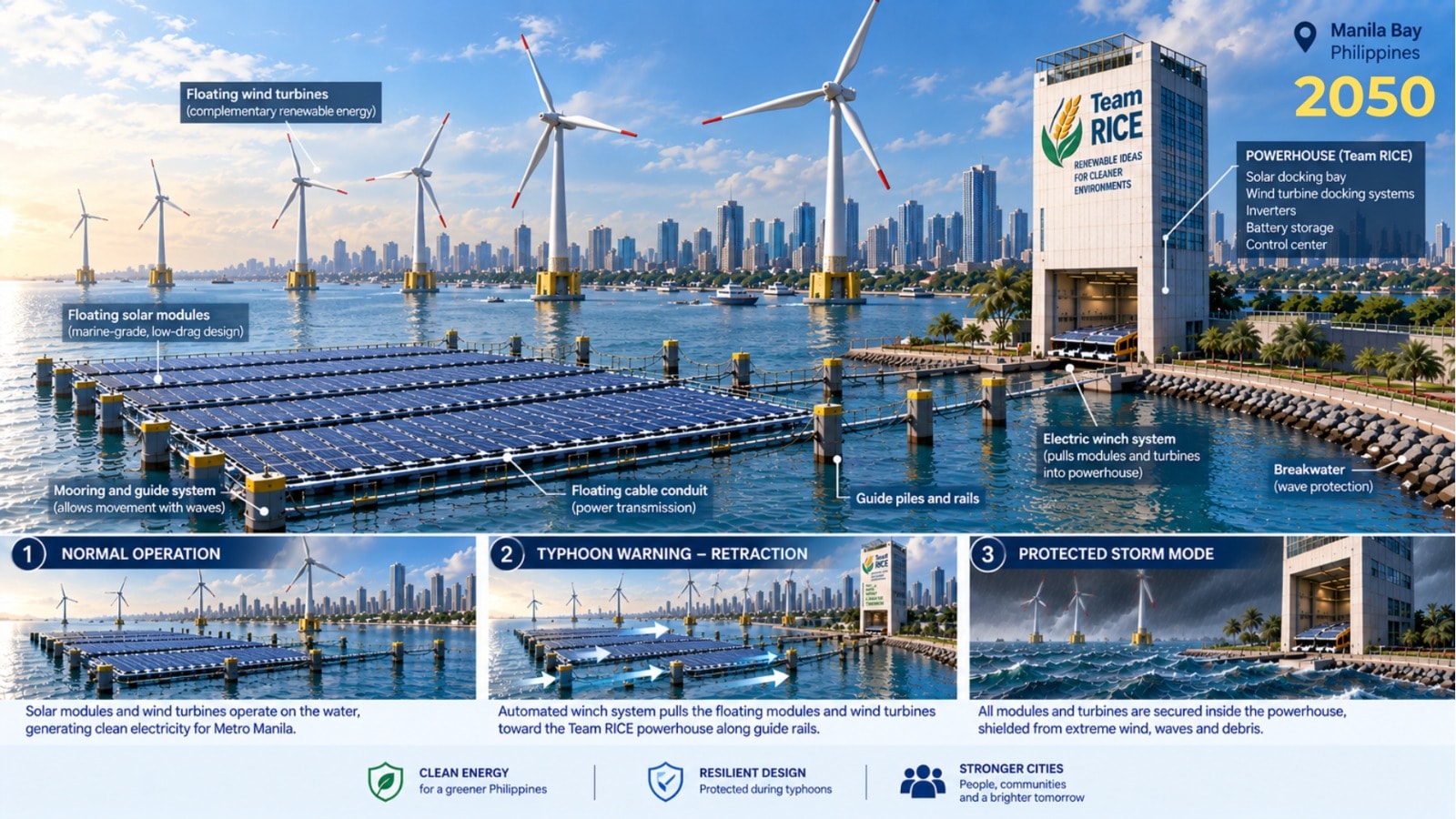
Besides cleaner electricity, the team also proposed making electricity more affordable for underserved communities, creating jobs and giving residents a say in how the project develops.
“It is not enough to develop an innovative solution or introduce new technology; we must also approach policymaking with open-mindedness, curiosity and empathy to understand the realities and needs of stakeholders and communities on the ground,” said Ms Valerie Wong, a Singaporean team member.
What if young people could build their futures closer to home?
For second runner-up team Sixth Sense, the challenge was personal. Their proposal began with a Lao teammate sharing experiences from his hometown of Ngoi in northern Laos, where many young people leave school early to work due to limited local opportunities.
Across Laos, nearly four in ten young people aged 15 to 24 are not in education, employment or training, according to 2022 figures cited in the team’s proposal.
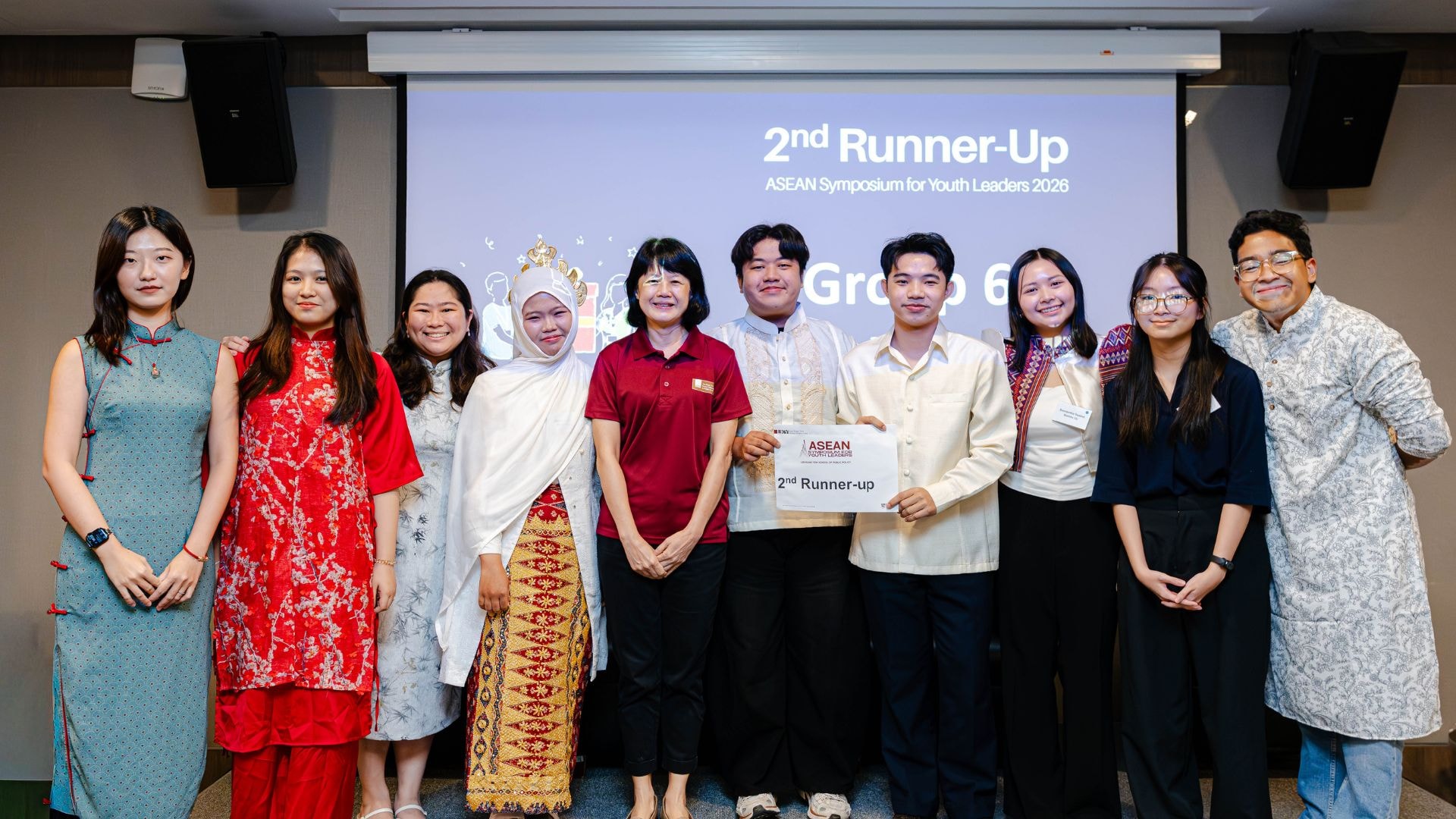
They envisioned transforming Ngoi into a green education hub by 2050, connecting young people with careers in sustainable industries such as ecotourism, clean energy, and green transportation through vocational training, business partnerships and internships.
“Natural wealth becomes lasting development only when local people are equipped to build on it,” said team member Ms Yang ZhenZhen, who is from Singapore.
Imagining the future, together
Despite addressing different challenges, the three proposals share an ambition to help communities overcome barriers and realise their potential.
“What is common is that everyone is passionate about co-creating meaningful solutions to contemporary governance challenges,” said Ms Ong Toon Hui, Vice Dean and Executive Director of the Institute for Governance and Leadership at LKYSPP.
These ideas may remain visions for now, but they are an important starting point for a brighter future in Southeast Asia.