


Singapore’s strong research base makes it easier for it to adopt nuclear energy: UN nuclear chief
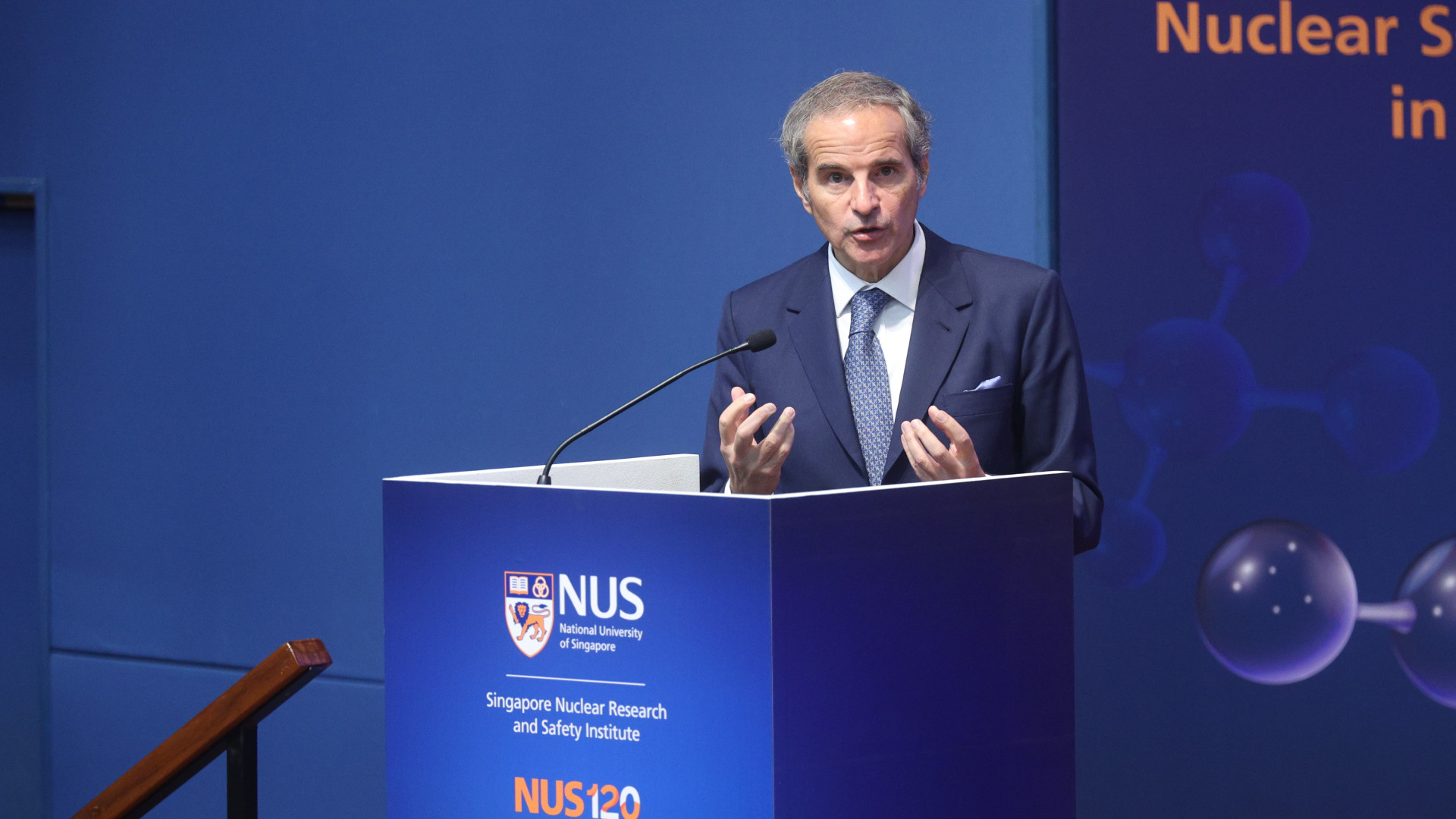
Singapore is seen as an ideal country that could use nuclear energy, due to its technological know-how, institutional maturity, and geographical constraints on renewable power generation.
This view came from Mr Rafael Mariano Grossi, Director General of the International Atomic Energy Agency (IAEA), who delivered a lecture on developments in atomic energy and nuclear security at NUS on 25 July 2025. The lecture, hosted by the Singapore Nuclear Research and Safety Institute (SNRSI) at NUS, was followed by a question-and-answer session moderated by Associate Professor Leong Ching, NUS Vice Provost (Student Life) and Acting Dean of the Lee Kuan Yew School of Public Policy at NUS.
“When it comes to decarbonising, what are your options? Here, there is no hydropower. You have renewables, but you don’t have much territory... so you cannot have wind parks for kilometres on end,” he told an audience of 250 students, undergraduates, academics, experts and government officials at NUS’ Shaw Foundation Alumni House.
“In my opinion, and in the opinion of many experts, in terms of the options, perhaps Singapore could rightly figure as the most perfect example of a country that needs nuclear energy. With a very small nuclear power plant, you can have a level of energy density and production that you cannot match with anything else.”
Singapore has been contributing to global developments in nuclear research for the last decade and has been a member of IAEA since 1967.
For example, Singapore conducts training on nuclear science and technology for other countries, and its government agencies contribute to technical committees of the IAEA — which functions as the United Nations nuclear watchdog.
While the government announced in February that Singapore would study the potential deployment of nuclear power and systematically build up capabilities in the area, no decision has been made on whether the country will adopt nuclear energy.
Meanwhile, the country is further building its nuclear expertise with SNRSI, which was launched on 11 July 2025.
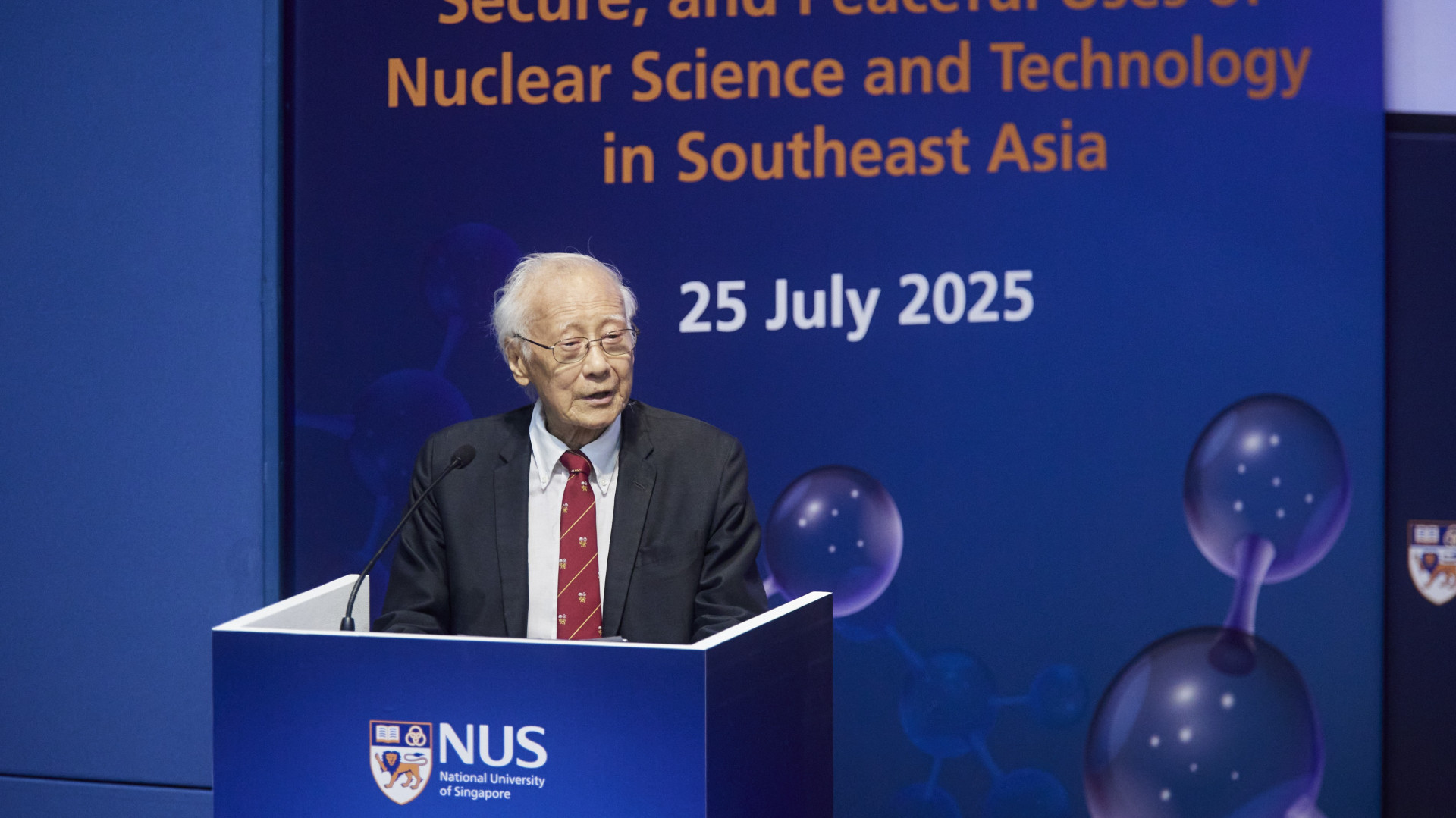
“Having Mr Grossi here today is of special significance to us because, earlier this month, the Singapore Nuclear Research and Safety Institute was officially launched after 10 years as an Initiative. It didn’t happen overnight, it took us 10 years to grow our size and capability,” said Professor Lui Pao Chuen, Chairman of the SNRSI Management Board, in his opening remarks.
“Singapore is committed and ready to contribute to the safe, peaceful use of nuclear science and technology,” he added.
SNRSI will operate from a new purpose-built facility at NUS, with a S$66 million grant. It plans to double its pool of experts to 100 by 2030, and will play a major role in Singapore’s partnership with the IAEA to train experts from developing countries in nuclear research.
Singapore has also worked with the IAEA on other areas, such as the designation of the NUS Centre for Ion Beam Applications as a Collaborating Centre — the first such centre in Singapore. One focus of the Collaborating Centre is proton beam therapy, which is used in radiation cancer treatment.
What’s driving the nuclear pivot
The pivot towards atomic power has been a global trend, with ASEAN countries also showing interest in collaborating with IAEA to develop nuclear energy capabilities. For instance, countries like Indonesia, Vietnam and Myanmar plan to build nuclear power plants.
“It is not a trend towards nuclear dominance,” noted Mr Grossi, emphasising that the role of nuclear energy is to provide a stable base load for the grid that “never stops”.
Instead, he attributed the rising interest to two factors: decarbonisation and energy security.
If the world aspired to hit decarbonisation targets of the Paris Agreement, it would have to include the use of nuclear energy. “Decarbonisation without nuclear (energy) is practically utopian,” he added.
A more fragmented world also means growing energy security concerns, as an overreliance on external energy supplies could put countries in a vulnerable position.
“The allure of a source of energy which gives you total independence becomes even clearer when you have a nuclear power plant. You switch it on, it’s yours,” said Mr Grossi.
If Singapore is keen to pursue nuclear energy, he suggested that the Republic could share a nuclear power plant with an ASEAN neighbour, citing how this is done in Slovenia with the Krsko power plant that provides energy to both Slovenia and Croatia.
Safety is top priority
While there are benefits to nuclear energy, the topic of safety, among other areas such as application guidelines and costs, was brought up and addressed by Mr Grossi during the question-and-answer session.
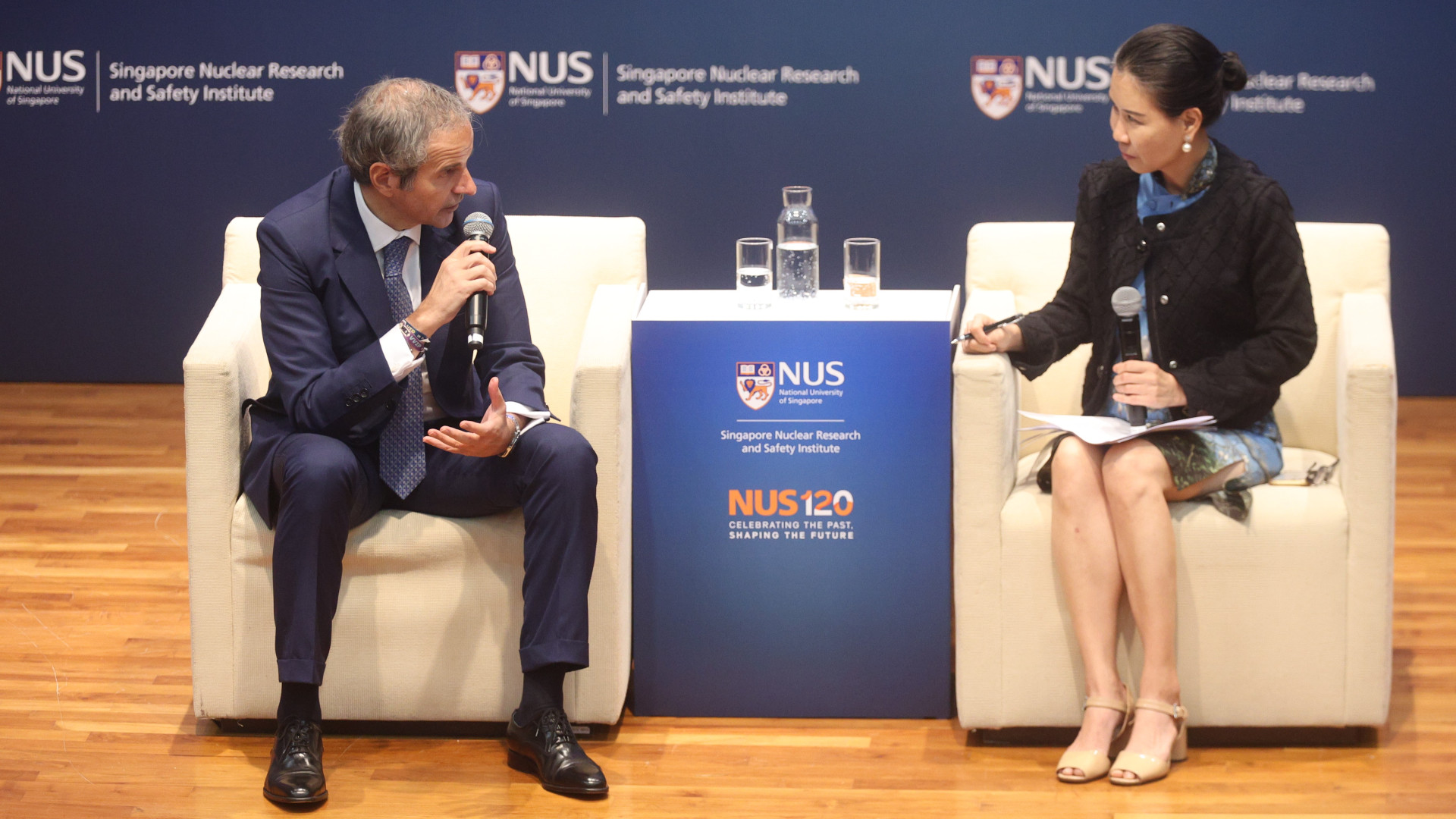
In response to a question on the effects of a nuclear power plant incident in a densely populated city such as Singapore, Mr Grossi assured that safety is IAEA’s top priority. “We at the IAEA develop, together with the countries, emergency preparedness and response mechanisms,” he said. “It’s one indispensable part of nuclear power planning and operation.”
To another question on disposing radioactive waste, Mr Grossi said that no country can run a nuclear power programme without first having a clearly defined and agreed plan for managing the waste – a process he emphasised that must be considered from the start and not left until after the fuel is used. “There are very clear methodologies to deal with it, and they are used…to great success.”
While there have been debates concerning the long-term disposal due to the lasting radiation of spent fuel, Mr Grossi noted that the amount of such waste is extremely low. The waste generated is also inspected to ensure there is no radiation hazard or misuse of nuclear material. “We are the only industry that checks the rubbish,” he added with a smile.
Summing up the potential of nuclear power, he concluded, “Let me say that all of this presents a picture of opportunities, challenges and problems.” It is a blueprint that the IAEA, in partnership with countries like Singapore, will continue to fine-tune and optimise.
