


Stronger together: NUS-led research team to study how regions can build resilience
As great powers increasingly upend the traditional “rules-based order”, seemingly without consequence, more countries are recognising the need for strategic partnerships as a counter to growing power politics. This was highlighted at the World Economic Forum’s Annual Meeting in January, when Canadian Prime Minister Mark Carney called on other middle powers to unite for greater strength, saying, “Collective investments in resilience are cheaper than everyone building their own fortresses.”
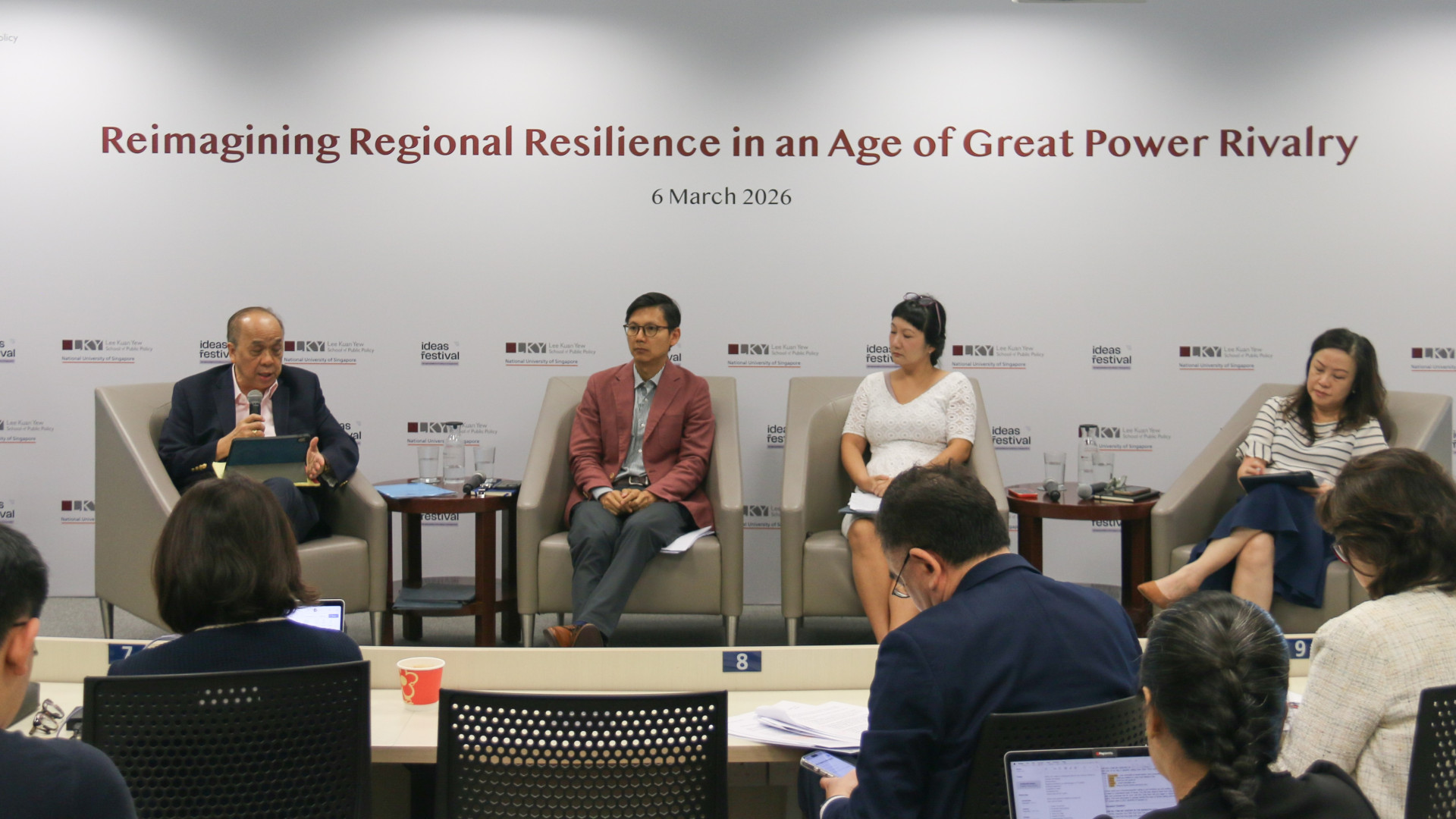
For small powers like Singapore and its neighbours, this insight is familiar. “Strategic usage of norms, institutions and laws has always been a part of the smaller powers’ modus operandi. We’ve just never really been heard,” said Associate Professor Tan Hsien-Li of NUS Law, at the event “Reimagining Regional Resilience in an Age of Great Power Rivalry”, held at the Lee Kuan Yew School of Public Policy (LKYSPP) on 6 March 2026 as part of the 2026 Ideas Festival.
The questions of how countries should measure and invest in collective resilience will be explored in an upcoming five-year study titled “Rethinking Regional Resilience in a Changing World”, involving 12 researchers from NUS, Nanyang Technological University and Singapore Management University, including Assoc Prof Tan, whose research focuses on international law, international relations and political economy.
While the study is set to officially kick off in July 2026, the event provided an early platform for the research team to engage academics, students, government and industry representatives, and members of the public in discussions on how Singapore and Southeast Asia should navigate an increasingly complex and volatile strategic landscape.
The team presented their preliminary ideas and approach, including some of the questions they will seek to answer: What does net regional resilience consist of? How do we know it when we see it? And how can a region get closer to achieving it?
New definitions for better understanding
Regional resilience is generally defined as the ability of a region to withstand internal and external shocks and to recover and renew this ability, said Professor Khong Yuen Foong, Li Ka Shing Professor in Political Science and Co-Director of the Centre on Asia and Globalisation at LKYSPP, who leads the research project.
Traditionally, it has been regarded as the sum of the individual countries’ resilience, but this view fosters a defensive and inward-looking approach and falls short in understanding how a region will handle transboundary issues and polycrises, or interconnected and simultaneously occurring crises like pandemics and political conflicts.
“What we came up with is to suggest thinking of regional resilience as having the capability to deal with challenges that are of national significance, but which also cut across national boundaries. Not only are these challenges transboundary, they are also existential and planetary, such as great power rivalry, and there are regional repercussions.”
The team has identified six critical challenges: power transition and the emerging regional order; economic decoupling and deglobalisation; institutional and normative resilience; technological security in the AI age; health threats; and demographic transitions. The ability of a region to deal with and overcome each of these challenges will be analysed to achieve a clearer understanding of regional resilience.
Along with new principles and frameworks for assessing regional resilience, the research project may also uncover answers to existential questions for the Association of Southeast Asian Nations (ASEAN). These questions include whether the regional organisation, a product of the 20th century’s geopolitical environment, is fit for purpose in the 21st century, and what it must do to remain relevant and project agency in the new global order.
Creative, nuanced approach needed
Over two panel sessions, researchers discussed how regions can demonstrate resilience to these challenges.
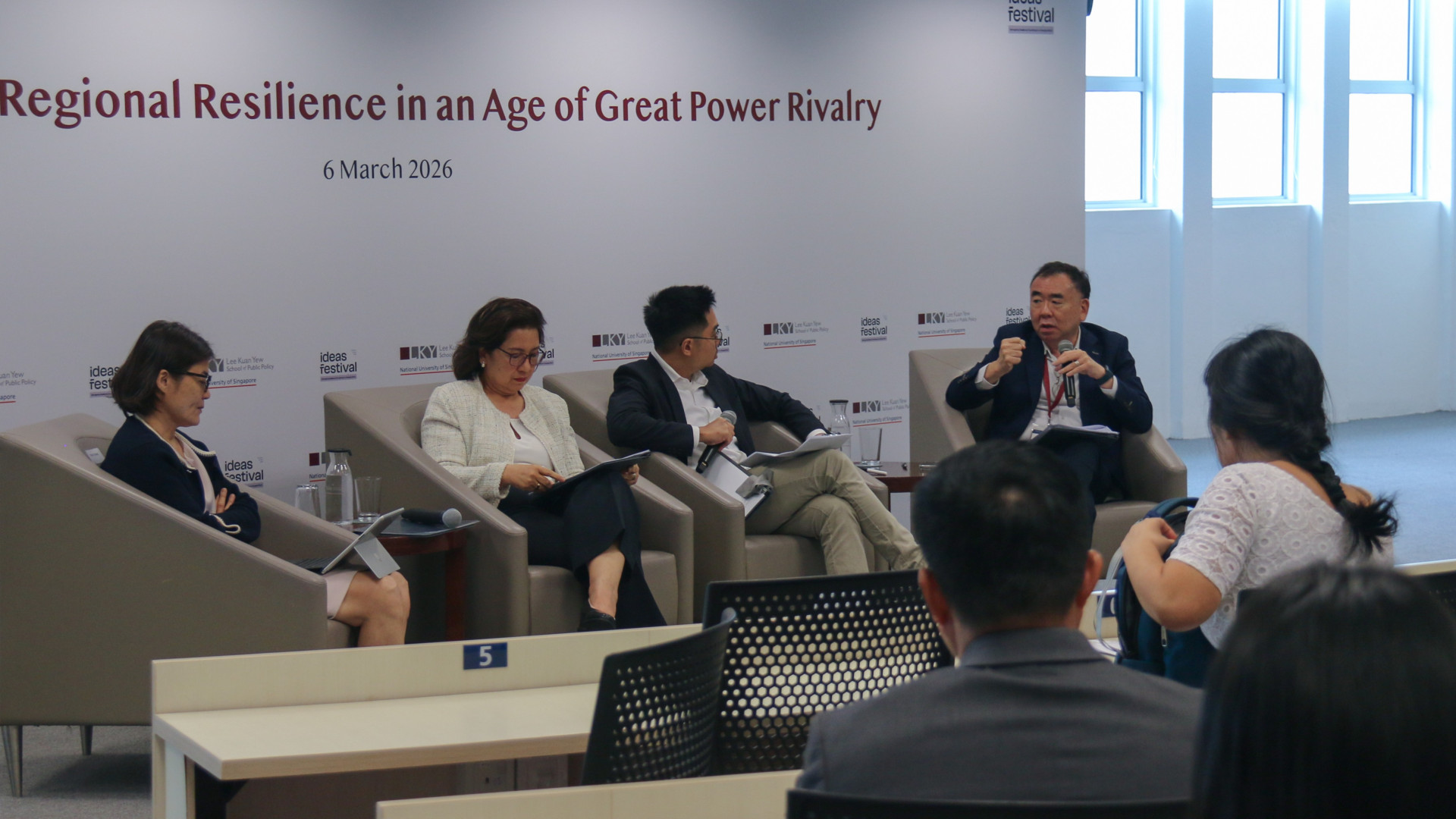
Asia, especially ASEAN, is caught in a “quagmire” between the great powers, being reliant on the US but economically tied to China, making any sustained confrontation costly, said Associate Professor Huang Chin-Hao, Co-Director of the Centre on Asia and Globalisation at LKYSPP, who researches international politics and regional security in Asia.
However, the situation can spur creative approaches where small powers can work with like-minded states to boost military cooperation and invest in regional institutions and norms that promote security and peace. Assoc Prof Huang noted that bigger powers still need the support of other countries, and small states can use this opportunity to shape power dynamics by offering support to the country that can help them with trade, security and stability.
“You can’t claim to be Number 1 if you don’t have an audience around you, supporting and rallying behind you,” Assoc Prof Huang said. “We’re not just passive bystanders and price takers as small states. We actually have the ability to influence these great powers as they want the legitimate right to lead the international system going forward.”
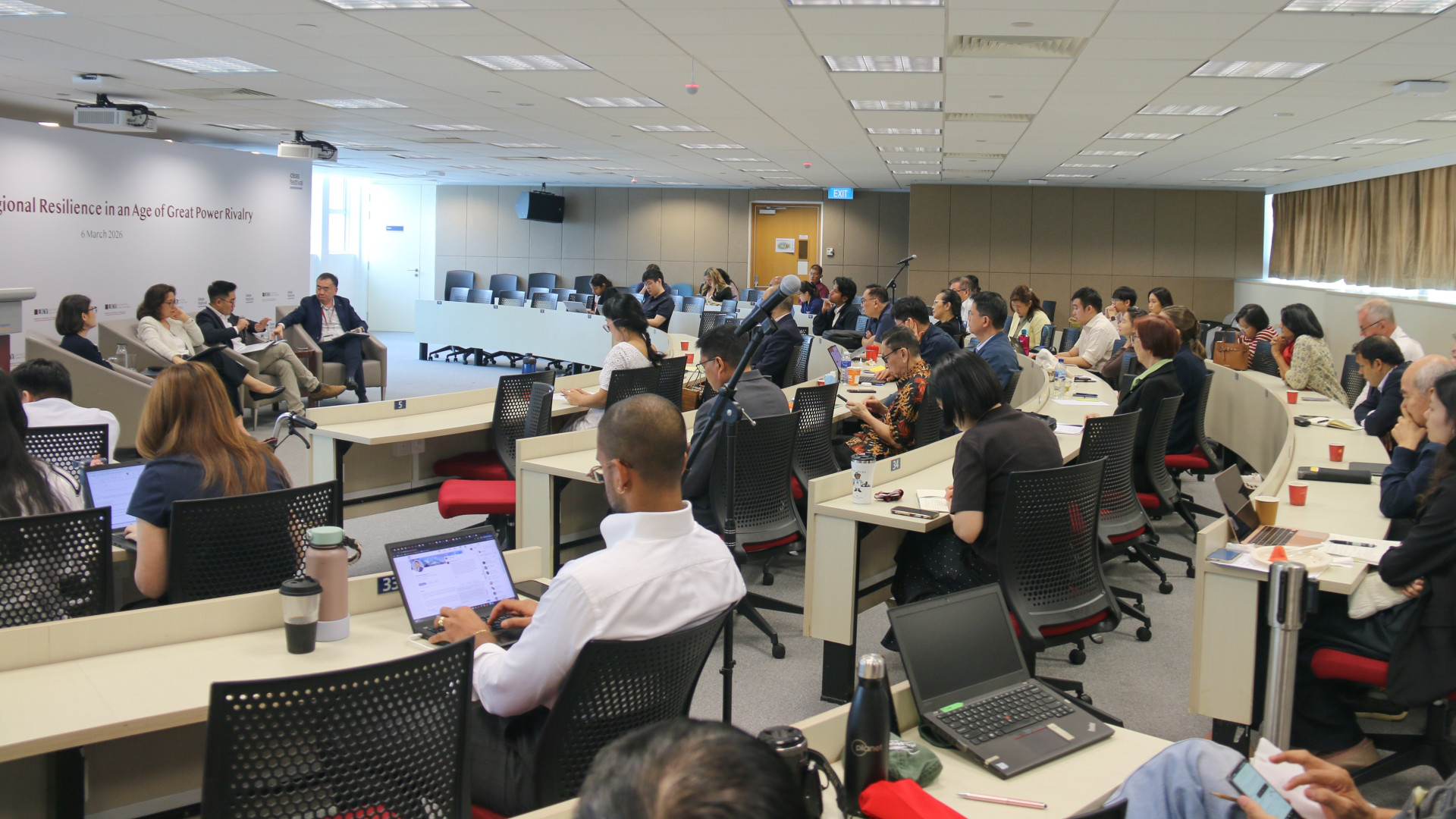
Technological security and digital resilience are rapidly evolving aspects of regional resilience, but digital systems bring both opportunities and risks, from cyberattacks and misinformation to the severing of undersea cables, said Dr Miguel Alberto Gomez, Senior Research Fellow at LKYSPP, who studies the geopolitics of emerging technologies and artificial intelligence.
To complicate matters further, every country values technology and defines cybersecurity differently, and levels of trust in technology vary as well. For some, resilience lies in the stability and protection of their infrastructure and critical services, while others are more concerned about information integrity and flow.
Access to these technologies and related resources, like training and talent, is also uneven across countries, constraining the growth of national and regional technological capabilities.
“Digital resilience is not primarily a technology problem. It is a governance and strategy problem expressed through technology,” said Dr Gomez.
“Resilience is not a matter of purchasing or developing the right technological tools, but how best to use them. It is also a function of our ability to acknowledge our differences at national and regional level in order to overcome the gaps in trust, varying perceptions and so on.”
By analysing the elements that constitute resilience to each of these critical challenges, the study aims to provide a roadmap for regions to bridge gaps across countries, mount a united response to transboundary crises and emerge stronger as a whole.
