


Student research projects on love and plant-based abalone shine at NUS UROP+REx Conference
The UROP+REx Conference (UREC) featured a diverse range of topics from multiple disciplines, showcasing the breadth of research inquiry among undergraduate students
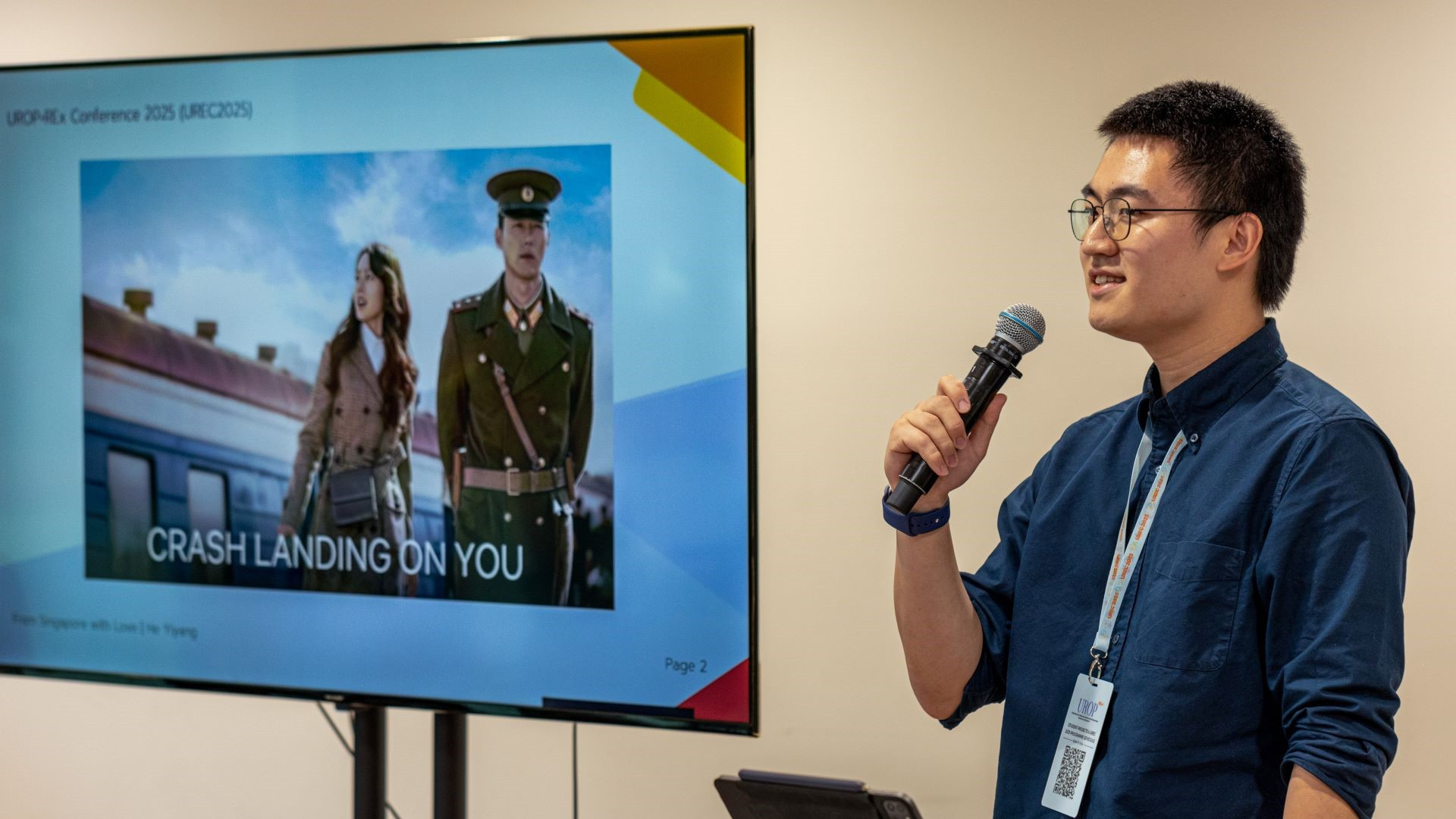
Not only are they known for bucking trends and traditions, young adults from Generation Z (Gen Z) are marching to the beat of their own hearts when it comes to relationships too, according to an NUS undergraduate research project.
Titled “From Singapore with Love: How do Gen-Zs in Singapore Find, Build and Maintain Romance?”, the small-scale study involved interviews with 25 participants aged 19 to 23.
“We wanted to investigate the role of parents and family in influencing the decision of partner selection or initiating a romantic relationship,” said He Yiyang, a second-year Sociology student at NUS College (NUSC).
He found that the respondents were likely to avoid replicating their family structures in their own relationships, even if they viewed them positively. For example, participants from families where one parent stayed home to manage the household and care for the children appreciated their parent’s sacrifice. However, they would not choose the same arrangement for themselves, instead prioritising their own preferences, such as working as needed.
The reason, his study concluded, was that Gen Z strove for personal fulfilment even as they appreciated the strengths of their parents’ relationships.
This study on love was one of close to 30 projects presented to more than 100 NUS staff and students on 22 January 2025, at the UROP+REx Conference (UREC) held in the NUS Medicine+Science Library.
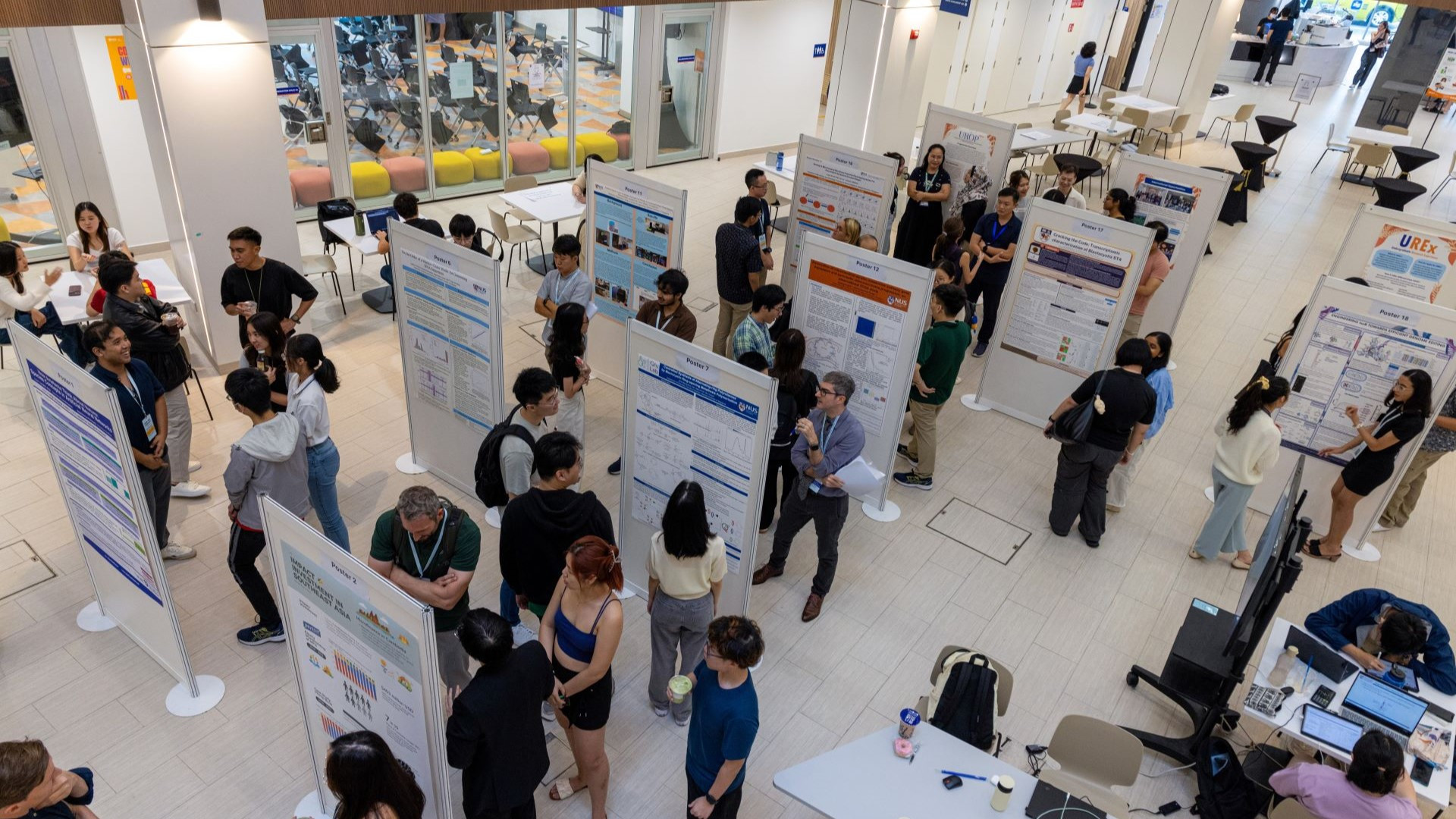
A stage for student researchers
The annual conference features Undergraduate Research Opportunities Programme (UROP) projects and presentations by Research Experience (REx) fellows. UROP allows students to participate in research projects under the supervision of faculty members, while the REx programme is a course upgrade that arms them with research skills.
After completing their UROP project, REx fellows get the chance to showcase their findings at UREC, which has a line-up of new features this year.
For the first time, UREC 2025 included interactive booths led by faculty members, and offered more opportunities for students to showcase their work with a line-up of about three times more presenters than the year before.
Students could also take on leadership positions, with some in the UREC student-led publicity team, and others who became panel moderators, a role usually given to graduate students with more experience.
It was through the conference that Yiyang, under the supervision of Dr Kyeong Hi Baek, Senior Lecturer at NUSC, studied how Gen Z-ers found, built, and maintained relationships. He was intrigued by the structural inequalities and social norms at play in society, with love being a key – and relatable – pillar.
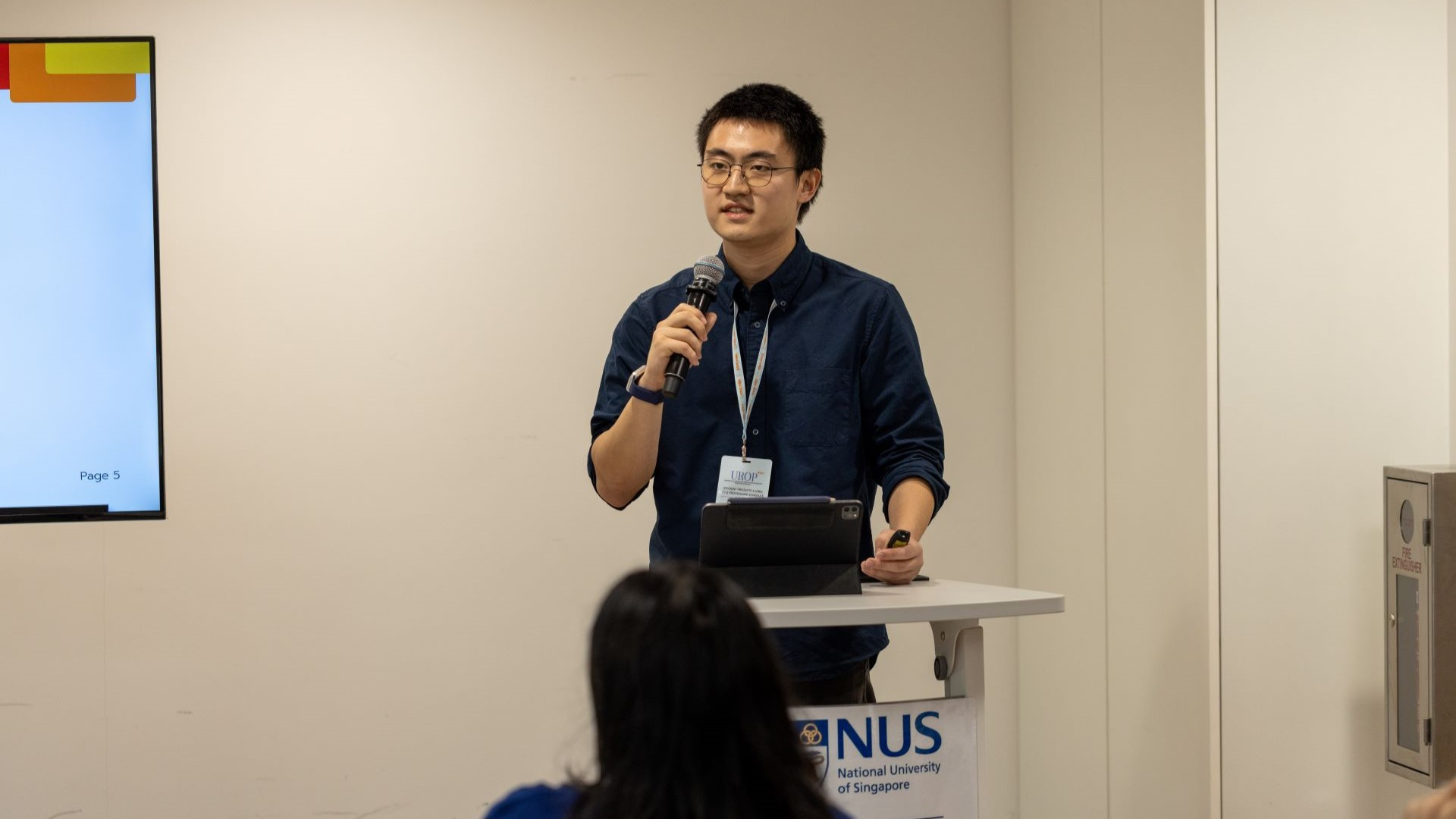
Keeping in mind what he learnt from his REx workshop on research communication, Yiyang prepared his presentation at UREC with the goal of engaging the audience, who were from different faculties in NUS. To do this, he referred to icons in pop culture such as the popular Korean drama, Crash Landing on You. “Whenever I discuss my research on love, my audience often reacts with puzzlement, viewing love as an inexplicable, deeply subjective emotion—much like the romance portrayed in Crash Landing on You. However, this study demonstrates that love can be rigorously examined through scientific inquiry, revealing its broader societal implications.”
The world is your abalone
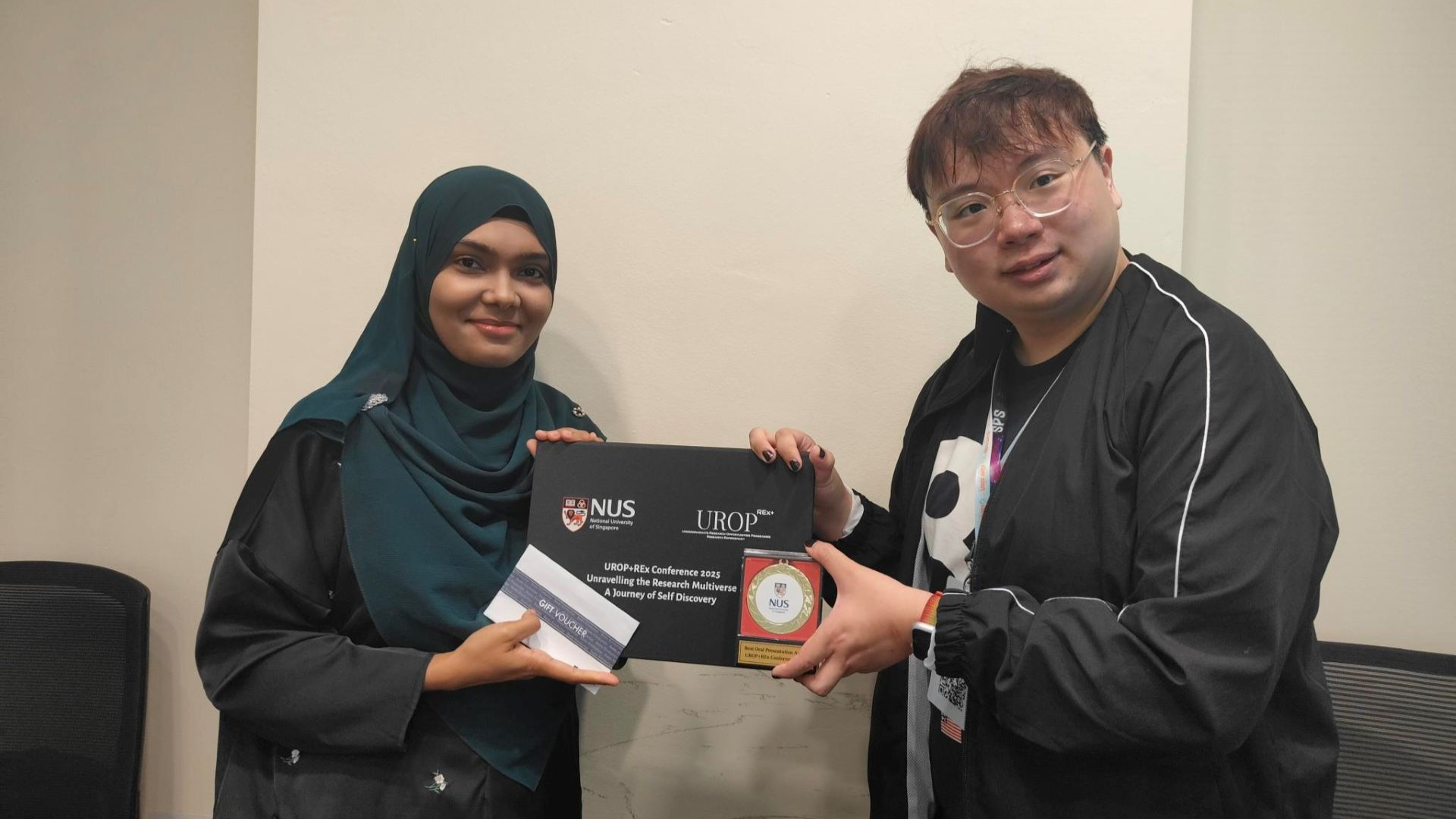
While Yiyang’s presentation on love captured the attention – and hearts – of many, it was fellow presenter Alpha Ho who won the Best Oral Presenter award with hand-drawn illustrations and a duck plushie as props.
The Year 4 undergraduate majoring in Food Science & Technology had studied the effects of three cooking methods on the nutritional value of plant-based abalones made from mung beans. Abalones are considered critically endangered, which calls for the sourcing of suitable alternatives.
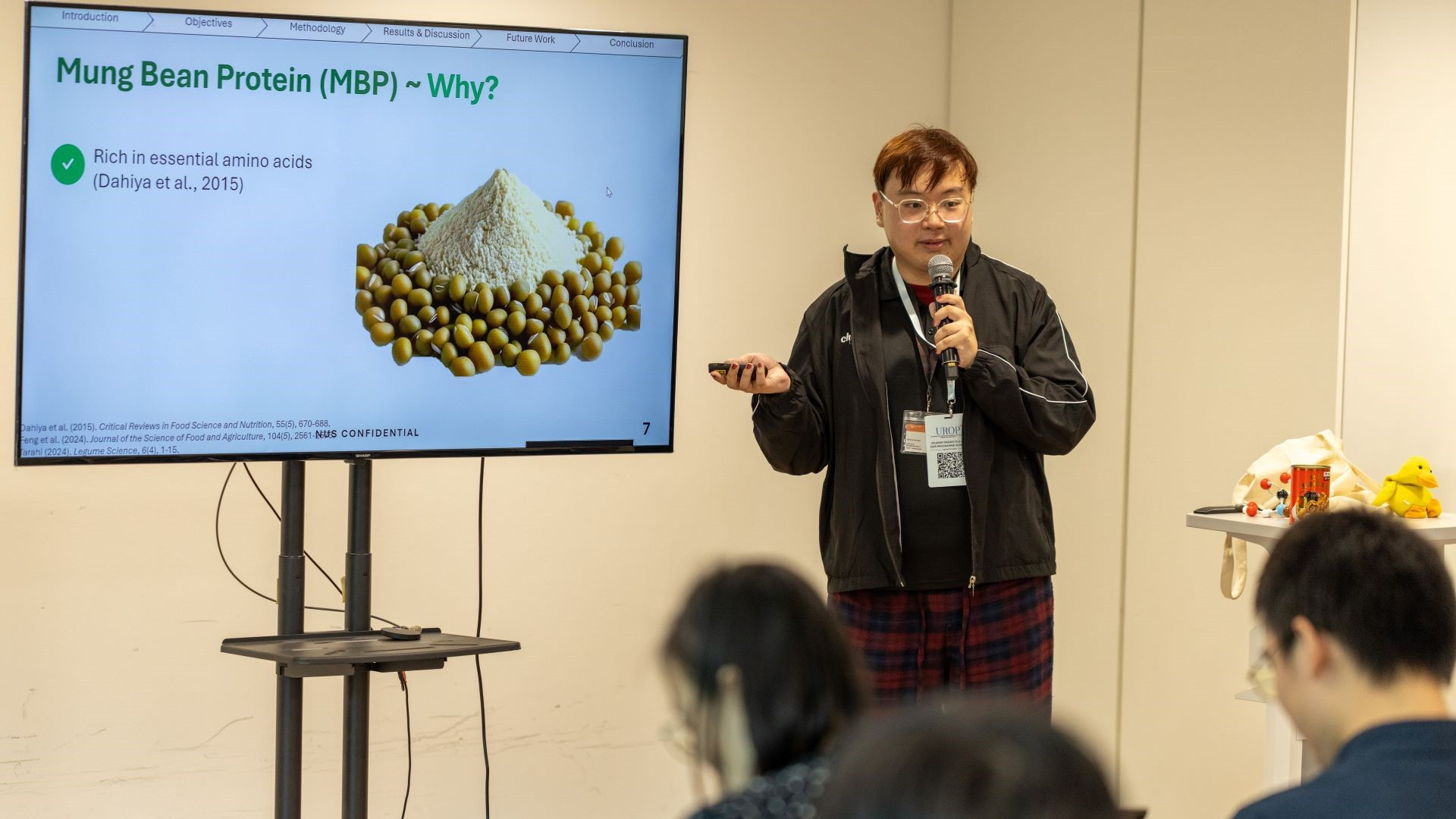
“The other reason for the investigation is that mung bean protein is not often used in the plant-based food industry, and the protein ends up going to waste,” noted Alpha.
In his experiments, he cooked the abalones and mung bean alternatives using three common Asian cooking methods: steaming, boiling, and stir-frying. He then roped in over 40 participants for a blind taste test of the two abalone options, the real abalones and the mung bean abalones.
Alpha concluded from their feedback that the smell, taste, texture and colour of regular and plant-based abalones were comparable, although there was still room for improvement. He also found that mung bean abalones retained more essential amino acids after cooking than real abalones did, making them nutritionally viable alternatives.
Under the guidance of his supervisor, Professor Huang Dejian and co-supervisor Dr Liu Yunjiao from the Department of Food Science & Technology, Alpha compiled his findings into a report and a presentation deck for the conference.
On winning the award, Alpha credited other faculty members such as Dr Liu Mei Hui and Dr Vinayak Ghate who were engaging presenters and how he channelled them during his presentation to maintain an infectious energy. “They inspired me to find my own way of being engaging,” he said.
Taking REx fellows to new heights
At UREC, Alpha also drew inspiration from the posters of other REx fellows, taking personal notes on how to present information in a more compelling manner for future conferences.
In addition, UREC has stoked Yiyang’s creative fire. After a chat with a fellow conference participant, he is now thinking of studying how other factors such as multiracialism affect parents and family, which in turn impact romantic relations.
He will be analysing his findings in relation to meso-level systems. These are medium structures that exist between the micro and macro levels, like families (micro); and organisations, communities or ethnic groups (macro), respectively. By interacting with others at the interdisciplinary conference, Yiyang has found that obtaining data is only the first step in taking his research further.
“The conference is like magic – you approach so many people with different perspectives and get new insights,” said Yiyang who spoke to engineers, scientists, and social scientists.
This is exactly why the UREC was established. “UREC aims to be an annual student conference where undergraduate researchers share their work and learn from one another,” said Mr John Caines, Programme Manager, Research Experience (REx). “With each iteration, UREC hopes to bring together students from more faculties and departments to discover exciting intersections between disciplines.”
Both Yiyang and Alpha hope to pursue PhDs, and UREC is a stepping stone to their goal.
“I feel that you don’t get that many opportunities to present your research outside of your department as an undergraduate,” said Alpha. “Hence, this conference is an opportunity to showcase my project to a broader audience and it helped me brush up on my scientific communication skills for different audiences. It has also strengthened my research portfolio.”
Students interested in the Research Experience (REx) Course Upgrade can apply for it here.
