


Green living: How NUS students are championing sustainability at the hostels

In this series, NUS News explores how NUS is accelerating sustainability research and education in response to climate change challenges, and harnessing the knowledge and creativity of our people to pave the way to a greener future for all.
Sustainability is an integral part of the NUS experience, a commitment deeply embedded in hostel life. Alongside campus-wide initiatives such as energy and water conservation, promoting recycling and enhancing biodiversity, NUS students are encouraged to champion eco-friendly practices in their living spaces to do their part for the environment and contribute towards a greener future.
From finding new homes for pre-loved items for incoming student residents to nurturing new friendships while caring for plants together, these student groups in the hostels have implemented a range of thoughtful initiatives that show how small, meaningful actions can leave a lasting impact.
Eusoff Hall
Better known for its strong sporting culture, Eusoff Hall (EH) also has a Green Committee made up of a dedicated group of students who organise various activities to encourage Eusoffians to adopt more eco-conscious habits in their daily lives. Justin Soon, a Year 2 undergraduate from the School of Computing (SOC) and Vienna Fiorella Anong, a Year 2 undergraduate from the Faculty of Science are heading the Committee this academic year.
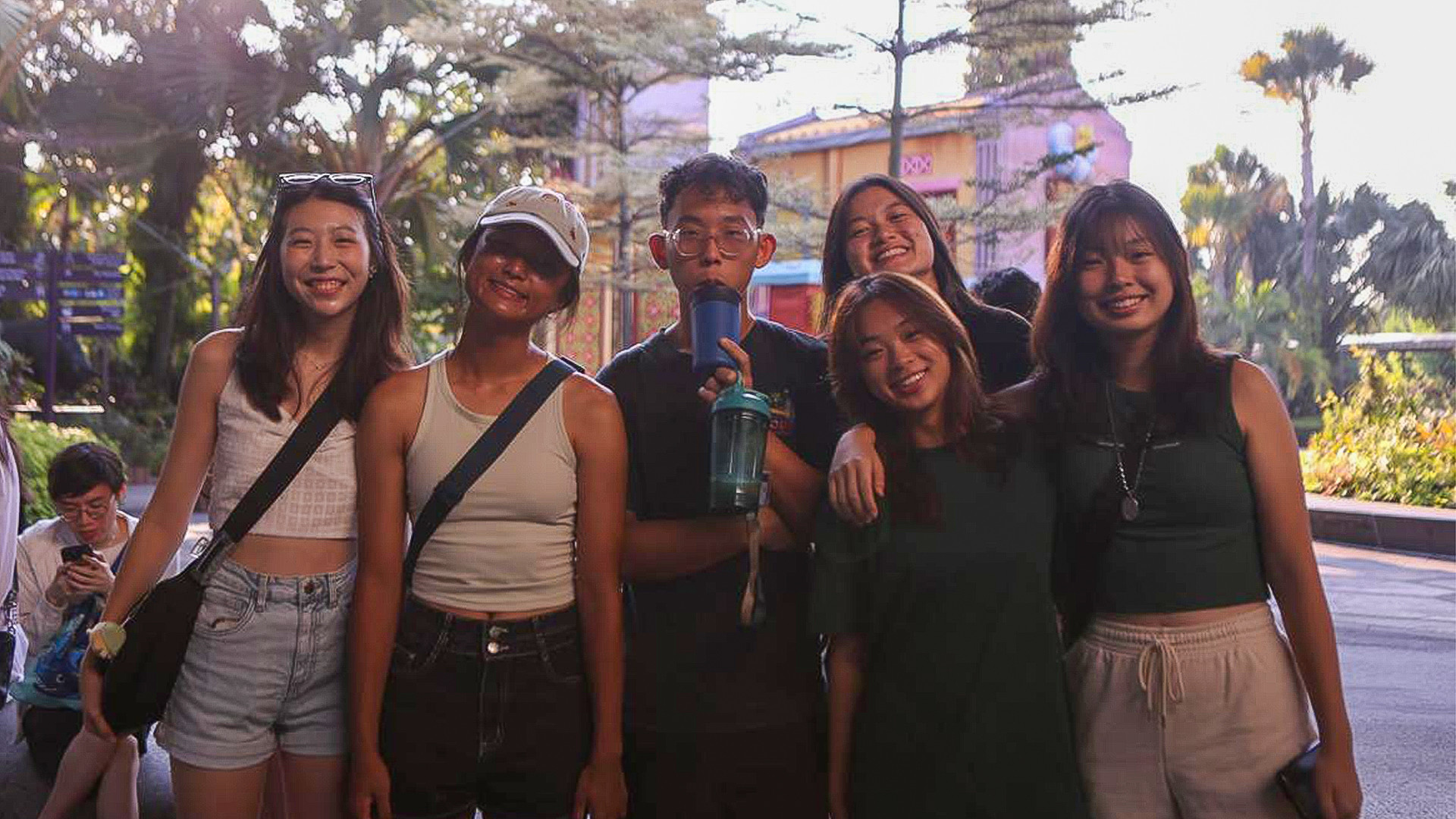
One of the recurring projects helmed by the team is a hall-wide recycling competition which aims to foster community engagement while cultivating a sense of environmental responsibility by making recycling accessible and rewarding within the students’ living spaces. The competition takes place every academic year, from the middle of Semester 1 to the middle of Semester 2. Each block in EH is assigned a designated recycling box where residents can deposit recyclables such as paper, plastics, and metals. At the end of the competition period, the Green Committee evaluates each block's recycling efforts based on criteria such as proper sorting of recyclables and cleanliness, before sending the recyclables to the recycling point. Winning blocks are awarded for their dedication to sustainability, inspiring continued eco-friendly habits throughout the hall.
To cultivate a stronger sense of community ownership over the green spaces in EH, the Committee initiated building a spice garden. Featuring a diverse range of plants including bougainvillea, chili, papaya, and lemongrass, the project aims to spark an interest in gardening among Eusoffians, encouraging them to care for the plants and environment around them. Those who cultivated edible plants, such as rosemary and basil, have also harvested them for cooking!
Vienna, a sustainability champion in EH, and the Head of the Green Committee said, “Together, through initiatives like the spice garden and recycling competition, we are sowing seeds for a greener future. Small actions lead to big change, and by working as a community, we can nurture sustainability one step at a time.”
Sheares Hall
Despite being one of the oldest halls at NUS, Sheares Hall’s (SH) commitment to taking meaningful actions for the environment has endured. The SH community is deeply passionate about environmental sustainability and has organised a diverse range of activities, encouraging Shearites to actively contribute to both the environment and the broader community. It also has a dedicated student committee, ConSheares, that leads such meaningful activities and encourages participation from across the hall.
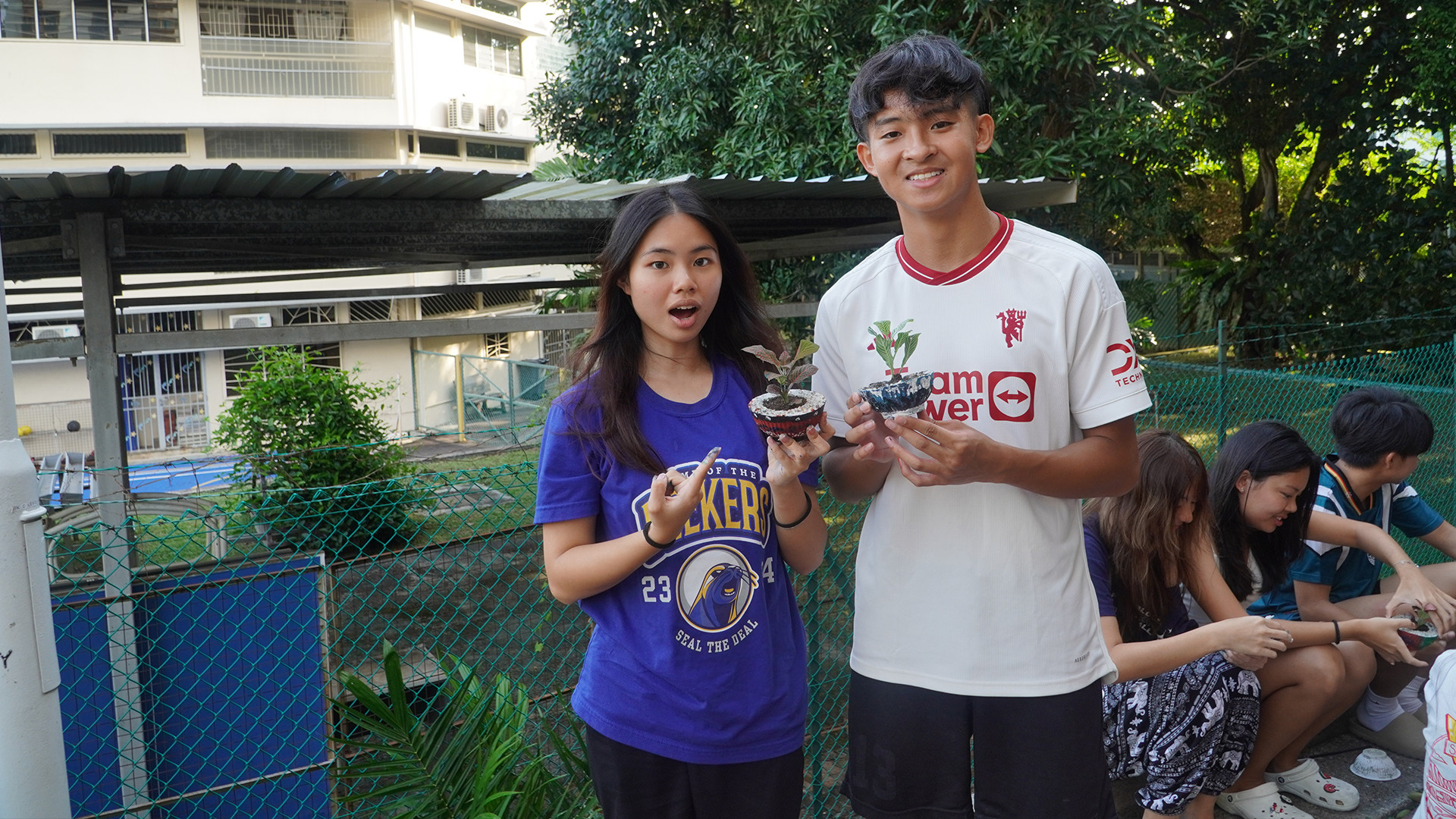
As part of the Sheares Newly Discovered Companion (SNDC) programme, in which freshmen select a senior from their block to guide them through their first year of hall life, Shearites have the opportunity to participate in the Adopt a Plant initiative at the Sheares Garden. Each SNDC pair gets to choose between cactuses or fittonias, and are taught how to care for the different types of plants. They are also involved in the entire gardening process, from casting and decorating the cement pots to planting saplings, with each student taking home a potted plant at the end. Beyond strengthening community bonds, this initiative allows Shearites to gain a deeper understanding of the vital role plants play in our ecosystem and how gardens contribute to urban sustainability.
Among those who forged new friendships while laying down roots at Sheares Hall were Gabriel Ponce Simundo (right of picture), a freshman at SOC, and Bernadette Tan (left of picture), a senior from the Faculty of Arts and Social Sciences. Gabriel shared that the experience helped him develop a love for nature and an appreciation of the tranquility of gardening.
In the spirit of giving back, ConSheares partnered with the Sheares Hall Voluntary Corps and Tasek Academy and Social Services to educate disadvantaged students from primary to early secondary school about environmental issues. The EnviroKids initiative allows Shearites to share their insights about environmental issues and the impact of everyday actions while raising the students' environmental awareness through engaging, hands-on activities. These include turning recycled materials into musical instruments and creating craft projects, making learning about sustainability both fun and interactive. While previous iterations of this programme were organised across two sessions, the committee is exploring the possibility of converting this into a recurring engagement with the students.
Prince George’s Park Residence
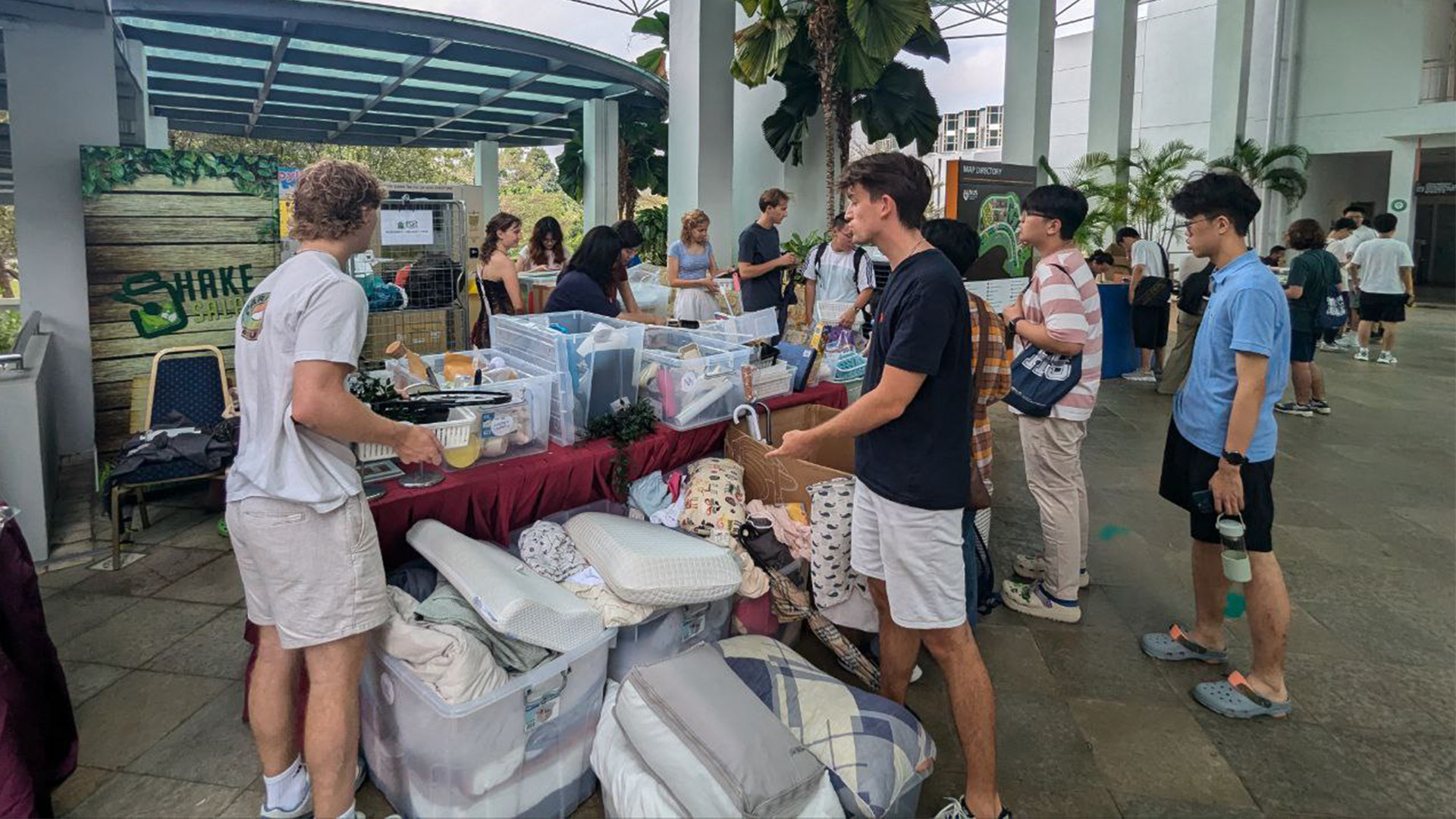
Housing students from over 68 different countries, Prince George’s Park Residences (PGPR) is a vibrant melting pot of cultures including local, international and exchange students. As a residence for many short-term students, a significant amount of perfectly usable items was often discarded as the residents moved out of PGPR, contributing to unnecessary waste. This led to a collaboration between PGPR and the UTown Residences’ Sustainability Committee, utilising their existing InfiniUse initiative to reduce waste by gathering unwanted items, sorting them, and redistributing them, primarily to incoming international and exchange students. InfiniUse has since grown into a campus-wide initiative, with the team behind it also collecting unclaimed parcels to be repurposed and preventing additional waste.
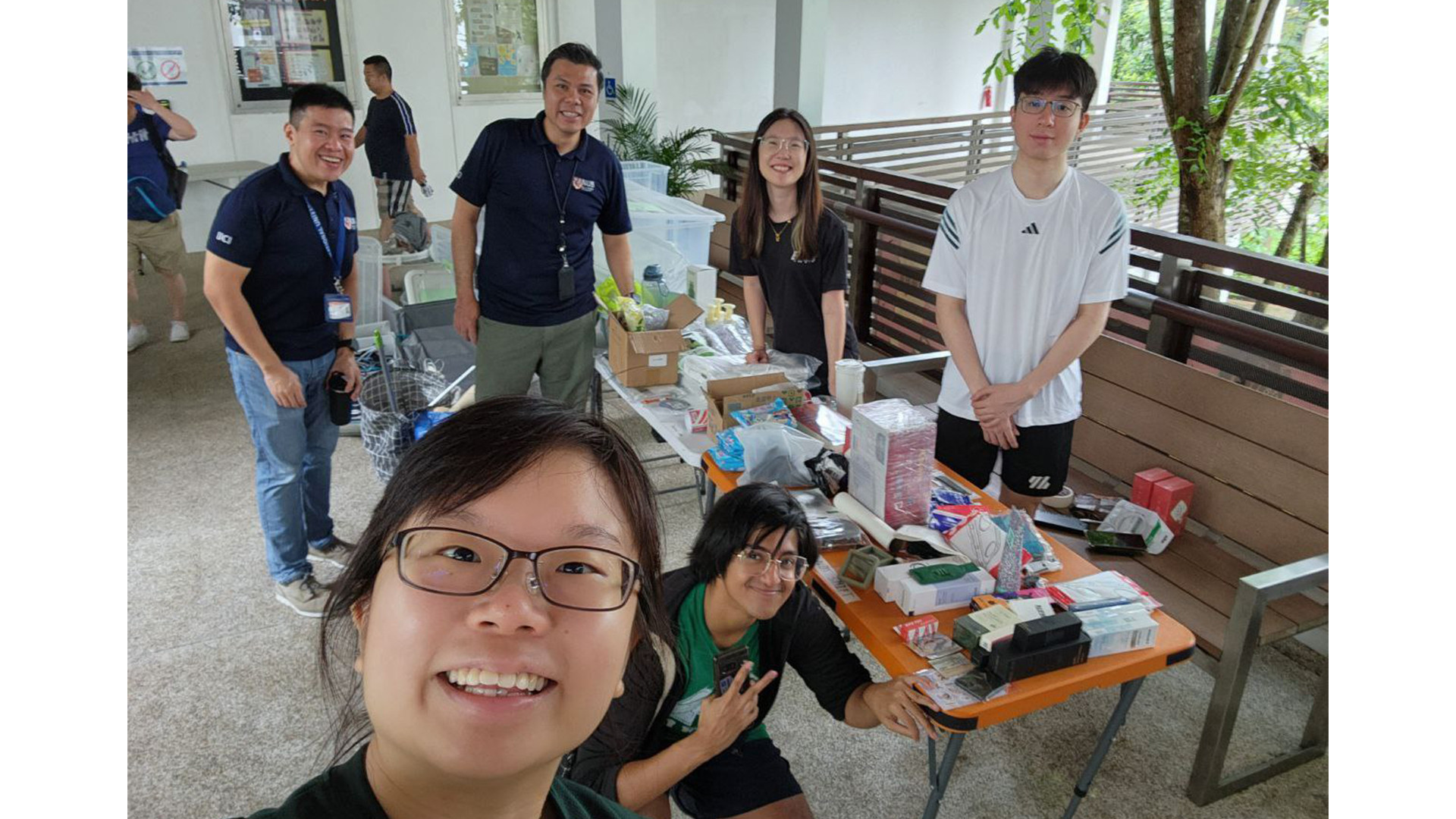
The initiative is currently managed by two Year 4 undergraduates, Shayer Ahmed from SOC and Regina Tan from the College of Design and Engineering, both of whom are project leaders for InfiniUse. They said, “We aim to ensure the sustainability of InfiniUse in the long run as it has benefited over 300 exchange students and helped to redistribute more than 20 boxes of second-hand items, enabling the NUS community to choose more sustainable living options.”
By giving pre-loved or unused items a second life, the InfiniUse team aims to shift students' consumption habits, promote a culture of reuse at NUS, and ease the move-in process for new residents.
This is the first in a two-part series featuring sustainability initiatives at the various hostels in NUS.
