Is AI changing the way we speak, think and connect with one another?
NUS Faculty of Arts and Social Sciences Dean Professor Lionel Wee highlights how AI could disadvantage speakers of different varieties of English and raises questions about its impact on human relationships and skills.
From Singlish to the rich diversity of languages and dialects spoken around the world, how we speak often reveals who we are and how we think.
But these linguistic differences may not always be fully understood by AI, which begs the question: Is technology adapting to the way we communicate — or the other way round?
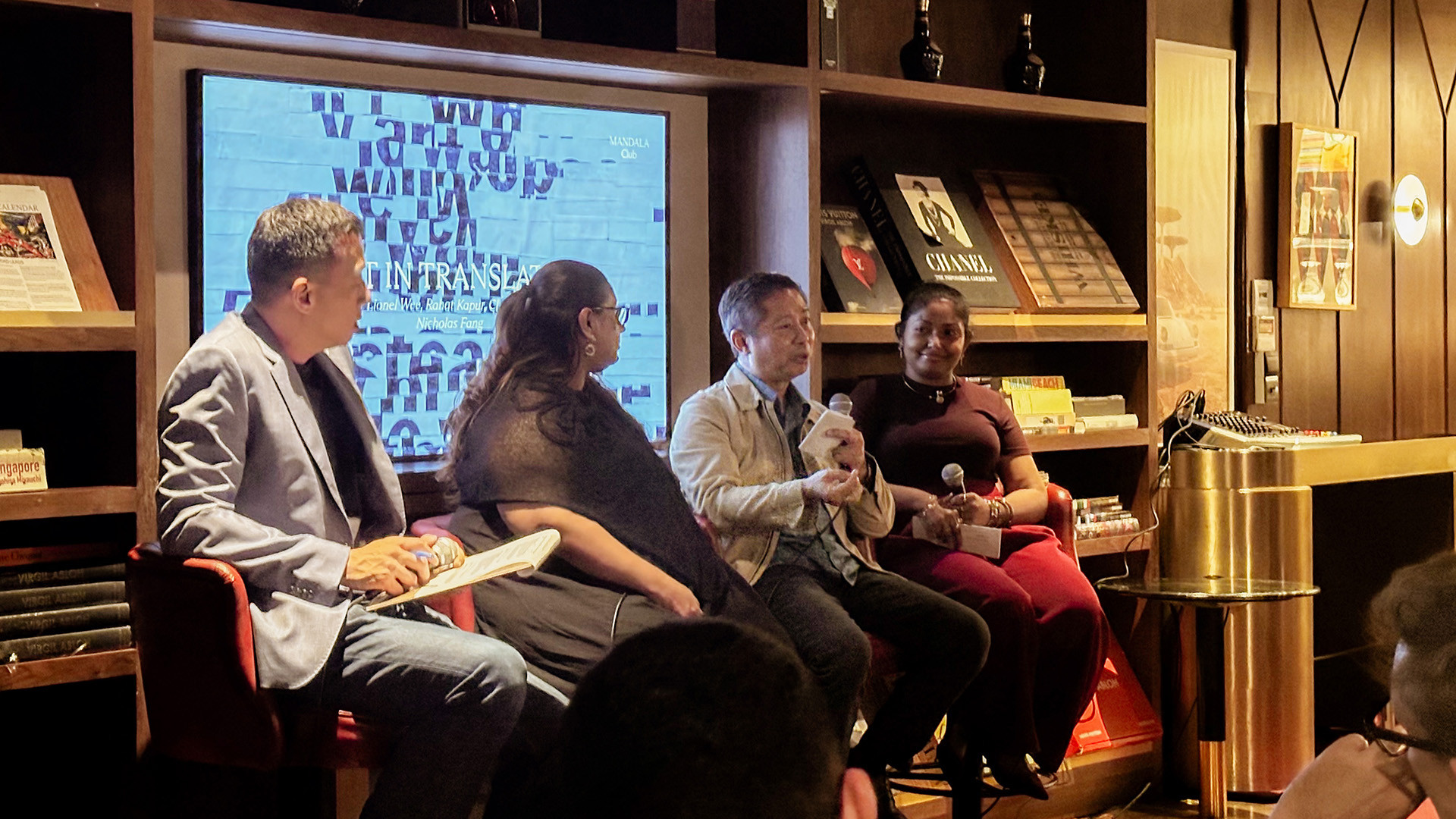
This question took centre stage at “Lost in Translation”, a panel discussion organised by The Mandala Club on 20 October 2026, featuring Professor Lionel Wee, Dean of the NUS Faculty of Arts and Social Sciences (FASS) and a linguist specialising in sociolinguistics and pragmatics.
He was joined by Ms Rahat Kapur, Co-founder and Editorial Director of Beyond The Boardroom, and public policy practitioner Ms Chathuni Uduwela, to explore how AI shapes the way people use language and interact with each other.
When AI favours one way of speaking
While much of the discussion centred on differences between Asian and Western communication styles, Prof Wee cautioned against treating them as distinct categories, highlighting a less obvious concern: that AI may inadvertently disadvantage people who speak different varieties of the same language.
Much of the data used to train AI language models is based on American English. As a result, users in India have reported instances where AI corrects commonly used expressions in Indian English, treating them as grammatical mistakes rather than legitimate variations of the language.
“Access on its own is not really meaningful if you don’t take into account the kinds of friction that people encounter,” Prof Wee said.
Can AI understand what we really mean?
Another challenge lies in AI’s ability to interpret the nuances of human communication. Understanding language is not just about recognising the literal meaning of words, but also interpreting what people mean when they do not say things directly.
Prof Wee illustrated this with everyday examples. When a waiter says, “Table number five wants their check”, everyone understands that it is the customer, not the table, asking for the bill. Likewise, when someone responds to a dinner invitation with “I've got to wash my hair”, most people recognise it as a polite refusal.
Such exchanges rely on shared understanding and social context. The question is whether AI can consistently interpret these subtleties, particularly as languages continue to evolve.
When chatbots become companions
The discussion also examined how AI could reshape relationships, particularly as more people turn to chatbots for companionship and emotional support.
Prof Wee shared anecdotes about how a colleague’s niece, following a difficult breakup, turned to a chatbot for comfort, while another student relied on a religious chatbot app for reassurance long after exams were over.
“Are we creating generations that are less resilient, less able to deal with setbacks and difficulties because all we get are cooing noises from some technology?” Prof Wee asked, raising concerns over how this could affect how people respond to disagreement and setbacks in real life.
What human skills should we preserve?
Finally, as AI takes on an expanding range of cognitive tasks, another pressing question arises: What human skills and abilities should we continue to cultivate?
Writing, for example, has reduced the need to memorise information, while calculators have made manual calculations less necessary.
Describing himself as an “AI agnostic”, Prof Wee stressed the importance of maintaining “a healthy dose of scepticism towards AI” – an acknowledgement that its technological potential should not come at the expense of humanity’s ability to think independently, cope with challenges and build meaningful human connections.