


NUS graduates command higher starting salaries and maintain strong employment rates amid global uncertainties
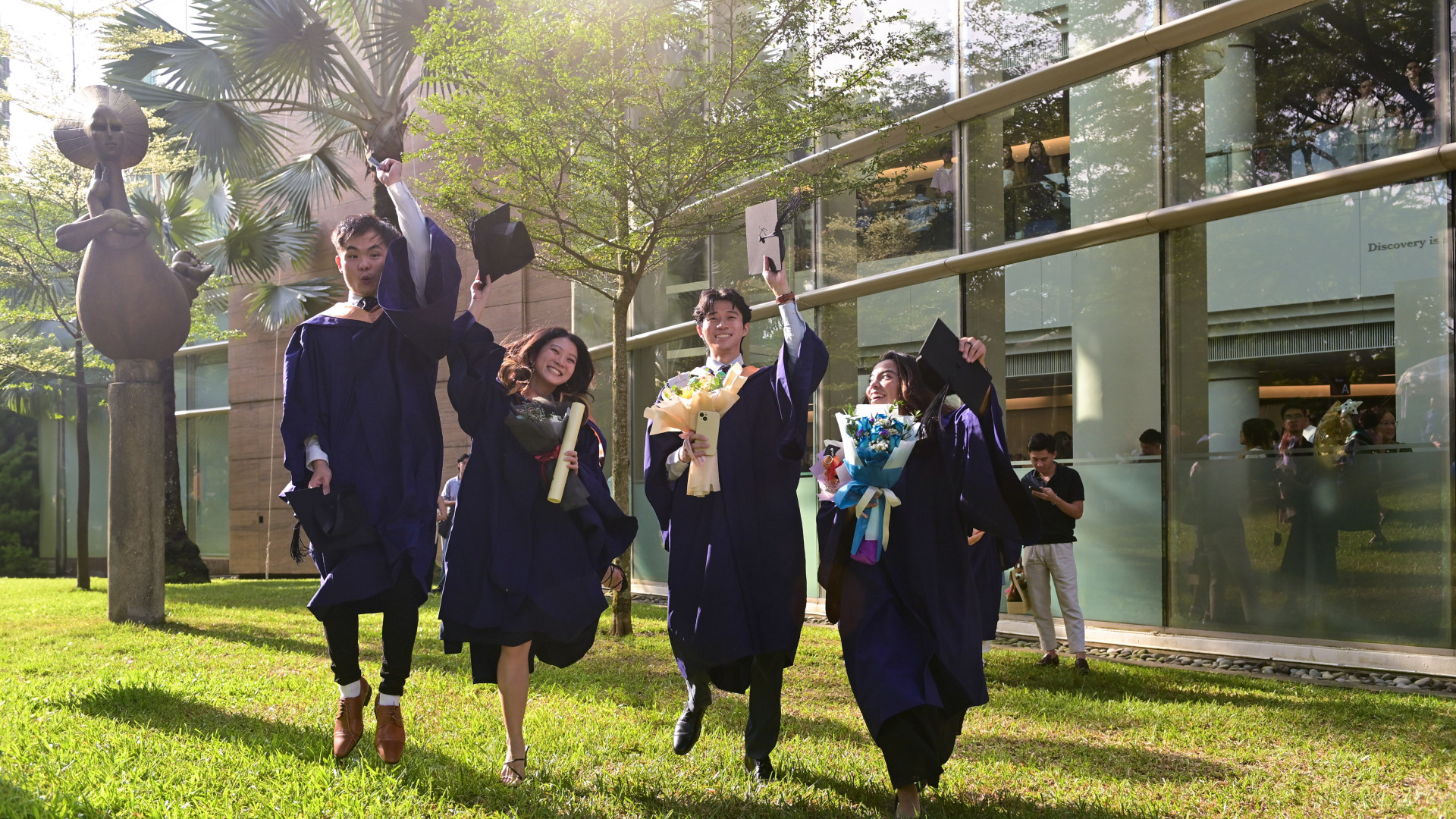
- Higher or similar starting salaries for graduates from 35 courses1 compared to the year before, up from 25 in 2023; 10 courses saw significant salary increases of 10 per cent or more
- Steady rise in median starting salaries for Arts and Social Sciences, and Science graduates over the past three years
- 100 per cent employment for graduates from Accountancy and Dentistry1; 96.9 per cent employment for Accountancy (Honours) and 95.7 per cent employment for Materials Science and Engineering graduates
- More than nine in 10 graduates across 17 degree programmes1 employed within six months
Graduates of the National University of Singapore (NUS) continue to earn higher starting salaries and achieve strong employment rates in 2024, according to the Joint Autonomous Universities Graduate Employment Survey (JAUGES) 2024, jointly conducted by NUS and other Autonomous Universities.
Professor Aaron Thean, NUS Deputy President (Academic Affairs) and Provost, said, “We are heartened that NUS graduates continue to enjoy strong employment outcomes and command competitive salaries, despite the challenging global economy. These encouraging results demonstrate how their NUS journey prepares them to excel and make meaningful contributions across diverse industries.”
“As artificial intelligence and big data reshape the modern workplace, today's job market demands unprecedented adaptability. NUS equips our students with resilience, creativity, and practical skills to embrace new opportunities in the technology-driven future. We encourage our graduates to continuously seek self-development and stay adaptable as they advance in their professional careers," Prof Thean added.
Close to nine in 10 NUS fresh graduates in the labour force employed within six months after final exams
Among NUS fresh graduates in the labour force, 88.1 per cent were employed within six months of completing their final exams, a slight dip from 90.5 per cent in the 2023 survey. 80.9 per cent of NUS fresh graduates had secured full-time permanent employment2 during the survey period. Another 4.1 per cent of NUS fresh graduates in the labour force have either accepted a job offer and are pending commencement of duty, or are actively starting a business venture.
More than nine in 10 fresh NUS graduates across 17 degree programmes3 found employment within six months of completing their final exams. The list of these courses can be found in Annex A. Some undergraduate programmes delivered stronger employment outcomes, including Accountancy and Dentistry which achieved 100 per cent employment, as well as Accountancy (Honours) and Materials Science and Engineering which achieved 96.9 per cent and 95.7 per cent employment, respectively.
Over 96 per cent of follow-up graduates from Architecture3 were employed within six months of completing their final exams.
NUS graduates in full-time permanent employment earned higher starting salaries
The survey also revealed that the mean gross monthly salary of NUS fresh graduates in full-time permanent employment was S$5,101 in 2024, an increase from S$4,875 in 2023.
The median gross monthly salary of fresh graduates from NUS in full-time permanent employment also increased to S$4,600 in 2024, an increase from S$4,400 in 2023.
Graduates from 35 courses3 in Arts and Social Sciences, Business, Computing, Dentistry3, Design and Engineering, Law3, Nursing, and Science3 have either secured higher or maintained similar starting salaries compared to graduates the year before. Please refer to Annex B for the list of courses in which graduates have achieved higher or similarly high starting salaries compared to 2023.
In particular, median starting salaries for graduates from Arts and Social Sciences, and Science have risen continuously over the past three years.
5,269 out of a total of 7,382 fresh NUS graduates from the Class of 2024, and 427 out of 806 follow-up4 NUS graduates, participated in the joint survey.
Stepping out with courage and confidence
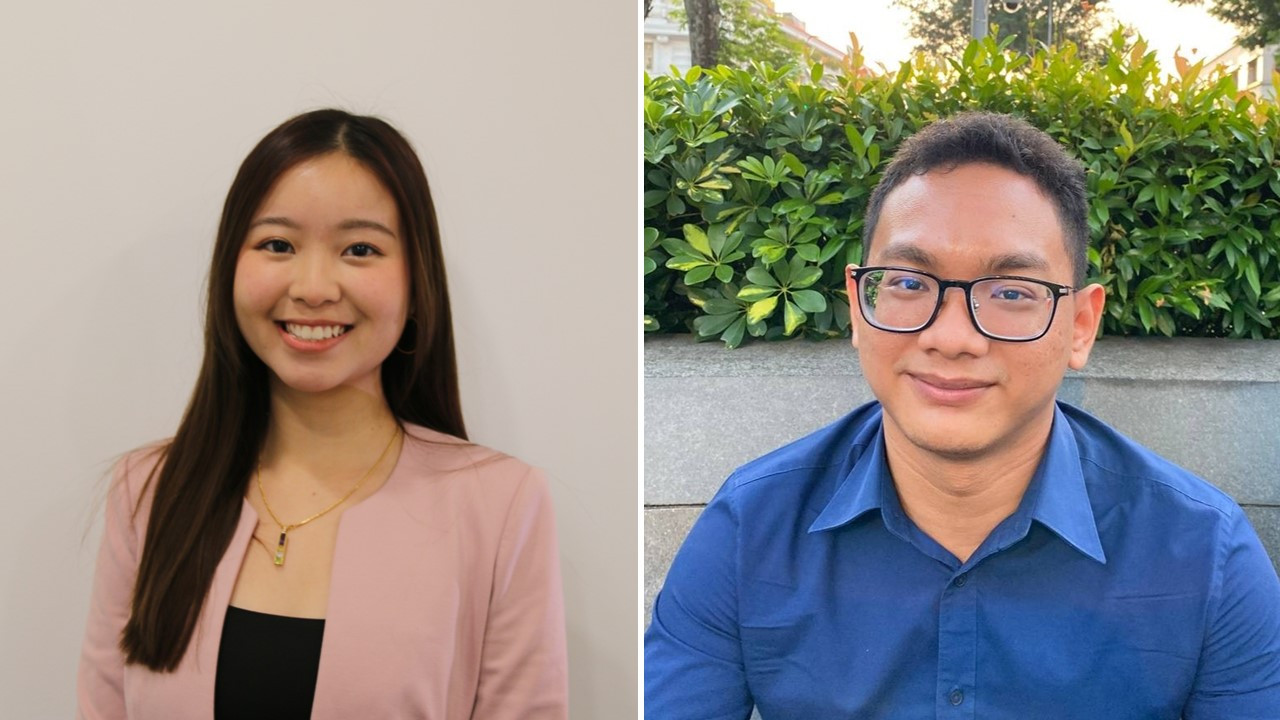
Growing up with a keen interest in entrepreneurship, NUS Business School graduate Ms Woo Ling Ling is now an investment analyst at Blauwpark Partners, where she is responsible for private markets fund investments spanning private equity, venture capital and illiquid alternatives globally.
During her undergraduate years, Ling Ling took on various overseas experiences, including internships under the NUS Overseas Colleges (NOC) programme, time in Canada as an exchange student, and the opportunity to spend a week at Harvard Business School. She also built strong networks and leadership skills through her active participation in co-curricular activities, notably as President of the NUS Entrepreneurship Society (NES) where she led a partnership between NES and Princeton’s Entrepreneurship Club which culminated in a startup competition.
Highlighting how her journey in NUS Business school nurtured her personal and professional development, Ling Ling shared, “The insights and resources at NUS Business School have helped me in preparing for my career. The school also stays ahead of market trends with the compulsory coding and software courses. My overseas experiences also provided me the opportunity to learn from different schools in different environments and meet people from other countries. The presentation and communication skills I’ve picked up are transferrable in the workplace, as I’m required to speak up and voice my opinion confidently in my current role.”
Ling Ling also tapped on the NUS TalentConnect for her job search and sought support from the BizCareers office for resume writing, interview preparation, and career advice, which gave her the confidence and tools to navigate the competitive job market.
Mr Muhammad Rossyaban Bin Rosman graduated with a Bachelor of Engineering (Chemical Engineering) with Honours (Distinction) and a minor in Innovation and Design from the College of Design and Engineering at NUS. In his current position as Process Engineer at Micron Semiconductor Asia Pte Ltd, Rossyaban manages and optimises the photolithography process to enhance efficiency and yield.
Rossyaban demonstrated his passion for engineering and sustainability, nurtured since his time as a Chemical and Biomolecular Engineering student in polytechnic, through hands-on projects and internships. As part of his minor under the Innovation and Design Programme (IDP), Rossyaban and a multidisciplinary team explored the valorisation of food waste into lactic acid to achieve the project’s aim of promoting a more sustainable, circular economy. In 2023, he further developed his expertise during a Circularity and Sustainability Internship at a leading clean energy solutions provider, where he helped design an economically viable and sustainable bioreactor. This experience deepened his commitment to creating innovative solutions in sustainable engineering.
He also actively applied his expertise to serve communities, for example through NUS Engineers without Borders, where he and his team helped to build a bridge in Vietnam to allow villagers to access the city centre during the flooding season.
Rossyaban credits NUS for the valuable opportunities and critical support to prepare him for career success and growth, as well as the guidance from NUS Centre for Future-ready Graduates (CFG).
“My first job interview did not go well. On the same day, CFG was having an open-door session where any undergraduate could visit them for career advice. At the session, I discovered various tools provided by NUS that I wasn’t aware of, such as resume templates and guidelines, and VMock. Armed with encouragement from CFG staff and these useful tools, I was more confident during my next round of applications and interviews and managed to land a good job shortly after!”
---
1 Includes course(s) with sample size smaller than 30 or a response rate less than 70%.
2 Full-time permanent employment refers to the number of graduates working on a full-time permanent basis, as a proportion of graduates in the labour force (i.e. those who were working, or not working but actively looking and available for a job).
3 Includes course(s) with sample size smaller than 30 or a response rate less than 70%.
4 Follow-up graduates refer to graduates from the Architecture Class of 2021 and Class of 2023 graduates from Law, Medicine, and Pharmacy. These graduates were surveyed three years after graduation (for Architecture graduates) or one year after graduation (for Law, Medicine and Pharmacy graduates) to allow those who choose to continue with their practical law course, pupillage or housemanship/ first-year residency/ pre-registration training to complete their practical training.
