


Singapore cannot be passive in a volatile world, says Minister K Shanmugam at NUS dialogue
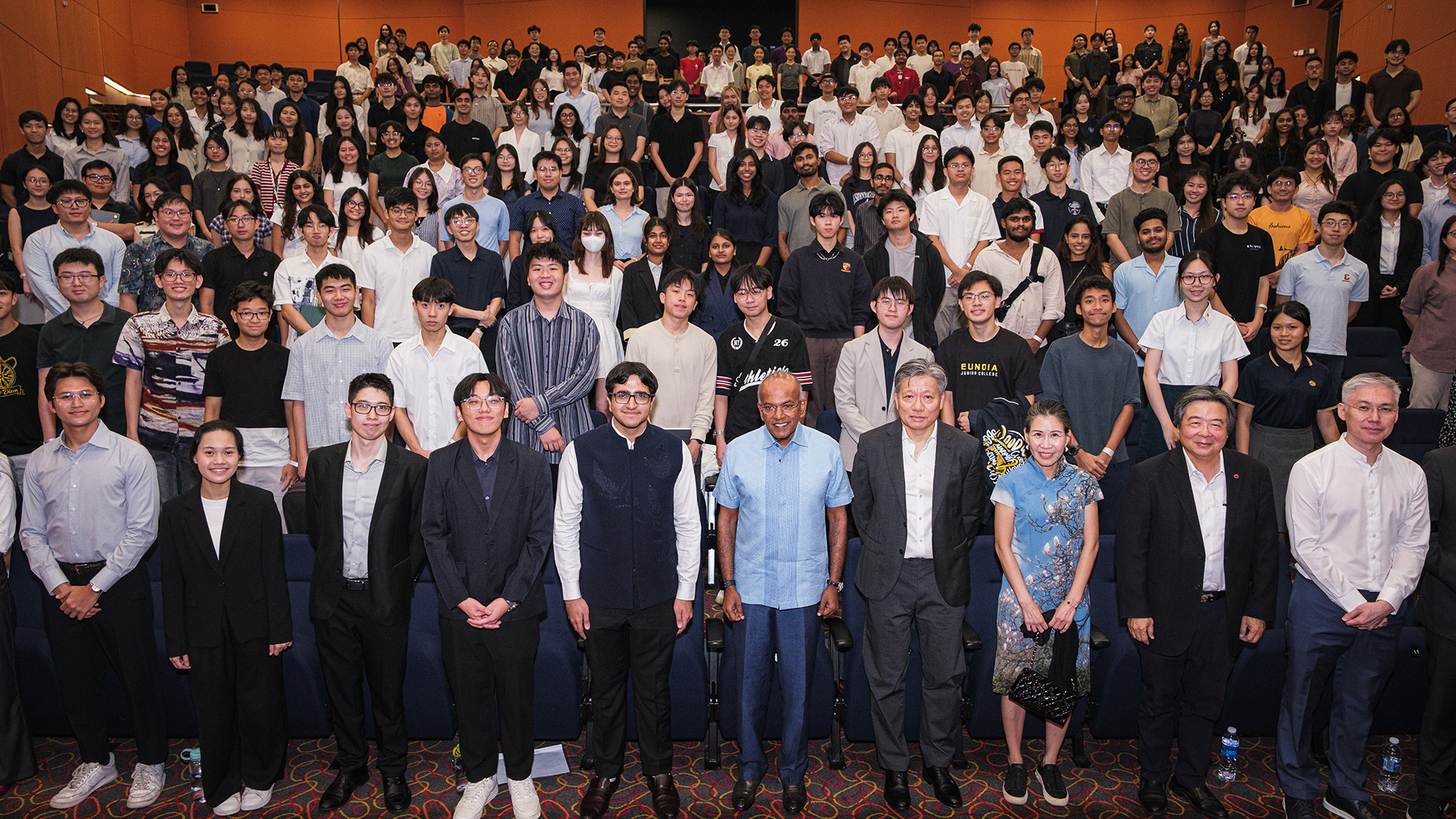
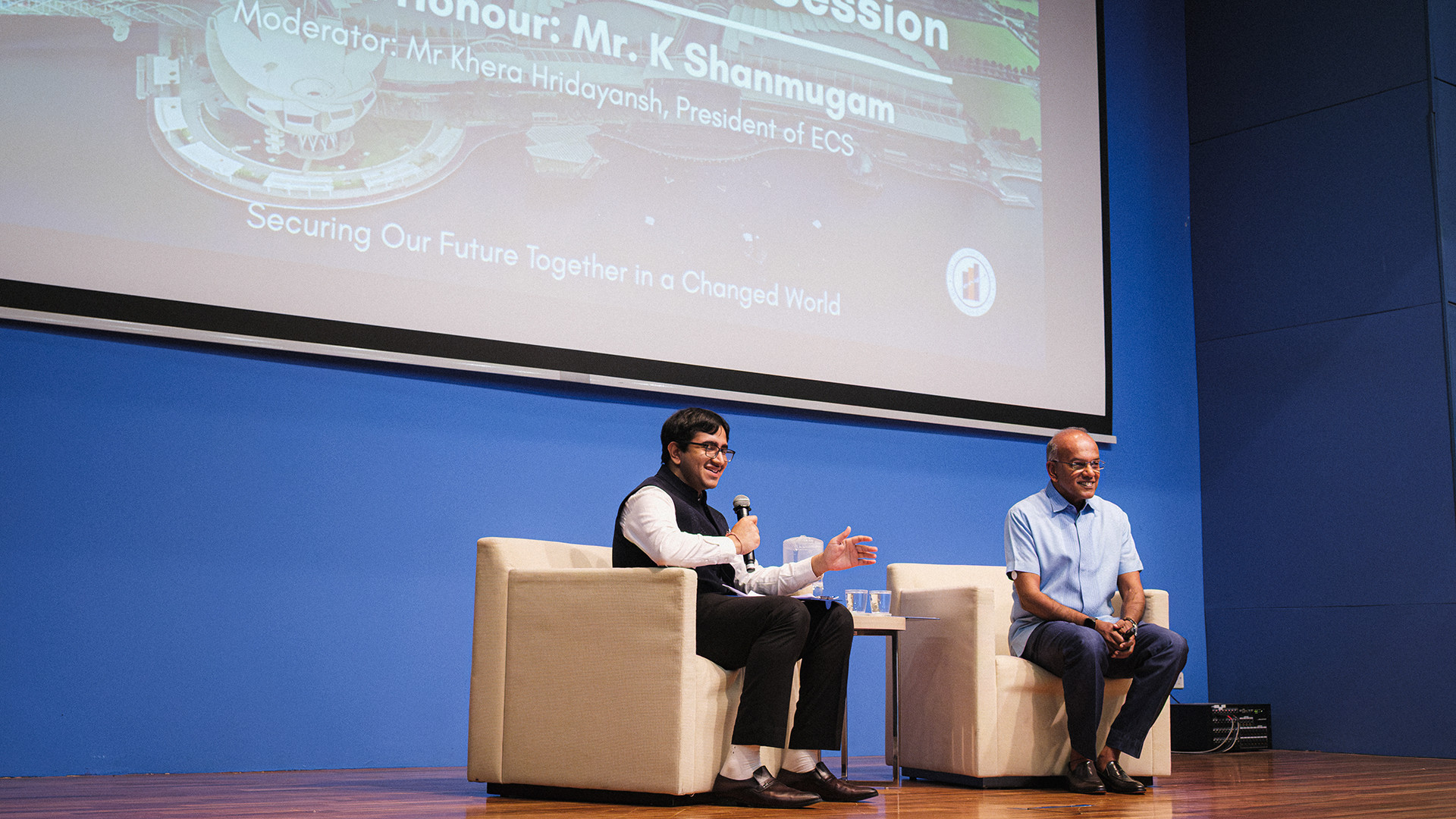
Singapore’s openness to trade, talent and ideas is essential to its national security, said Minister for Home Affairs, Mr K Shanmugam, at a recent dialogue with about 300 students organised by the NUS Economics Society (ECS).
“Our external economy is three times our internal Gross Domestic Product (GDP). Whatever happens outside has a multiplier effect on us,” he said, describing Singapore as a “small sampan” in a big ocean, using the Malay word for a wooden boat to highlight how international events, such as the recent US tariffs, Ukraine war and Iran war, can have a tremendous impact on us.
Singapore has actively pursued free trade agreements with countries and regional groupings around the world which have created openings for investment and trade, helping Singapore remain a competitive global hub.
Mr Shanmugam, who is also Coordinating Minister for National Security, was speaking at this year’s Singapore Post-Budget Dialogue, an annual event organised by ECS.
He said that one critical task in the Budget, among many, is to make sure it protects and advances Singapore’s economic and physical security — both internally and externally. On the economic security front, it is to ensure that good jobs are created for Singaporeans. He added that a strong rule of law, political stability and the ability to protect investments help set Singapore apart and underpin employment opportunities for Singaporeans.
The $154.7 billion national Budget unveiled last month saw an increase in state security spending by 11 per cent to $37.3 billion, or about 3 per cent of GDP, with Prime Minister Lawrence Wong expecting it to rise in the years ahead. Other highlights of the Budget included spending on artificial intelligence (AI) initiatives and cost-of-living measures.
Besides external risks, Singapore also faces internal demographic and workforce challenges. It is estimated that in 2030, there will be only two working adults supporting a person above 65 years old. In the year 2000, the figure was 8.4. With surging healthcare costs to support an ageing population, the working population will face a greater tax burden.
Mr Shanmugam also addressed the role of foreign manpower in Singapore’s economy. While Singaporeans have broadly accepted the need for a foreign workforce, he said the Government must continually explain how openness to global talent and capital ultimately benefits Singaporeans.
“You’ve got to be open to talent, you’ve got to be open to capital. You’ve got to be externally focused. We have no other choice,” he said, adding that the priority of ensuring that economic growth translates into good jobs and opportunities for Singaporeans remains.
“I’m just giving you a snapshot of the type of issues that don’t get discussed much, but are real for us, which keeps us awake during the day and night,” said Mr Shanmugam.
The evening at the Shaw Foundation Alumni House was rounded off with an open-floor discussion, where students asked questions about the Budget, on issues like AI, support measures and the total fertility rate.
Beverley Yeo, a third-year NUS College of Design and Engineering student who attended the Dialogue, called it an “insightful experience”. “I found his reflections on Singapore’s policy trade-offs and long-term planning particularly meaningful, as they highlighted the importance of balancing economic growth, social cohesion, and governance in a complex global environment,” she shared.
Hadrian Barki, a Cornell University exchange student currently reading Political Science at the Faculty of Arts and Social Sciences (FASS) also welcomed the candid exchange. “I think it’s really good that there are still politicians in the world that are that transparent about [geopolitical] issues and have a long-term vision on how to address some of those issues. That is quite rare in the world these days.”
Hridayansh Khera, an FASS Economics major and President of ECS, said the Society was thrilled to have Mr Shanmugam at this year’s dialogue. “Few leaders have witnessed and shaped Singapore’s growth as closely as Minister Shanmugam, one of the country’s longest-serving ministers…and he brings the perspective to do just that,” he said.
Perhaps Mr Shanmugam’s opening question on what Singapore would do in dire straits, literal and metaphorical, was best answered by FASS Economics major and ECS Vice-President Lin Weiyang, in his welcome speech.
“We gather at a time when the global order is becoming increasingly fragmented and unpredictable. For a small city-state like Singapore, we cannot control the headwinds but we can control how we sail,” he said.
Not bad at all for a small sampan.
