


Sustainability in action: Deep diving into environmental issues and building the greenest campus in Singapore

In conjunction with Clean & Green Singapore (CGS) Day 2024 held on 3 November 2024 at NUS University Town (UTown), NUS’ University Campus Infrastructure (UCI) organised the inaugural Iceberg Series comprising two panel discussions to engage the NUS community on conversations relating to environmental sustainability.
In a spirit akin to uncovering an iceberg’s submerged mass, the Iceberg Series brought together researchers, experts and policymakers to dive deep into how plastic recyclables at the end of their life cycle can be responsibly managed while maximising their environmental sustainability as part of climate action; and how campus greening on Kent Ridge campus has contributed to the global fight against climate change.
Closing the plastic loop on responsible waste management
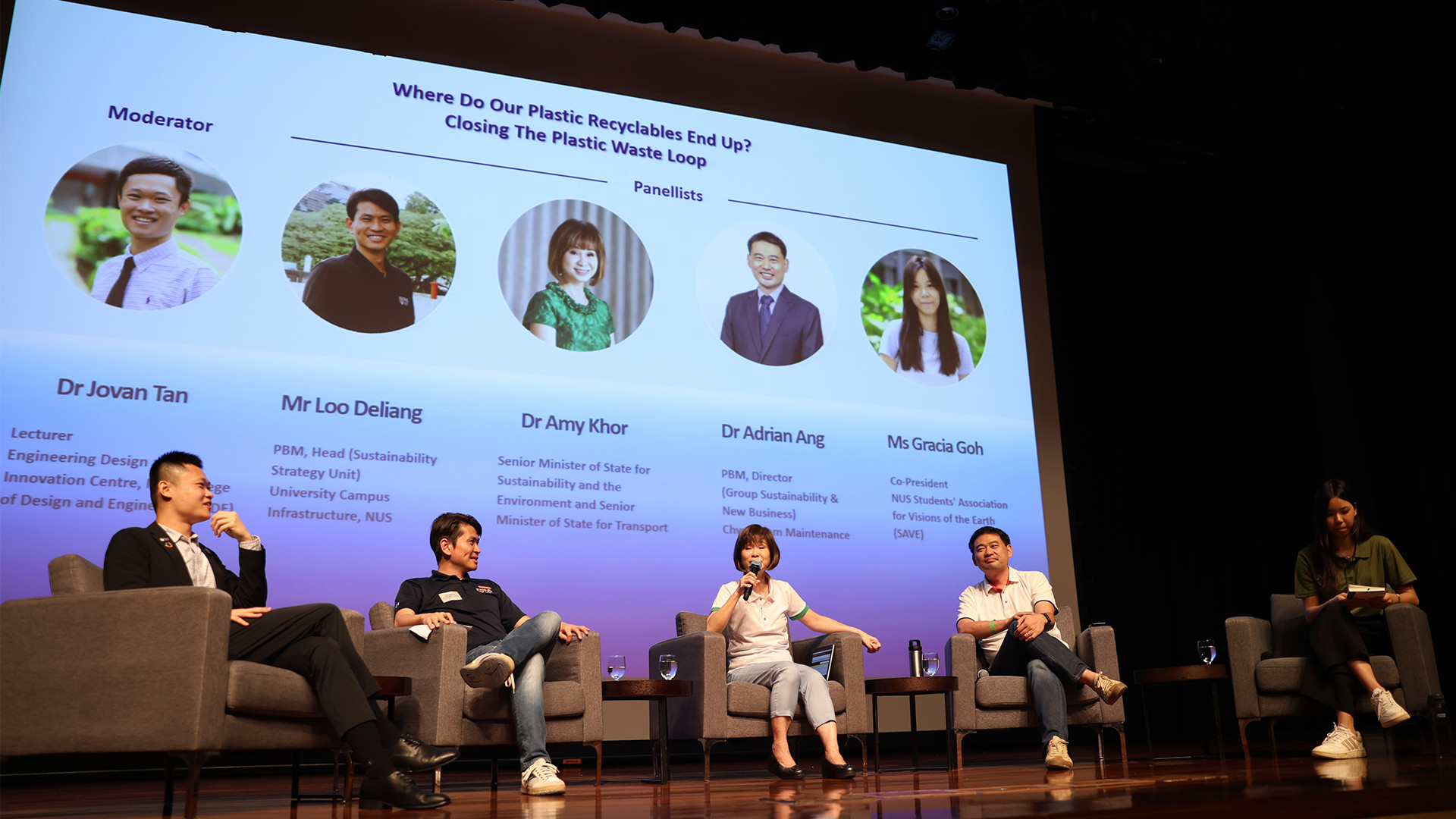
Speaking on the panel “Where do our plastic recyclables end up? Closing the plastic waste loop”, Senior Minister of State for Sustainability and the Environment Dr Amy Khor shared about Singapore’s strategy for tackling plastic waste through the nation’s Zero Waste Masterplan. These included regulatory measures such as the Beverage Container Return Scheme, which is designed to increase the recycling of beverage containers and reduce waste disposed at incineration plants. She emphasised, however, that government regulation is not the only solution to improving recycling and must instead be supported with public education and industry innovation.
The panel featured other speakers including Dr Jovan Tan, Lecturer at the NUS College of Design and Engineering (CDE); Mr Loo Deliang, Head (Sustainability Strategy Unit) at UCI; Dr Adrian Ang, Director (Group Sustainability & New Business) at Chye Thiam Maintenance; and Gracia Goh, Co-President of NUS Students’ Association for Visions of the Earth (SAVE).
Recognising the importance of traceability in waste management, the NUS Zero Waste Taskforce facilitated a student-driven initiative to place trackers in NUS’ plastic containers to track their journey. It was discovered that recyclables were sent to Malaysia and likely processed in facilities with inadequate pollution controls.
Highlighting the negative impact of inadequate end-of-life management of recyclables, Mr Loo pointed out that its implications extend beyond geographical boundaries, making it essential to tackle the issue from the root. He shared that NUS is exploring options to reduce packaging materials upstream and is sending clean PET-1 (polyethylene terephthalate) plastic bottles, which are commonly used in the production of beverage containers, to an established processing facility in Johor, Malaysia, to be turned into recycled PET resins, closing the plastic waste loop.
To encourage youths to take action, Gracia who is a Year 4 undergraduate from the Faculty of Arts and Social Sciences, suggested that youths can contribute by sparking conversations to rally actions or share their views to inform the regulatory environment.
Adopting an evidence-based approach to campus greening
During the panel on “Campus as a real-world living laboratory to tackle climate change”, NUS Vice-President of Campus Infrastructure Mr Koh Yan Leng, who also heads UCI, highlighted that the University is one of the first in Singapore to intensify campus greening efforts to build climate-resilience.
Taking an evidence-based approach, 49 weather stations and microclimate sensors have been installed across the Kent Ridge campus since March 2024 – the densest network in a local campus, to track how the University’s greening strategies have impacted the microclimate over time.
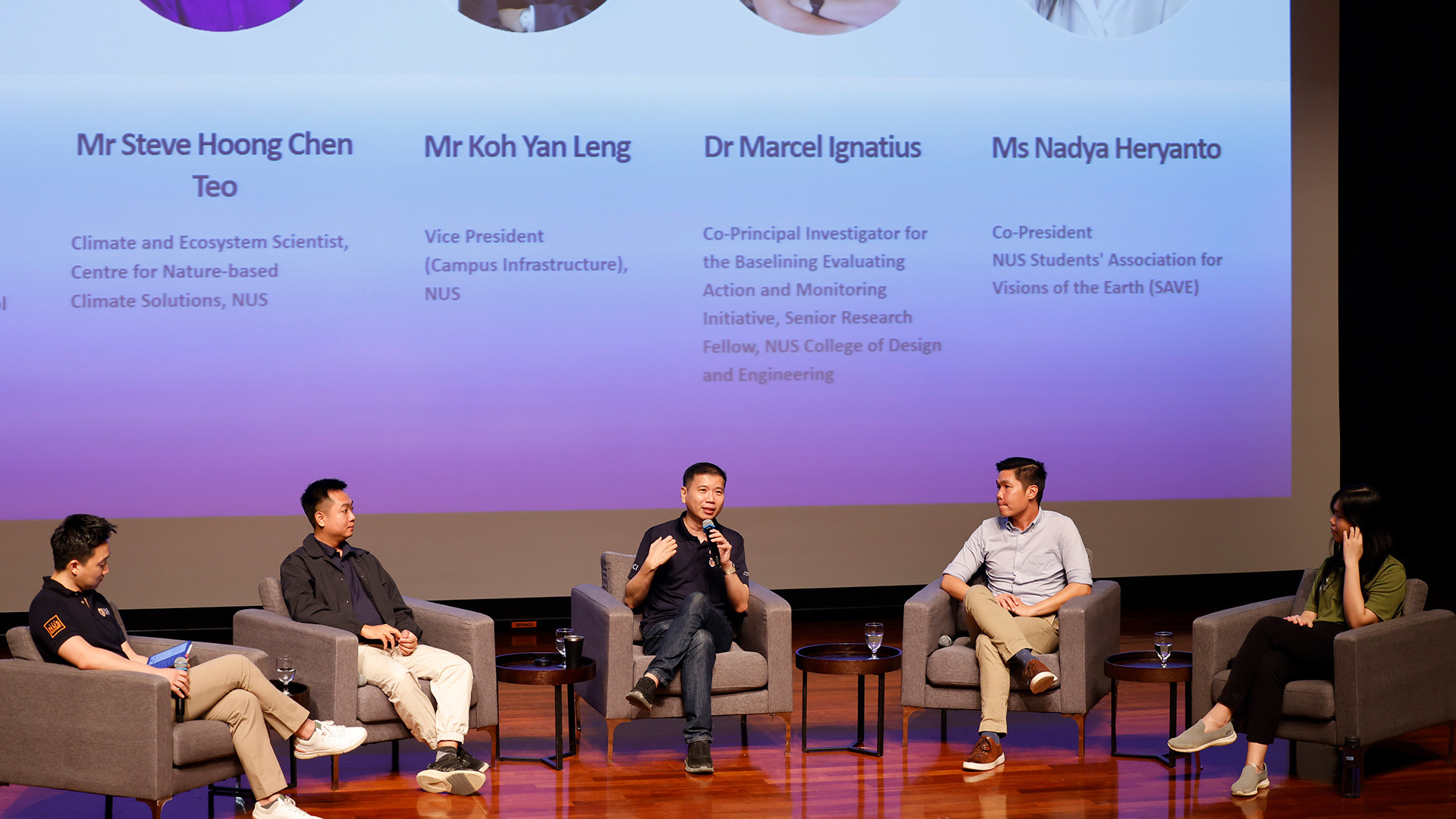
Mr Koh was joined by other speakers including Mr Steve Teo, Climate and Ecosystem Scientist at the NUS Centre for Nature-based Climate Solutions; Dr Marcel Ignatius, Senior Research Fellow at CDE; and Nadya Heryanto, Co-President of NUS SAVE. The panel discussion was moderated by Dr Sean Shin, Senior Lecturer of Accounting at NUS Business School.
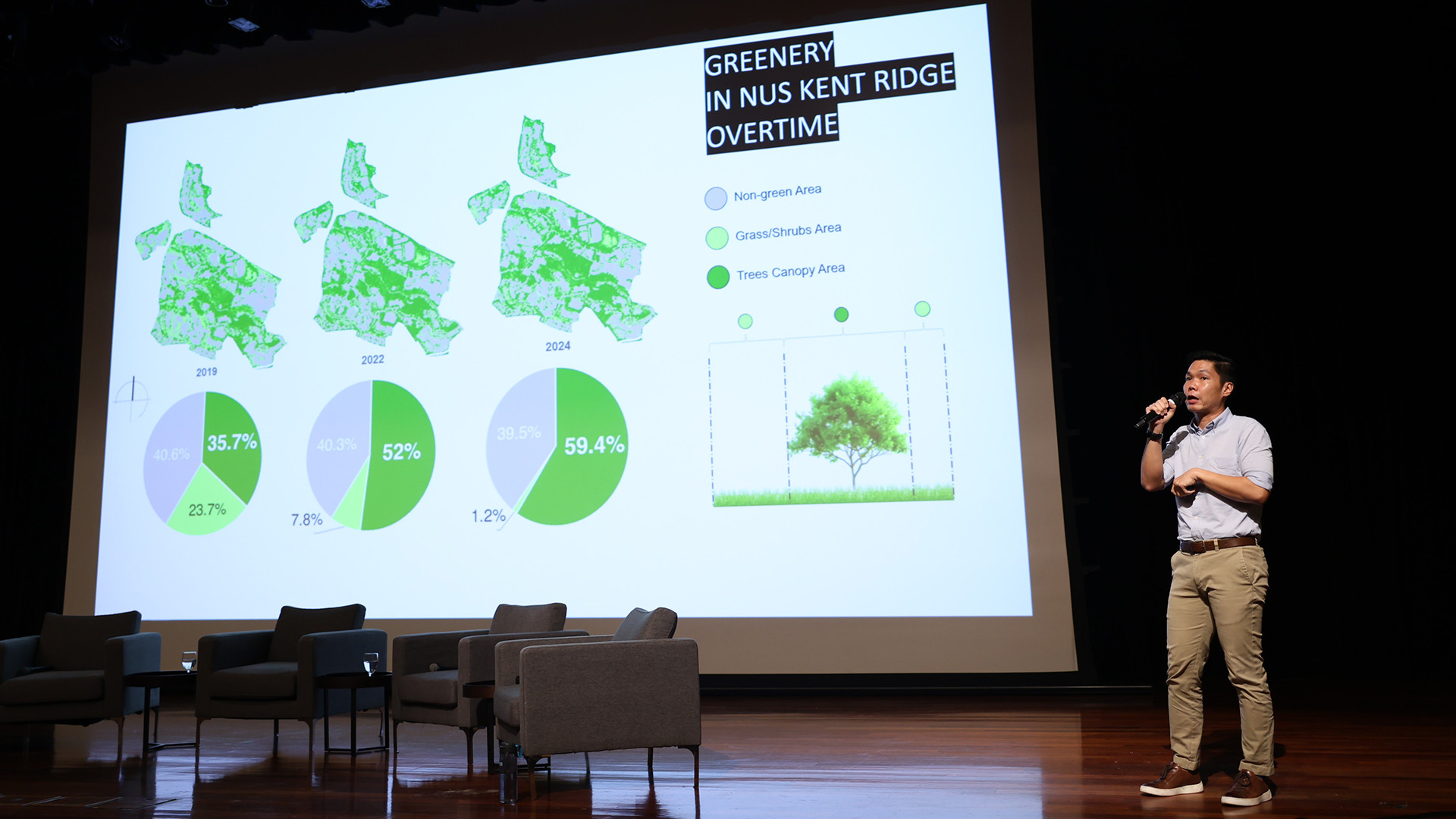
Dr Ignatius, the co-principal investigator of the CoolNUS-BEAM initiative, shared that tree planting efforts on campus have resulted in a significant increase in tree canopy coverage from 36 per cent in 2019 to 60 per cent in 2024. As temperatures continue to rise with climate change, having more than half the campus grounds covered in trees will help cool the environment through shade and evapotranspiration. Mr Teo noted the positive impact of strategic urban reforestation on campus for health and well-being, yielding restorative effects that can help alleviate stress and encourage community interactions.
Nadya, a Year 3 undergraduate from NUS Business School, reflected on how tree-planting ignited in her, a deeper appreciation of nature and taking a stake in protecting the environment. “Once you realise how hard it is to plant a tree, you will think harder about the implications of ‘killing’ one (tree).”
Milestone planting of the 50,000th tree on campus
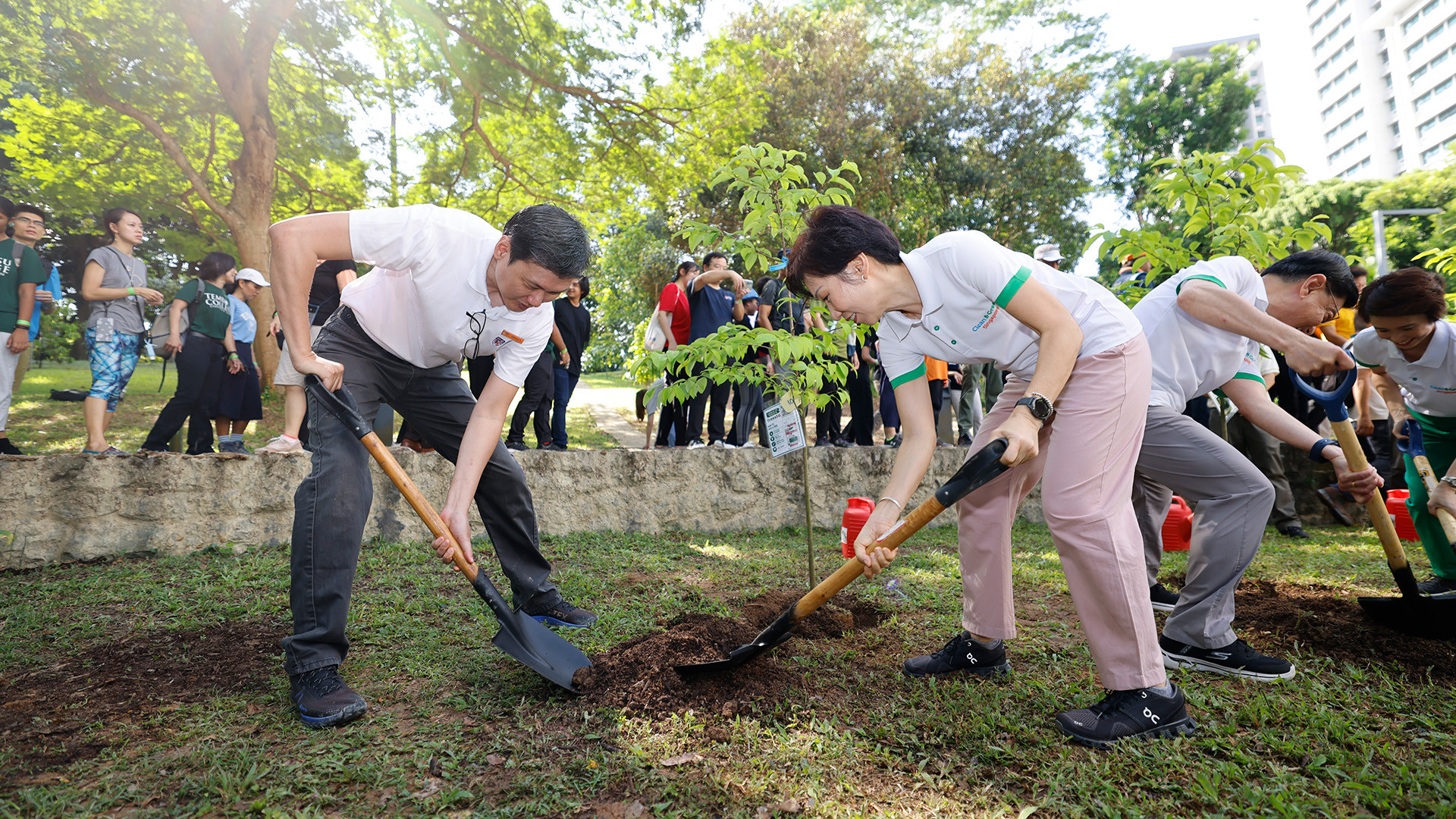
CGS Day 2024 also saw the planting of the 50,000th tree on campus. This marked the halfway point of the University’s pledge to plant 100,000 trees by 2030, in support of the National Parks Board’s OneMillionTrees movement. More than 100 NUS staff and students joined hands to plant a total of 50 trees at the event.
Since 2015, the University has been organising annual tree planting activities to augment its commitment to build a Campus in a Tropical Rainforest – one of the goals outlined in NUS’ Campus Sustainability Roadmap 2030.
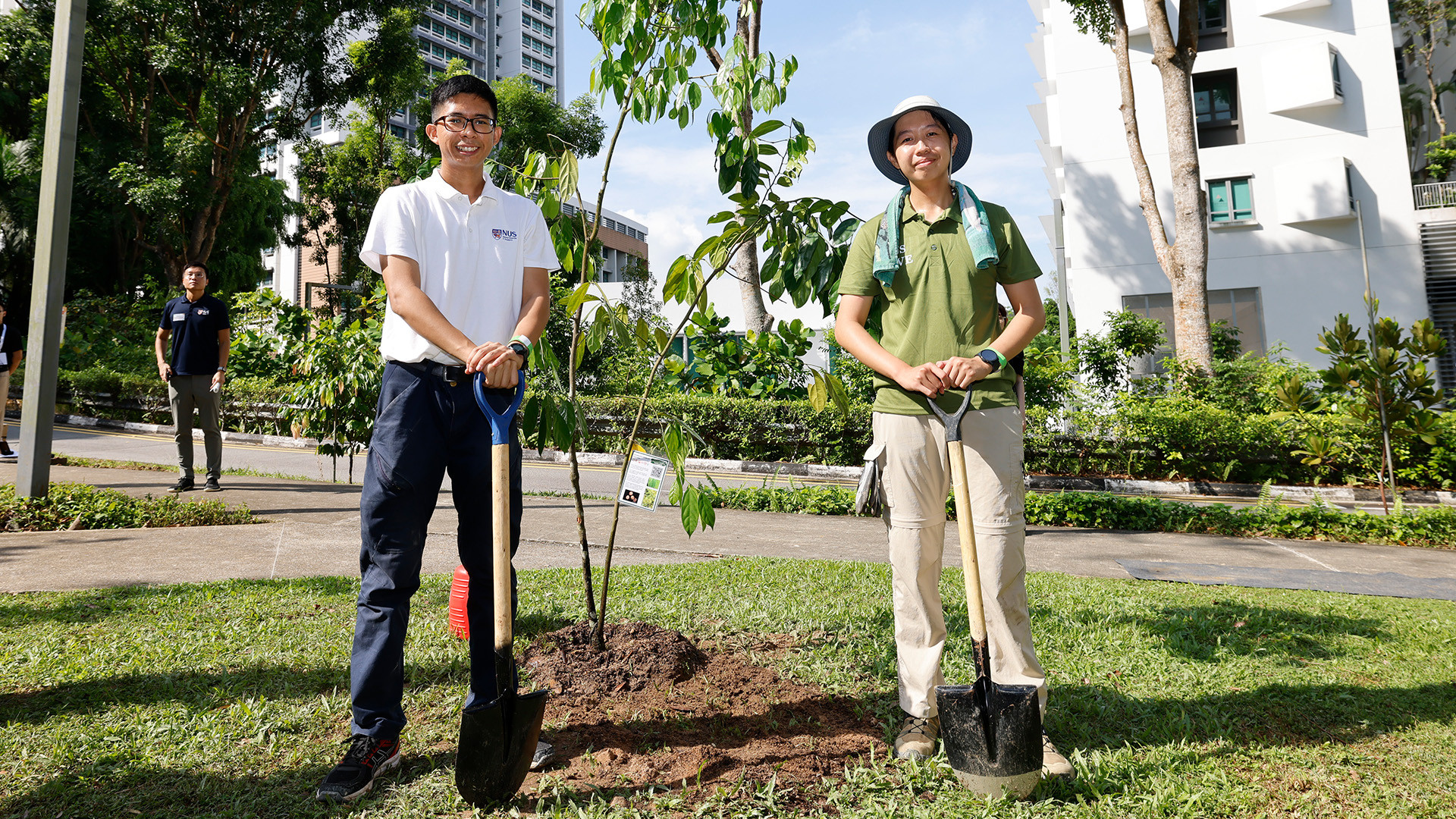
Year 3 Life Science undergraduate Ahmad Musa was one of the students who participated in this meaningful cause. The avid tree planter said, “I do enjoy tree planting because it helps to restore our native forest and bring back the rich biodiversity that was lost many years ago. It is an investment for current and future generations to enjoy. Ultimately, I hope that through greening (the) campus, we can play a small yet important role in addressing and mitigating the effects of climate change one tree at a time.”
By University Campus Infrastructure
