


From plant poems to critter cuisine: A multidisciplinary immersion in the wonders of nature

In this series, NUS News highlights the University’s innovative teaching strategies, spotlighting the educators breathing life into the lessons in unique and innovative ways.
The soft tickle of insects crawling on skin usually sets off a frenzy of flailing arms and screams. But for students taking the Biodiversity and Natural History in Singapore course, part of their first lesson is to face this fear head-on.
They are asked to sit down on a grass patch with their eyes closed to feel as many sensations of nature as they can, including tiny insect feet – or tarsi, as the students learn later learn during the course. Dr Yuchen Ang, the Senior Lecturer at NUS College (NUSC) who teaches the course, says this eases students into opening up their senses to nature.
Dr. Ang, who holds a Ph.D. in Biological Sciences, remarks, “You have to be comfortable with the environment before you can study it, and feel safe enough to be curious about it.” He playfully shares an unconventional teaching tactic where he wields a stick to mimic the sensation of insects crawling on his students who have their eyes shut, such that they can analyse their perceptions and experiences.
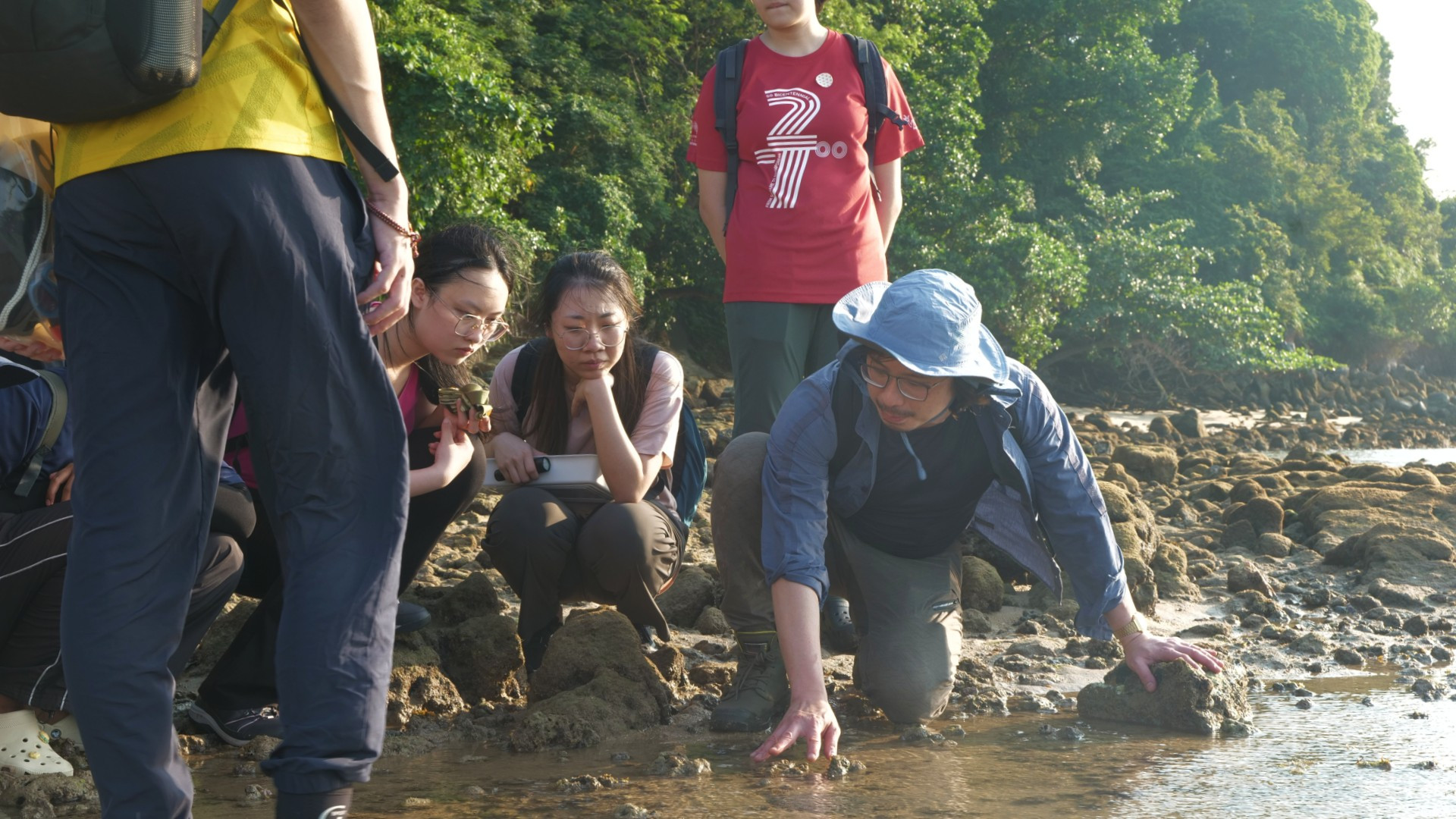
This exercise is part of his strong belief in experiential learning, which he implements with his class of about 20 students from across differing schools and faculties through components such as field trips and nature journaling. After seven runs, Dr Ang has seen students come in without much knowledge about nature – maybe even a slight fear of it – but leave with a deeper appreciation of the wonders of the natural world.
The biodiversity buff, who is also a Senior Curator at the Lee Kong Chian Natural History Museum (LKCNHM), was drawn to nature at a young age. “We didn’t have mobile phones back then, so I used to go out and catch spiders with my cousins after school at the kampung I grew up in,” Dr Ang recounted. “I had an affinity for nature since my childhood, but it blossomed into real curiosity only when I went to university and took a module on evolution.”
He was inspired by the professor who taught him that course during his undergraduate years in NUS, and hopes to pass on his passion for nature to his own students. “At the end of the day, I want them to be naturalists – people who are able to observe the natural world and notice things that you usually pass over,” he said.
“It is about opening a space for students to start being curious about the world, and teaching them how to approach this curiosity with scientific rigour.”
Beyond green fingers
Science, however, is not the only discipline involved when studying natural history – you need fingers in more than one pie.
“It’s a holistic amalgamation of different aspects of science and arts, from observing natural phenomena to knowing how to describe them scientifically, and also to illustrate them beautifully,” Dr Ang explained.
It is important to learn from other educators, he noted, especially those who teach in areas he is not as familiar with. He once collaborated with a visual arts teacher—Dr Chen Yan Yun of Yale-NUS College—to have their students teach each other about their respective fields of visual arts and biology. Environmental philosophy is another important area in which he actively engages with his pedagogical peers, seeking their input on effective methods and best practices to educate his students.
“I often invite other educators to give guest lectures to my students, and I also teach their students,” he added, citing collaborations in environmental philosophy with Dr David Merry of NUSC, and in evolutionary biology with Dr Rudolf Meier of the NUS Department of Biological Sciences. This focus on interdisciplinary education and experiential learning aligns with the teaching philosophy of NUSC, Singapore’s first honours college integrated into the larger NUS ecosystem, which grants its students access to programmes, facilities, and other opportunities across the University.
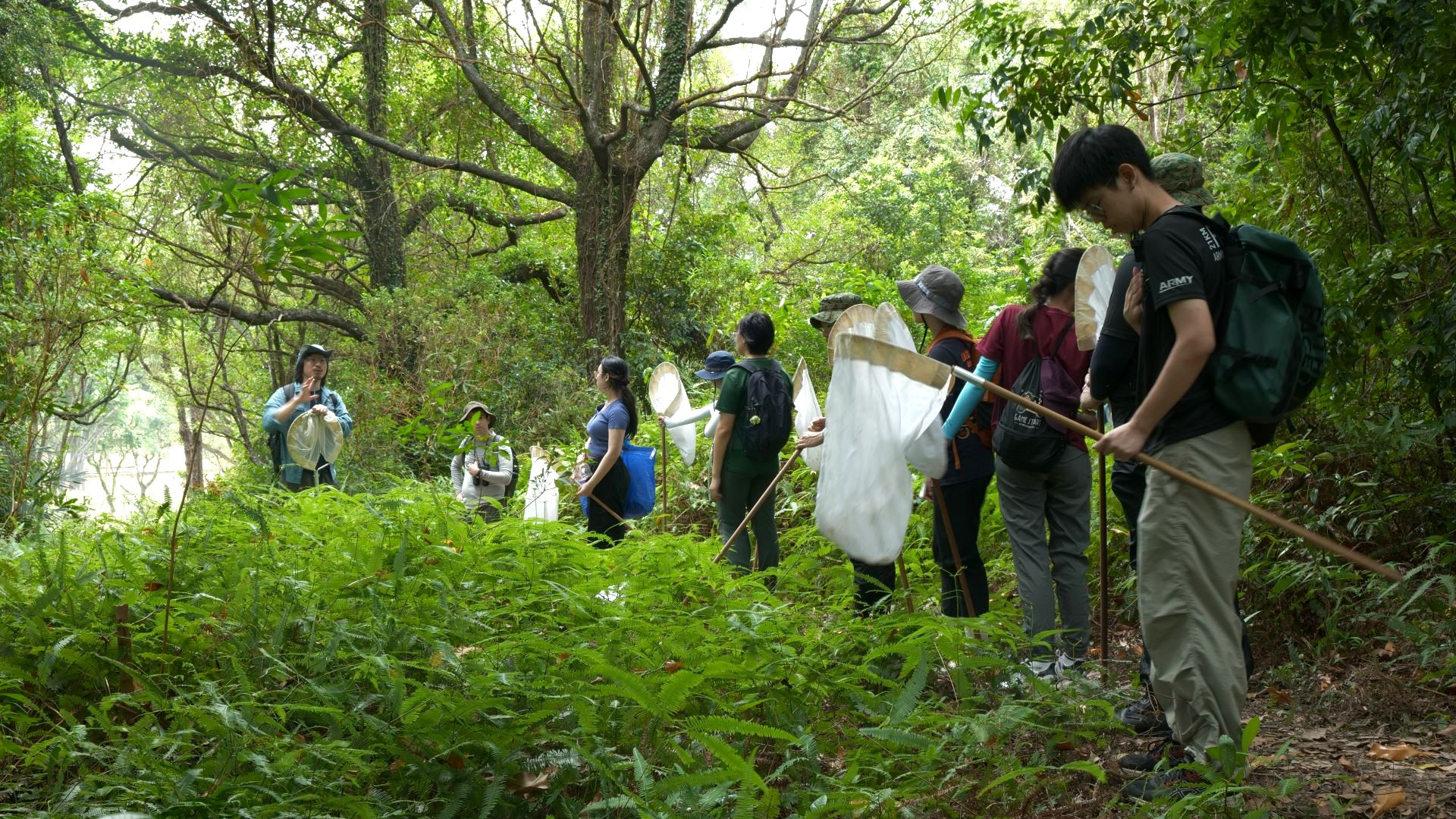
Another activity where multidisciplinary skills and knowledge are imparted is a field trip – the highlight of the course. During Recess Week, students camp on nearby islands such as St. John’s for three to four days, where theory comes alive and they get to apply what they had learnt in the first half of the course out in the field.
“During field trips, I try to replicate professional outfield surveys. Students practise investigative methods, sample collection and more practical field techniques like cooking,” Dr Ang explained, adding that this hands-on experience helps them to consolidate their learning and truly appreciate what it feels like to be out in nature.
“My most enjoyable experience in the course is definitely the night survey because I've never gone out at night before in the forest,” Syakirah Binti Jamaludin, a Year 2 student from the NUS Faculty of Science and NUS College, enthused. “I was really shocked at the cacophony of sounds that I heard in the forest at night. Although I couldn't see a lot I felt as though I wasn't alone and that the forest was just teeming with life and biodiversity.”
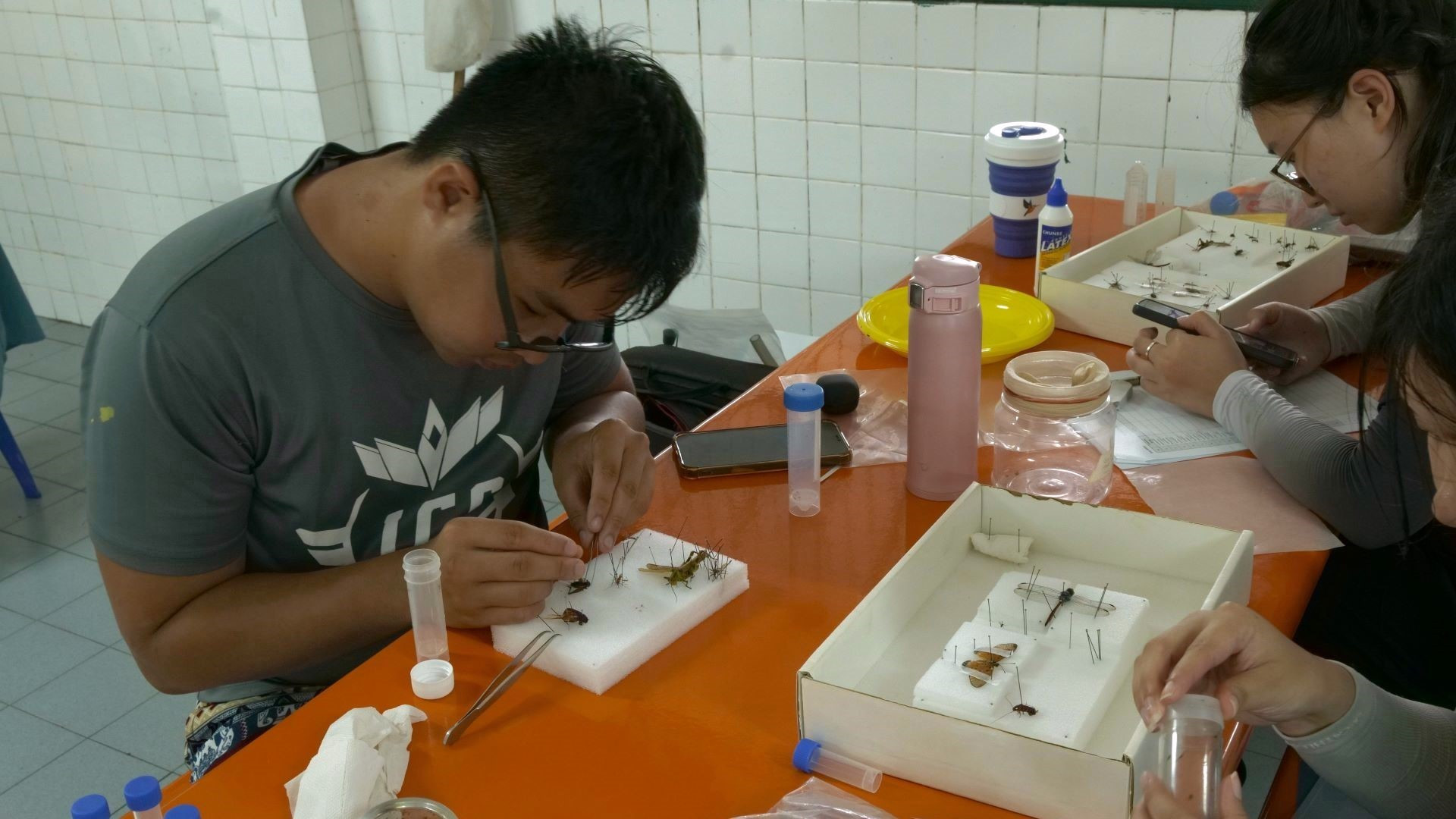
One exercise during the field trip involves students attempting to illustrate and describe a plant in two hours as though it were a new species.
Back in NUS, students are also sent on mini-quests to observe nature around the Kent Ridge campus and record their observations and thoughts through notes, poems, sketches, and more. This activity, called nature journalling, incorporates visual and literary arts into students’ work. “Art helps students open up more because they tackle personalised issues, like their relationship with nature,” Dr Ang noted.
“I really enjoyed nature journaling, as I was able to appreciate and experience nature in my own time and at my own pace outside of the classroom. I was given assignments that allowed me to go out in my own time, sit at places that I chose, and experience nature for myself,” Syakirah reflected.
So the next time you see someone staring unusually intently at a plant on campus, they might well be one of his students composing a poem about it.
Freedom to explore
Besides the course content and modus operandi, Dr Ang’s unusual pedagogy extends to the form of assessment. Trust the students—this is Dr Ang’s philosophy for his students’ final projects, which begin after they return from their field trip.
“I leave it open to my students to come up with amazing projects, trusting that they have been engaged enough by the course so far,” he explained, adding that he is always pleasantly surprised by their project proposals.
One student, an avid dancer, decided to come up with an interpretive dance routine that mirrored the life cycle of a cicada, while another caught and cooked a meal of Asian weaver ants (Oecophylla smaragdina) for his classmates.
Another student project showcased various insect specimens in a glass box frame, including a rare species of Scarab Hunter fly (Pyrgotidae) – the third-ever specimen collected in Singapore thus far. For their project, these students curated a field guide, Insects of Cinnamon College, consisting of insects caught in the residential college, with the help of the community’s Telegram tip-offs. Their project ultimately won them a full travel scholarship to present their research at the 7th Conference for Student Research (StuFo 2022) in Berlin.
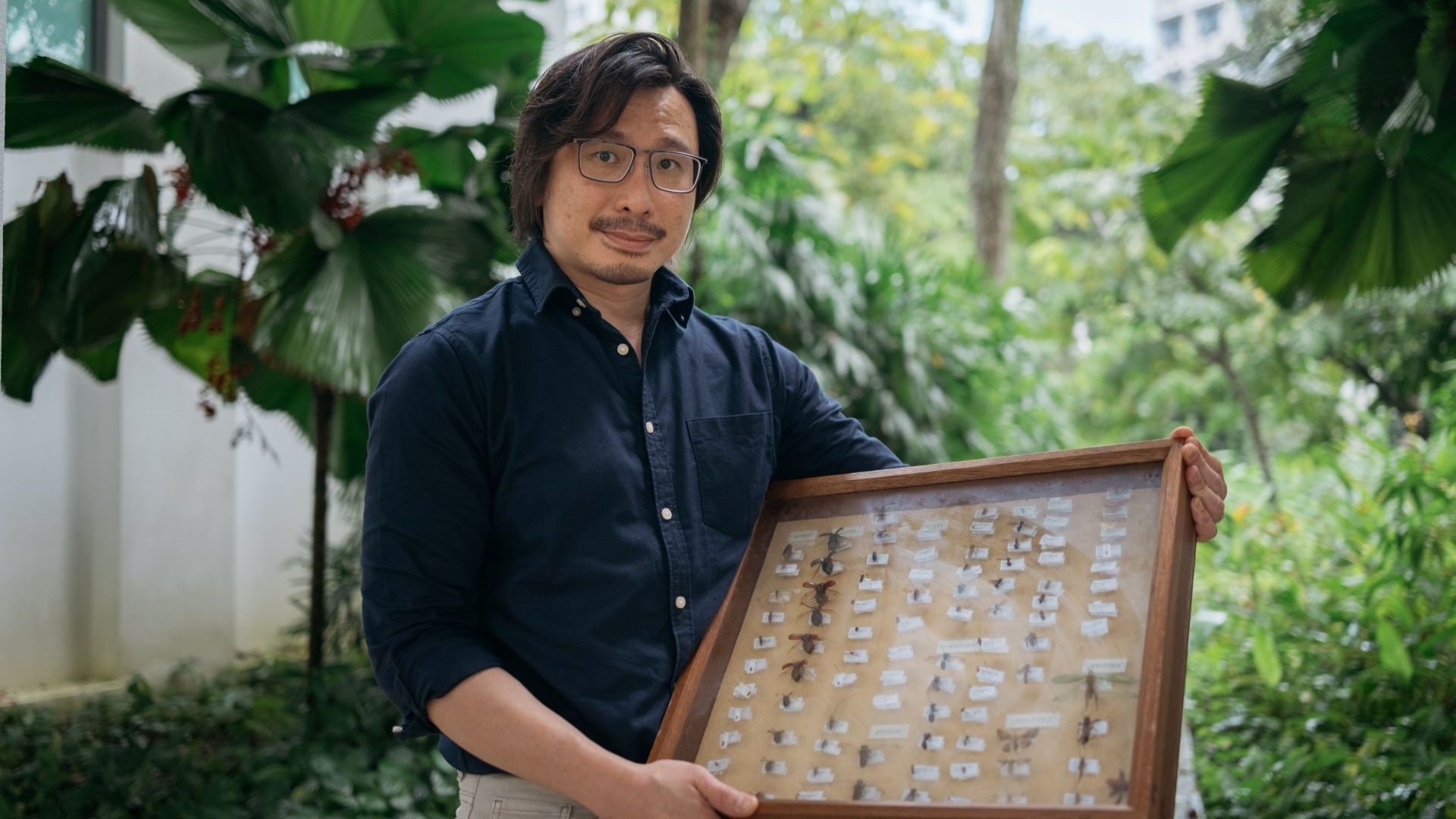
The creativity and calibre of his students’ projects are a testament to Dr Ang’s success as an educator. His hope is to instil a sense of wonder in his students, so they continue applying what they learn beyond the course.
He remembers one student in particular, who approached him after the course ended to initiate a research project on entomophobia, or the fear of insects. This student had such intense entomophobia that she would shed tears when handling insects.
“But she was very curious about the topic and made the effort to learn. She ended up more scared of insects after the project, but at least her fear became more rational,” he recounted with a chuckle.
This sense of curiosity and fascination with the natural world has also taken on a life of its own in the community that has grown up around the course. A group of alumni kickstarted their own interest group, “Biocurious”, even organising their own events and workshops like intertidal walks to further explore Singapore’s rich natural heritage on their own.
“It is a good sign when I receive emails from ex-students with photos of plants or insects that remind them of what they learnt,” he concludes.
