NUS Business School's new Dean envisions building a future-ready, AI-native school
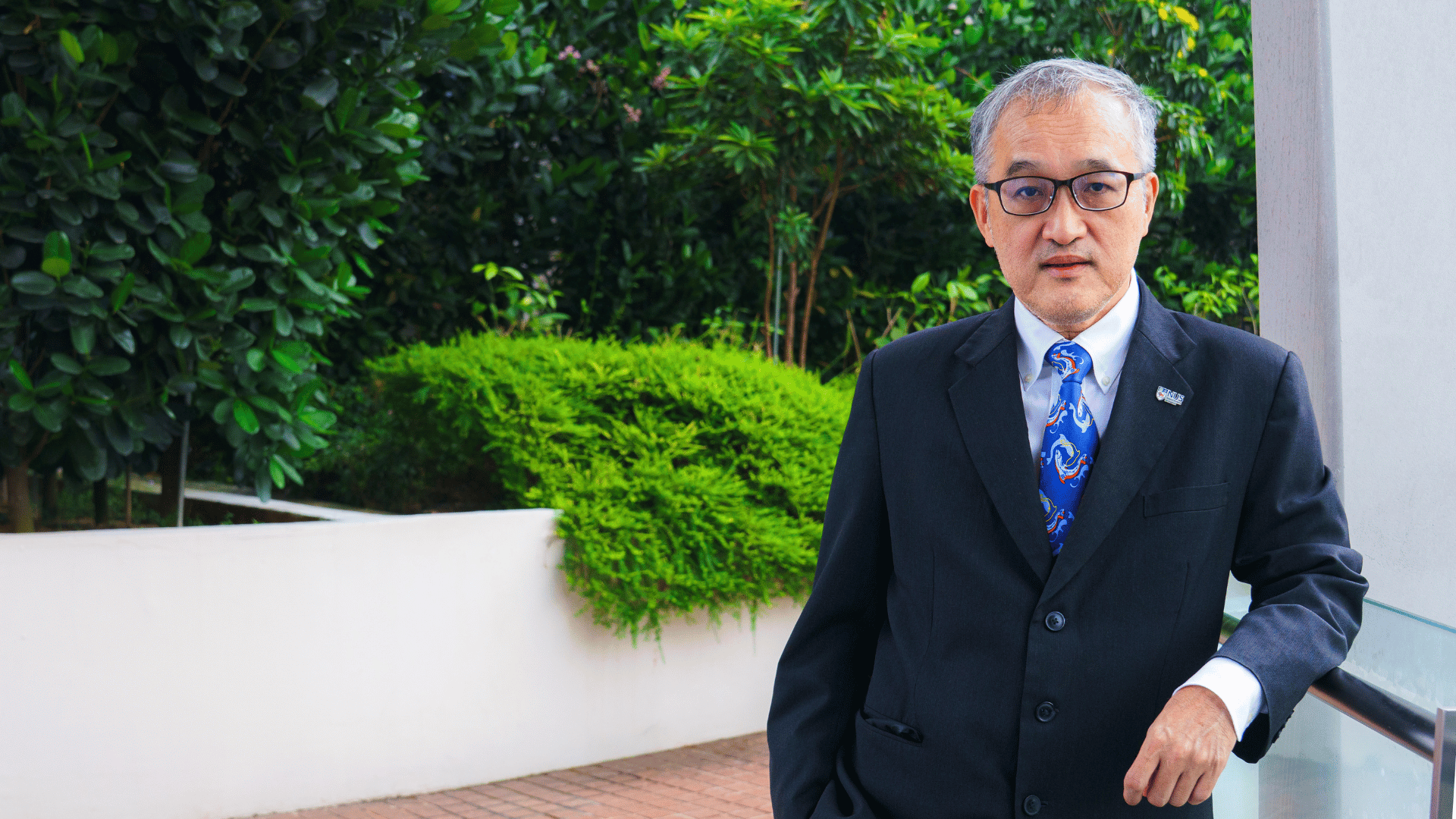
After more than three decades at NUS Business School, Professor Teo Chung Piaw is looking to shape the next chapter of its development as its new Dean, with a focus on preparing students for a changing business world.
Having witnessed first-hand how business education has evolved, he is acutely aware that while finance, economics and management once provided a strong foundation for graduates, today's business environment also increasingly demands knowledge of areas like technology, data science, sustainability and AI.
It is why, since taking the helm in July 2026, Prof Teo has spent his first few months meeting faculty, students and staff to better understand their challenges and share his vision and priorities: building an AI-native business school, strengthening connections with industry, and translating academic research into real-world impact.
Building an AI-native business school
Prof Teo envisions NUS Business School to have AI embedded not only in the curriculum, but also in teaching and operations.
“We want to build an AI-native business school, going beyond just launching new modules and programmes in AI,” he said.
Central to this ambition is NUS’ X+AI education strategy, which embeds AI into existing disciplines to reflect changing professional practices. At NUS Business School, the approach is being implemented across its nine business majors, helping students understand how AI is applied in their chosen fields.
As AI makes specialised knowledge more accessible, Prof Teo believes broad-based education will become increasingly important and welcomes students’ growing interest in pursuing second majors and minors, which allows them to acquire knowledge in multiple domains.
“What we need are people who can tell a good solution from a bad solution, and a good recommendation from a bad recommendation,” he said.
For faculty, Prof Teo is encouraging greater use of AI in teaching, including a project to develop multi-agent simulations that could change how case studies are taught.
Strengthening industry connections
Prof Teo also hopes to build a more externally engaged School by strengthening industry partnerships, enabling faculty to collaborate with companies to address real-world business challenges and bring these insights back into teaching and research.
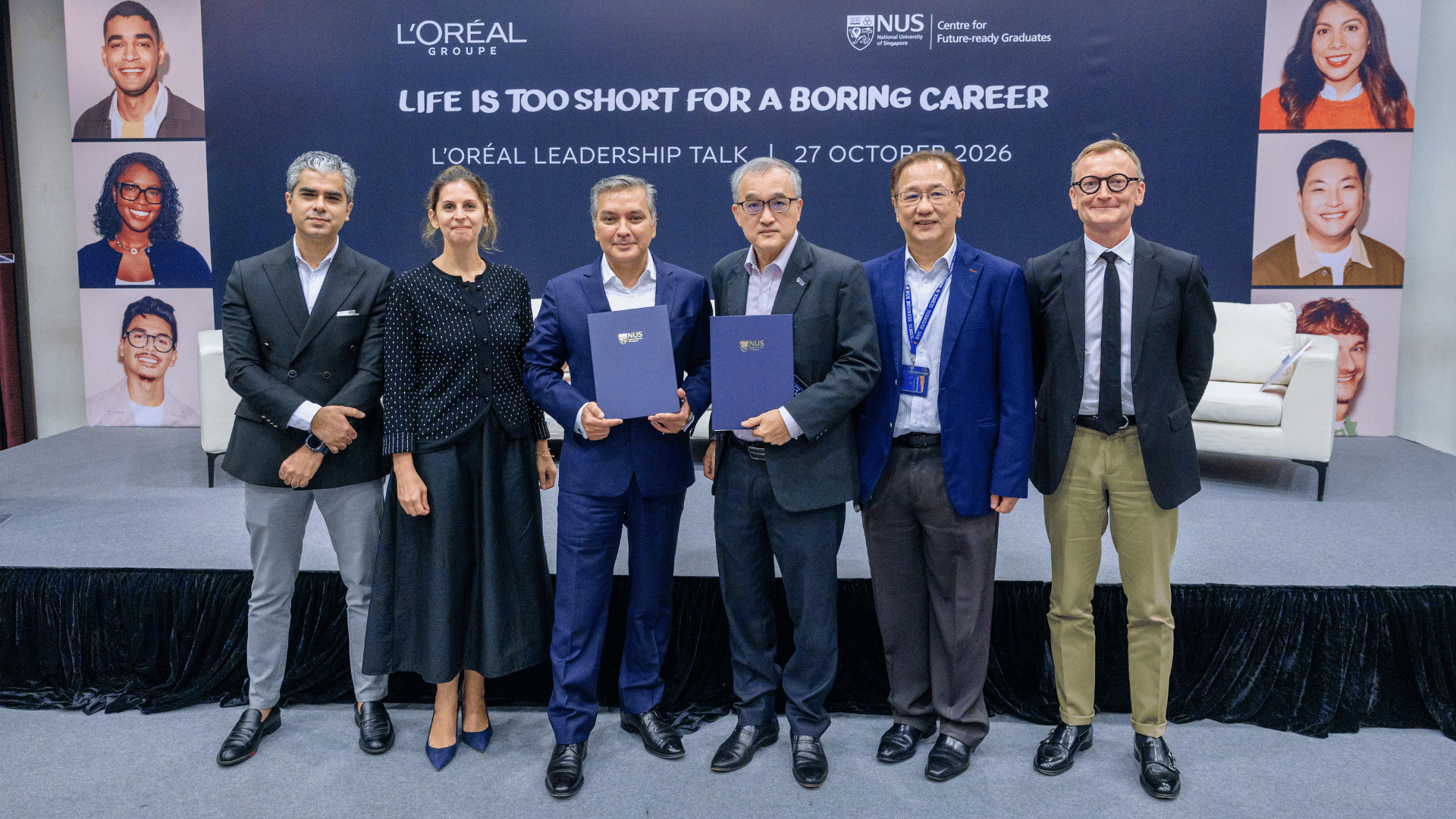
As AI increasingly takes on entry-level work, graduates entering the workforce have fewer opportunities to gain experience through foundational tasks. Universities thus have an important role to play in helping students develop these skills before graduation.
A key strength Prof Teo hopes to draw on is the School's network of more than 50,000 alumni worldwide, which he sees as a differentiating factor. The School also taps on industry practitioners as adjunct faculty, who bring real-world business challenges into the classroom.
“I want the School to work more closely with alumni and companies to solve important problems. I believe this will benefit both our faculty and students,” said Prof Teo.
Building on these connections, Prof Teo hopes to expand field service projects, giving students more opportunities to work with companies to solve real business problems, gain practical experience and develop the judgement and skills needed to take on more complex responsibilities.
Translating research into impact
Finally, Prof Teo's third priority is to help faculty translate their cutting-edge research into practical solutions that solve real business challenges and inform government policy.
Building on NUS Business School's established strengths as a research-intensive institution, Prof Teo hopes to strengthen its translational impact by deepening connections between academic research and industry.
“The most interesting business challenges often inspire the best research. We want to create a virtuous cycle where academic discoveries improve practice, and real-world problems drive new discoveries,” said Prof Teo.
He believes advances in AI will create new opportunities for researchers to tackle complex problems, while also changing how the value of research is perceived. As AI makes it easier to build on existing knowledge, he anticipates greater emphasis on how research findings are applied and who benefits from them.
“For me, the exciting opportunity is to turn research ideas into solutions that organisations can actually use. A breakthrough in optimisation or AI should not remain confined to an academic paper. It could help companies and policymakers make better decisions,” he said.
Building people and shaping futures
Ultimately, Prof Teo's three priorities share a common purpose: to help students and faculty grow and realise their potential.
Yet beyond curriculum reforms, industry partnerships and research achievements, his aspirations are also deeply personal. When asked what he hopes to achieve during his tenure, Prof Teo said: “I want to build bridges to companies, and I want to build people up.”
In a few years, he hopes to have collected a list of student success stories that demonstrates what NUS Business School has helped them achieve.
“The beauty of education is the impact we have on students’ lives,” he said.