


Inaugural conference addresses challenges to advancing social mobility amid global shifts
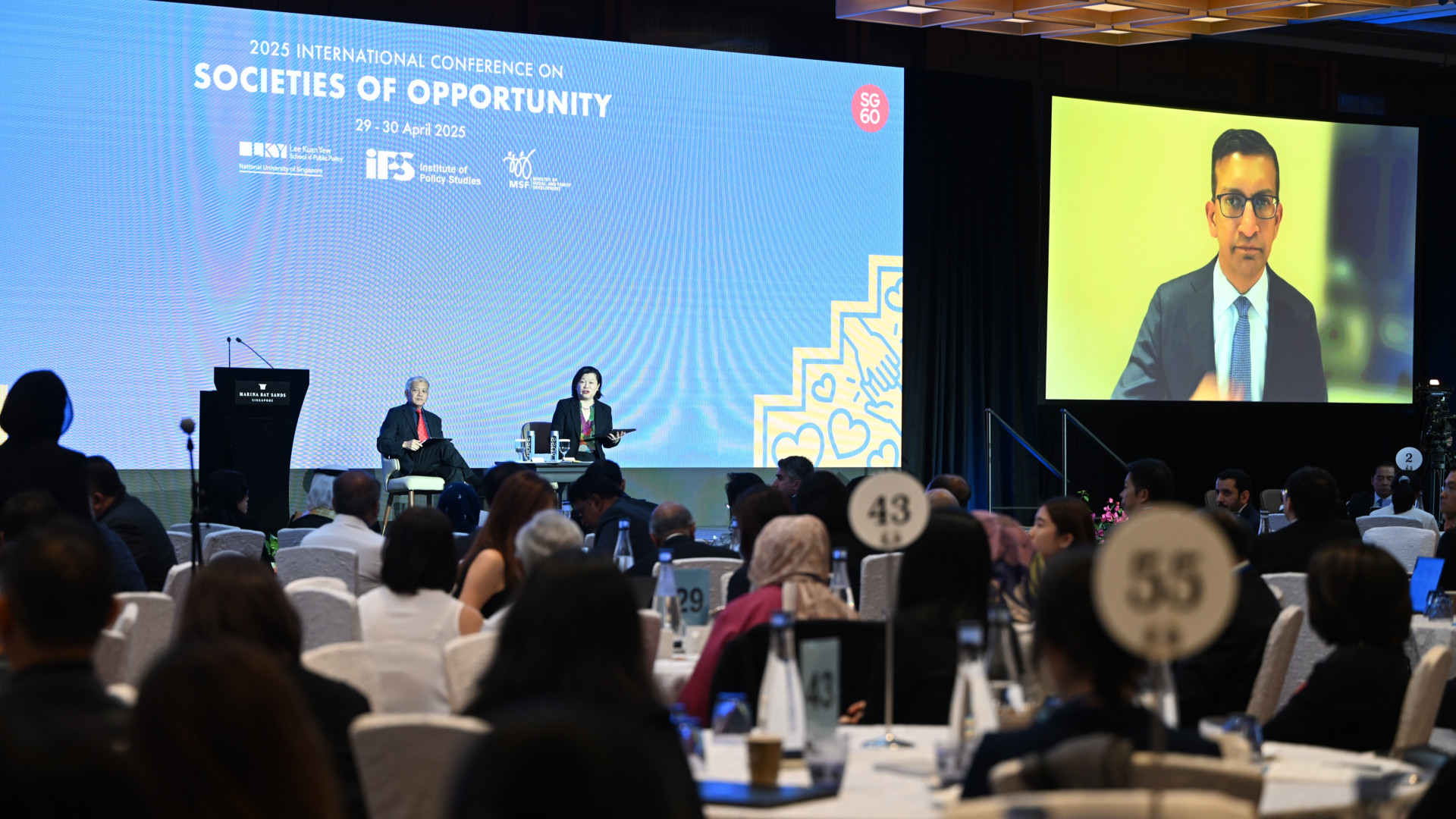
As geopolitical upheaval, technological disruption, and demographic shifts signal an impending economic slowdown for most of the world, social mobility is gaining recognition for its bearing on a society’s ability to tackle these challenges.
This characteristic of societies describes how closely the social status of individuals is linked to that of their parents, with social immobility resulting in barriers that prevent talented and hardworking people from realising their full potential. On the other hand, high social mobility ensures that people have access to opportunities and a fair chance to achieve their dreams, leading to greater stability and prosperity for society at large.
About 700 policymakers, researchers, and practitioners from across the people, public, and private sectors gathered on 29-30 April 2025 to exchange ideas and research findings for advancing social mobility at the inaugural International Conference on Societies of Opportunity. The conference was organised by Singapore’s Ministry of Social and Family Development and the Institute of Policy Studies (IPS).
Said Dr Justin Lee, Senior Research Fellow and Head of Policy Lab at IPS: “The topic of social mobility is timely as societies worldwide grapple with economic and technological shifts. The conference examines how government policies, corporate investments, and community action can contribute to a more equitable and inclusive society.”
Over the two days, attendees gleaned insights from two keynote speeches, three plenary sessions, and four breakout sessions on effective ways that governments, community organisations, corporates, academia, and individuals can help to remove obstacles to progress and uplift those in the lower strata of society.
Close links between social mobility and economic growth
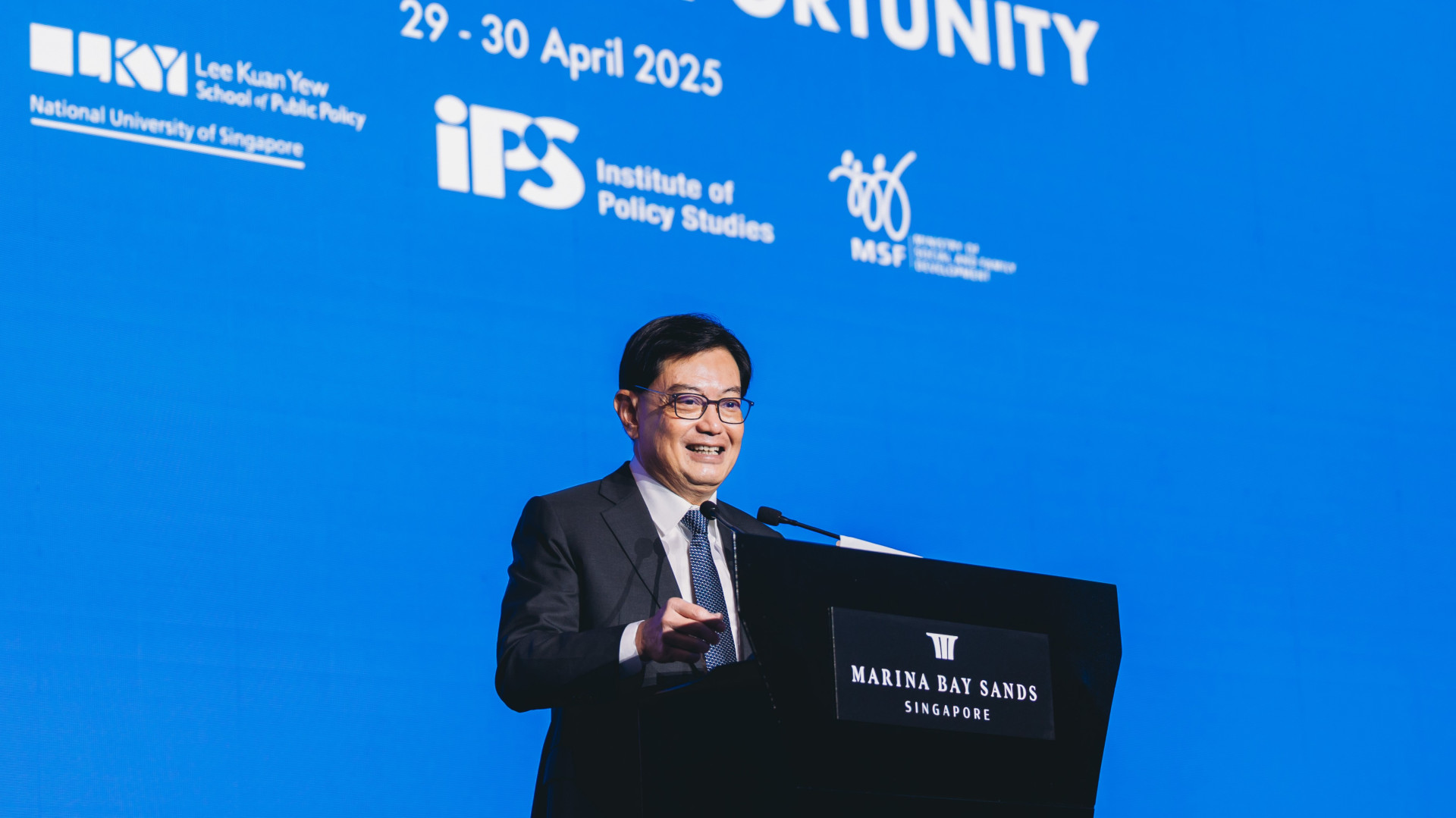
In the conference’s opening address, then Deputy Prime Minister Mr Heng Swee Keat contrasted the post-World War period of strong economic growth and social mobility with the current era where opportunities and progress are being stymied by deglobalisation, technological disruption, and ageing populations. Countries that once relied on the free flow of people, ideas, and capital across borders for growth must now put more effort into maximising their existing resources, especially their human capital.
“As a small node in the global economy, Singapore cannot block the forces of global change. Instead, we must create opportunities for our people, by staying relevant and useful to the world,” said Mr Heng, who cited building partnerships with other countries, investing in research and education to keep pace with technological developments, and shoring up support for the lowest rungs of society as some of Singapore’s strategies for doing so.
The need for both macro- and micro-level interventions to achieve social mobility targets was explored in keynote speeches by Professor Danny Quah, Dean and Li Ka Shing Professor in Economics at the Lee Kuan Yew School of Public Policy, and Professor Raj Chetty, William A. Ackman Professor of Public Economics and Director of Opportunity Insights at Harvard University.
Prof Quah illustrated the importance of macro-level interventions using the Growth-Mobility Curve, which emerged from comparisons of cross-country data showing that past economy-wide growth foreshadows high social mobility. “Economic growth provides the space and the opportunity for all members of society to advance, especially those at the bottom end of the income distribution,” he said.
Approaching the question from the other direction, Prof Chetty shared findings on the direct impact of childhood circumstances on economic opportunities and mobility, uncovered through analysing large-scale data sets.
For instance, one study of 20 million people born in the United States found that their upward economic mobility was strongly linked to the levels of inequality, stability of family structures, education, and social capital in the neighbourhoods where they grew up. Another study of children whose families moved from poorer to richer neighbourhoods, even just across the road, showed a clear pattern of higher earnings in adulthood, with greater gains realised by those who moved earlier in life.
“If you take a given child and change that child’s environment, that dramatically changes their life outcomes,” said Prof Chetty, noting that the findings have been replicated in other countries. “This is very encouraging for those interested in improving economic opportunity and social mobility, because it shows that this is a tractable problem.”
Perspectives from research and practice
Making welfare systems more universal and prioritising cross-class mixing to increase social capital were some of the recommendations put forward in the conference to make social mobility efforts more effective.
Professor Irene Ng of the Department of Social Work at the Faculty of Arts and Social Sciences (FASS) highlighted the challenges that needy individuals face in navigating in Singapore’s welfare system, where an emphasis on self-reliance and keeping welfare spending low has resulted in a wide variety of programmes with various application processes and requirements to follow.
“A low-income person’s mind is constantly preoccupied with how to pay the bills, how to put food on the table, and that leaves little cognitive space for other important tasks in life,” she said. “This has implications on how multiple programmes can cognitively overload low-income individuals, so that it has the counteracting effect of impairing their function and ability to succeed at work and comply with programmes.”
Citing research that shows more universal or generous welfare systems to be more successful at promoting social mobility, Prof Ng recommended consolidating programmes, simplifying processes, and incorporating automatic stabilisers like inflation indexing to ensure that assistance keeps pace with economic conditions.
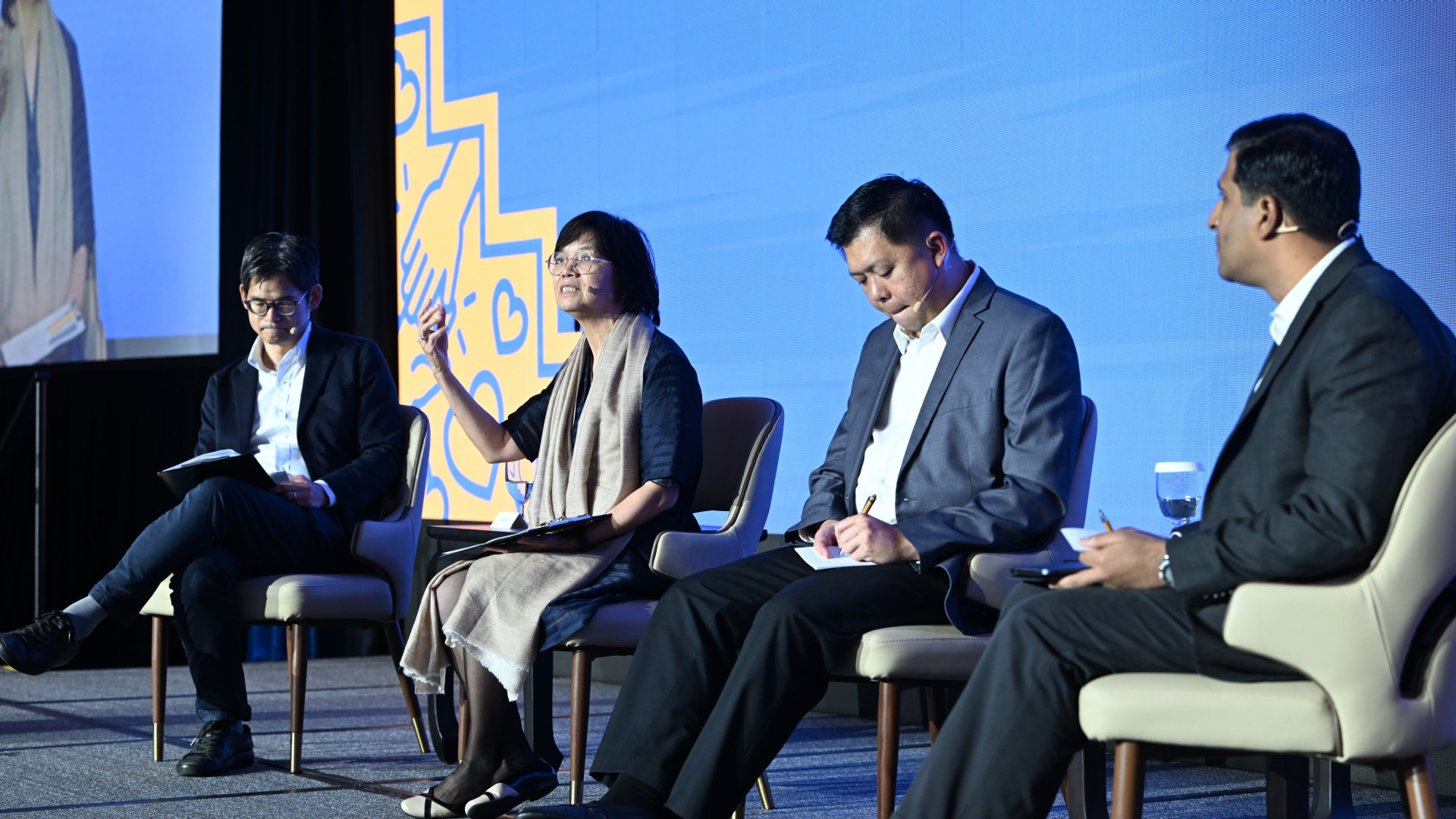
To help lower-income groups increase their social capital, several speakers suggested ways to promote mixing between people of different socioeconomic classes, which can expose children to more potential career options and pave the way to opportunities through job referrals or advice.
“For opportunities to translate into uptake, people need the guiding hand of social capital, someone who comes alongside to say, ‘This is the way to go about it, this is what to say, this is how to say it,’” said Associate Professor Vincent Chua of the Department of Sociology and Anthropology at FASS, whose research found that having a mentor like a trusted teacher increases the probability of a young person becoming a university graduate. He proposed matching effective teachers to less popular schools and prioritising mentor-mentee matching for students of lower socioeconomic status.
Along similar lines, social capital can be built through engaging parents and community members as volunteers in school activities like reading programmes, said Emeritus Professor Esther Ho, Senior Research Fellow at the Department of Educational Administration and Policy and Director of the Hong Kong Centre for International Student Assessment, both at the Chinese University of Hong Kong. She noted that such programmes have a significant impact on reading habits and enjoyment especially among lower-income students whose parents may have less time to read with them at home.
Representatives from the social service, corporate, and philanthropic sectors underscored the need to ensure that invested capital drives outcomes and catalyses innovation, rather than simply funding well-intentioned programmes that may not yield meaningful results. This requires focusing on outcome metrics like learning improvements instead of activity metrics like teacher training hours, as well as forming strategic partnerships to tap the right expertise and leverage innovative mechanisms like blended finance.
Said Ms Tan Li San, CEO of the National Council of Social Service, “As society becomes more complex and the global environment becomes more uncertain, it’s even more critical to tap on different stakeholders who bring valuable expertise and assets that can help us create much greater social impact in our society.”
