


Progress through policy: NUS College course highlights role of legislation in changemaking
In Singapore and many other parts of the world, the national Parliament is where policies that impact everyday life, such as housing, transport, healthcare and welfare, take form. A new course at NUS College (NUSC) is giving students an inside look at how parliaments shape policy and laws — and how citizens can engage meaningfully in the process to advance causes they care about.
“If you genuinely care about changing the world, how do you actually go about doing it?” This is the question that Associate Professor (Practice) Louis Ng explores with students through NHS2103 Working with Parliaments: Shaping Policy, Driving Laws. Offered for the first time in AY2025/2026 by the honours college of NUS, the course examines how laws are made and policies evolve, as well as how different actors including Members of Parliament (MPs), civil society, the media, think tanks and ordinary citizens can shape national decisions. It is shaped by Assoc Prof Ng's decade of experience in Parliament as MP for Nee Soon GRC from 2015 to 2025, during which his speeches contributed to discussions on 269 pieces of legislation.
“It’s important to care about an issue. It’s even more important to understand the processes that shape decisions and outcomes,” said Assoc Prof Ng.
“If you care about climate change, animal welfare, migrant workers, housing, inequality, whatever the issue, sooner or later you will run into policy and legislation. And if you don’t understand how those work, you will always be operating at the surface.”
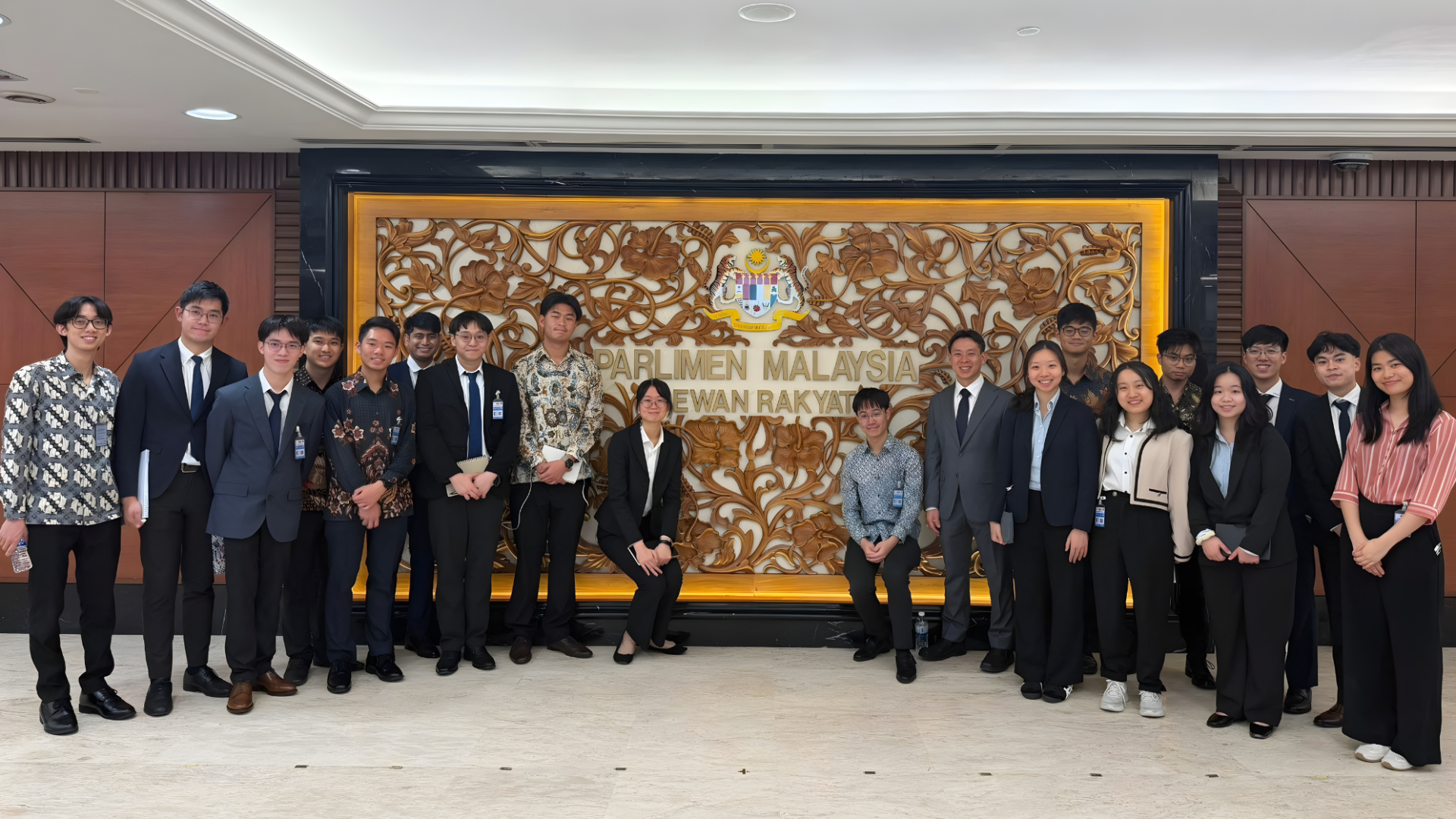
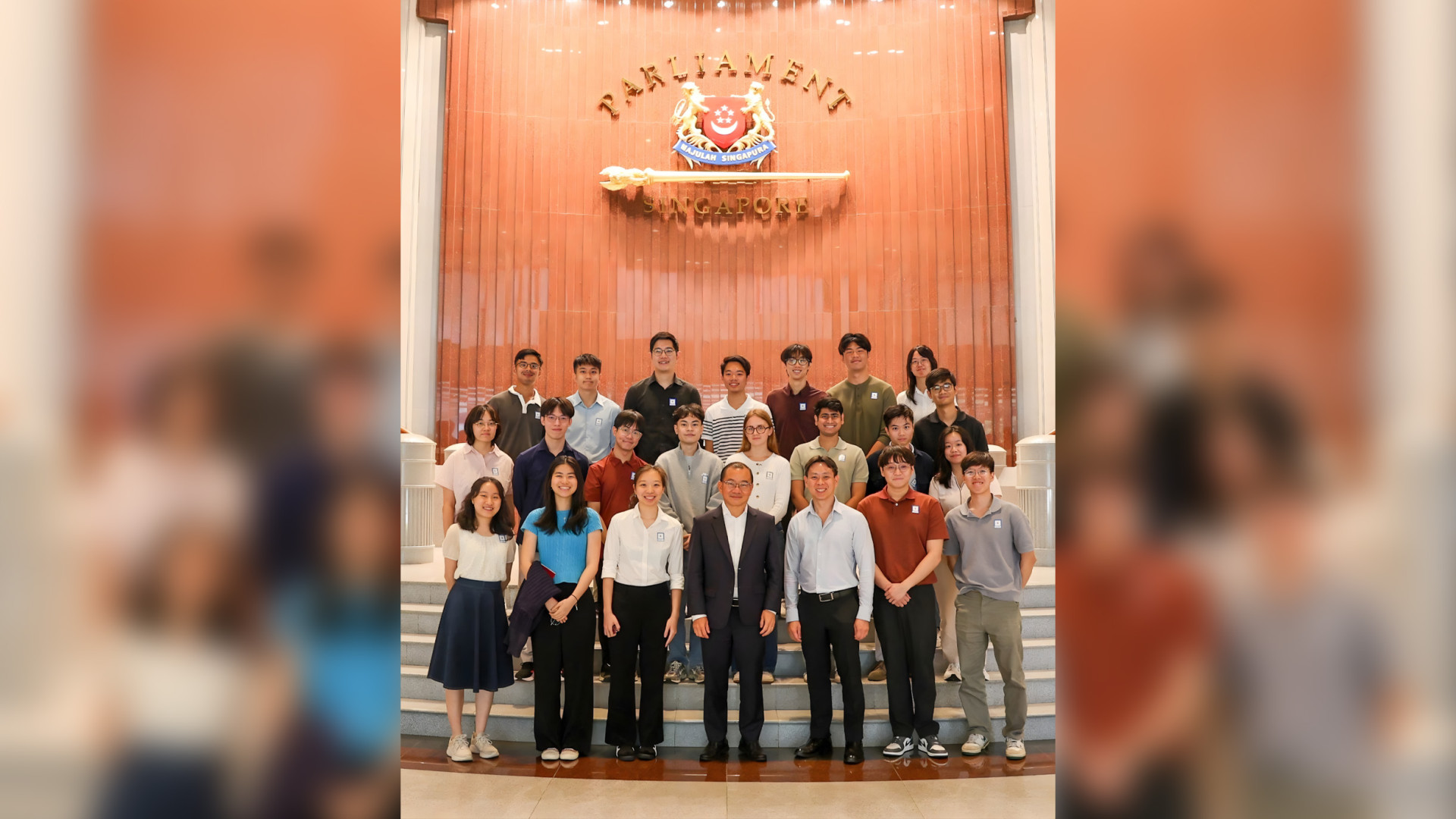
In keeping with NUSC’s emphasis on experiential learning, out-of-classroom and hands-on components are integral to the course — students visit Parliament to observe the debates and converse with policymakers, embark on a field trip to the Malaysian Parliament to compare systems, and draft their own adjournment motions as part of a full Model Parliament.
This first run included an opportunity to work with the regional parliamentary body for the Association of Southeast Asian Nations (ASEAN), with the students organising Singapore’s first ASEAN Inter-Parliamentary Assembly (AIPA) Roadshow to showcase AIPA’s role in fostering regional cooperation.
Steady steps to lasting impact
Assoc Prof Ng shared that through his career in civil society and politics, he has come to appreciate the importance of understanding the workings of institutions like Parliament and how laws and policies are drafted, trade-offs are negotiated and complex issues are addressed at their roots.
He founded Animal Concerns Research and Education Society (ACRES) as an NUS undergraduate (Biology ’02) and campaigned strongly for animal welfare and the environment through his full-time work with the charity. In Parliament, he advocated for marginalised causes and communities including animal rights, migrant workers, working parents and single unwed mothers.
His goal with this course is to guide students beyond broad discussions about change to understand actions that impact policy. By challenging their assumptions and providing opportunities to engage with the parliamentary process, he encourages students to participate constructively and develop deeper understanding.
“Parliament is where priorities are decided. It’s where trade-offs are made and resources are decided. If young people want to create real, lasting change, they need to understand how parliaments function,” said Assoc Prof Ng.
Roy Eugenie Clemence, a third-year political science student on exchange from Sciences Po, said that the prospect of having a former MP as an instructor factored into her choice to read this course.
“It is useful to go beyond what we can find on the internet in general or on the website of the Parliament. Prof Louis provides us with a lot of actual case studies, which make the course a lot more interesting,” she said.
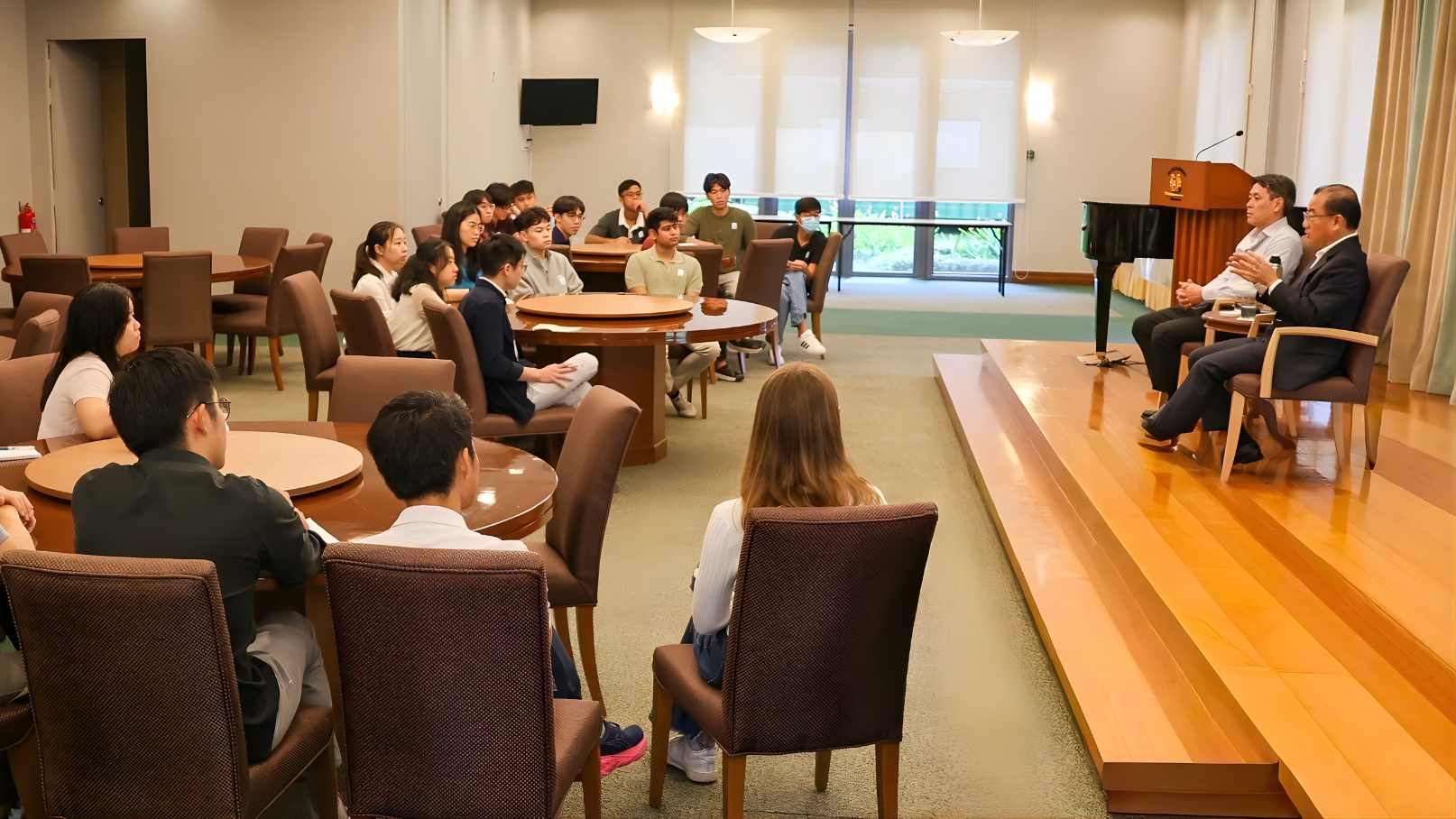
Pranav Ghosh, a final-year Law major, took up the course to understand the parliamentary lawmaking process better, as he recognised that the rationales behind certain laws impact how the judiciary applies the laws in court. In addition to learning about the various procedures in a parliamentarian’s toolkit and Assoc Prof Ng’s journey in championing social change, he gained insight into the significant role of legislative assistants behind the scenes of the research and argumentation presented in Parliament.
“Through Assoc Prof Louis Ng, we get to experience more than a mere academic understanding of what happens in Parliament,” he said.
Cross-border cooperation for regional progress
The gap between theory and practice was further narrowed for the students through working on the 22nd AIPA Roadshow, one of AIPA’s regular events to raise awareness about its work and enhance youth engagement in regional inter-parliamentary cooperation by providing a platform for youth to interact with AIPA representatives.
Assoc Prof Ng learnt at an AIPA meeting in 2025 that the event had not been held in Singapore before, and quickly seized the opportunity to turn it into a learning experience for his upcoming course.
“Given that I was going to teach about how parliaments work and how to engage them, it felt natural to bring it here. It would allow students to meet policymakers and regional diplomats face-to-face, instead of just reading about ASEAN in a textbook,” he said.
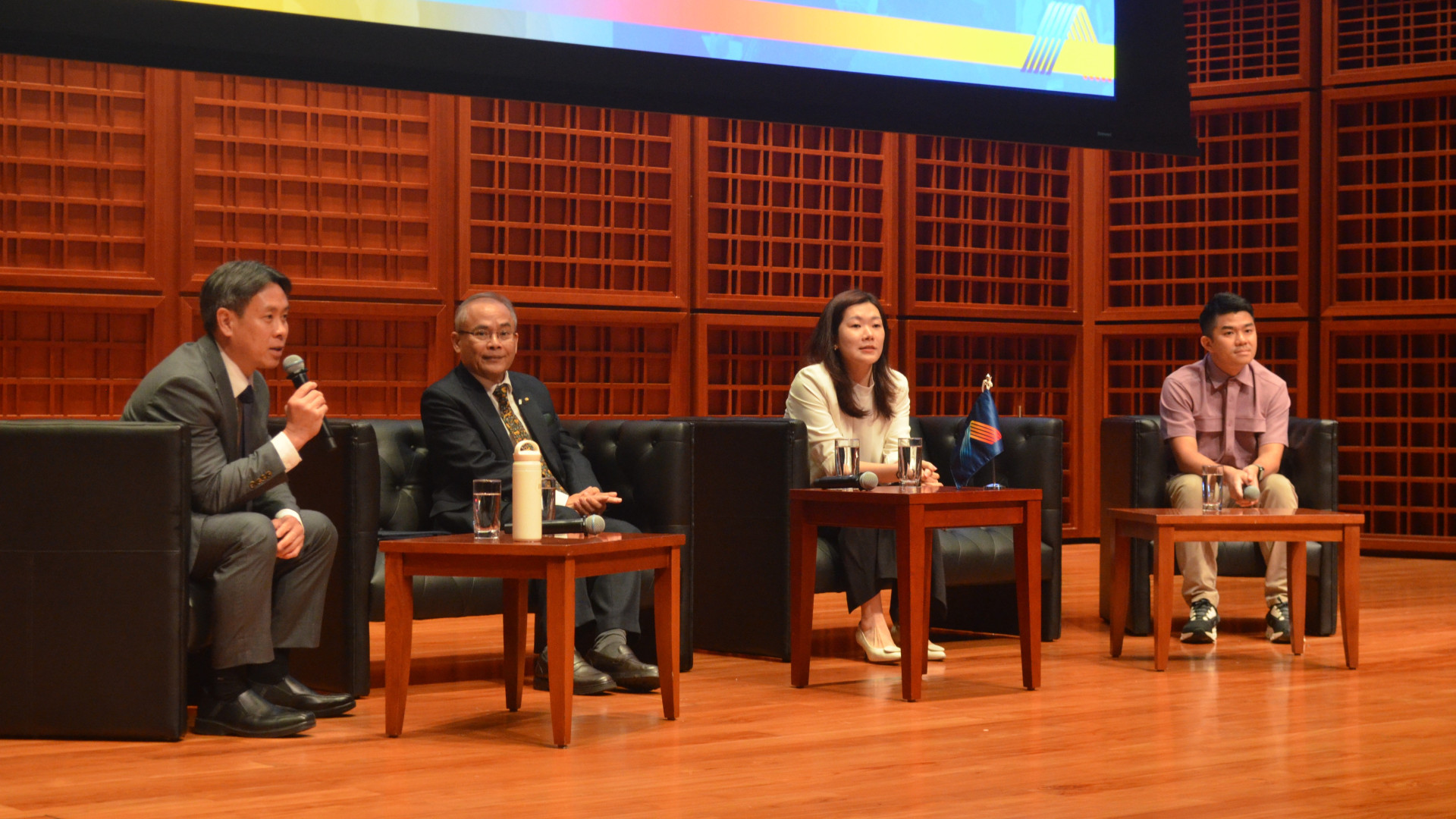
About 75 students attended the event on 9 March 2026, which featured presentations by the Secretary-General of AIPA, His Excellency Dr Chem Widhya, and local MPs Ms Hany Soh and Mr Cai Yinzhou, and a dialogue session with Assoc Prof Ng and the three speakers.
Pranav and Eugenie, co-chairs of the student organising committee, reflected that the project was an accessible way for them to contribute to regional diplomacy and provided valuable hands-on experience in coordinating an event involving dignitaries. They also gained insight into ASEAN’s unique characteristics, with the regional bloc forming the third largest entity by population and fifth largest economy globally and fostering cooperation through diplomacy and a consensus-seeking approach.
Said Pranav: “The panellists’ sharing helped me understand how the collective bargaining power of ASEAN actually has much force in international relations. At the same time, ASEAN’s consensus-based mechanism allows for each individual nation to be heard equally without compromising on their respective positions to achieve collective growth.”
The keynote presentations gave Eugenie a new perspective on ways that regional organisations can form and work together, aside from the binding system used by the European Union. She noted: “Given the current international context, it was also important to reemphasise the mechanisms of international cooperation and coordination that still exist and are set to last.”
