


A planet on the brink: Climate scientist Johan Rockström warns Earth is nearing its limits
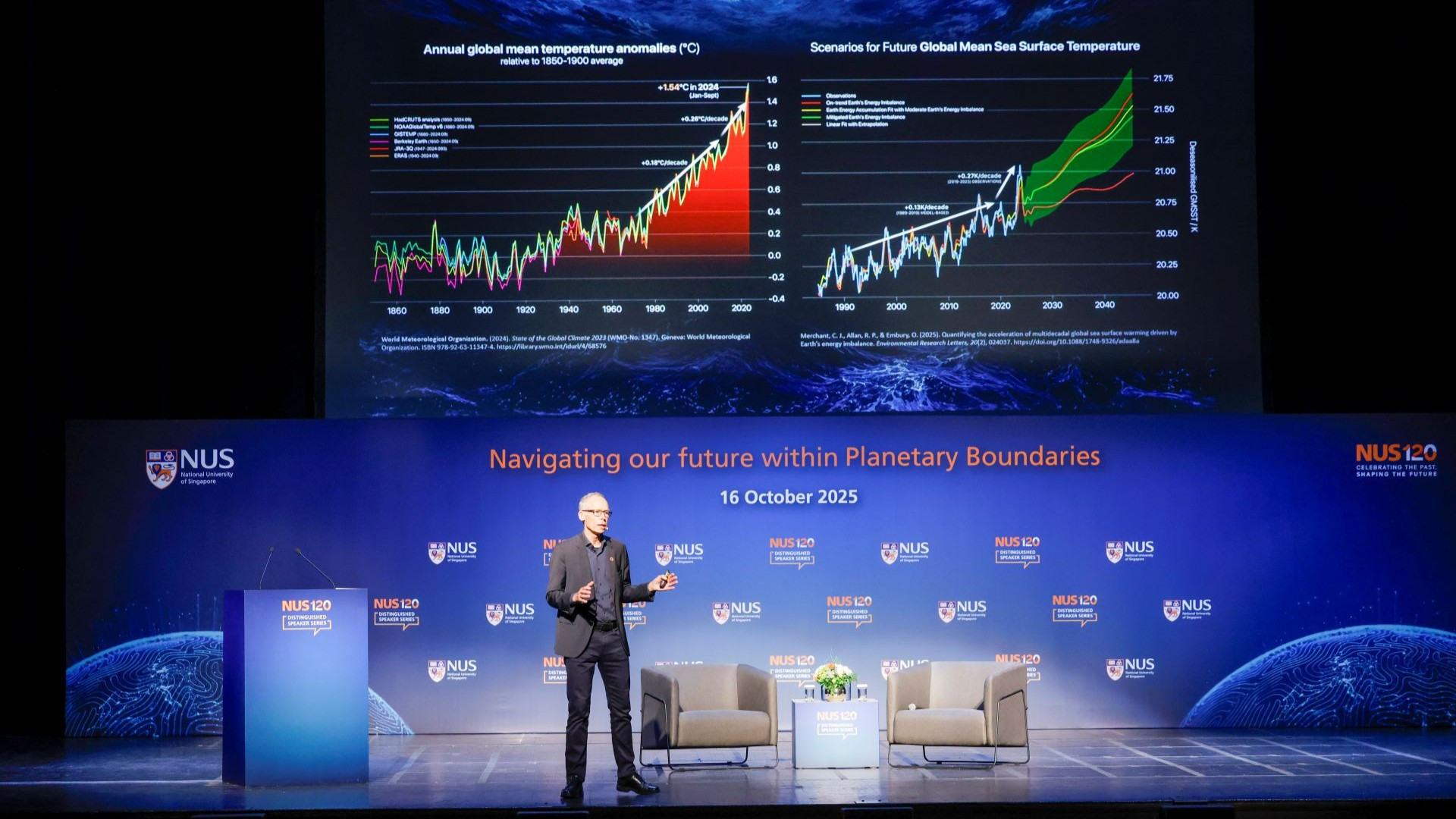
Even if the world phases out fossil fuels in the next 25 years, it will still miss the Paris Agreement’s target to limit global temperature rise to 1.5 degrees Celsius (deg C).
The reason? The Earth is reaching the limits of its self-regulating capability, which is essential to keeping the planet hospitable for human life, warned renowned climate scientist Johan Rockström.
“We are, for the first time in our presence on planet Earth, forced to address the question: Are we at risk of destabilising the very state of the planet?” said the Director of the Potsdam Institute for Climate Impact Research in Germany. “We have ample scientific evidence that we’re hitting the ceiling of hard-wired biogeophysical processes that regulate the very functioning of the Earth system.”
The Swedish scientist was delivering his keynote lecture as part of the NUS120 Distinguished Speaker Series on 16 October 2025. The series is among a line-up of events held to celebrate NUS’ 120th anniversary this year.
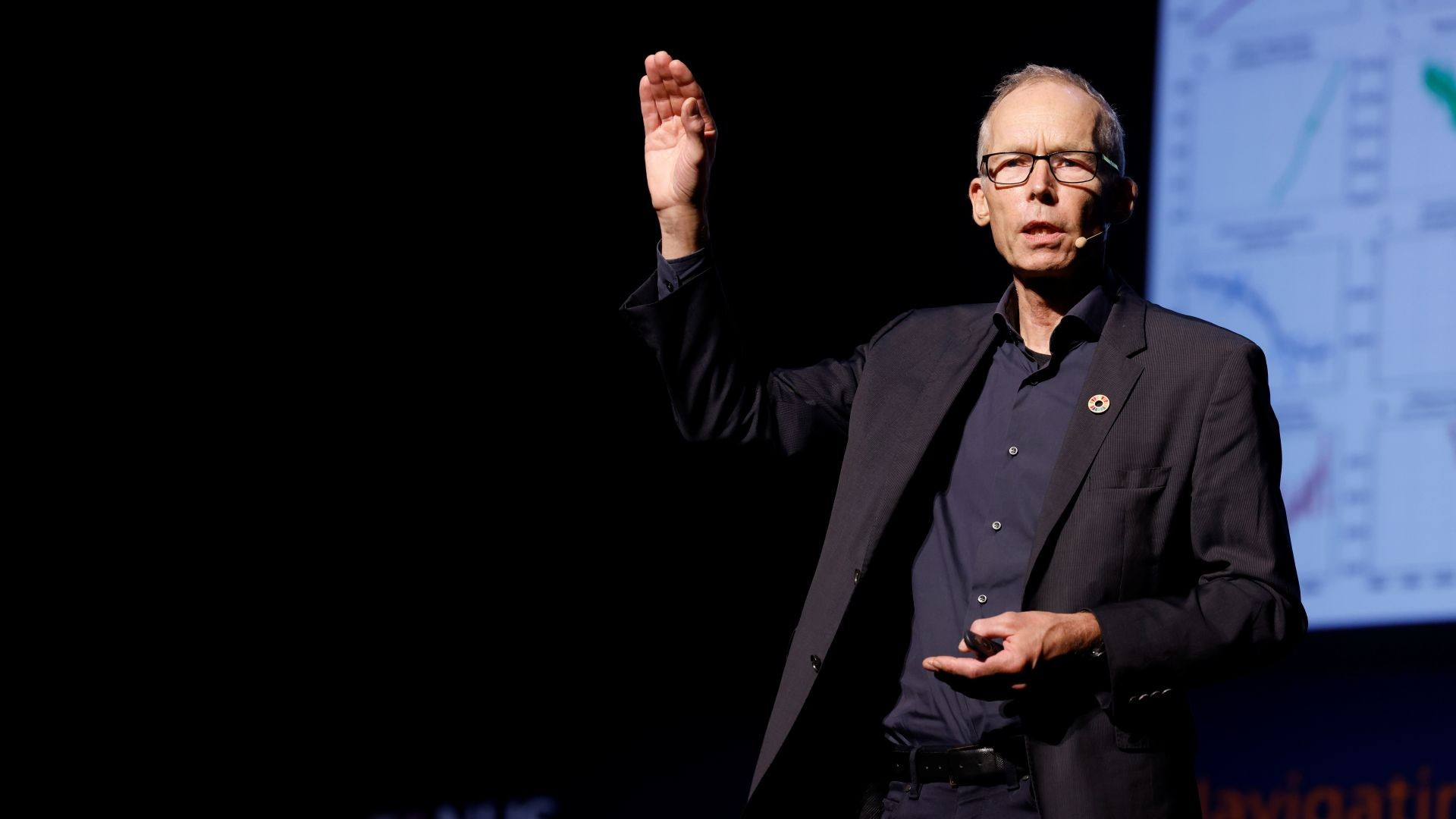
The session, moderated by NUS Vice President (Sustainability & Resilience) Professor Koh Lian Pin, drew over 650 students, academics, policymakers and business leaders who came to hear the insights of the climate expert on the future of the earth.
A planet at its limits
Prof Rockström is well known for leading the development of the planetary boundaries framework, which defines nine critical earth systems— such as climate change, ocean acidification and freshwater change— and the limits within which humanity must operate for a safe and stable planet.
Drawing on decades of data, Prof Rockström described how the Earth entered a period of accelerating instability around 1950, which coincided with the end of the two world wars and the start of the third industrial revolution.
Today, seven of the nine planetary boundaries have been breached, putting the planet under dual strain— the mounting stress of climate change and a weakening capacity to withstand it.
As such, even the complete elimination of fossil fuels would not guarantee safety. “Even if we phase out fossil fuels to a completely fossil-fuel-free world economy in 25 years, we will still fail,” he said. “Because the breaching of the biosphere boundaries will, on their own, push us beyond 1.5 deg C.”
Recent data, he added, show that the planet is already beginning to lose its buffering strength. “The carbon uptake capacity of forests is going down. The Brazilian part of the Amazon Basin has already flipped over and is no longer a carbon sink,” he said. “These are signs of a system that may be moving to a more fragile state.”
Lessons from the past
In response to a question from the floor on what lessons today’s leaders can draw from the 1987 Montreal Protocol, Prof Rockström called that treaty “a remarkable achievement”. The world, he said, had listened to science and acted accordingly by phasing out ozone-depleting chemicals. “Nobody had seen an ozone hole, yet the world trusted science and the conclusion that it was an existential threat.”
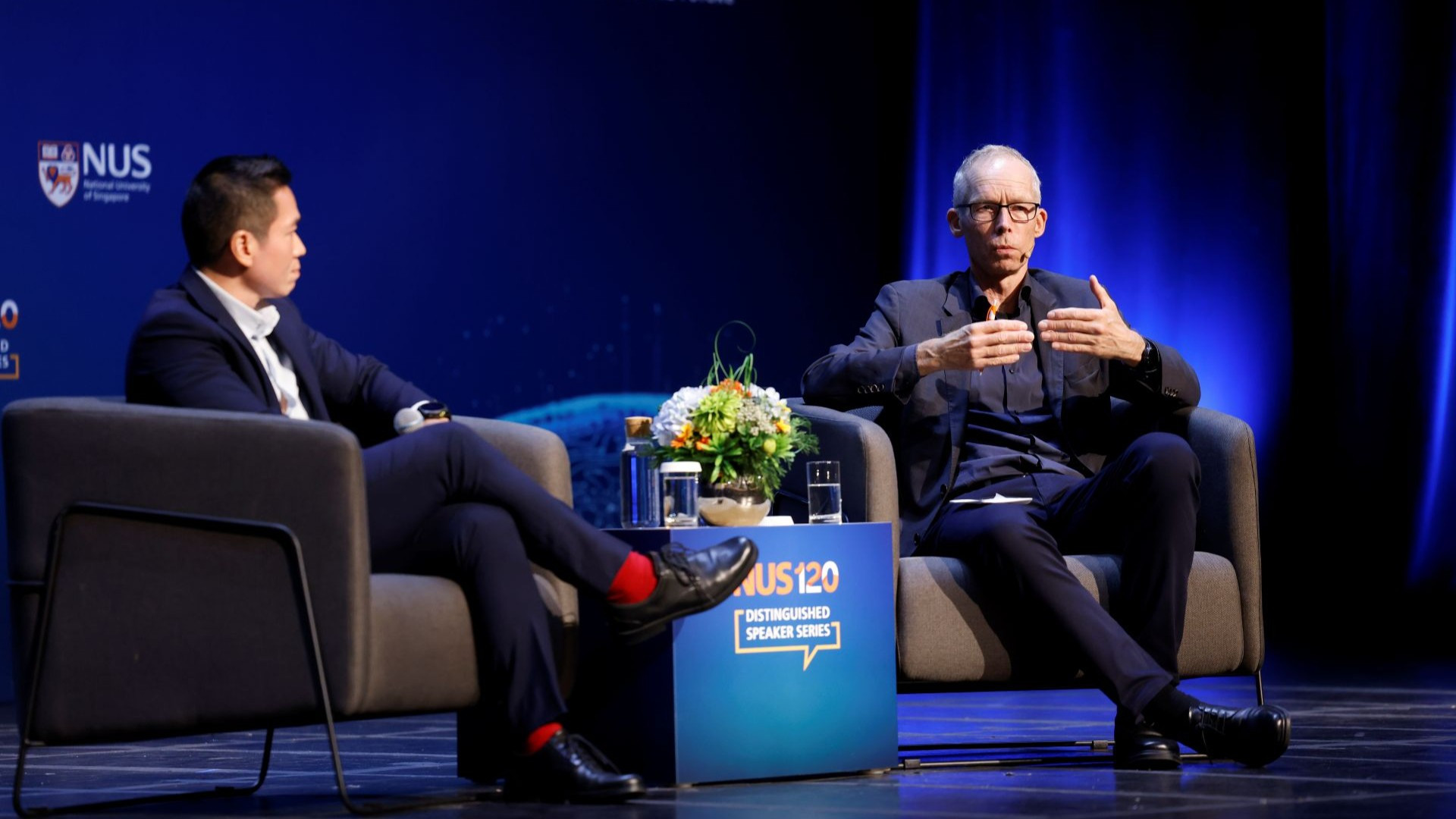
What made the pact powerful was its binding nature. “We didn’t have a phase-out plan for chlorofluorocarbons. We forbade them. It was a red line in the sand. It was a mandatory regulatory framework,” he added.
By contrast, the 2015 Paris Agreement depends too heavily on voluntary pledges. What the energy transition needs, he said, is compliance and accountability guided by science, and for policy science and technology to work hand in hand.
“The Montreal Protocol succeeded, not only thanks to science and to political leadership, but also because the industry had solutions, and they were scalable solutions that got equal or better outcomes,” he elaborated.
From peril to possibility
Today, as we stand on the cusp of a critical turning point in our planet’s future, Prof Rockström’s work is more pertinent than ever before in addressing the pressing challenges that confront us.
Despite his bleak analysis, Prof Rockström stressed that the story need not end in despair. “I don’t call this doom,” he said in response to another question about how to overcome public apathy towards climate science.
“The story of sustainability is the story of winners, of modernity and of the future,” he added.
There are also emerging “bright spots”. He highlighted exponential gains in renewable energy: “We’re passing this 10 per cent point in solar and wind … When new innovations penetrate more than 20 per cent of market share and show to be better options than incumbent solutions…they can tip over the entire market.”
Electric-vehicle (EV) adoption, he added, was rising steeply, with 90 per cent of car sales in Norway being EVs and the EV market share in Denmark approaching 60 per cent.
The other breakthrough, he said, lies in transforming global food systems. A shift towards healthier, largely plant-based diets and lower food waste could, combined with clean energy, bring humanity back within planetary limits.
“If we can decarbonise the energy system and shift towards healthy diets, we could actually return to a safe operating space within the next 25 years,” he said.
Partners in science
The lecture also marked the signing of a Memorandum of Understanding between NUS and the Potsdam Institute for Climate Impact Research, committing the two institutions to collaborate on research into global change, climate impacts, water, energy and sustainable development. The agreement provides for joint projects, data sharing and researcher exchanges.
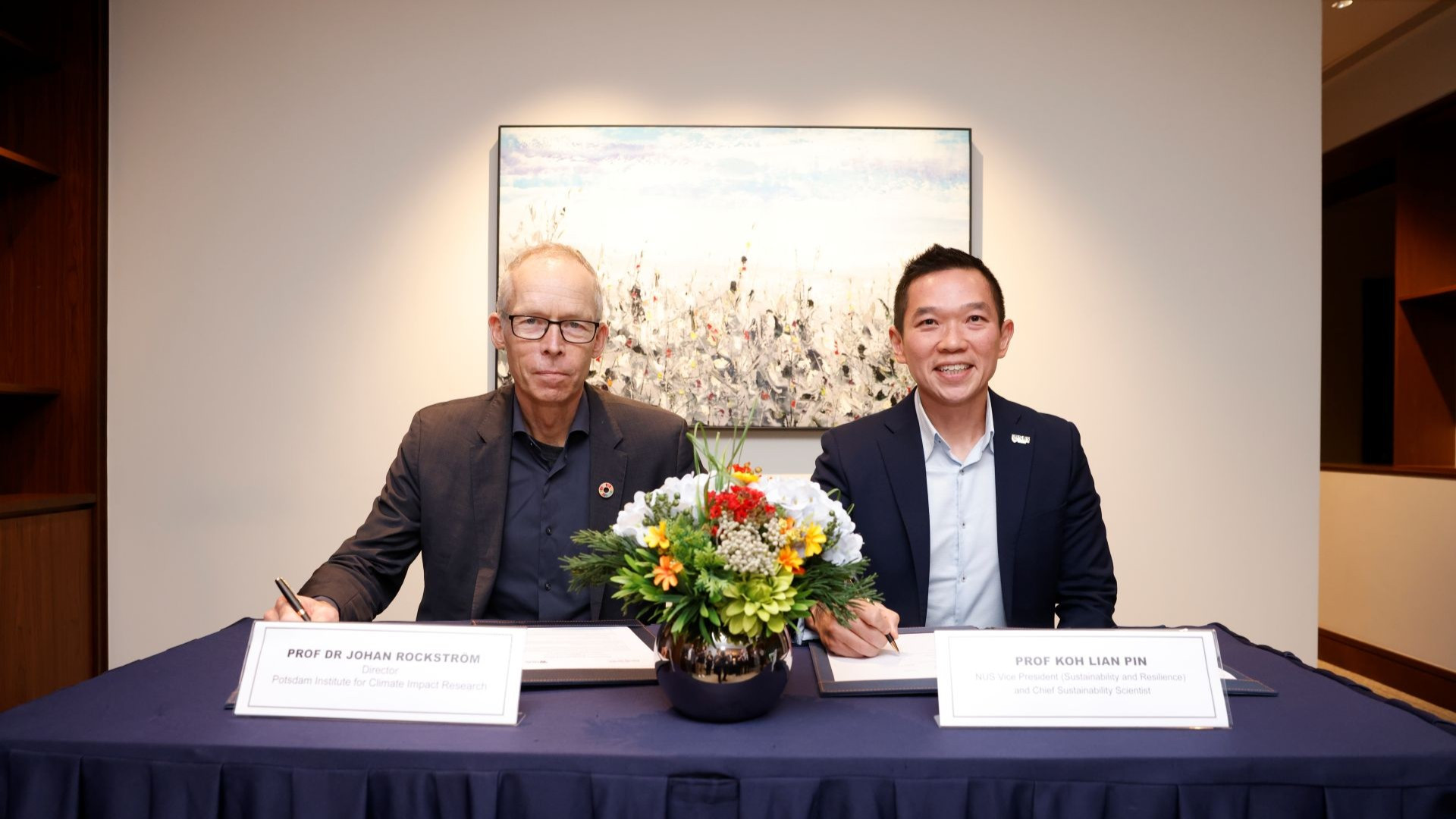
“This (partnership) will allow us to exchange valuable expertise, information and ideas for successful collaborations. This seminar today marks the beginning of this vital exchange,” said Professor Liu Bin, NUS Deputy President (Research and Technology), in her opening address at the lecture.
For Prof Rockström, such alliances are essential to alter the Earth’s dangerous trajectory. “We are outside the safe space but still within the danger zone,” he said in closing. “That means the window is open to turn this around.”
