Chance for change: How NUS College students turn ideas into lasting impact
From supporting communities in Singapore and Southeast Asia to creating solutions that can carry on, NUS College students are learning what it takes for their ideas to change lives through its two-year Impact Experience programme
What if a student project wasn’t seen as something merely for experience or grades, but a real chance to change lives?
For NUS College (NUSC) students, the answer to these questions came through the experiences they have gained from the College’s flagship Impact Experience programme (IEx). Embodying its philosophy of ‘breaking open the classroom’, IEx allows students to go beyond lectures and books to learn from the communities and environment around the world.
“The projects that have emerged from IEx remind us that, in a world where technology is helping us move faster and generate solutions more quickly, meaningful change often takes time,” said Professor Simon Chesterman, Dean of NUSC.
“Students need time to build relationships, test ideas and stay engaged over a longer period for their work to grow and continue with the communities and students that come after them. This is what ‘Resonance’ means to us — seeing the work continue to have meaning and impact for years to come.”
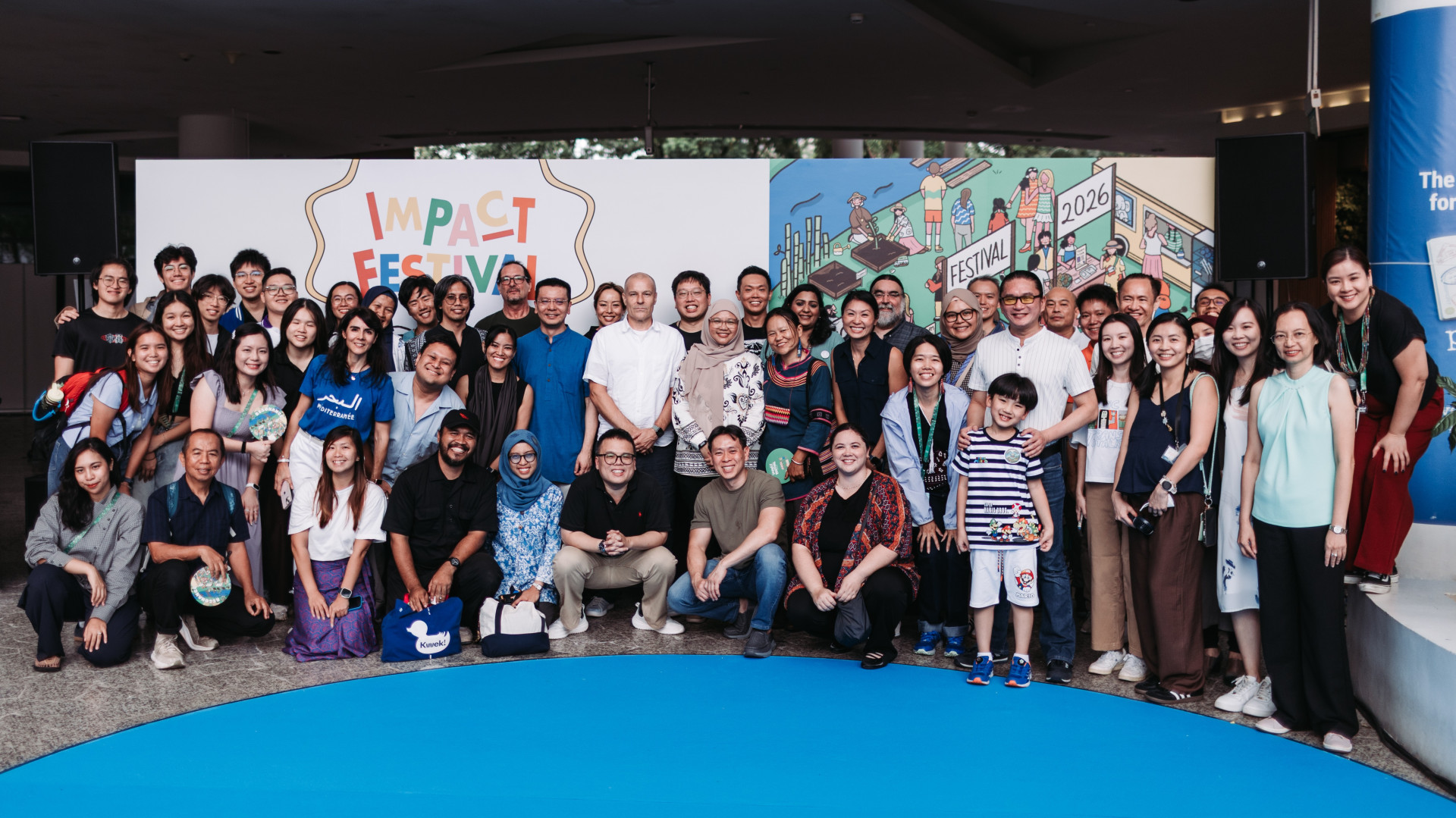
At NUSC’s second Impact Festival, themed ‘Resonance’, on 16 September 2026, 57 projects were put on display, offering a glimpse into what students had learnt from putting their ideas to the test and how to turn them into lasting impact.
The Festival also featured a specially curated Creative Showcase, which brought the students’ work to life through illustrations and performances, on top of two Conferences, where representatives from seven projects shared about their communities and causes, as well as their experience working alongside NUSC students to drive change for good.
One key takeaway from the presentations was the importance of forming meaningful connections to offer appropriate solutions. However, the students faced various challenges, from experiencing failures and language barriers to figuring out how to deliver lasting impact.
Overcoming language barriers
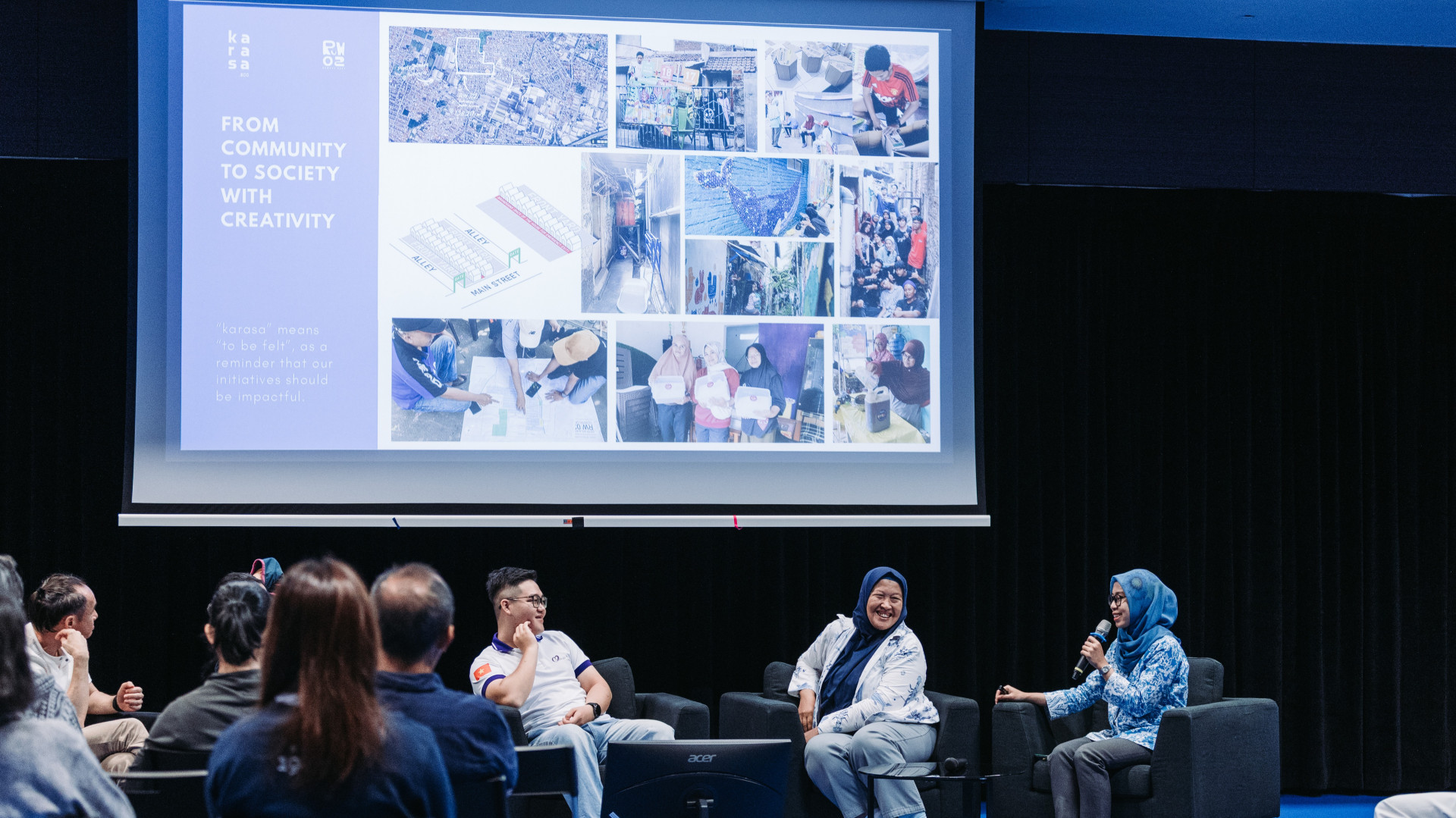
For students who took their projects overseas, building connections meant navigating communication challenges. “The language barrier is the highest wall that we have to break through,” said Ms Arum Kartika, one of the co-founders of Karasa, an Indonesian ground-up initiative that engages local youths through art.
Ms Kartika and her husband started Karasa in 2019 as they worried for the youths in their Bandung neighbourhood, located next to Southeast Asia’s largest textile factory. In their area, air, water and soil quality are poor and crime rates are high.
Karasa, which means “to be felt” in Sundanese, gives at-risk local youths an outlet for constructive pursuits. “We want to make a space for them so that they can do something good for their neighbourhood,” explained Ms Kartika.
IEx students worked with the youngsters to revitalise the neighbourhood by turning walls along alleyways into vibrant murals. At another wall, participants used bottle caps salvaged from a nearby river to create a head-turning whale.
Although the two groups of youths spoke different languages, the two-year IEx programme gave the students room to gradually pick up the basics of Bahasa Indonesia and, over time, engage more meaningfully with their Indonesian peers.
But communication was only the first step. At another non-governmental organisation (NGO) Yayasan Juang Laut Lestari (JARI), students learned that meaningful engagement also meant being able to co-develop solutions with a community, rather than simply bringing solutions to it.
In Gili Balu, a marine tourism area in the Alas Strait off West Sumbawa, Indonesia, students worked with the Poto Tano community and JARI to redesign four ecotour programmes. The aim was to ensure that as tourism grows, its benefits remain with the local community, including fisherfolk, women and youth.
“NUSC students sit and discuss together with the local community to try to find solutions,” said Ms Hani Nusantari, Program Manager of JARI. “They don’t just create a project, but help the local community find what’s best for them.”
Language wasn’t the only barrier. Students also had to adapt to an unfamiliar environment, but the IEx programme structure gave the students time to immerse in the culture and gradually pick up the basics of Bahasa Indonesia.
“By the end of our trip, we actually learnt quite a few words and managed to have conversations,” said Zhou Ze Hao, a second-year Computer Science major, who visited Alas Strait with his project team for their recce in the initial stages of the project in April 2026.
“It’s really a very enriching experience. I learnt a lot from the community there,” said Ethan Divyanathan, one of Ze Hao’s project mates, a second-year Mechanical Engineering major. “They have a lot of different kinds of knowledge that you can never pick up from sitting around the classroom.”
Navigating community dynamics
In the Lisu village of Doi Lan in Chiang Rai, Thailand, IEx students encountered a community that is far more complex than it first appeared.
“People see the village as culturally homogeneous. Instead, there are conflicts, disagreements and contestations,” said Ms Amema “Mimi” Saeju, founder of the Lisu Cultural Heritage Centre in Chiang Mai, which seeks to preserve Lisu culture by promoting the traditional art of Lisu handicrafts.
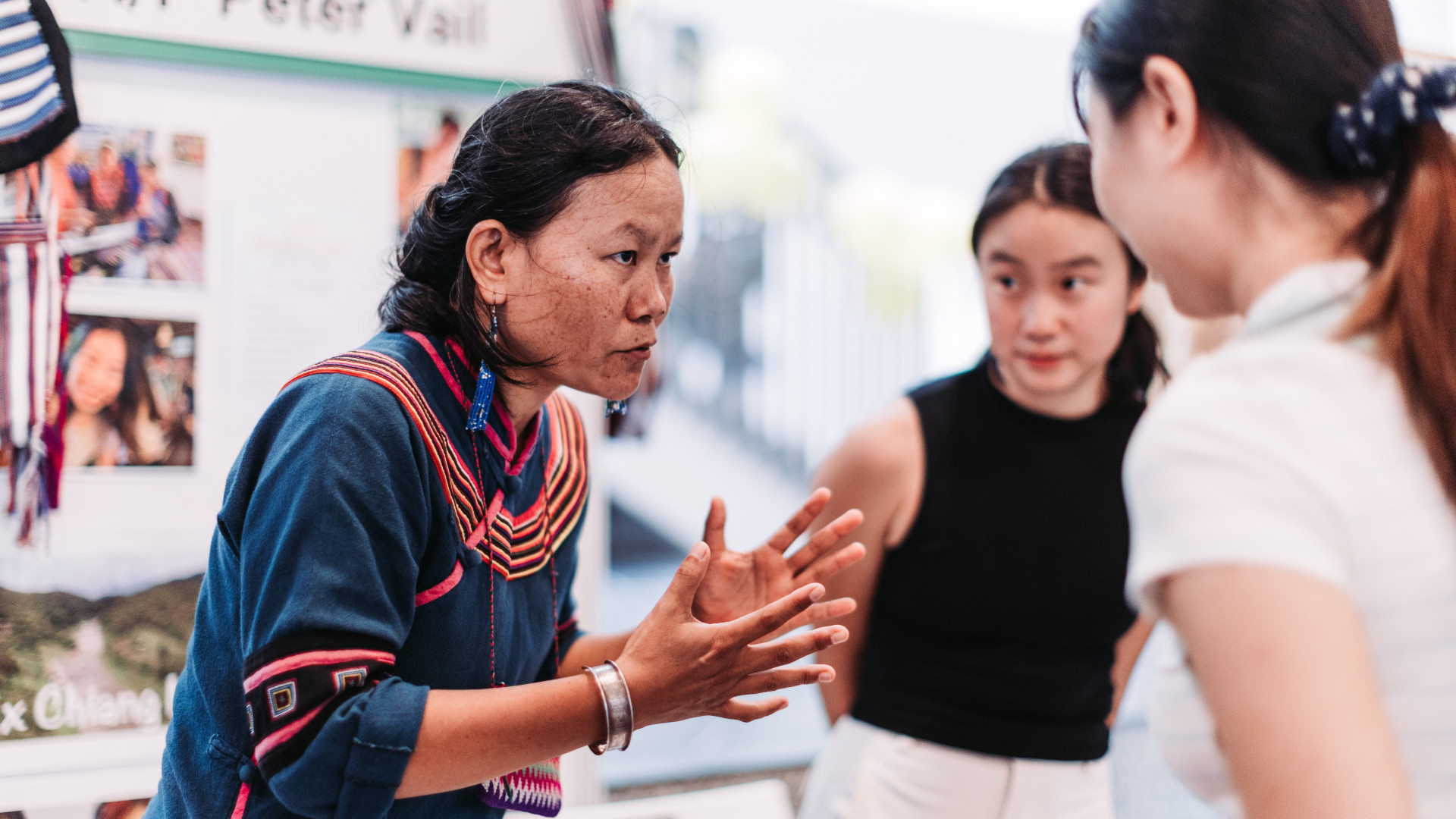
Residents have different social and economic backgrounds, from farmers to lawyers, government officials and businesspeople. These differences can lead to competing priorities, including over Ms Saeju’s efforts to preserve Lisu culture.
For students supporting her work, understanding these dynamics is an important part of the project. Ms Saeju noted that students can be seen as aligned with the community partner they work with, which can affect how other residents respond to them.
“The students would be viewed as an extension of the [community] partner,” she said. “The students are not neutral.”
IEx’s two-year project timeline gives students more time to understand these different perspectives, build relationships and adapt their projects to the community context.
“It takes time for the community to figure out what you’re doing,” said Ms Saeju, adding that it took more than 10 years for members of her community to understand and appreciate her own preservation work.
Her advice to students: “Don’t expect immediate results.”
Building lasting impact
But building relationships and understanding a community are only part of the challenge. For the students, the bigger question is whether the work can continue after they leave.
That, to them, is the real test of success.
NUSC class of 2026 alumni, Andrew Roy Toh and Naomi Ang, first joined Bamboo Bootcamp in 2023, an NGO based in Davao, Philippines that trains local workers in bamboo construction, building livelihoods while promoting native bamboo as a viable alternative to concrete.
From the get-go, the students had to rethink what it meant to make an impact. Rather than create a solution that depended on their repeated involvement, they realised that lasting impact meant ensuring that the community could continue the projects sustainably.
“One of the targets we had was to make ourselves obsolete from the community,” Andrew said. “After we finish our project, they must be able to stand on their own two feet, pick it up and carry it on even without our presence.”
That meant co-creating projects with the community rather than delivering a templated solution.
“The best thing that we can do as visitors is to listen to the community,” said Naomi, adding that it was a better approach to let the community decide on what works for them.
Over four trips, the team put this into practice by testing and refining a bamboo workshop for children based on feedback from local teachers. They eventually condensed it into a two-day programme and trained the teachers to run it independently.
“The beautiful thing is the consistent influx of NUS students,” said Mr Jed Michael de Guzman, Chief Operating Officer of Bamboo Bootcamp. “The community now recognises when there’s a new batch of NUS students coming and there’s anticipation. They are excited to co-work with them,” he added.
The idea of continuity is already playing out in Gili Balu. The marine conservation and responsible ecotourism project which began in August 2024 has since been handed to a new cohort of NUSC students, who are continuing to co-develop the ecotours with the community as new needs and challenges emerge.
Nuryanee Anisah, a final-year Business Administration major who was a pioneer on the project, said: “One of my biggest takeaways was that sustainability is not just about protecting the environment but also understanding the people whose lives and livelihoods are connected to it. Some of my most meaningful memories were the simplest ones — sitting with the fisherfolk at night, sharing music and stories, and learning about their lives beyond what we could ever learn in a classroom.”