


SGFIN Sustainability Summit 2025 strikes hopeful note for climate action

When visiting Singapore, most people immediately notice the city’s cleanliness, and so did Professor Myles Allen of Oxford University when he visited for the first time at the invitation of the NUS Sustainable and Green Finance Institute (SGFIN) to be its keynote presenter at the SGFIN Sustainability Summit 2025 held on 13-14 March 2025.
He observed that maintaining Singapore’s clean streets takes not just extensive cleaning efforts, but also a sense of social responsibility to recognise that littering transfers the cost of disposal onto other people and is simply “not okay”.
“When are we going to get to the stage where dumping carbon dioxide into the atmosphere and imposing the cost of disposing of or coping with the impact of your carbon dioxide on other people is also not okay?” asked Prof Allen, who is Head of Atmospheric, Oceanic and Planetary Physics in the Department of Physics and Professor of Geosystem Science in the School of Geography and Environment, both at the University of Oxford.
Calling for climate policy to be reframed from the traditional focus on changing corporate and citizen behaviour to a focus on product and waste disposal, Prof Allen’s keynote presentation outlined a roadmap to halt global warming within 30 years, which would limit future warming to less than the amount that has occurred since the 2000s.
“We could stop global warming within a generation, but it requires a fresh approach to climate policy, and one that I think should be inspired by the turbulence we’re seeing over climate policy around the world,” he said.
Prof Allen’s suggestion was among several cautiously optimistic messages about climate action shared during the summit, held to the theme “Commitments, Challenges, and Innovations in the Transition to Sustainable Economy”. The event was attended by about 200 representatives from the global sustainable finance community, including academics, industry leaders, policymakers and regulators, financial institutions, and legal experts.
Optimism amid policy turbulence
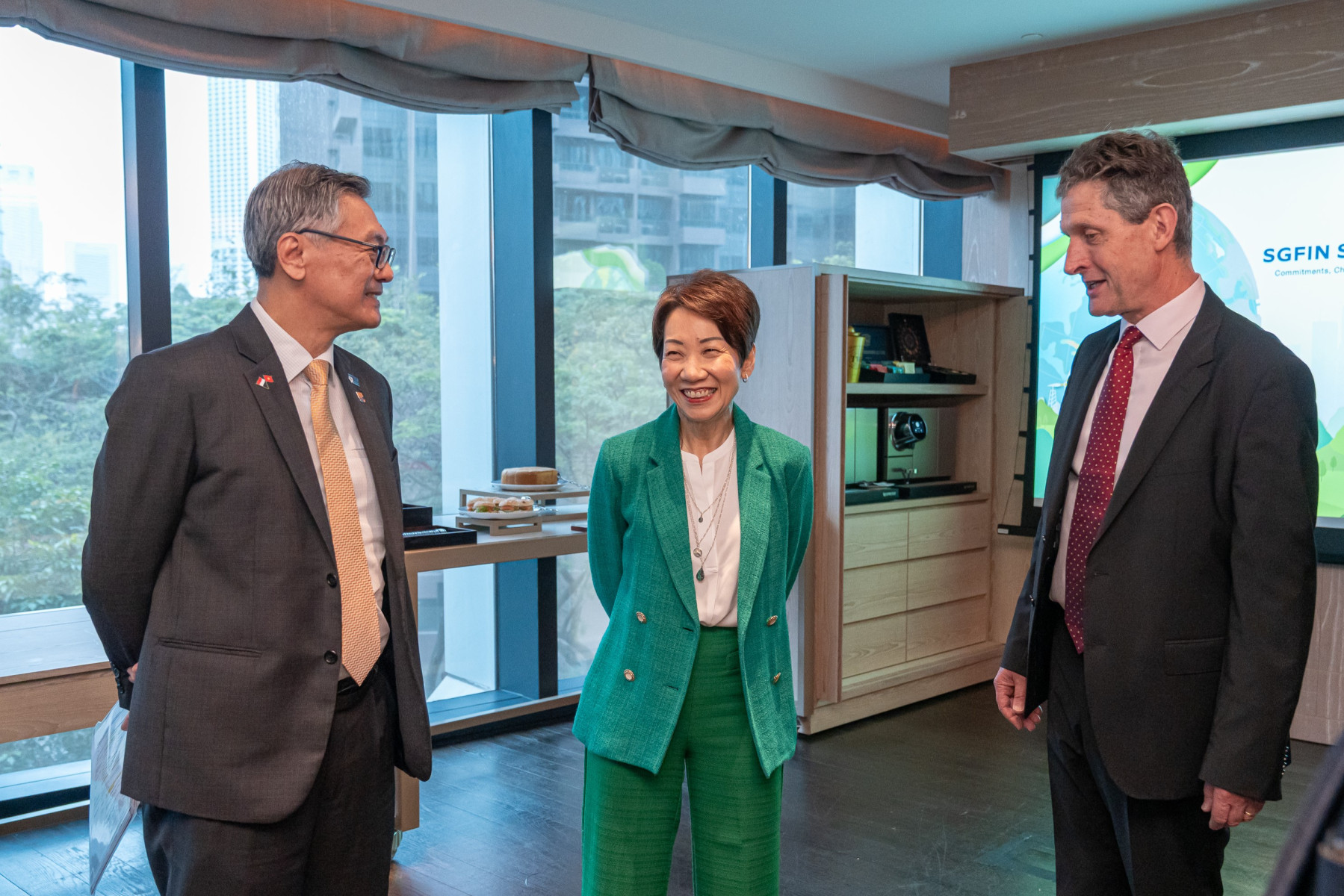
In her opening address, Guest of Honour Ms Grace Fu, Minister for Sustainability and the Environment and Minister-in-charge of Trade Relations, noted that the challenges in the fight against climate change are “complex… but not insurmountable.”
Although global momentum appears to be wavering, Singapore is pressing forward with collaborations and contributions to key enablers of the green transition, she said.
Similarly, industry keynote speaker Ms Emily Chew, Head of Sustainability at GIC, said the sovereign wealth fund’s assessment of global climate policies indicates that “despite the headlines, it’s not a one-way pullback on climate policy around the world.”
Policy momentum in the European Union, China, Australia, and the United Kingdom remains strong, and Europe’s focus on renewable energy and related products has intensified, driven by energy cost concerns due to the Russia-Ukraine conflict and a desire to compete with China on key components in the clean energy value chain.
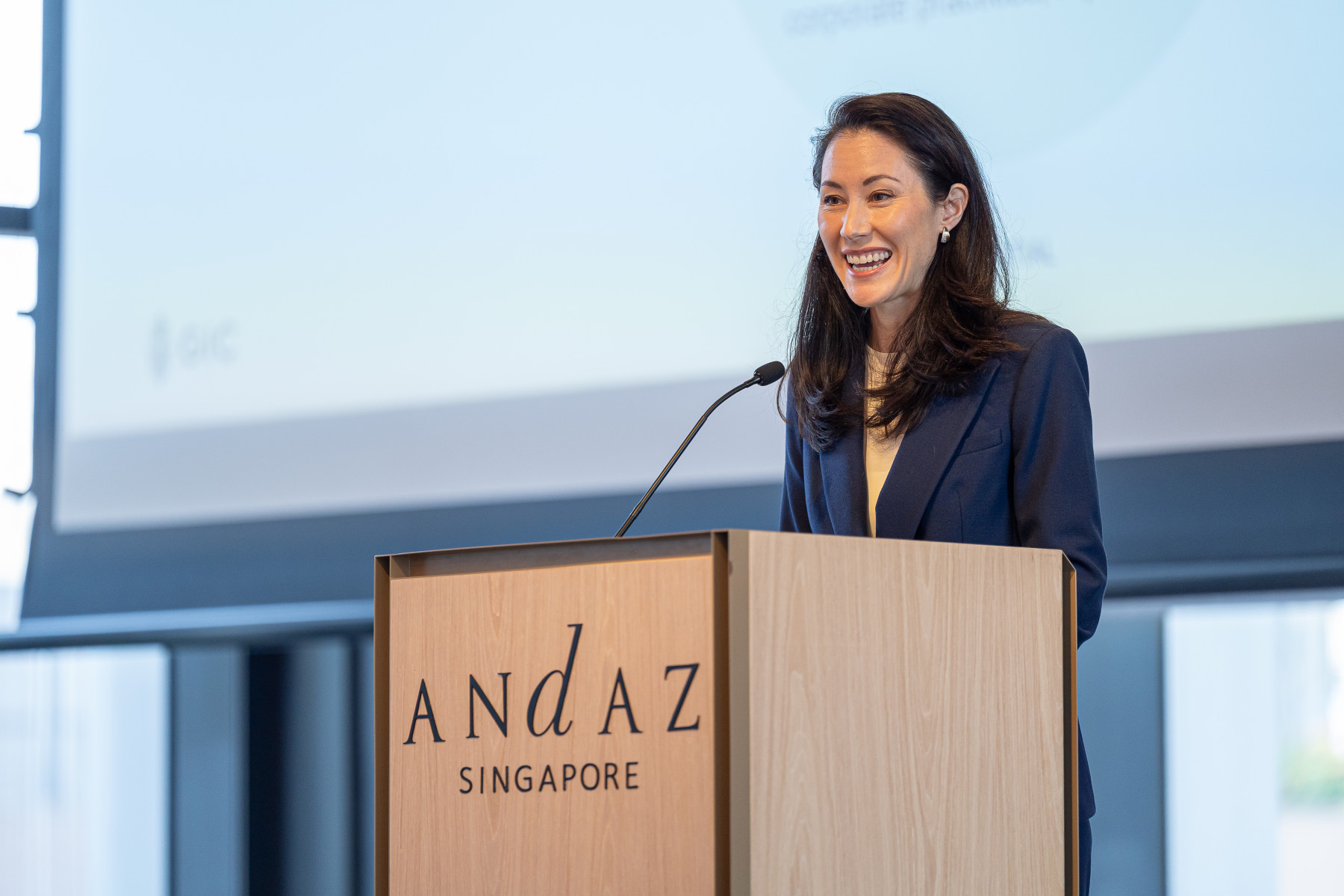
Ms Chew noted that demand for energy continues to outstrip supply at a pace that cannot be met with fossil fuel energy alone. This will drive growth in renewable energy capacity, as renewable energy technology development, advances in energy efficiency, improvements in grid management, and innovations in energy storage like battery technology and liquid storage are expected to ramp up even more rapidly to fill the gap.
Nevertheless, through its climate scenarios research, GIC sees growing conviction that the world may face a “too little, too late” scenario when it comes to the global transition. In this scenario, policy responses to address emissions would be insufficient to keep global warming below 2 degrees Celsius. It is thus looking at investing in not just climate solutions and climate transition, but also climate adaptation, which will be inevitable in a world that is 2-3 degrees Celsius warmer by 2100.
Achieving Geological Net Zero
To avert this crisis, the world must address the issue of carbon dioxide disposal, said Prof Allen.
Progress on replacing fossil fuels with clean energy and reversing deforestation has been far from satisfactory, especially with the reluctance of certain economies and industries to give up fossil fuels. In addition, these methods do not reduce carbon emissions enough to meet net-zero goals.
“If we don’t avoid producing carbon dioxide, we have to take up the slack by increasing the amount we put back in the Earth’s crust, because the amount we can store at the surface by restoring forests is actually quite limited,” Prof Allen said.
“We need to stop fossil fuels from causing global warming, and we need to do it before the world stops using fossil fuels.”
The climate goal should be Geological Net Zero, incorporating capture and storage of carbon dioxide in the Earth’s crust to balance the existing and ongoing emissions, he said. With this approach, getting to net zero by 2055 would entail capturing and storing underground 10 per cent of carbon dioxide produced from fossil sources by 2035, 50 per cent by 2045, and 100 per cent by 2055.
Carbon capture solutions are already available and effective, but more capital is needed to scale up such projects, which currently receive less than 1 per cent of transition investments. The high cost of direct air capture of carbon dioxide, about US$600 per tonne, could be managed by pricing it into fossil fuel costs over time, Prof Allen argued. For example, he estimates that doing so for petrol would increase prices by only 60 US cents per litre over 30 years.
Prof Allen also warned that there is a risk of miscalculating the emissions reduction needed to achieve net-zero targets, due to ambiguous wording in Article 4 of the Paris Agreement. The article calls for striking a balance between carbon emissions and removals to stop global warming but does not specify exactly what removals are included, which leaves the door open for natural carbon uptake by forests and oceans to be “double counted” as part of removal efforts.
“If we only aim for net zero with this definition of emissions, then we stabilise the concentration of carbon dioxide in the atmosphere, rather than allowing it to fall as it should. We would see constant concentrations (of carbon dioxide) resulting, and that allows ongoing warming,” Prof Allen said.
He ended on a positive note, urging those present to take the helm and not wait for direction from elsewhere.
“There is an opportunity here for Asia to lead the way to a more effective, less intrusive, more pragmatic climate future based on the principle that if you generate carbon dioxide, you have the responsibility to dispose of it responsibly and not just dump it into the atmosphere for somebody else to clean up – a policy that I might say is inspired by the clean streets of Singapore.”
