NUS researchers take healthcare innovation beyond the lab and into the community
From contactless health screening to cognitive training and eye care, NUS researchers working with the Health District @ Queenstown (HD@QT) are exploring how technology can support healthier, longer lives
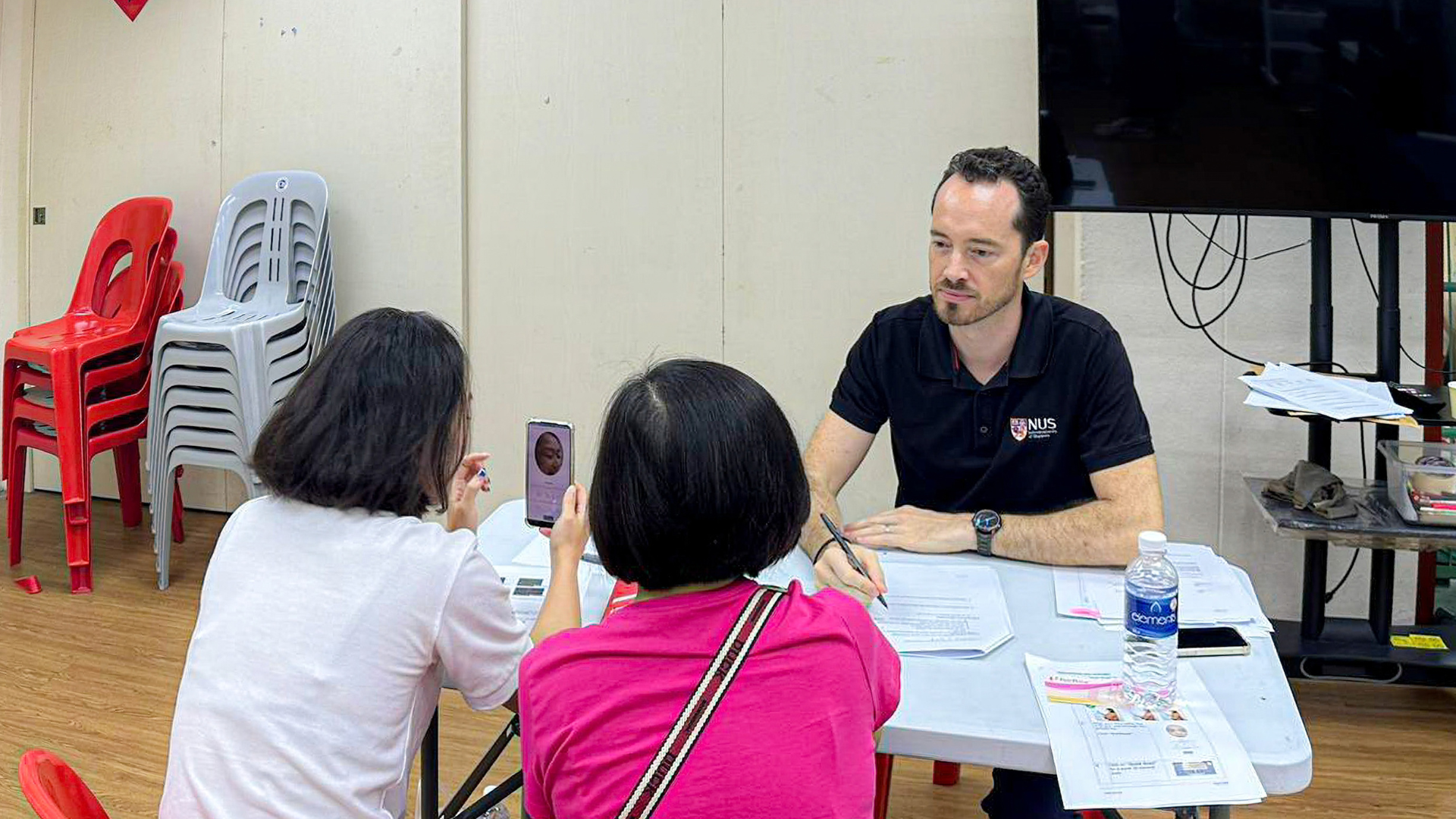
Could a quick facial scan help flag the risk of high blood pressure? Could games based on everyday activities support cognitive health among older adults? And could people at risk of glaucoma have aspects of their eye health monitored closer to home?
These are among the questions being explored through the Health District @ Queenstown (HD@QT), where NUS researchers work with residents and partners to develop and test health and social solutions with communities in real-world settings. The aim is not simply to create new tools, but to understand how technology can make preventive health and care more accessible and relevant to everyday life.
Smart screening
One project will soon bring contactless health screening into the Queenstown community. Led by Dr Yoann Sapanel, Head of Health Innovation at the Institute for Digital Medicine (WisDM), Yong Loo Lin School of Medicine (NUS Medicine), the study will explore whether a wellness kiosk could provide a convenient way to engage people in their health and identify those who may not know they are at risk of hypertension. The kiosk uses remote photoplethysmography (rPPG), a contactless technology that uses a standard camera to detect subtle changes in facial colour caused by blood flow with each heartbeat. These changes, which are invisible to the human eye, can be used to estimate vital signs.
The issue is significant. About one in three Singapore residents aged 18 to 74 has hypertension, according to the National Population Health Survey cited by the project team. Of these, more than half were unaware they had the condition.
From 11 November 2026, residents visiting HD@QT's Come 4Tea Lah! community hub will be able to participate in the study, which is conducted in collaboration with Singapore health technology company Nervotec. Participants will undergo a facial scan at the kiosk and answer a few questions. The technology will subsequently be trialled at Happy Village @ Mei Ling.
For Dr Sapanel, testing the technology in Queenstown is crucial to understanding whether it can work beyond controlled research environments.
“Running this pilot in Queenstown, in a real-world environment rather than a lab, lets us test whether the kiosk meets a clinical need and something residents themselves would actually want help with, which is very much in line with our co-creation approach,” he said.
Importantly, the study is not intended to replace clinical assessment. Researchers will examine how residents respond to the technology, including whether they are comfortable using it, what makes them trust the results and whether those receiving a higher-risk reading subsequently consult a doctor.
Living longer, living better
Other NUS researchers are exploring how technology can support health as people live longer.
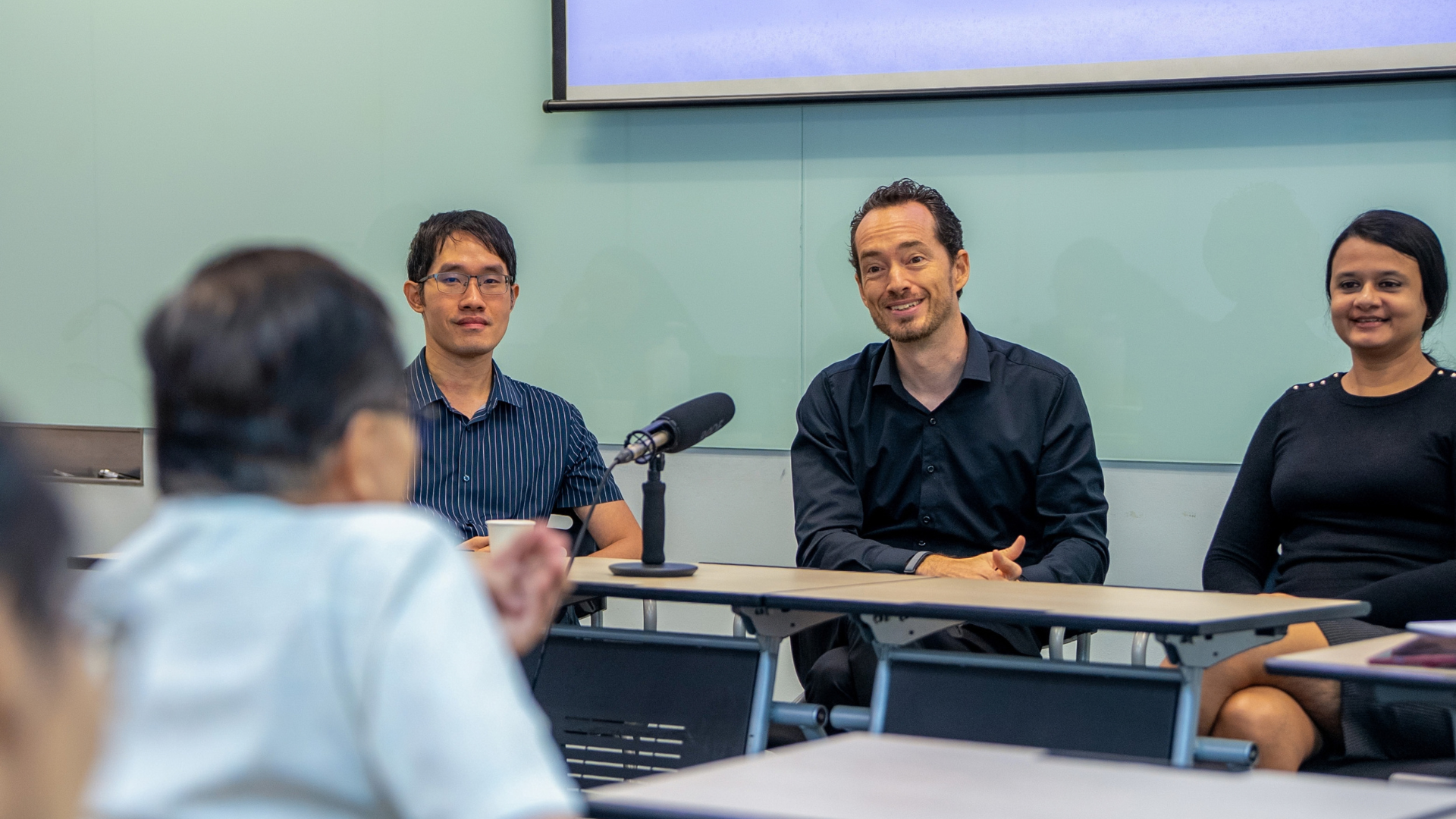
At National Engineers Day 2026, Dr Sapanel joined Associate Professor Bina Rai and Dr Rubin Yong from HD@QT's Technology and Innovation team to share their work in preventive health, cognitive health and eye care.
Together with her team, Assoc Prof Rai, from the Department of Biomedical Engineering, College of Design and Engineering at NUS, has developed a digital cognitive training platform that uses games inspired by familiar activities such as gardening to engage older adults. The platform adjusts the level of challenge according to individual performance, enabling more personalised cognitive training.
Dr Yong, a Research Fellow at the NUS Centre for Innovation and Precision Eye Health (INVISION), is working on another aspect of healthy ageing. The FourSight project explores community-based monitoring for people at risk of glaucoma, with the aim of making routine eye monitoring more accessible while connecting it with existing healthcare services.
While the technologies differ, the researchers share a common approach: taking innovation beyond the laboratory and designing it around the people expected to use it. Through HD@QT, researchers can pilot ideas in community settings, gather feedback from residents, and work with healthcare and industry partners to understand what it takes for promising technologies to work in everyday life.
As Singapore's population lives longer, such approaches could open new ways to support health and independence — not only when people enter the healthcare system, but also in the communities where they live.
Find out more about Health District @ Queenstown.