Three NUS trailblazers honoured with nation’s top research accolades
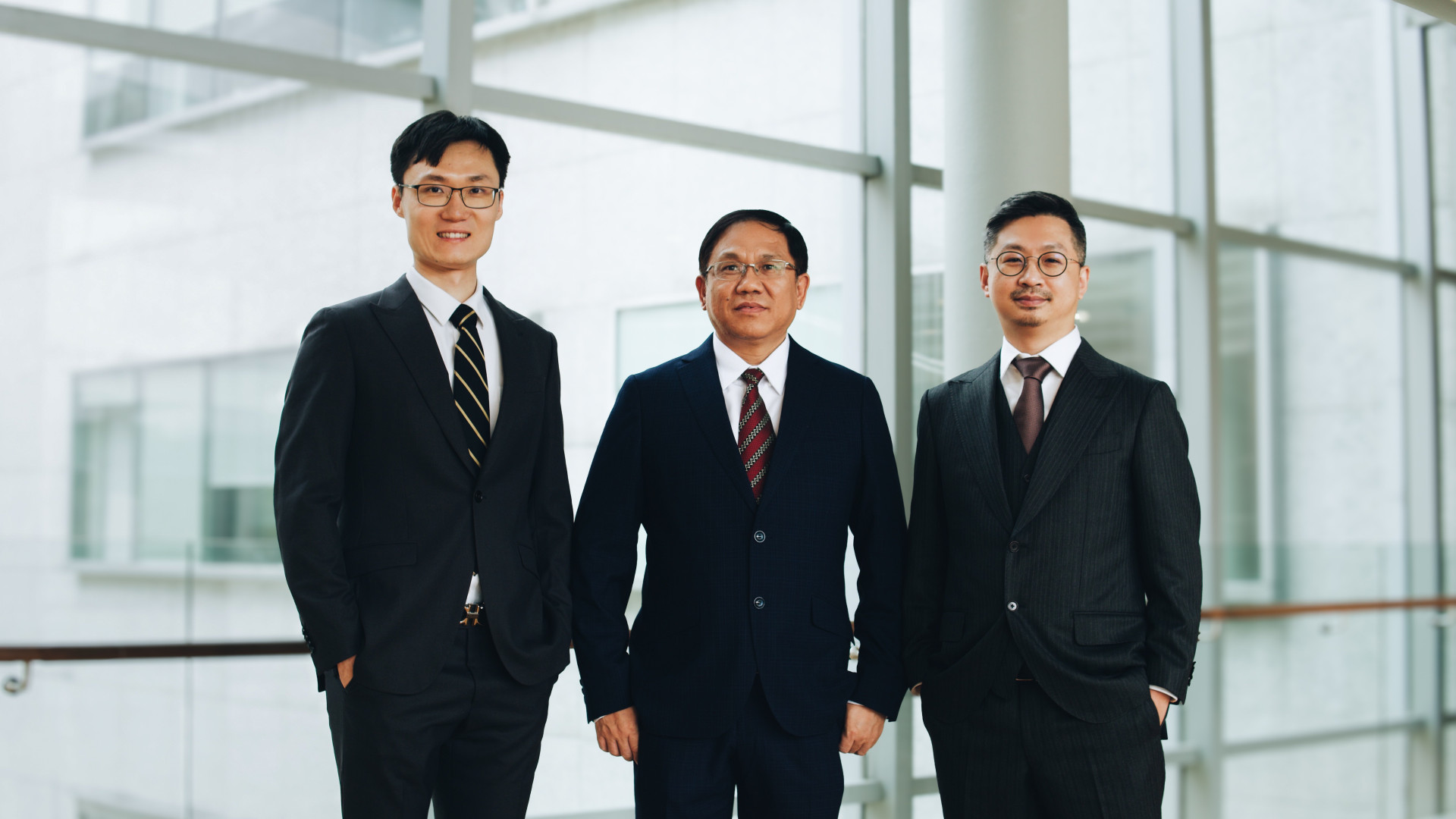
Three distinguished NUS scientists have been recognised at this year’s President’s Science & Technology Awards (PSTA) for their exceptional contributions in pushing the boundaries of science and technology. Presented annually and organised by the National Research Foundation (NRF), the PSTA is the nation’s highest honours for research scientists and engineers in Singapore. This year’s awards ceremony was held on 28 August 2026.
Professor Wu Jishan, Provost's Chair Professor from the Department of Chemistry in the Faculty of Science at NUS, received the esteemed President’s Science Award (PSA) from Mr Tharman Shanmugaratnam, President of the Republic of Singapore.
Two outstanding young researchers were conferred with the Young Scientist Award (YSA) from Mr Heng Swee Keat, Chairman of NRF, for their potential to become future world-class leaders in their fields. They are: Assistant Professor Liu Boxiang, Presidential Young Professor from the Department of Pharmacy and Pharmaceutical Sciences in the Faculty of Science at NUS, and Assistant Professor Hou Yi, Presidential Young Professor from Department of Chemical and Biomolecular Engineering in the College of Design and Engineering at NUS, and Head of the Perovskite-based Multijunction Solar Cells Group at the Solar Energy Research Institute of Singapore (SERIS) at NUS.
Their collective achievements underscore the University’s deep commitment to fostering a culture of research excellence and innovation at every career stage, from promising young talents to established leaders in their fields.
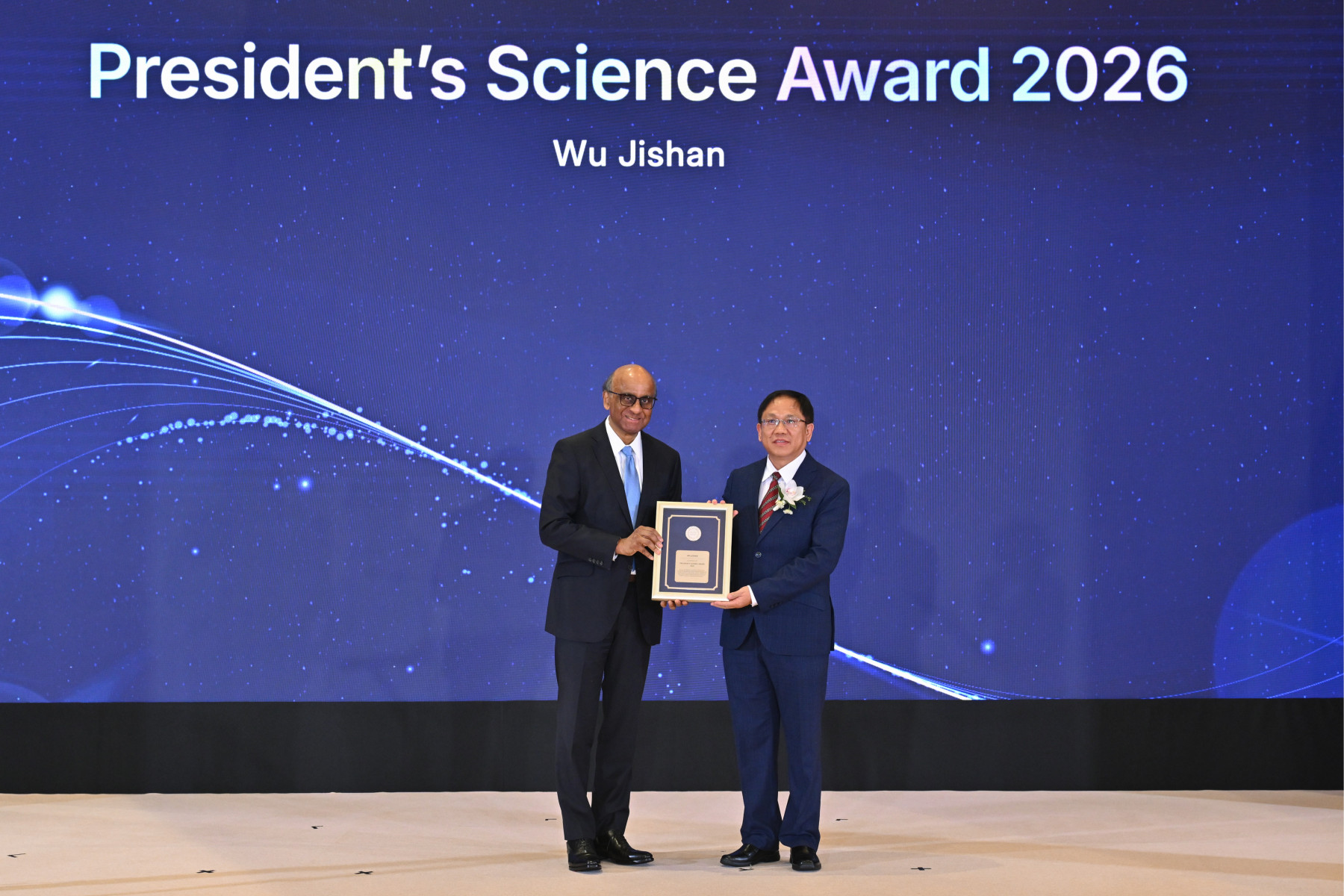
2026 President’s Science Award Recipient: Professor Wu Jishan
Professor Wu Jishan was presented the PSA for his contributions to molecular carbon science. His work focuses on developing open-shell and topologically complex molecules as designable systems, enabling new approaches to control their properties for future electronic, magnetic, photonic and quantum technologies.
A leading molecular scientist, Prof Wu has transformed our understanding of how electrons can be controlled in carbon-based molecules. He challenged the long-standing reliance on stable "closed-shell" molecules by demonstrating that highly reactive "open-shell" molecules can be systematically designed and controlled. This paradigm shift turned scientific curiosities into functional materials with unique magnetic, optical, and quantum properties.
One of Prof Wu’s most significant contributions is the development of stable diradicals and polyradicals – molecules containing unpaired electrons that interact with one another. His discoveries have led to new materials for spintronics, photonics and molecular quantum technologies. Prof Wu also reshaped chemistry’s core concept of aromaticity by extending it into three dimensions. He synthesised complex carbon architectures like Möbius and figure-eight molecular systems, opening new possibilities for advanced photonics, circularly polarised light technologies, spin-selective devices, and future quantum systems.
“Receiving the President’s Science Award is a tremendous honour and a deeply meaningful milestone for me. It recognises not only my own scientific journey, but also nearly two decades of work by my students, research team and collaborators at NUS,” said Prof Wu. “I am particularly grateful that our long-term effort to explore unconventional molecular systems — from open-shell molecules to three-dimensional aromatic and topological carbon structures — has grown from fundamental curiosity into new directions for advanced materials and quantum technologies.”
Collectively, Prof Wu’s discoveries provide a unified framework for controlling electron behaviour. Since joining NUS in 2007, he has built a world-leading research programme and mentored a new generation of scientists who now hold leadership positions globally. His foundational work and commitment to talent development lay the groundwork for future quantum technologies and cement Singapore’s position as a global leader in scientific innovation.
Read the full citation here.
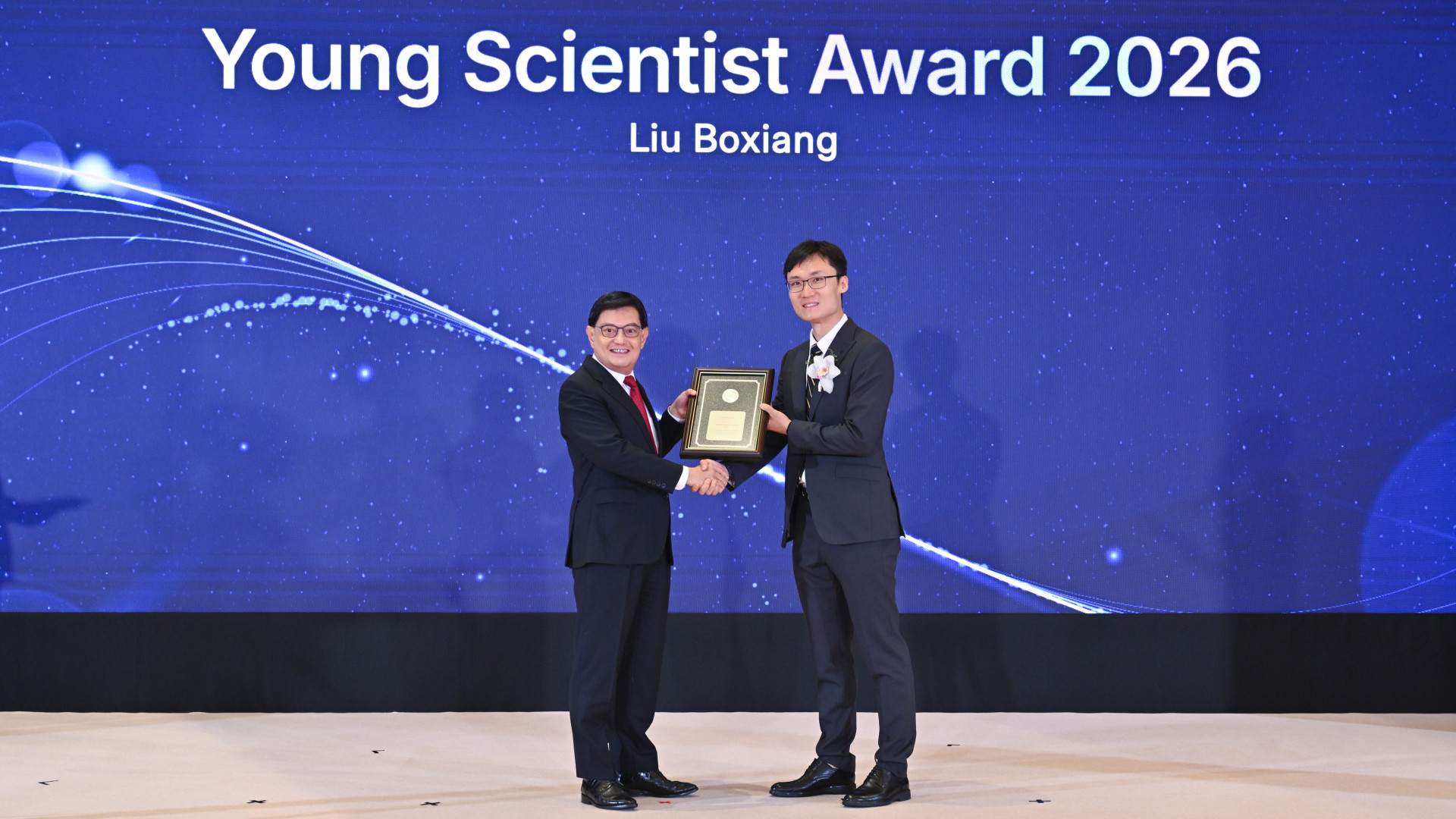
2026 Young Scientist Award Recipient: Assistant Professor Liu Boxiang
Assistant Professor Liu Boxiang, a computational biologist and geneticist, won the YSA for his work in developing artificial intelligence (AI) and bioinformatics methods that improve the identification of causal genes for complex diseases, enabling precision medicine approaches for human health.
“This award recognises not just me but the hard work and dedication of my team and the generosity of my mentors and collaborators. It shows that the work we do is generating real-world impact, and the risk we took led to positive outcomes,” said Asst Prof Liu.
Asst Prof Liu’s research involves developing and employing AI methods to find genes that cause complex human diseases, with a particular focus on Asian populations, which have been underrepresented in genomic research. His work lays the groundwork for precision medicine tailored to an individual’s genetic makeup.
To close the data gap, he spearheaded the creation of the first atlas that maps genetic variation in individual Asian cells. His work identified an Asian-specific gene variant linked to Graves’ disease, a common thyroid condition, with the discovery earning a coveted spot on the cover of the scientific journal Nature Genetics. Asst Prof Liu also developed powerful computational tools, including the LocusCompare2 web platform used by researchers worldwide and the DIRAC deep-learning model, which turn raw genetic signals into actionable insights about disease mechanisms and potential drug targets.
Beyond his own research, Asst Prof Liu is committed to nurturing the next generation of scientists. He directs the Genomic Data Science Laboratory and the MGI-PPS Joint Laboratory at NUS, mentors a team whose work has earned awards, and has co-created and taught new genomics courses for the University. He also leads an industry partnership to bring advanced sequencing technologies to NUS. Apart from YSA, Asst Prof Liu received two other early-career awards this year – the NUS Young Researcher Award, and the NUS Faculty of Science Young Scientist Award.
Addressing aspiring scientists, Asst Prof Liu urged, “Don't give up – most people give up way too soon and never manage to see the light at the end of the tunnel. Pace yourself and avoid burnouts. Eat well, rest well, and exercise to fight for another day.”
Read the full citation here.
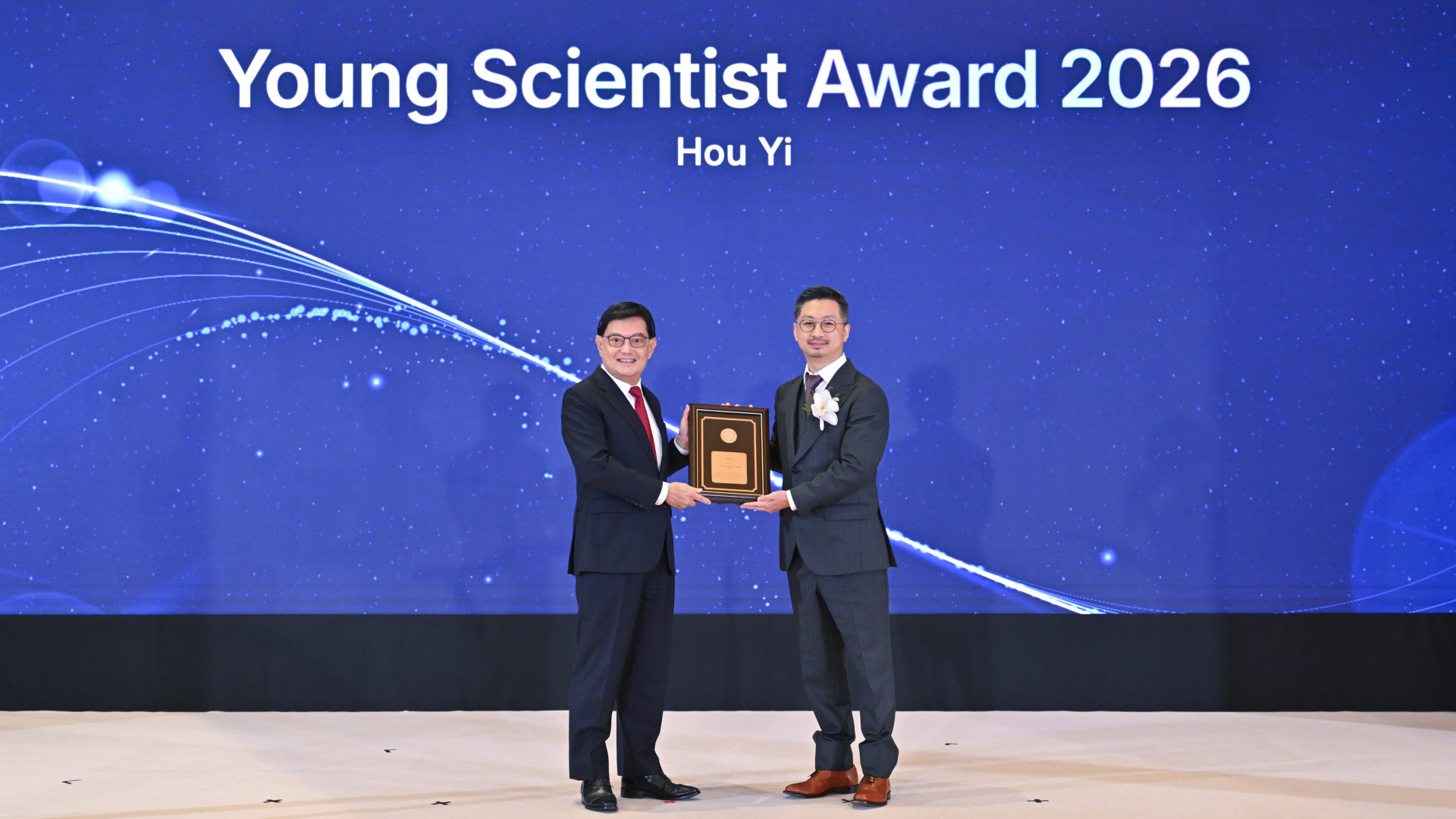
2026 Young Scientist Award Recipient: Assistant Professor Hou Yi
Assistant Professor Hou Yi clinched the YSA for his contributions to the development of high-performance perovskite solar technologies, from record-breaking devices to scalable manufacturing. His work has enabled lightweight and energy-efficient power systems for AI infrastructure, wearable electronics, space platforms and sustainable energy applications.
A pioneer in next-generation solar technology, Asst Prof Hou specialises in tandem solar cells. These cells stack two light-absorbing layers, often using perovskite materials, to capture more solar energy than conventional single-layer cells. His research has produced multiple world-record performances and tackled key challenges in stability and large-scale deployment.
By expanding the understanding of how different material layers interact and the degradation mechanisms of solar cells, Asst Prof Hou has made these advanced solar technologies significantly more durable, efficient, and commercially viable. His breakthroughs are paving the way for lightweight, energy-efficient power generation, moving beyond the limitations of traditional silicon and enabling new energy solutions for a wide range of demanding applications.
“One of the biggest challenges in our research has been translating high-performance perovskite solar cells from laboratory-scale devices into technologies that are stable, scalable, and relevant to real-world applications. We have addressed this by working across disciplines and continuously connecting fundamental materials science with device engineering and manufacturing,” said Asst Prof Hou.
Outside the lab, Asst Prof Hou is deeply involved in technology commercialisation. As the founder of the NUS spin-off company Singfilm Solar, he actively translates academic research into industrial use. Through his research and entrepreneurial efforts, he is building revolutionary power sources for AI infrastructure, wearable electronics, and space systems, strengthening Singapore’s position as a global leader in next-generation solar technology.
To young researchers, his advice is “to stay curious, focus on important problems, and not be afraid of taking on challenges that may initially seem difficult or unconventional”.
Read the full citation here.