Two NUS academics selected under Returning Singaporean Scientists Scheme to advance research in biomedical imaging and advanced materials
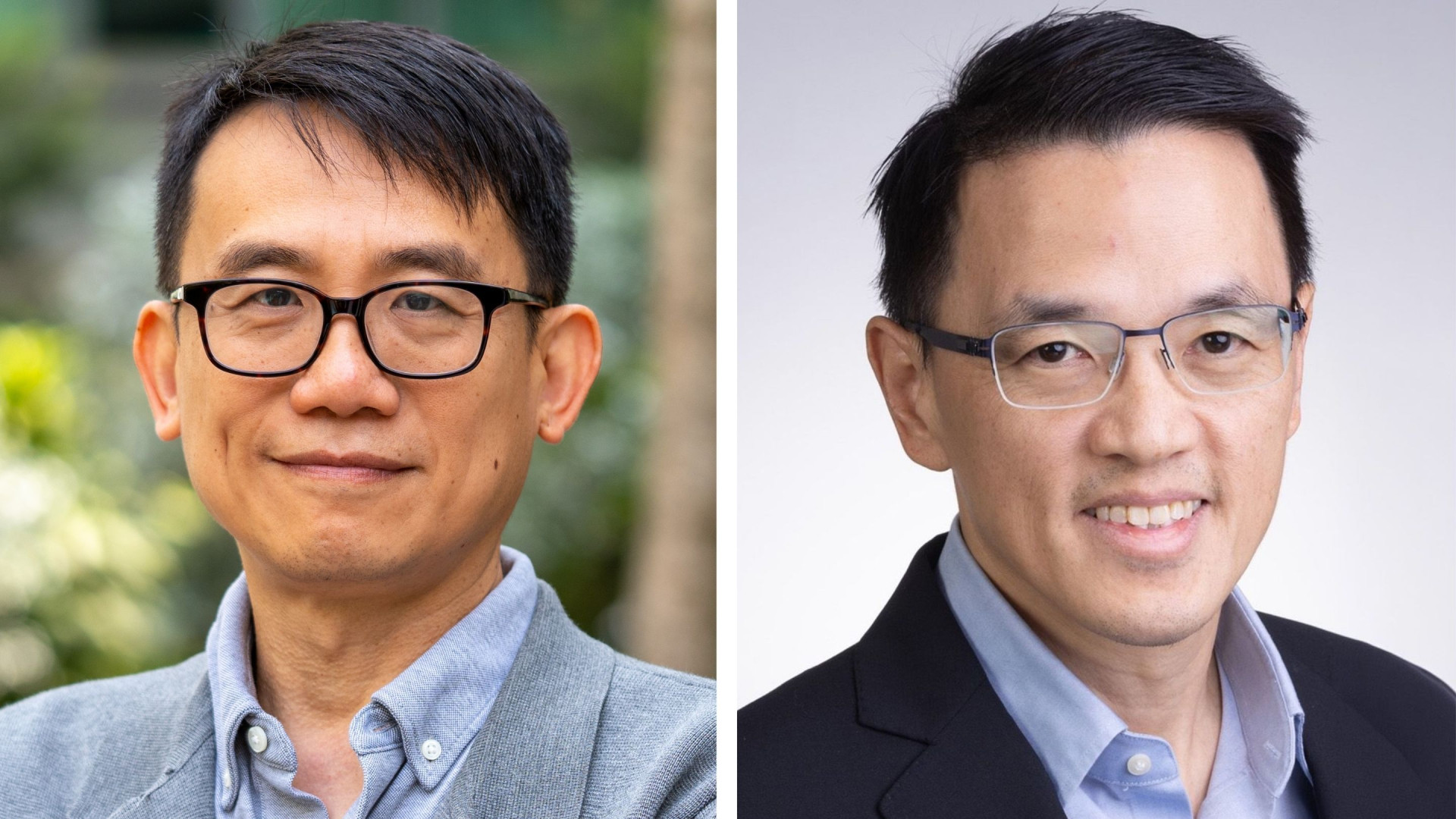
Professor Yang Changhuei and Professor Ong Shyue Ping from the College of Design and Engineering (CDE) at NUS have been selected under the prestigious Returning Singaporean Scientists Scheme (RSSS) administered by the National Research Foundation Singapore, for their world-leading expertise in fields that are shaping the future of science and technology.
The RSSS initiative is designed to attract top overseas-based Singaporean research leaders back to lead local autonomous universities and research institutes.
Prof Yang, a pioneer in biomedical optics and computational imaging, joined NUS CDE’s Department of Electrical and Computer Engineering and Department of Biomedical Engineering in August 2026. After more than two decades at the California Institute of Technology, where he was the Thomas G. Myers Professor of Electrical Engineering, Bioengineering and Medical Engineering, he has returned to NUS to lead the new Computational Microscopy, AI and Wavefront Shaping Lab.
His work focuses on pushing the limits of how light and computation can reveal biological structures, from developing Fourier ptychographic microscopy to pioneering methods that focus light deeper into biological tissue. More recently, he has turned to AI to analyse biopsy slides from lung cancer patients to uncover patterns that could support earlier and more accurate disease prediction.
Prof Ong, widely recognised as one of the pioneers of foundation potentials, joined the Department of Materials Science and Engineering under NUS CDE in January 2026. After nearly two decades in the United States, he has returned to NUS to establish the AI Foundry, a system that connects AI, scientific data and automated experiments to transform how new materials are discovered. He aims to shorten the materials discovery cycle by enabling models to propose promising candidates, guide experiments and learn from results in a continuous loop.
He leads the Materialyze.AI Lab at NUS, where his research sits at the intersection of materials science and information science. In addition to founding and leading the development of pymatgen, a popular open-source library for materials analysis, Prof Ong’s work also includes developing an AI model to screen millions of hypothetical crystal structures.
Both researchers share a common goal to combine deep scientific insight with AI and computation to create technologies and accelerate discovery with real-world impact. Their return also reflects Singapore’s growing strength as a hub for advanced research, talent and innovation.
Read more about Prof Yang and Prof Ong.