NParks and NUS launch S$60M National Institute for Marine and Ocean Sciences to strengthen Singapore’s coastal resilience and blue economy
The new institute will strengthen whole-of-coast research, train local talent and position Singapore as a regional hub for marine resilience
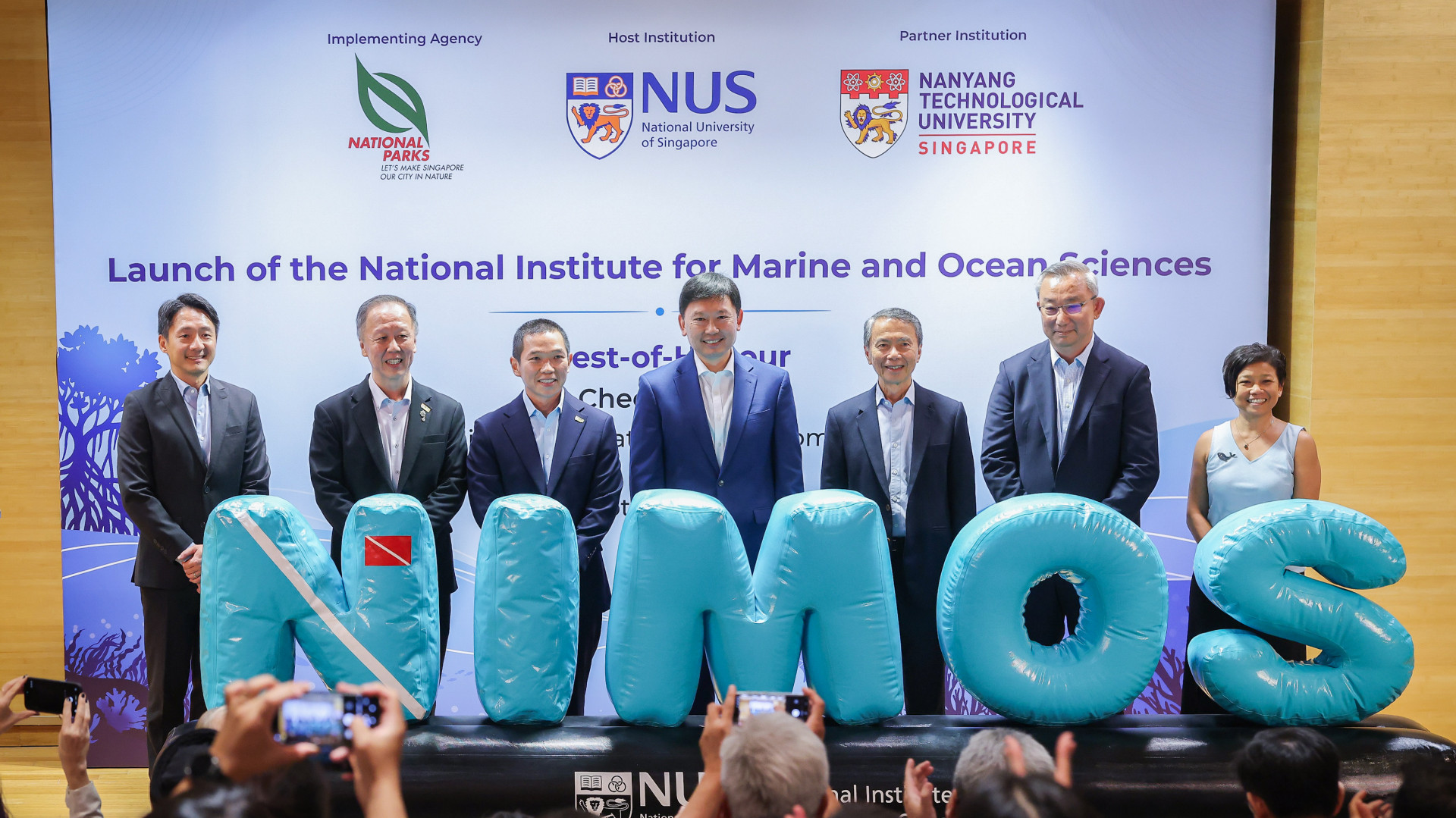
The National Parks Board (NParks) and National University of Singapore (NUS) have launched the National Institute for Marine and Ocean Sciences (NIMOS), a national research institute that will strengthen Singapore’s capabilities to protect its marine environment and sustainably manage its coastal and marine spaces. The launch ceremony, held today at NUS, was graced by Mr Chee Hong Tat, Minister for National Development, as the Guest-of-Honour.
NIMOS is established by NParks and hosted at NUS, with Nanyang Technological University, Singapore (NTU Singapore) as a partner institution, and St John’s Island National Marine Laboratory as a key national facility. It brings together expertise across universities, research institutes and public agencies to address how Singapore can develop management and conservation strategies for marine ecosystems, advance Singapore’s blue economy, build local talent, and establish Singapore as a regional thought leader in marine science.
“As marine environmental challenges in Singapore and the region become increasingly complex – crossing disciplines, sectors, geographies and national boundaries – research and innovation must keep pace to deliver the knowledge and solutions needed to address them. NIMOS, hosted at NUS, brings together universities, research institutes, government agencies and partners across the region to align our research priorities, deepen Singapore’s marine science capabilities, and develop practical solutions that support both environmental resilience and sustainable growth,” said Associate Professor Huang Danwei, Director of NIMOS and Deputy Head of the Lee Kong Chian Natural History Museum at NUS.
NIMOS builds on earlier and existing national marine science efforts, including the Marine Science Research and Development Programme (MSRDP) managed by NUS and the Marine Climate Change Science Programme (MCCS) led by NParks. These programmes established important scientific baselines and research capabilities; NIMOS will consolidate and expand this foundation into a coordinated national platform with a stronger focus on interdisciplinary solutions, talent development and regional leadership.
The launch was also part of NUS Sustainability CONNECT, the University’s flagship sustainability festival.
A whole-of-coast approach to conservation
NIMOS will take a whole-of-coast approach, which involves studying and managing an entire coastal sea space as an interconnected system, to address complex marine challenges with research projects expected to be inter- and trans-disciplinary, bringing together academic and non-academic experts, and across various marine ecosystems.
NIMOS will focus on research areas comprising biodiversity and nature, environment and climate, and ecosystem resilience, with technology being harnessed across research projects. NIMOS’ key strategic priorities include:
1. Developing targeted and effective management and conservation strategies
NIMOS will develop adaptive management tools and science-based approaches that enable marine ecosystems to withstand multiple stressors while continuing to provide essential ecosystem services. This includes developing predictive models for ecosystem tipping points, enhancing habitat resilience with restoration guidelines tailored for the local environment, and creating monitoring frameworks that can detect early warning signals of ecosystem degradation.
2. Deliver inter- and trans-disciplinary solutions to advance Singapore’s blue economy
NIMOS will undertake marine science research that can guide the optimisation and management of Singapore’s sea space. This includes studying how much activity, such as aquaculture and recreation, Singapore’s waters can sustainably support. NIMOS aims to develop inter- and transdisciplinary solutions to balance economic productivity with ecological resilience, ensuring that marine and coastal resources can scale and sustain Singapore’s blue economy – the sustainable use of marine resources for economic growth.
3. Building local talent and capabilities
NIMOS will focus on developing a robust pipeline of local talent that can help build capabilities across academia, industry, and government, ensuring Singapore has the capabilities needed to address complex marine environmental challenges.
4. Establishing Singapore as a regional thought leader in marine science
NIMOS aims to establish Singapore as a regional thought leader in marine science, by consolidating capabilities from key regional institutions and fostering partnerships across Southeast Asia. Building these meaningful regional partnerships can also enable data sharing and comparative assessments of marine health, across Southeast Asia. This would strengthen Singapore’s resilience against complex global marine challenges
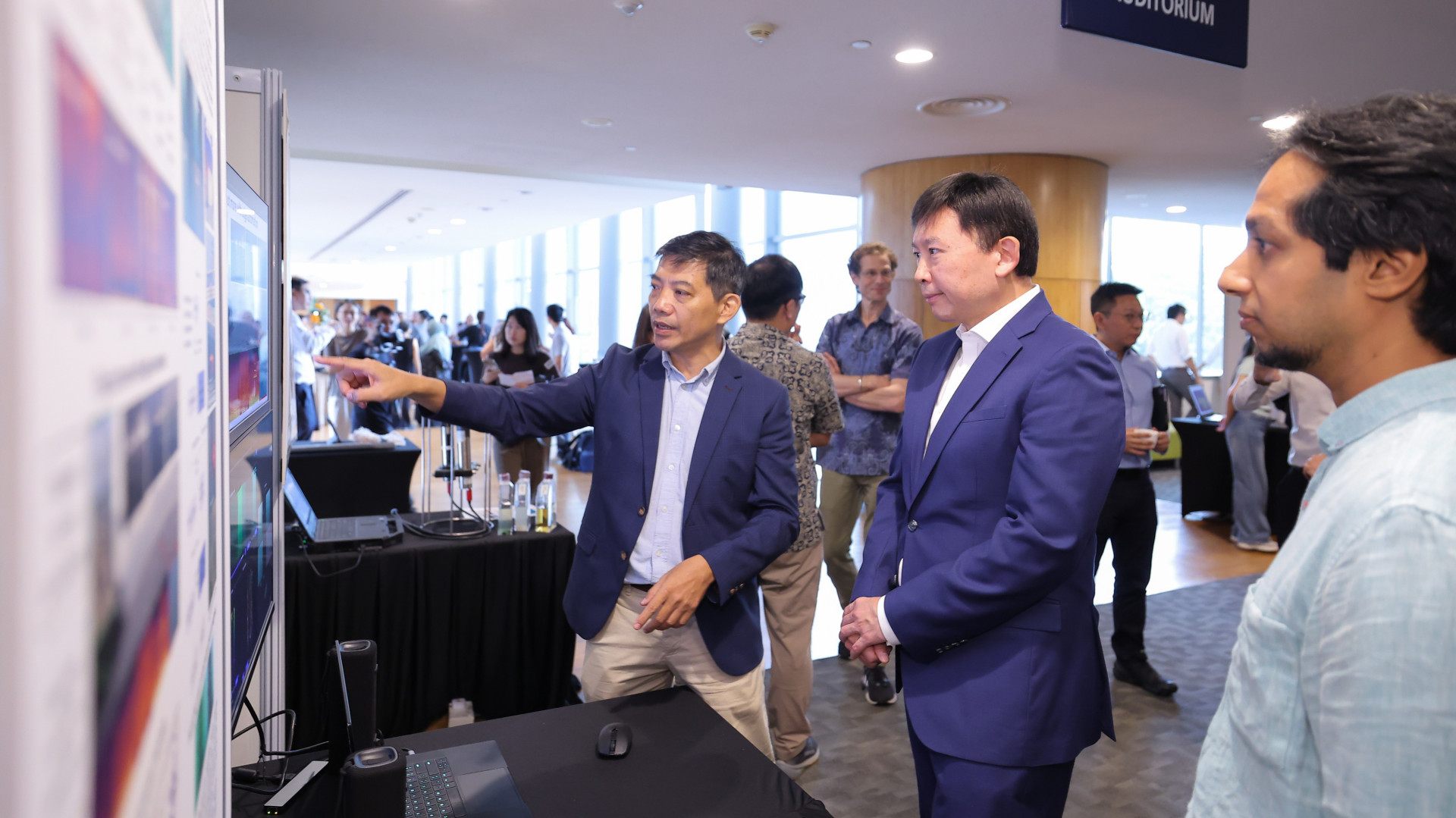
Boosting resources for research and talent development
The S$60 million funding for NIMOS under the Research, Innovation and Enterprise 2030 Plan (RIE2030) will support research, training and capability building.
Over the next 10 years, the institute will offer up to 12 PhD Research Scholarships for Singapore Citizens and Permanent Residents, supporting the growth of local expertise for academia, government and industry. NUS has also committed 10 additional PhD Research Scholarships for NIMOS projects.
NIMOS’ research projects will also create internship and training attachment opportunities for undergraduate and polytechnic students in marine science laboratories across institutes of higher learning.
Bringing the research community together to accelerate discovery
NIMOS will begin operating as a virtual institute, enabling research collaborations to start immediately while longer-term facilities are being developed. The future space will house the NIMOS staff, NUS researchers and collaborators working on NIMOS projects. Its permanent home on NUS campus is expected to include wet science laboratory facilities and collaborative office space for project teams.
To strengthen coordination across the marine science community, NIMOS will also convene the inaugural Singapore Annual Symposium for Marine and Ocean Sciences in 2027. The symposium will serve as a national platform for researchers, policymakers, industry partners and public agencies to share findings, identify emerging priorities and accelerate the translation of marine science into coastal planning, ecosystem management and climate resilience.
Strengthening Singapore’s regional role in marine science
NIMOS will also deepen Singapore’s regional and international marine science partnerships. These collaborations will support data sharing, comparative assessments of marine health and joint research on transboundary issues such as ecosystem connectivity, marine pollution, ocean warming and biodiversity loss. The Institute will build on existing research ties with various institutions worldwide, including those in Australia, the United Kingdom and the United States, and engage a regional network of institutions in Southeast Asia.